📰 Trending Topics
Google News - Trending
10/6/26: Trending a Little More Mild - NEWS10 ABC
2026-10-06 21:56
Intel Stock Is Trending Today: What's Going On? - Benzinga
2026-10-07 18:29
Google News - Technology
Microsoft releases new Nvidia-chip AI PCs with revamped Windows 11 - TechCrunch
2026-10-07 20:22
- Microsoft releases new Nvidia-chip AI PCs with revamped Windows 11 TechCrunch
- Microsoft debuts Nvidia-powered Surface Laptop Ultra, as it aims for AI market Yahoo Finance
- I’ll Be Honest, I’ve Always Wanted a PC Like the Microsoft Surface Laptop Ultra Gizmodo
- Building Windows for hybrid intelligence Windows Blog
- Windows and Surface October 2026 news Microsoft Source
Prime Day Offers Best TV Prices of the Year From Samsung, Sony, and More - MacRumors
2026-10-07 14:06
- Prime Day Offers Best TV Prices of the Year From Samsung, Sony, and More MacRumors
- I test TVs and soundbars for a living. Here are 24 Amazon Prime Day TV deals you should buy CNN
- Best Prime Day TV Deals: Top Picks From LG, Sony CNET
- At $2,000 off, this TV could be the best deal of Amazon Prime Day — but should you buy it? Yahoo Tech
- Today's biggest TV deal? $2,000 off a 100-inch Hisense TV (yes, really) USA Today
Amazon Anker fall Prime Day sale now live at up to 50% off! Deals on chargers, power banks, Qi2.2 gear, more from just $10 - 9to5Toys
2026-10-07 19:55
- Amazon Anker fall Prime Day sale now live at up to 50% off! Deals on chargers, power banks, Qi2.2 gear, more from just $10 9to5Toys
- I can’t live without a portable charger. Here are the heavily discounted models worth buying | CNN Underscored CNN
- One of the Most Efficient Power Stations We’ve Tested Is $350 Off for Prime Big Deal Days Popular Mechanics
- Anker’s 100W universal charger is a great travel gadget for $64 The Verge
- The Best Anker Prime Day Deals: Score Big on MagSafe Chargers and More MacRumors
NASA - Breaking News
NASA Sets Coverage for SpaceX 35th Station Resupply Launch, Arrival
2026-10-07 21:16
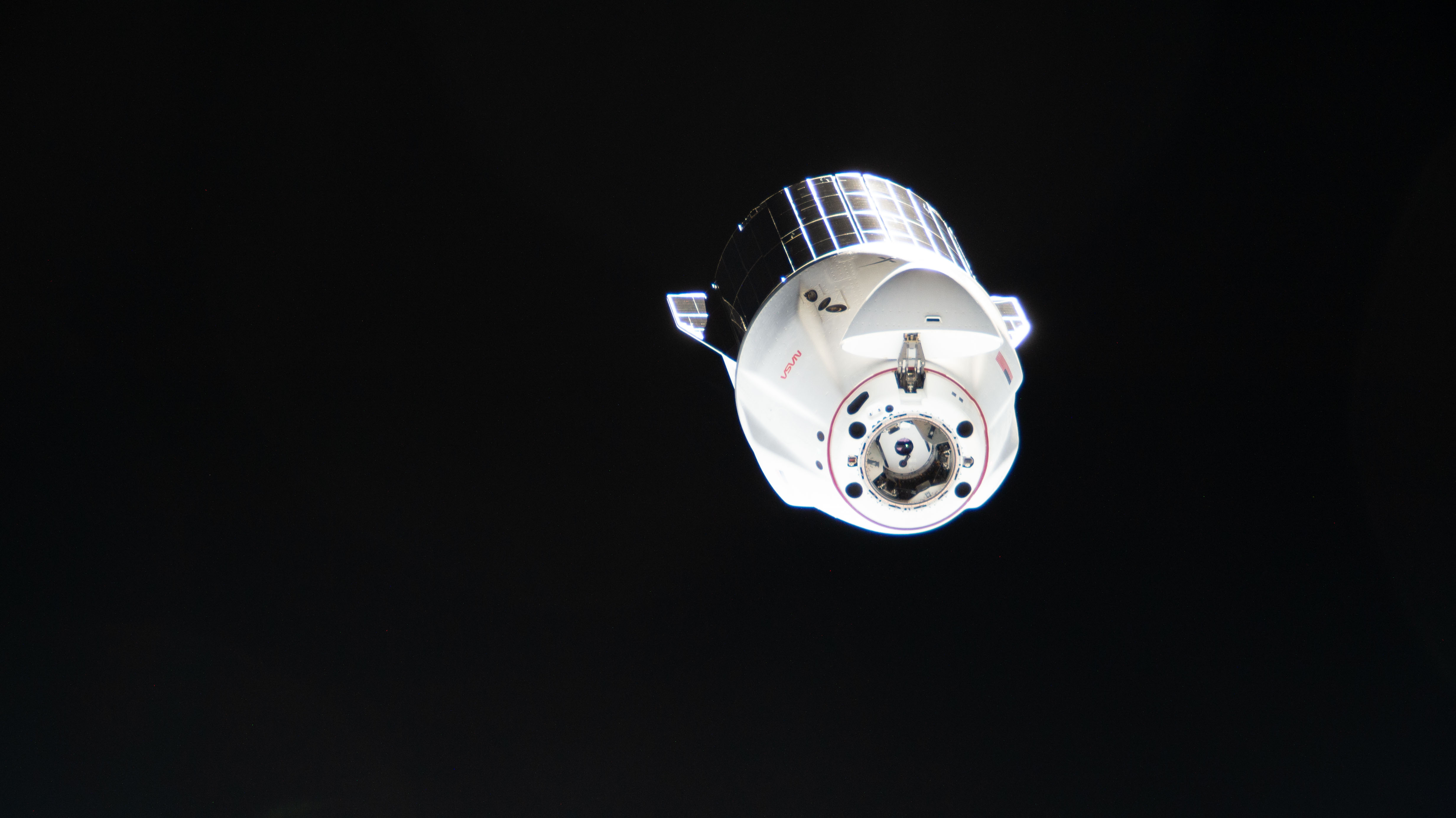
NASA and SpaceX are targeting 6:33 a.m. EDT, Tuesday, Oct. 13, for the next launch to deliver science investigations, supplies, and equipment, including the final set of International Space Station Roll-Out Solar Arrays, to the space station. This is the 35th SpaceX commercial resupply services mission to the orbital complex for NASA.
NASA also will host a media teleconference on Thursday, Oct. 8 that will preview the cargo resupply flight, as well as provide a post-splashdown update for the agency’s SpaceX Crew-12 mission, which will have returned to Earth from the space station Thursday morning.
Loaded with more than 6,300 pounds of supplies, a SpaceX Dragon spacecraft on a Falcon 9 rocket will lift off from Space Launch Complex 40 at Cape Canaveral Space Force Station in Florida. Dragon will dock autonomously around 11 a.m. on Thursday, Oct. 15, to the space-facing port of the station’s Harmony module.
NASA’s live launch and docking coverage will stream through a variety of platforms. Learn where to watch online:
In addition to the solar arrays, the Dragon spacecraft will deliver hardware to manufacture artificial retinas in microgravity to help restore vision on Earth and 3D heart tissues models to advance large‑scale drug testing on future missions. The spacecraft will carry materials to study how a new type of glass forms in microgravity and brain organoids that could reveal treatment targets for neurodegenerative diseases, such as Alzheimer’s, Parkinson’s, and multiple sclerosis.
The Dragon spacecraft is scheduled to remain at the space station until mid-November when it will depart the orbiting laboratory and return to Earth with time-critical research and cargo, splashing down off the coast of California.
NASA’s mission coverage is as follows (all times Eastern and subject to change based on real-time operations):
Thursday, Oct. 8
1:15 p.m.: International Space Station briefing for Crew-12 return, and SpaceX’s 35th Commercial Resupply Services launch with the following participants:
- Bill Spetch, deputy manager of Commercial, Low Earth Orbit Program
- Dr. Liz Warren, deputy chief scientist, NASA’s International Space Station Office
- Lee Echerd, senior mission manager, Customer Operations and Integration, SpaceX
- Andreas Mogensen, leader, Human Exploration Group, ESA (European Space Agency)
To participate in the teleconference, media must contact the NASA Johnson Space Center newsroom for call details by 12 p.m., Oct. 8, at: jsccommu@mail.nasa.gov or 281-483-5111. To ask questions, media must dial in no later than 10 minutes before the start of the call. The agency’s media credentialing policy is available online.
Tuesday, Oct. 13
6:15 a.m.: Launch coverage begins
6:33 a.m.: Launch
Thursday, Oct. 15
9:15 a.m.: Arrival coverage begins
11 a.m.: Docking
NASA website launch coverage
Launch day coverage of the mission will be available on the NASA website. Coverage will include live streaming and blog updates beginning no earlier than 6 a.m. on Oct. 13, as the countdown milestones occur. On-demand streaming video on NASA+ and photos of the launch will be available shortly after liftoff. For questions about countdown coverage, contact the NASA Kennedy Space Center newsroom at 321-867-2468. Follow countdown coverage on our International Space Station blog for updates.
Attend launch virtually
Members of the public can register to attend this launch virtually. NASA’s virtual guest program for this mission also includes curated launch resources, notifications about related opportunities or changes, and a stamp for the NASA virtual guest passport following launch.
Watch, engage on social media
Let people know you’re watching the mission on X, Facebook, and Instagram by following and tagging these accounts:
X: @NASA, @NASAKennedy, @NASASpaceOps, @Space_Station, @ISS National Lab
Facebook: NASA, NASAKennedy, ISS, ISS National Lab
Instagram: @NASA, @NASAKennedy, @ISS, @ISSNationalLab
Learn more about this commercial resupply services mission at:
https://www.nasa.gov/mission/nasas-spacex-crs-35/
-end-
Josh Finch / Jimi Russell
Headquarters, Washington
202-358-1100
joshua.a.finch@nasa.gov / james.j.russell@nasa.gov
Steven Siceloff
Kennedy Space Center, Fla.
321-876-2468
steven.p.siceloff@nasa.gov
Sandra Jones / Joseph Zakrzewski
Johnson Space Center, Houston
281-483-5111
sandra.p.jones@nasa.gov / joseph.a.zakrzewskI@nasa.gov
NASA’s SpaceX 35th Commercial Resupply Mission Overview
2026-10-07 20:17
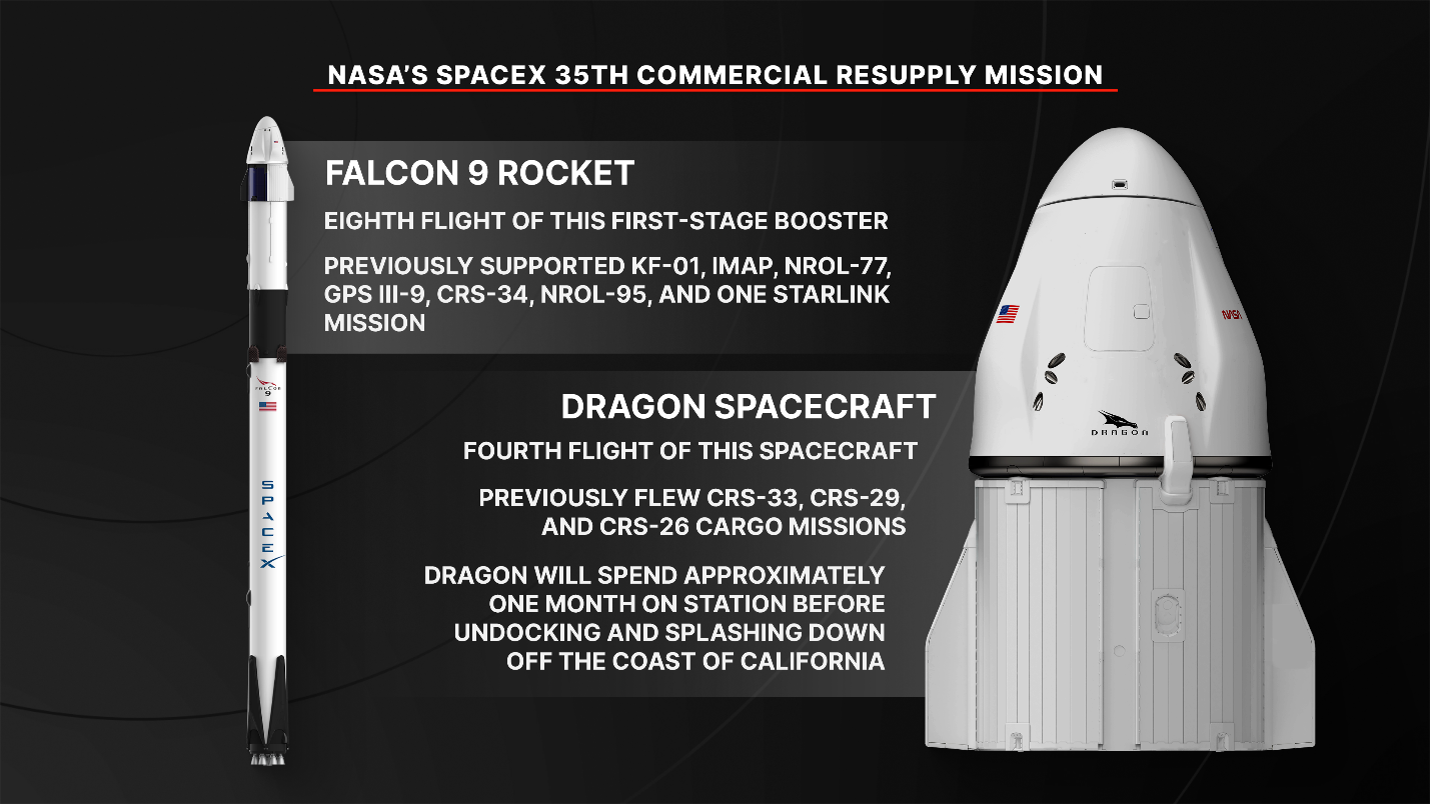
NASA and SpaceX are targeting no earlier than Tuesday, Oct. 13 to launch scientific investigations, supplies, and equipment to the International Space Station.
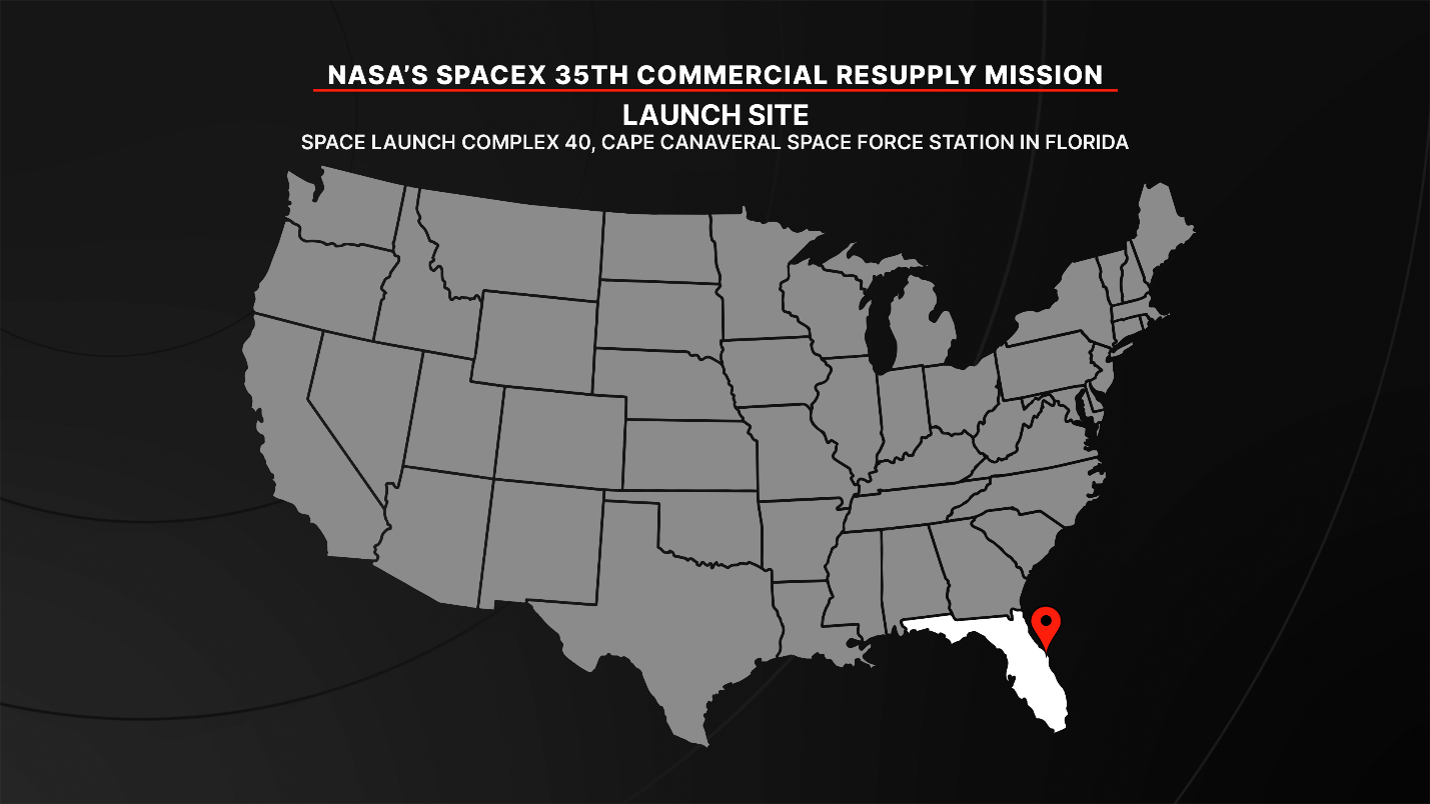
Loaded with more than 6,300 pounds of supplies, the SpaceX Dragon spacecraft will lift off aboard the company’s Falcon 9 rocket from Space Launch Complex 40 at Cape Canaveral Space Force Station in Florida. Following its arrival to the orbital complex, Dragon will autonomously dock to the space-facing port of the space station’s Harmony module.
NASA will stream launch and docking coverage through a variety of platforms. Learn where to watch online:
For more than 25 years, the International Space Station has supported research by scientists from more than 110 countries, enabling more than 4,000 experiments in microgravity. Research conducted aboard the station helps advance long-duration missions to the Moon as part of the Artemis program and to Mars, while also providing multiple benefits to humanity.
Science Highlights
In addition to cargo for the crew aboard the space station, Dragon will deliver several new science experiments, including:
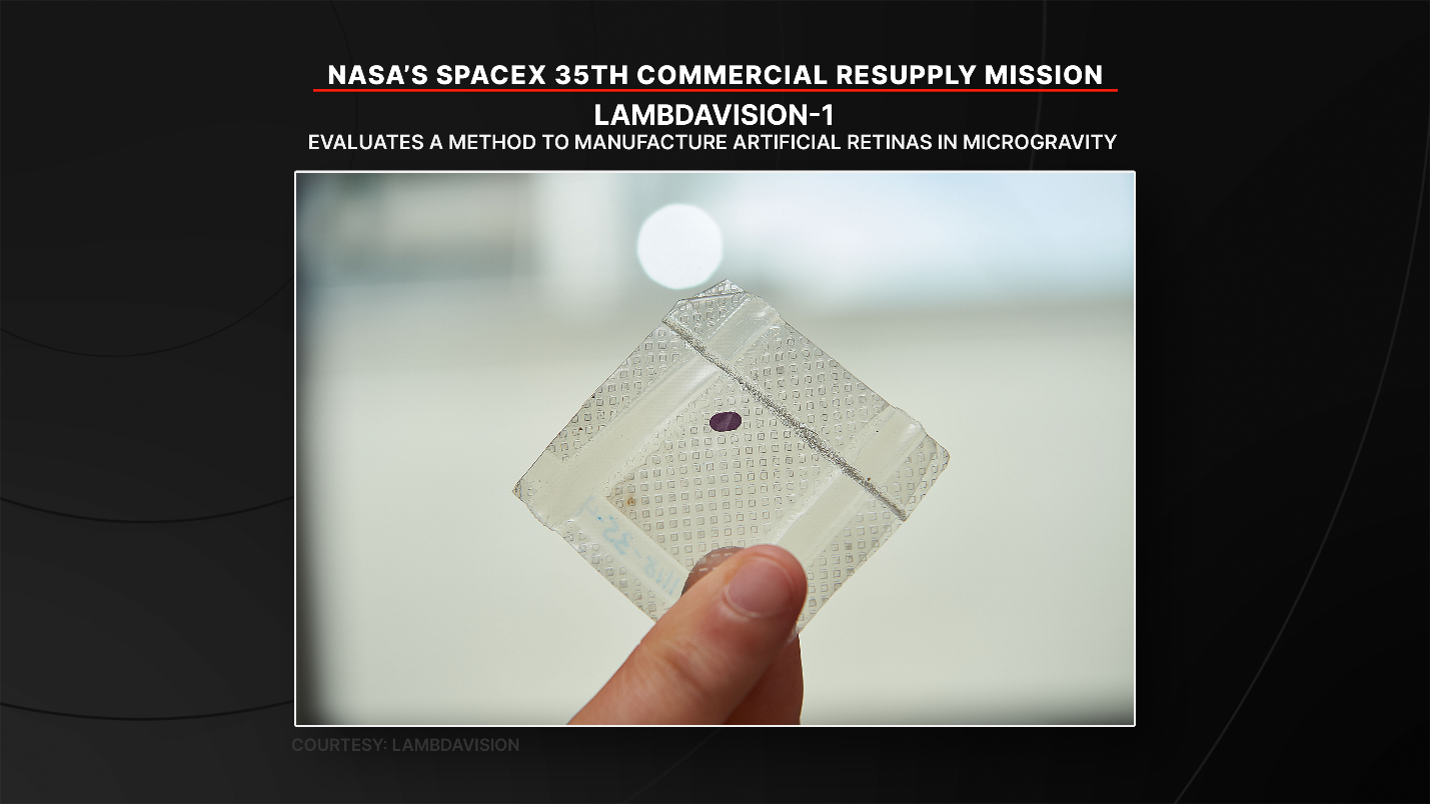
With LambdaVision-1, NASA is testing how to manufacture artificial eye retinas in microgravity, building them one thin layer at a time. Reduced settling in microgravity may create more uniform, stable layers, potentially improving implants’ performance. These artificial retinas could help restore vision for patients with currently incurable retinal diseases on Earth.
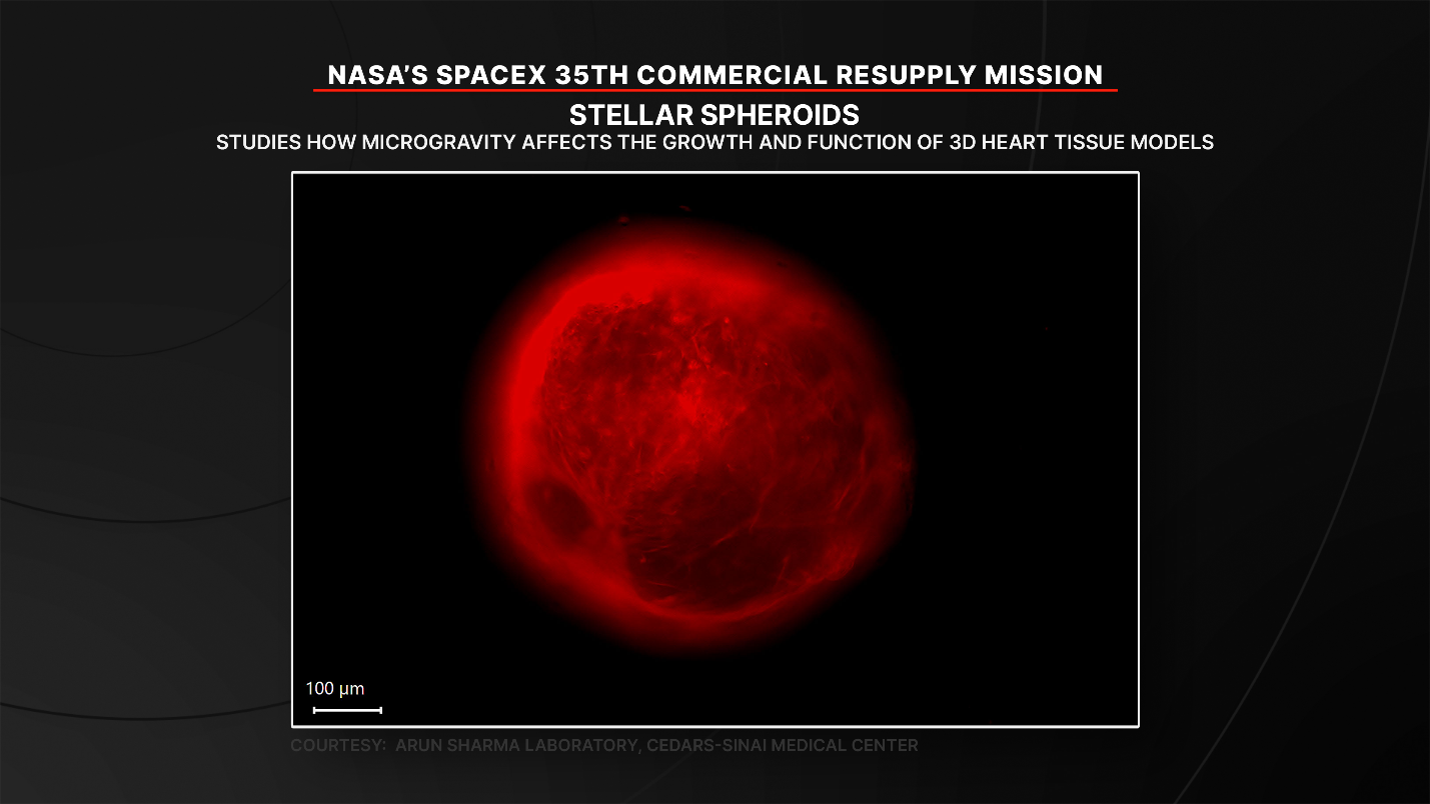
NASA will use the Stellar Spheroids experiment to study how microgravity affects the growth and function of 3D human heart tissue models. Researchers will assess whether microgravity improves the formation of advanced vascular networks. Results could help researchers develop more realistic heart tissue models for disease research and support larger‑scale drug testing on future space missions.
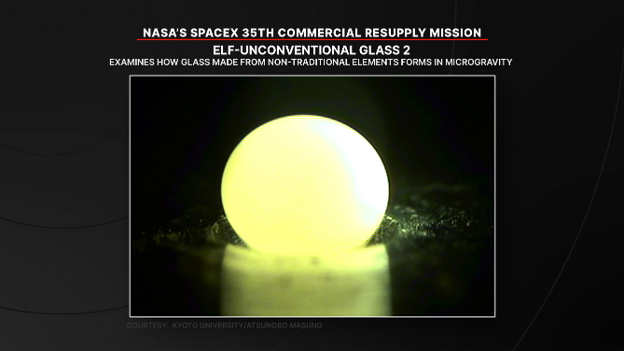
Using non-traditional elements, ELF-Unconventional Glass 2 studies how glass forms in microgravity. Researchers will observe molten behavior in space, then return solid samples to Earth for detailed analysis. These unconventional glasses could offer higher strength, improved optical capabilities, and greater durability for spacecraft, habitats, and other exploration technologies.

The MINDS experiment studies brain organoids to better understand inflammation linked to neurodegenerative diseases. The investigation uses “organoid villages,” which combine cells from multiple people to better represent patient diversity. Results could help identify new treatment targets for diseases like Alzheimer’s, Parkinson’s, and multiple sclerosis.
Arrival and Return
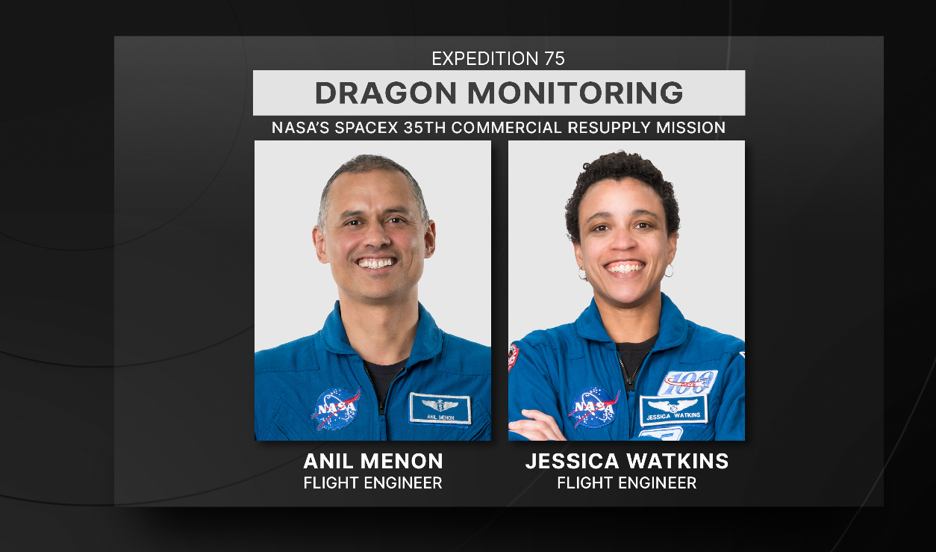
NASA astronauts Anil Menon and Jessica Watkins will monitor the Dragon spacecraft’s arrival. It will remain docked to the orbiting laboratory for about a month before splashing down in the Pacific Ocean, returning critical science and hardware to teams on Earth.
Cargo Highlights
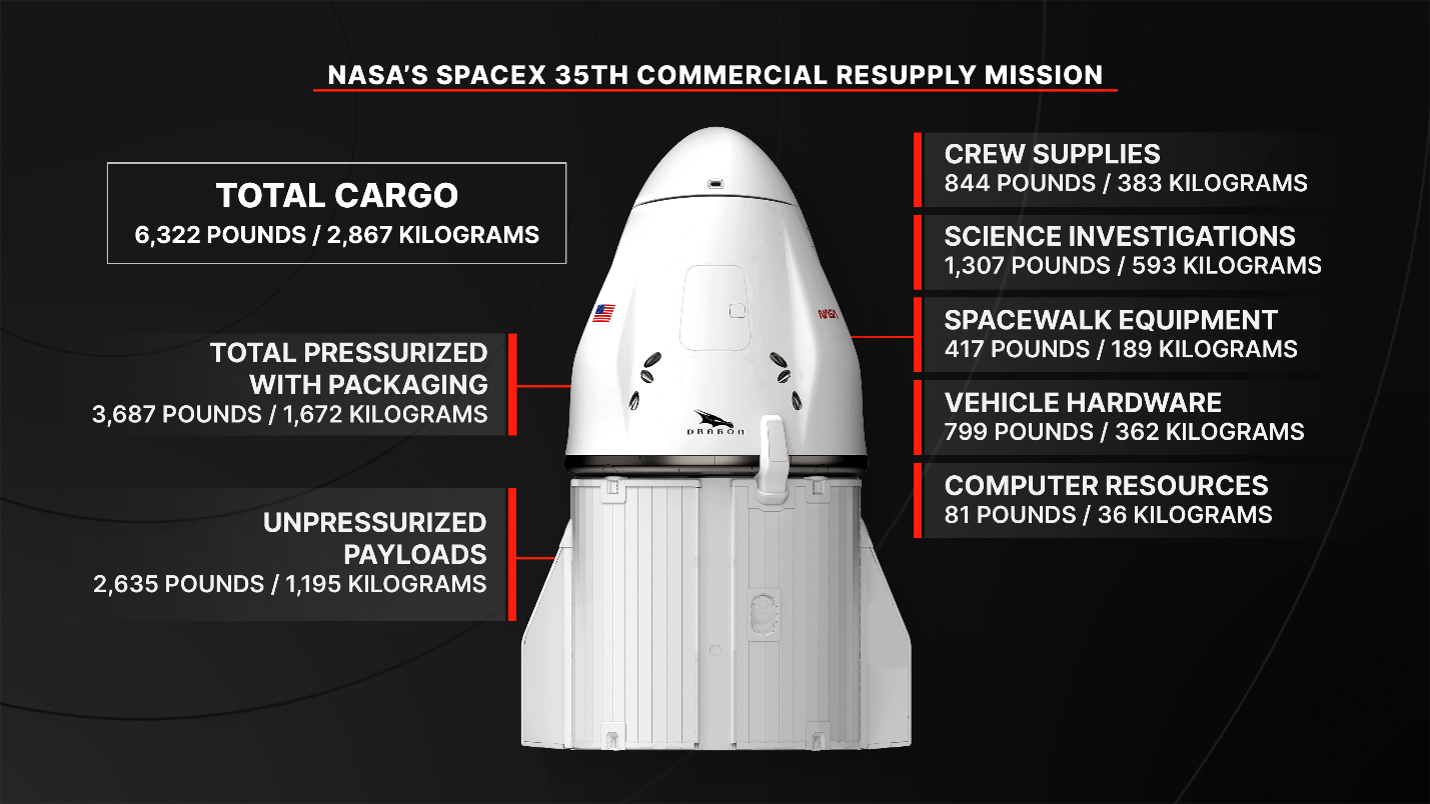
Launch
International Space Station Roll-Out Solar Arrays (IROSA) – The final pair of IROSAs that will be installed on the space station, completing the augmentation of its power system to support critical operations, including its safe and controlled deorbit.
Collapsible Continency Urinal and supporting hardware – A demonstration and test unit supporting NASA’s Artemis III mission.
Canadarm2 joint flight support equipment – A large foam clamshell will fly empty to return the failed robotic arm joint that was replaced during a June 30 spacewalk. After its return to Earth, teams will analyze the joint on the ground.
Additional equipment launching includes a toilet dose pump, a toilet pretreat quality sensor, and a robot micro-conical tool used for space station maintenance and utilization tasks with external replacement units and payloads.
Return
When Dragon returns in mid‑November, it will bring back the failed joint on the Canadarm2 for analysis and refurbishment, a spacesuit for ground refurbishment, a fluid- and pressure-control pump assembly from the urine processor, and a filtration unit for the water processor assembly.
NASA’s PRIMA Spacecraft (Artist’s Concept)
2026-10-07 20:15
NASA’s PRIMA Spacecraft (Artist’s Concept)

NASA/JPL-Caltech
Description
This artist’s concept depicts the proposed design for NASA’s PRobe far-Infrared Mission for Astrophysics (PRIMA), which was selected by the agency in September 2026. The PRIMA observatory is the first in a new class of NASA astrophysics missions, called Probe Explorers, within the agency’s longstanding Explorers Program. By observing far-infrared light, PRIMA will enable scientists to study cosmic objects heavily obscured by dust, providing new insights into the formation of planets, stars, and black holes, and even how water on Earth came to be. If confirmed by the agency, PRIMA will be targeted to launch in 2033, for a planned five-year mission.

NASA’s Curiosity Looks Back After Reaching Elevation Milestone
2026-10-07 17:00
NASA’s Curiosity Looks Back After Reaching Elevation Milestone
NASA/JPL-Caltech/MSSS
Description
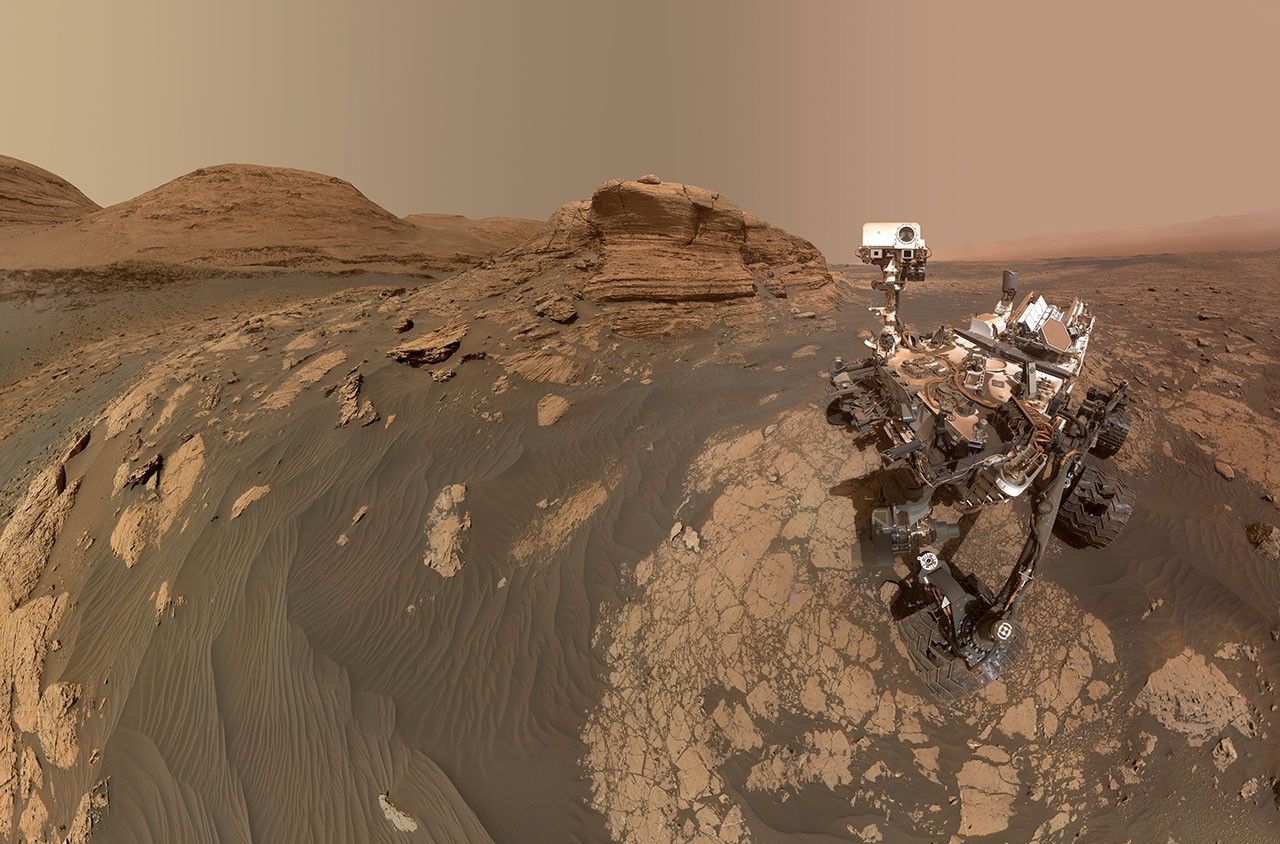
NASA’s Curiosity Mars rover captured this view looking back at the floor of Gale Crater, with the crater’s rim visible in the distance, on Sept. 5, 2026, the 5,006th Martian day, or sol, of the mission. Just nine days prior, on Aug. 26 (Sol 4,996), Curiosity set a mission milestone by reaching 1 kilometer of elevation above the crater floor. Since 2014, Curiosity has been climbing the lower foothills of Mount Sharp, a 3-mile-tall (5-kilometer-tall) mountain located within Gale Crater.
A sand ridge extends across the foreground of the image, and a trench left by the rover’s right front wheel is visible at right. Geologic layering inside the ridge, as well as the size and composition of its sand grains, will provide clues to how the feature formed.
This panorama is made up of 95 individual images taken by Curiosity’s Mast Camera, or Mastcam. The color in these images has been adjusted to match the lighting conditions as the human eye would see them on Earth.
Curiosity was built by NASA’s Jet Propulsion Laboratory, which is managed by Caltech in Pasadena, California. JPL leads the mission on behalf of NASA’s Science Mission Directorate in Washington as part of NASA’s Mars Exploration Program portfolio. Malin Space Science Systems in San Diego built and operates Mastcam.
To learn more about Curiosity, visit:
NASA’s Curiosity Captures Dawn Breaking on Wind-Carved Cliffs
2026-10-07 16:49
NASA’s Curiosity Captures Dawn Breaking on Wind-Carved Cliffs

NASA/JPL-Caltech/MSSS
Description
NASA’s Curiosity Mars rover captured this panorama of sunrise illuminating distant, wind-carved features called yardangs on Aug. 11, 2026, the 4,982nd Martian day, or sol, of the mission. Scientists are eager to learn more about how the yardang layer formed.

Figure A is a crop zooming in on the distant yardangs.
Since 2014, Curiosity has been ascending 3-mile-tall (5-kilometer-tall) Mount Sharp, which is made up of a series of distinct layers that were deposited one on top of the other. In the area of the vast mountain’s shoulder where the rover is climbing, that stack of layers ends with the yardang layer. Before the yardang layer was laid down, Mount Sharp may have begun eroding, creating a gap in the otherwise continuous record of climate history that Curiosity has been reading from the layers. Scientists aren’t entirely sure how the layer formed; one theory is that it’s a pile of volcanic ash, similar to what’s seen along the Red Planet’s equator.
This panorama was captured by Curiosity’s Mastcam and is made up six individual images that were stitched together after being sent back to Earth. Unlike most of Curiosity’s Mastcam images, this one was processed without the usual white balancing, an artistic choice that preserves the early morning appearance.
Curiosity was built by NASA’s Jet Propulsion Laboratory, which is managed by Caltech in Pasadena, California. JPL leads the mission on behalf of NASA’s Science Mission Directorate in Washington as part of NASA’s Mars Exploration Program portfolio. Malin Space Science Systems in San Diego built and operates Mastcam.
To learn more about Curiosity, visit:
TechCrunch - Latest
Robot data startup Mecka AI nabs $60M from Sequoia
2026-10-07 23:36
While VCs crowd into San Francisco, Endeavor Catalyst raises $320M for founders ‘elsewhere’
2026-10-07 22:59
Nous Research confirms it hit $1.5B valuation, launches AI agents for business users
2026-10-07 20:48
Microsoft releases new Nvidia-chip AI PCs with revamped Windows 11
2026-10-07 20:22
Meta’s Muse launches on iPad just a month after its mobile debut
2026-10-07 18:30