📰 Trending Topics
Google News - Trending
Google News - Technology
Amazon is phasing out Fire Tablets because they weren’t ‘giving customers what they were asking for’ - The Verge
2026-10-08 16:34
- Amazon is phasing out Fire Tablets because they weren’t ‘giving customers what they were asking for’ The Verge
- Introducing all-new Amazon Alexa Tablets—powerful tablets with Alexa+ built in About Amazon
- Amazon overhauls aging devices lineup with higher-priced Alexa tablet, dumping the budget Fire CNBC
- Amazon’s new Alexa Tablets drop the Fire branding but are more Android than ever Ars Technica
- Amazon Overhauls Tablet Line By Going After Apple’s High-End iPads Bloomberg.com
Apple Product Launch Announced for October 13: 'Welcome Home' - MacRumors
2026-10-08 16:04
- Apple Product Launch Announced for October 13: 'Welcome Home' MacRumors
- Apple to Launch Doorbell, Lock, Thermostat Developed With LG Bloomberg.com
- Welcome home: Apple unveils special October event Mashable
- 4 big announcements coming at Apple’s Welcome Home event Macworld
- Apple Still Expected to Announce Three New Products on October 13 MacRumors
Microsoft releases new Nvidia-chip AI PCs with revamped Windows 11 - TechCrunch
2026-10-07 20:22
- Microsoft releases new Nvidia-chip AI PCs with revamped Windows 11 TechCrunch
- NVIDIA, Microsoft Kick Off a New Beginning for Windows PCs With RTX Spark and AI Agents NVIDIA Blog
- The tech industry wants you to run AI models at home, but it’s not for everyone Yahoo Finance
- Building Windows for hybrid intelligence Windows Blog
- Microsoft to sell $2,599 Surface Laptop Ultra containing Nvidia AI chip CNBC
NASA - Breaking News
NASA Briefing to Highlight Contributions to Martian Moons Mission
2026-10-08 20:22
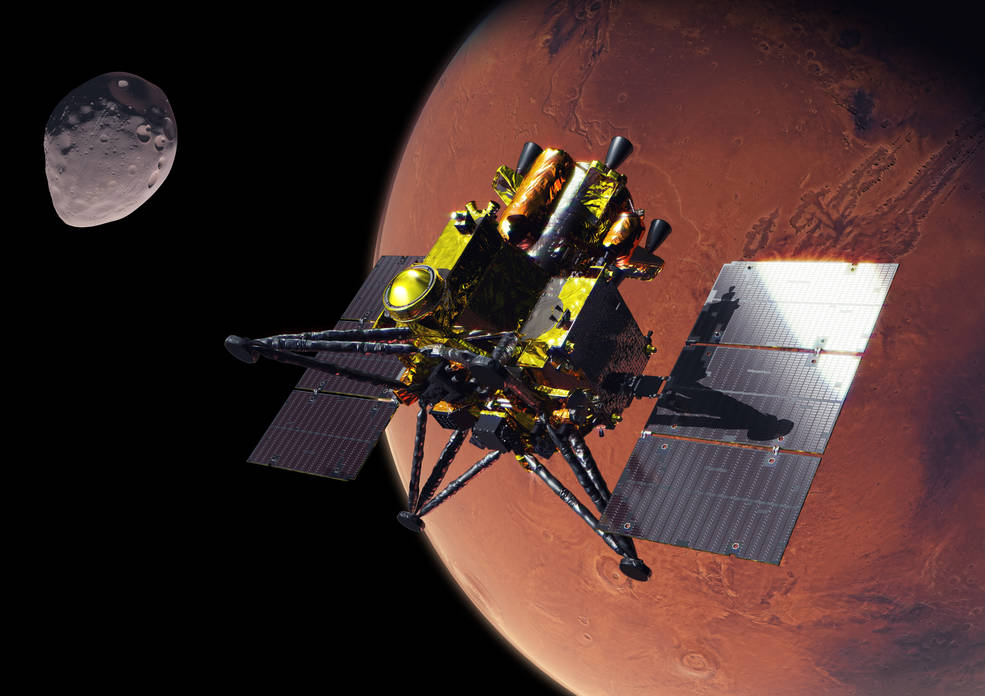
Media are invited to join NASA for a media teleconference at 4 p.m. EDT, Thursday, Oct. 15, to preview the agency’s contributions to JAXA’s (Japan Aerospace Exploration Agency) Martian Moons eXploration (MMX) mission. The mission is scheduled to launch from JAXA’s Tanegashima Space Center in Japan on Monday, Oct. 19 EDT (Tuesday, Oct. 20 JST).
Audio of the media teleconference will stream on the agency’s website at:
Participants in the briefing, who will provide an overview of the mission and NASA’s contributions, include:
- Lindsay Hays, acting director, Planetary Science Division, NASA Headquarters in Washington
- Tom Statler, MMX program executive and scientist, Planetary Science Division, NASA Headquarters
- David Lawrence, MEGANE (Mars-moon Exploration with Gamma-rays and Neutrons) principal investigator, Johns Hopkins Applied Physics Laboratory
- Kris Zacny, vice president, Blue Origin’s Honeybee Robotics
Media interested in participating by phone must RSVP no later than two hours prior to the start of the teleconference to Molly Wasser at molly.l.wasser@nasa.gov. A copy of NASA’s media accreditation policy is online.
The MMX spacecraft will arrive at Mars in August 2027 to begin its survey of the Red Planet’s two moons, Phobos and Deimos. After surveying Phobos in detail, the spacecraft will collect a sample of the moon’s surface no earlier than December 2028 and deliver it to Earth in 2031. NASA’s contributions to the mission include the MEGANE gamma-ray and neutron spectrometer, the spacecraft’s surface sampler mechanism, and communications and navigation support from the agency’s Deep Space Network, as well as funding United States scientists participating on the MMX science team.
The MEGANE instrument was developed by Johns Hopkins Applied Physics Laboratory. Honeybee Robotics, a Blue Origin company, developed the spacecraft’s pneumatic sampler mechanism. NASA’s contributions to the MMX mission were funded by the agency’s Discovery Program, which provides frequent flight opportunities for high-value, focused planetary science investigations. The Discovery Program is managed by NASA’s Marshall Space Flight Center in Huntsville, Alabama, for the agency’s Science Mission Directorate in Washington.
For more information about the MMX mission, visit:
https://science.nasa.gov/mission/mmx/
-end-
Karen Fox / Alana Johnson
Headquarters, Washington
240-285-5155 / 202-672-4780
karen.c.fox@nasa.gov / alana.r.johnson@nasa.gov
NASA Announces Bold Science Initiatives for America’s Golden Age Summit
2026-10-08 19:40

NASA is launching two new science and technology initiatives to deepen scientific understanding and accelerate the innovation that will shape America’s future in space.
The initiatives are announced in conjunction with the White House Office of Science and Technology Policy’s (OSTP) “Golden Age Summit” in Washington on Thursday with top U.S. agency leaders. The programs reflect NASA’s commitment to pioneering research and transformative technologies and advancing the Trump Administration’s vision as outlined in the July report to the President, Science: A New Golden Age. One focuses on peer review and the other on fellowship researchers.
“NASA has a proud history of pursuing bold ideas and achieving the near impossible,” said NASA Administrator Jared Isaacman. “Under President Trump’s leadership, we are building on that legacy by creating new opportunities for great science, experimenting with how we evaluate and accelerate the best ideas, and investing in the next generation of researchers through the Genesis Mission Fellowships. We are entering a new Golden Age of American innovation and discovery, and NASA will be at the forefront.”
During a fireside chat, Isaacman and Michael Kratsios, assistant to the President for science and technology and director of OSTP, will discuss the following:
- Establishing a coordinated metascience initiative within NASA’s Science Mission Directorate to strengthen the reliability, efficiency, transparency, and overall productivity of the agency’s scientific practices. As part of this effort, NASA is expanding the agency’s use of dual anonymous peer review to ensure proposals are evaluated solely on their intrinsic scientific merit. This approach enhances fairness and supports innovative and unconventional research ideas. Started as a pilot program during the first Trump Administration, this initiative has helped position NASA as a leader in advancing best practices in scientific review.
- NASA will support 10 Genesis Mission Fellows, who are accelerated doctoral students with dual competencies in super intelligence (SI) and science or engineering. Fellows will work directly on NASA mission areas and conduct research at NASA laboratories, advancing SI-enabled scientific discovery. The fellowships will be based on NASA’s successful Future Investigators in NASA Earth and Space Science and Technology program.
NASA leads the nation in space exploration, scientific discovery, and technological innovation. Through these new initiatives, NASA will continue to inspire the world and drive progress in science and technology.
Learn more about NASA science at:
-end-
Camille Gallo / Elizabeth Shaw
Headquarters, Washington
202-358-1600
camille.m.gallo@nasa.gov / elizabeth.a.shaw@nasa.gov
NASA’s SSPICY Mission to Demonstrate In-Space Inspection Technologies
2026-10-08 18:56
2 min read
Preparations for Next Moonwalk Simulations Underway (and Underwater)
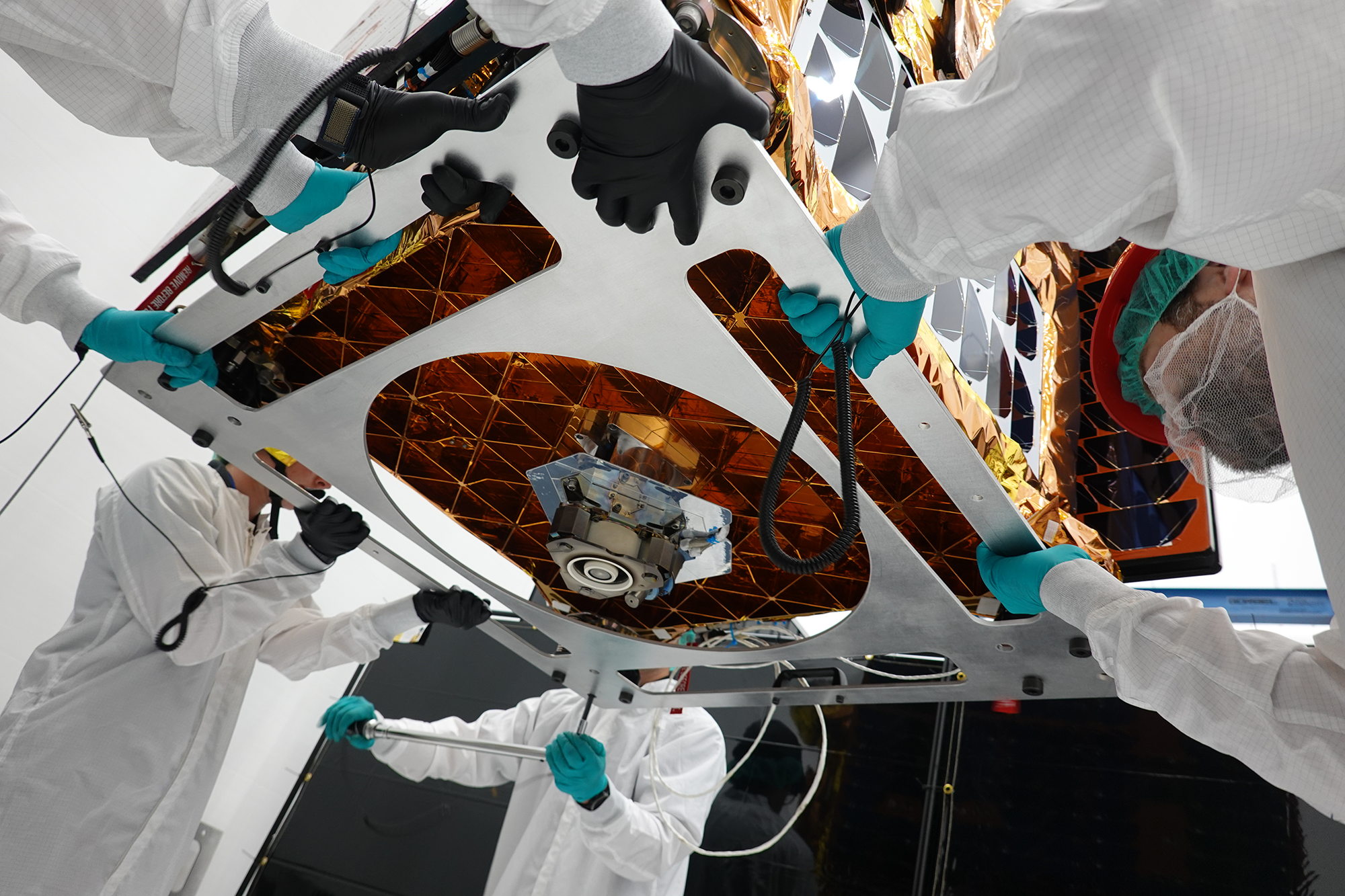
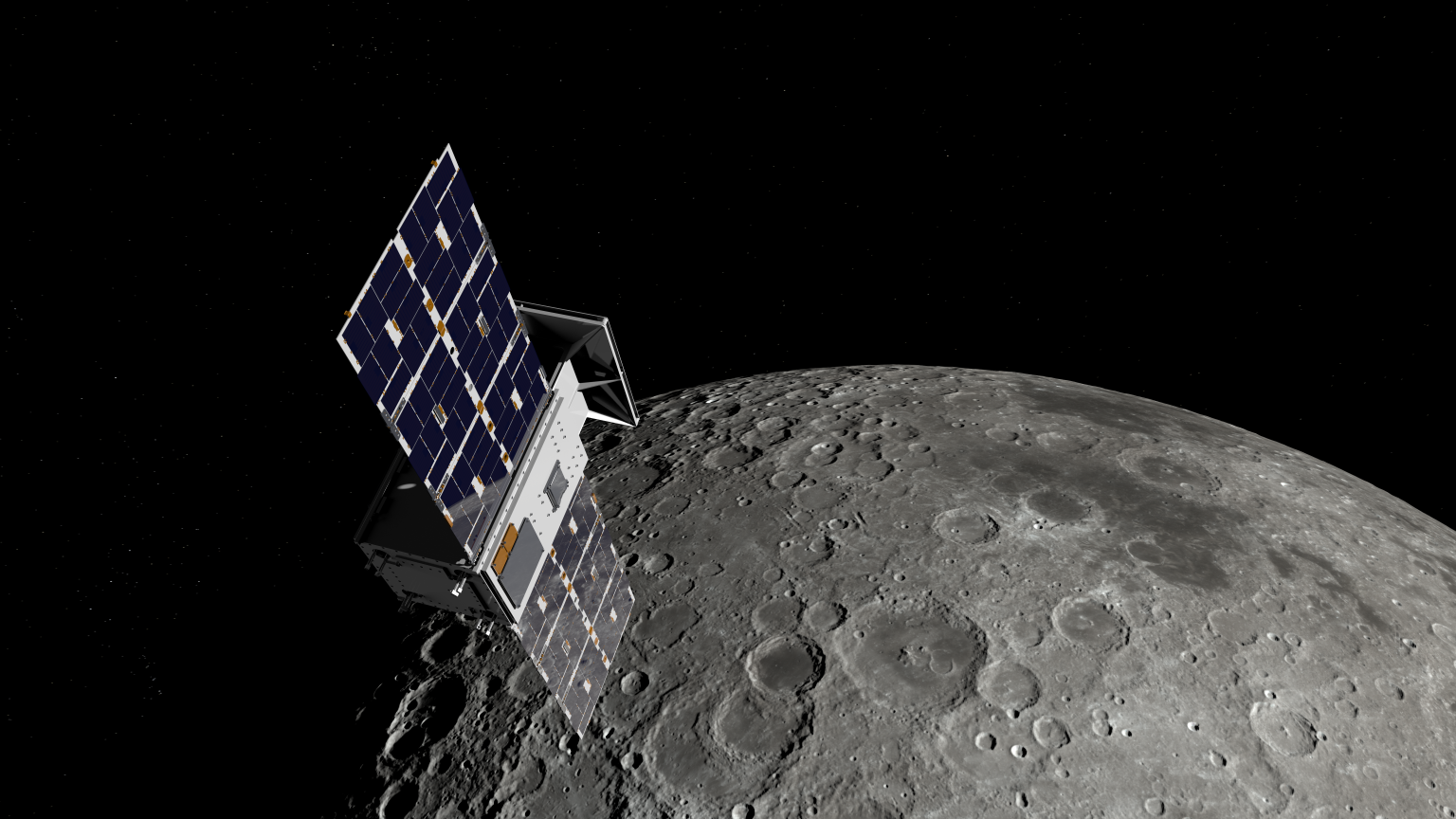
A new NASA-supported spacecraft will get up close to satellites that are no longer in service, demonstrating technologies that could support future in-space repairs and reduce orbital debris.
The Small Spacecraft Propulsion and Inspection Capability (SSPICY) mission launched Oct. 1 from Vandenberg Space Force Base in California. The mission is a technology demonstration where an Otter spacecraft will approach up to four inoperable space objects of U.S. origin in low Earth orbit, such as satellites and rocket bodies.
In early 2027, the Otter spacecraft, built by Starfish Space, will begin to navigate within hundreds of yards of each object to perform inspections, using autonomous guidance and control software with minimal input from ground controllers. Computer vision and sensors enable software to make real-time navigation decisions as the spacecraft approaches each target.
During inspection, the Otter spacecraft will gather critical information about each object, such as spin rate, orientation, and surface condition. An electric propulsion system will enable SSPICY to travel between objects, and an articulating robotic boom will test pointing the spacecraft’s thrusters for precise maneuvering between different orbits.
This mission is the first time these technologies will be tested together as an integrated system, paving the way for future autonomous servicing and orbital debris inspection.
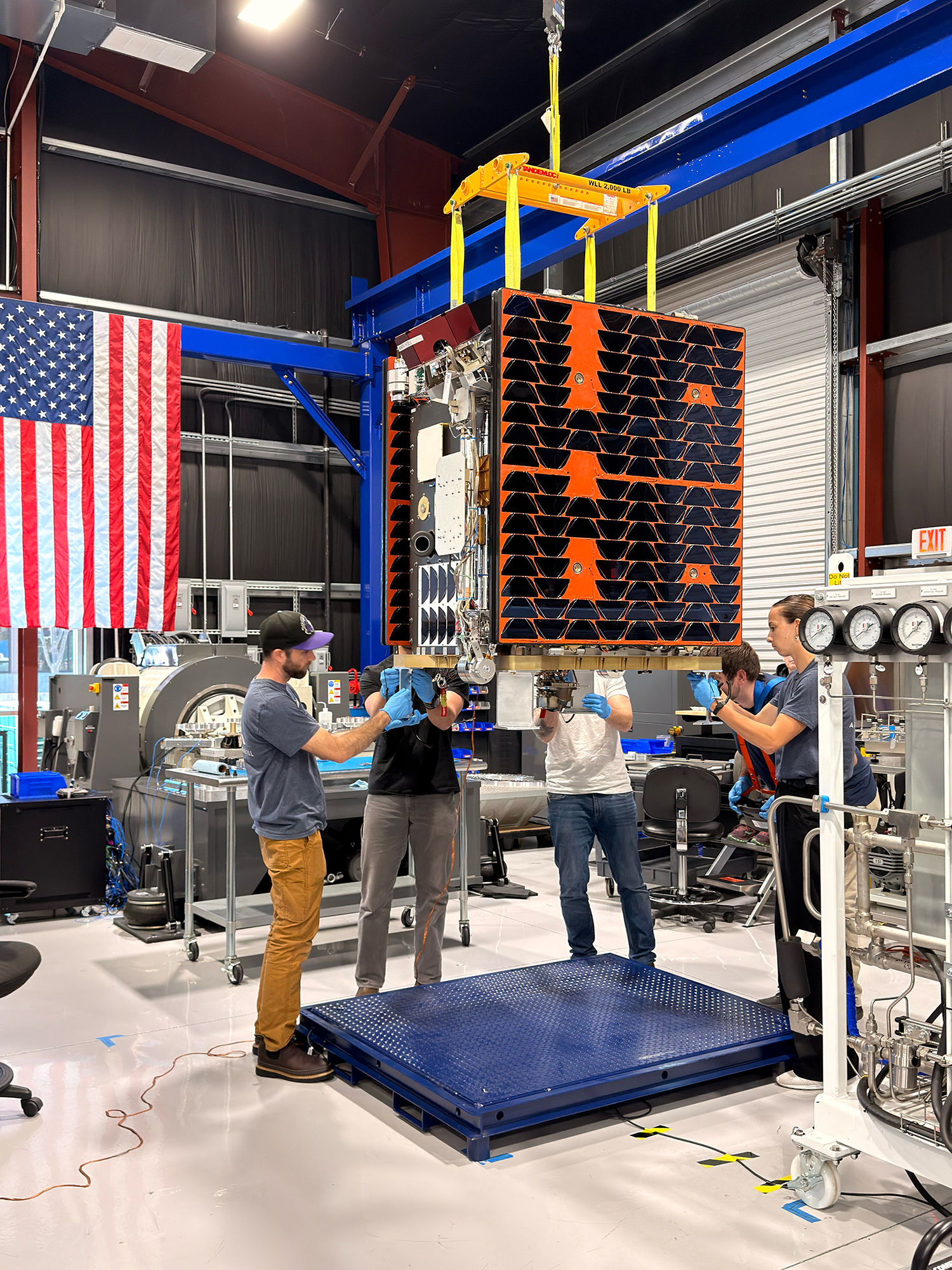
During the SSPICY mission, the Otter spacecraft won’t touch or dock with any satellites, but will test the technologies needed to one day enable missions to service or repair objects in orbit, or to safely remove them by pulling them into Earth’s atmosphere for disposal.
Space objects like rocket bodies and satellites that are experiencing issues or no longer in service can break apart or collide with one another, creating varying forms of orbital debris from large fragments to small particles. With thousands of satellites launched each year to provide communications, weather forecasting, navigation, and other services that people rely on daily, keeping the space near Earth safe for operations is increasingly critical.
Starfish Space developed and operates the Otter 24C spacecraft, which is performing the SSPICY mission. NASA’s Small Spacecraft and Distributed Systems program within the agency’s Research and Technology Mission Directorate funds and manages the technology demonstration.
NASA’s Small Business Innovation Research / Small Business Technology Transfer program funded awards to Starfish Space to support early development of the spacecraft’s key technologies and capabilities.
Share
Details
Related Terms




Crew-12 Returns to Earth
2026-10-08 18:52

The SpaceX Crew Dragon Freedom spacecraft is seen moments before splashing down in the Pacific Ocean off the coast of California in this Oct. 8, 2026, photograph. Aboard were NASA’s SpaceX Crew-12 members NASA astronauts Jessica Meir and Jack Hathaway, ESA (European Space Agency) astronaut Sophie Adenot, and Roscosmos cosmonaut Andrey Fedyaev. The four spent nearly eight months aboard the International Space Station.
See more photos from splashdown.
Image credit: NASA/Keegan Barber
NASA’s SPHEREx Telescope Sees Menagerie of Brown Dwarfs
2026-10-08 18:22
5 min read
Preparations for Next Moonwalk Simulations Underway (and Underwater)

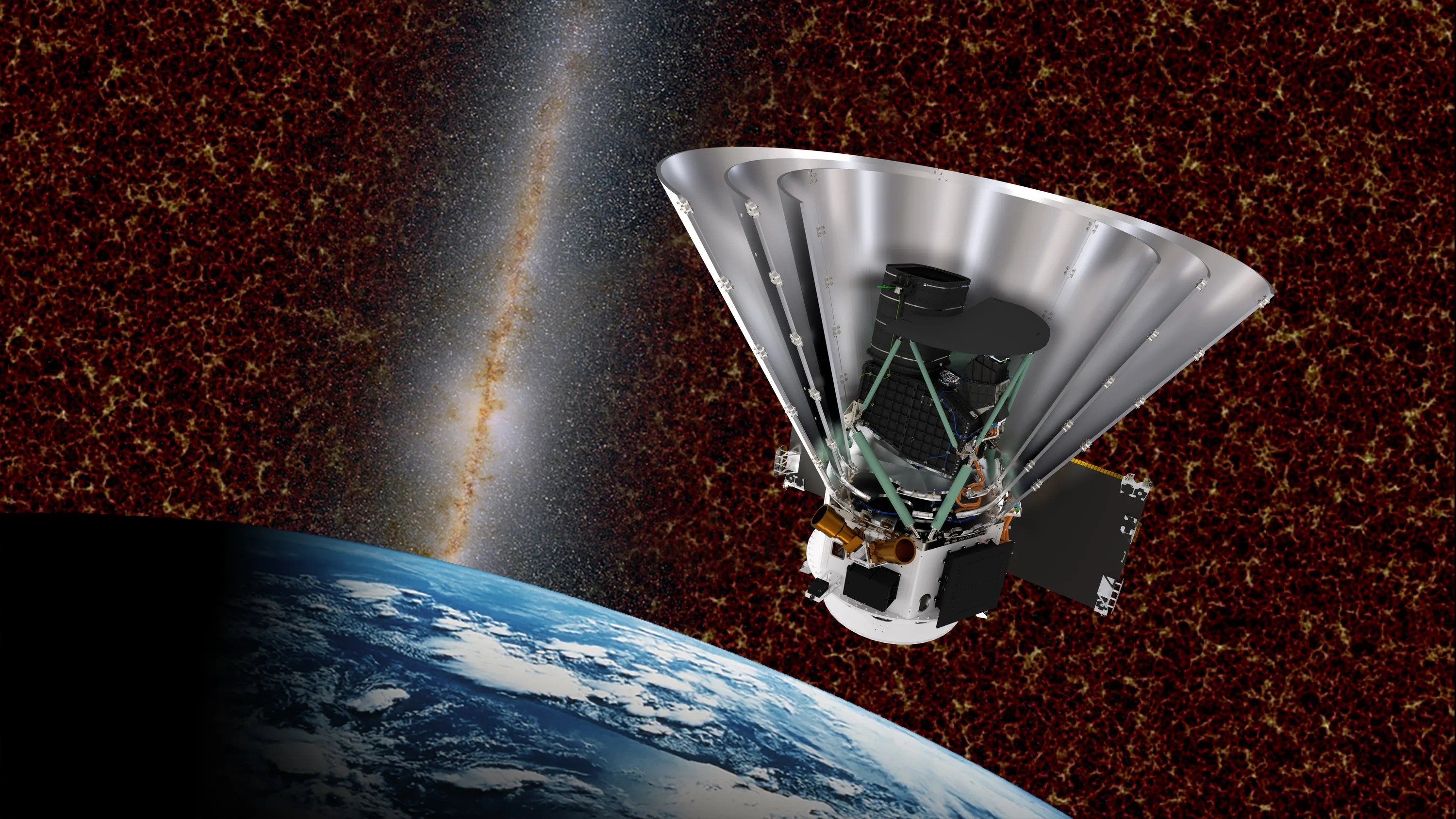
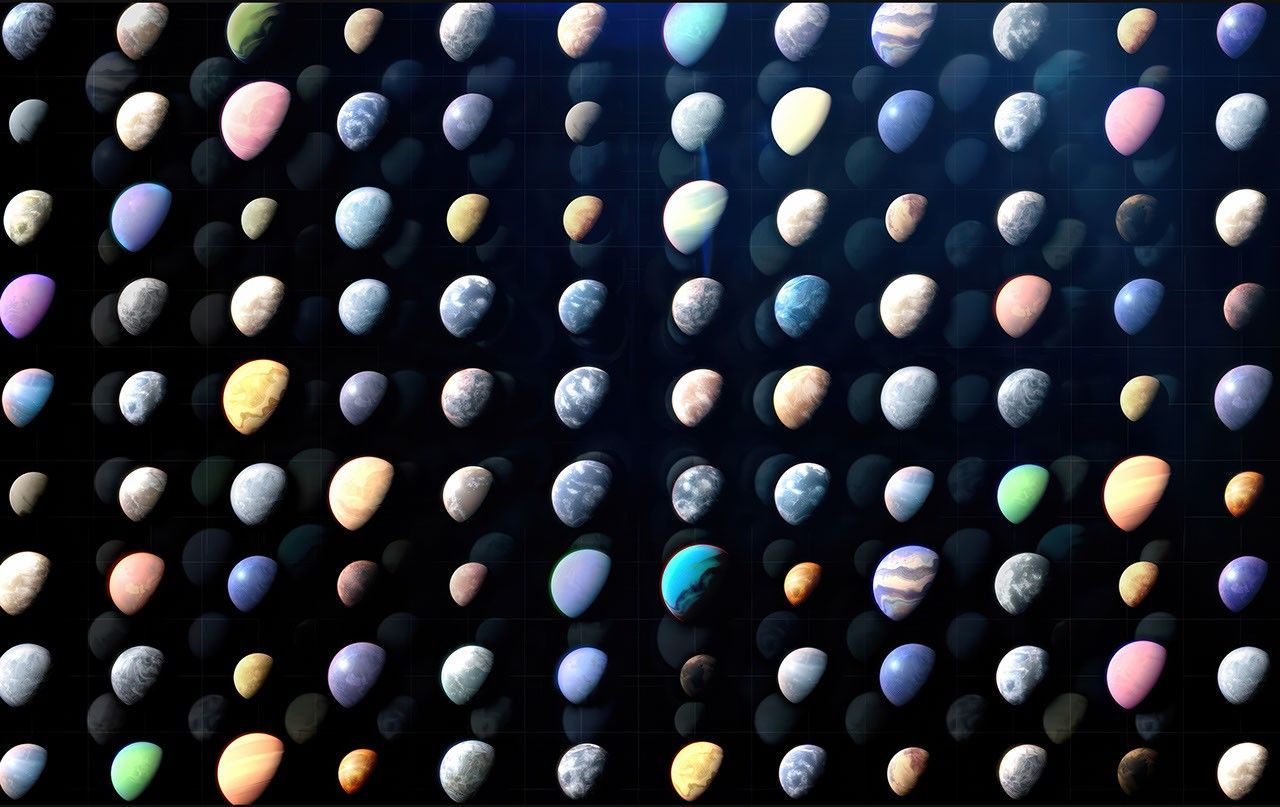
NASA’s SPHEREx (Spectro-Photometer for the History of the Universe, Epoch of Reionization, and Ices Explorer) space telescope is shedding light on brown dwarfs, celestial objects that blur the line between stars and exoplanets. New findings published in The Astrophysical Journal show that these dark and cloudy worlds have chemically rich atmospheres not unlike the giant planets in our own solar system.
First discovered in the 1990s, brown dwarfs form from collapsing clouds of gas, like stars do, but they aren’t hefty enough to sustain hydrogen fusion in their cores. These dimly glowing balls of warm gas also share characteristics with Jupiter and Saturn. In contrast to most planets, however, brown dwarfs drift in darkness, ungoverned by a host star and heated entirely from within.
“They’re kind of goth,” said Zafar Rustamkulov, lead author of the new study and a scientist at IPAC, Caltech’s science and data center in Pasadena, California. “Unlike exoplanets, free-floating brown dwarfs are completely independent celestial objects that will fade into eternity alone. We’re still learning how complex they are.”

Only a few dozen of these “dark wanderers” have been studied in detail with space-based telescopes. Astronomers want to observe more of them in the wild because much of our understanding of their makeup, storminess, and evolution comes from theoretical models.
Enter NASA’s SPHEREx, an infrared space telescope launched in March 2025 and managed by the agency’s Jet Propulsion Laboratory in Southern California.
The study authors analyzed SPHEREx observations of 37 nearby brown dwarfs spanning the full brown dwarf temperature range, from about 4,000 to minus 10 degrees Fahrenheit (2,200 to minus 20 degrees Celsius). The telescope measures their brightness in 102 different colors, from the deepest red our eyes can see, to the invisible heat of infrared light, creating a spectrum. These spectra revealed to the study authors chemically rich atmospheres harboring water, carbon dioxide, carbon monoxide, and methane.
“We’re seeing the signatures of these molecules and how they change from object to object across the entire temperature regime,” said study coauthor J. Davy Kirkpatrick, a scientist at Caltech’s IPAC. “Our paper concentrated on just three dozen, but we have thousands more that we are in the process of analyzing. I really want to see what bounds the universe places on the variety of brown dwarfs.”
“From orbit, SPHEREx sees wavelengths of light that are basically impossible to see with telescopes on the ground because water in Earth’s atmosphere absorbs them,” Rustamkulov said. “We are picking up light from the deep, red clouds of brown dwarfs all over the sky.”
Sweet spot
Spotting brown dwarfs is something of a side project for SPHEREx. The space telescope takes about 3,600 unique images per day to stitch into maps of the entire sky. Knowing where hundreds of millions of galaxies are distributed across the cosmos will help scientists reconstruct what happened in the first billionth of a trillionth of a trillionth of a second after the big bang. As it scans the sky, the telescope also is searching for the chemical ingredients of life and finding interstellar ice that could one day seed oceans on distant worlds.
For years, brown dwarfs have been spotted by other observatories, including NASA’s James Webb Space Telescope and retired Spitzer Space Telescope. But thanks to its spectral coverage, SPHEREx is now imaging thousands of them for the first time in a fruitful region of the electromagnetic spectrum that spans deep red and infrared wavelengths of light.

At those wavelengths, molecules carve out distinct absorption patterns in the light shining out to space. The patterns change as brown dwarfs grow older and colder. Some of the brown dwarfs observed by SPHEREx are in a dynamic stage of life when their exotic clouds thin out, giving way to methane-rich atmospheres.
“The state-of-the-art models are capturing the general chemical trend, but when it comes to these cloudy transitions, the models are struggling to match the data,” said Rustamkulov. “No two brown dwarfs are alike. Even at the same temperature, their spectra look quite distinct.”
“The findings are a call to action to explore even more of these dark worlds,” said Kirkpatrick. “This journey has turned many of us into accidental meteorologists. We know how hard it is to predict weather on our own planet, and we realize it’s going to be just as challenging to explain the phenomena we see in these bizarre, cold objects.”
More about SPHEREx
The mission is managed by JPL for NASA’s Astrophysics Division within the Science Mission Directorate in Washington. The telescope and the spacecraft bus were built by BAE Systems. The science analysis of the SPHEREx data is being conducted by a team of scientists at 13 institutions across the United States and in South Korea and Taiwan, led by Jamie Bock, principal investigator, who is based at Caltech with a joint JPL appointment, and by JPL’s Olivier Doré, the project scientist. Data is processed and archived at IPAC at Caltech in Pasadena. Caltech manages JPL for NASA. The SPHEREx dataset is freely available to scientists and the public.
For more information about the SPHEREx mission visit:
https://science.nasa.gov/mission/spherex/
-end-
Media Contact
Calla Cofield
Jet Propulsion Laboratory, Pasadena, Calif.
626-808-2469
calla.e.cofield@jpl.nasa.gov
Written by Sally Younger
2026-069
Share
Details
Related Terms


TechCrunch - Latest
President Trump awards Big Tech donors with nation’s highest science prizes
2026-10-08 22:33
Pretend you’re sitting at Elizabeth Holmes’ desk on this weirdly detailed website
2026-10-08 21:00
Fired OpenAI safety researchers dispute misconduct claims, warn of chilling effect
2026-10-08 20:04
Watch the trailer for ‘The Altruists,’ Netflix’s show about the FTX scandal
2026-10-08 18:30
Ben Affleck is an AI nerd, and the internet is impressed
2026-10-08 18:20


