📰 Trending Topics
Google News - Trending
Trending on KALB.com 10-06-26 - KALB | News Channel 5
2026-10-06 17:20
Trending: Stolen police car & hero 10-year-old - FOX 5 Atlanta
2026-10-06 18:10
Google News - Technology
Amazon Prime Big Deal Days Offers Major Discounts on AirPods, iPads, and Much More - MacRumors
2026-10-06 18:06
- Amazon Prime Big Deal Days Offers Major Discounts on AirPods, iPads, and Much More MacRumors
- 34+ Amazon Prime Day tech deals: Save over 50% on top products from Apple, Sony, Bose and more NBC News
- Apple’s new M6 Mac Mini is over $100 off The Verge
- The MacBook Air Is $200 Off During Prime Day, the Cheapest It’s Been Since June WIRED
- All of the best fall Prime Day deals now live: AirPods, Mac mini, MacBook, chargers, cases, more 9to5Mac
Today's biggest TV deal? $2,000 off a 100-inch Hisense TV (yes, really) - USA Today
2026-10-06 11:43
- Today's biggest TV deal? $2,000 off a 100-inch Hisense TV (yes, really) USA Today
- At $2,000 off, this TV could be the best deal of Amazon Prime Day — but should you buy it? Yahoo Tech
- Don’t Miss These 25+ October Prime Day TV Deals Chosen by Our Pixel-Peeping Experts CNET
- All Hisense U7 QLED TVs Are 50% Off for October Prime Day 2026 Lifehacker
- I test the best TVs and soundbars. Here are the 16 best Amazon Prime Day TV deals CNN
Powerhouse Galaxy Z Fold 8 Ultra plummets to a new record low price for October Prime Day - PhoneArena
2026-10-06 15:31
- Powerhouse Galaxy Z Fold 8 Ultra plummets to a new record low price for October Prime Day PhoneArena
- Samsung’s Z Fold 8 is hundreds off ahead of iPhone Duo launch The Verge
- Forget the iPhone Duo, Samsung's Galaxy Z Fold8 Foldable Is Being Dumped Before Apple's Even Ships Kotaku
- Samsung Goes All-In on Galaxy Z Fold8, Throwing Margins Out the Window With a Record-Low Prime Day Deal Gizmodo
- Galaxy Z Fold 8 is $1,549 right now, its lowest price ever 9to5Google
Star Wars: Galactic Racer launches on Amazon Luna as part of Prime subscription - GamesIndustry.biz
2026-10-06 09:12
- Star Wars: Galactic Racer launches on Amazon Luna as part of Prime subscription GamesIndustry.biz
- Review: Star Wars: Galactic Racer - A Top-Flight Arcade Racing Game with Incredible Graphics Tech Digital Foundry
- Star Wars: Galactic Racer is totally free to claim on PC day one, no download needed GAMINGbible
- The best Star Wars game of the year is now free on Amazon Prime Polygon.com
- Star Wars: Galactic Racer Review: Very Fast, Very Dangerous, And Very Good Game Informer
NASA - Breaking News
NASA to Cover Northrop Grumman CRS-24 Spacecraft Departure
2026-10-06 18:31
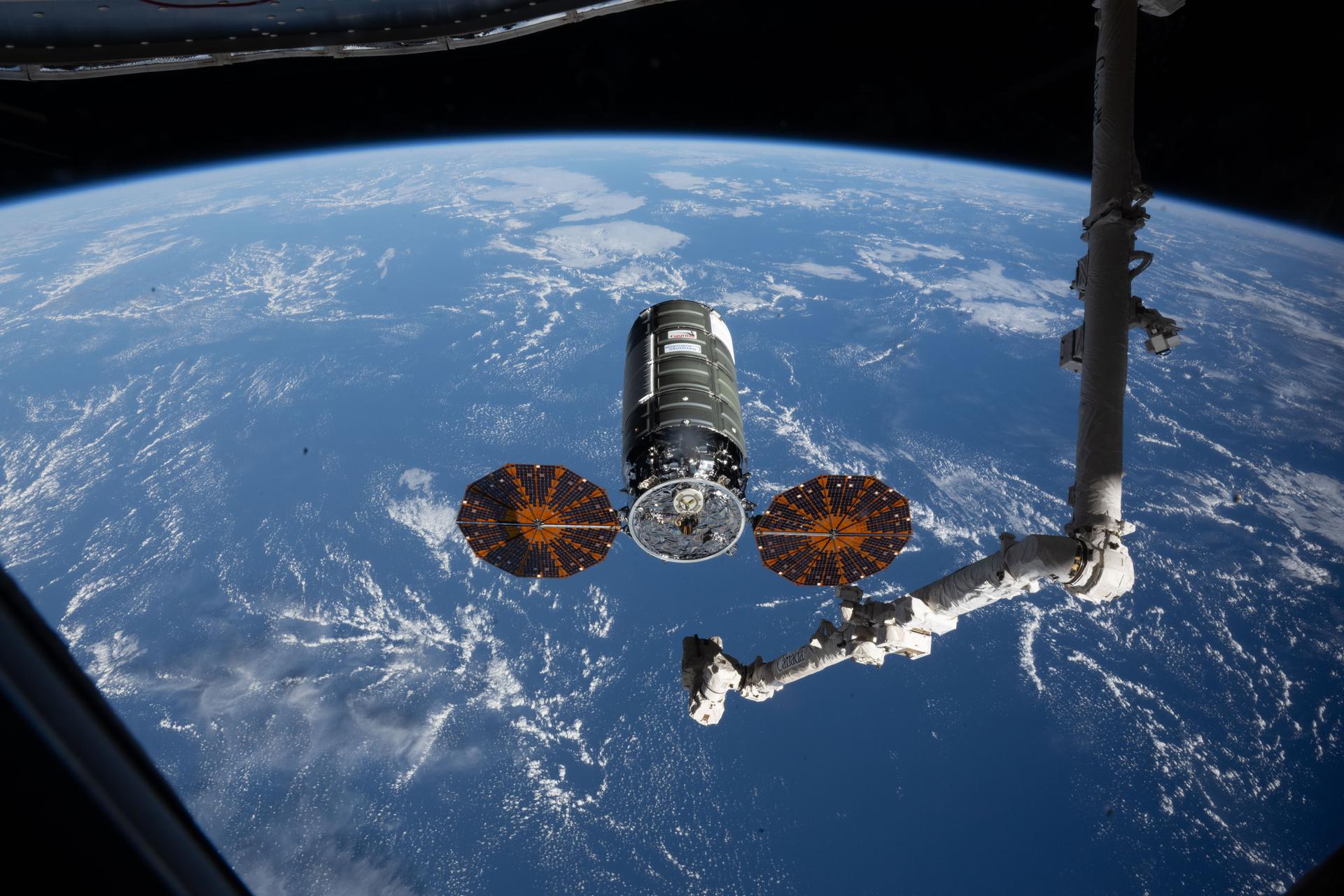
After delivering more than 11,000 pounds of supplies, science experiments, and other cargo to the International Space Station for NASA, Northrop Grumman’s Cygnus XL spacecraft is scheduled to depart Friday, Oct. 9, as part of the company’s Commercial Resupply Services-24 mission, or Northrop Grumman CRS-24.
Watch NASA’s live coverage of undocking and departure beginning at 12:30 p.m. EDT through a variety of platforms. Learn where to watch online:
Flight controllers on the ground will send commands for the space station’s Canadarm2 robotic arm to detach the Cygnus XL spacecraft from the Unity module’s Earth-facing port and maneuver it into position for release at 12:45 p.m. NASA astronaut Luke Delaney will monitor the operation from aboard the orbital complex.
Loaded with thousands of pounds of disposal items and other unneeded cargo, Cygnus XL will deorbit Sunday, Oct. 11, for a destructive re-entry into Earth’s atmosphere, where it will safely burn up. NASA will not provide coverage of the spacecraft’s deorbit.
The resupply spacecraft launched on April 11 on a SpaceX Falcon 9 rocket from Space Launch Complex 40 at Cape Canaveral Space Force Station in Florida.
Learn more about this NASA commercial resupply mission at:
https://www.nasa.gov/mission/nasas-northrop-grumman-crs-24/
-end-
Josh Finch / Jimi Russell
Headquarters, Washington
202-358-1100
joshua.a.finch@nasa.gov / james.j.russell@nasa.gov
Sandra Jones
Johnson Space Center, Houston
281-483-5111
sandra.p.jones@nasa.gov
October 2026 Satellite Puzzler
2026-10-06 18:27
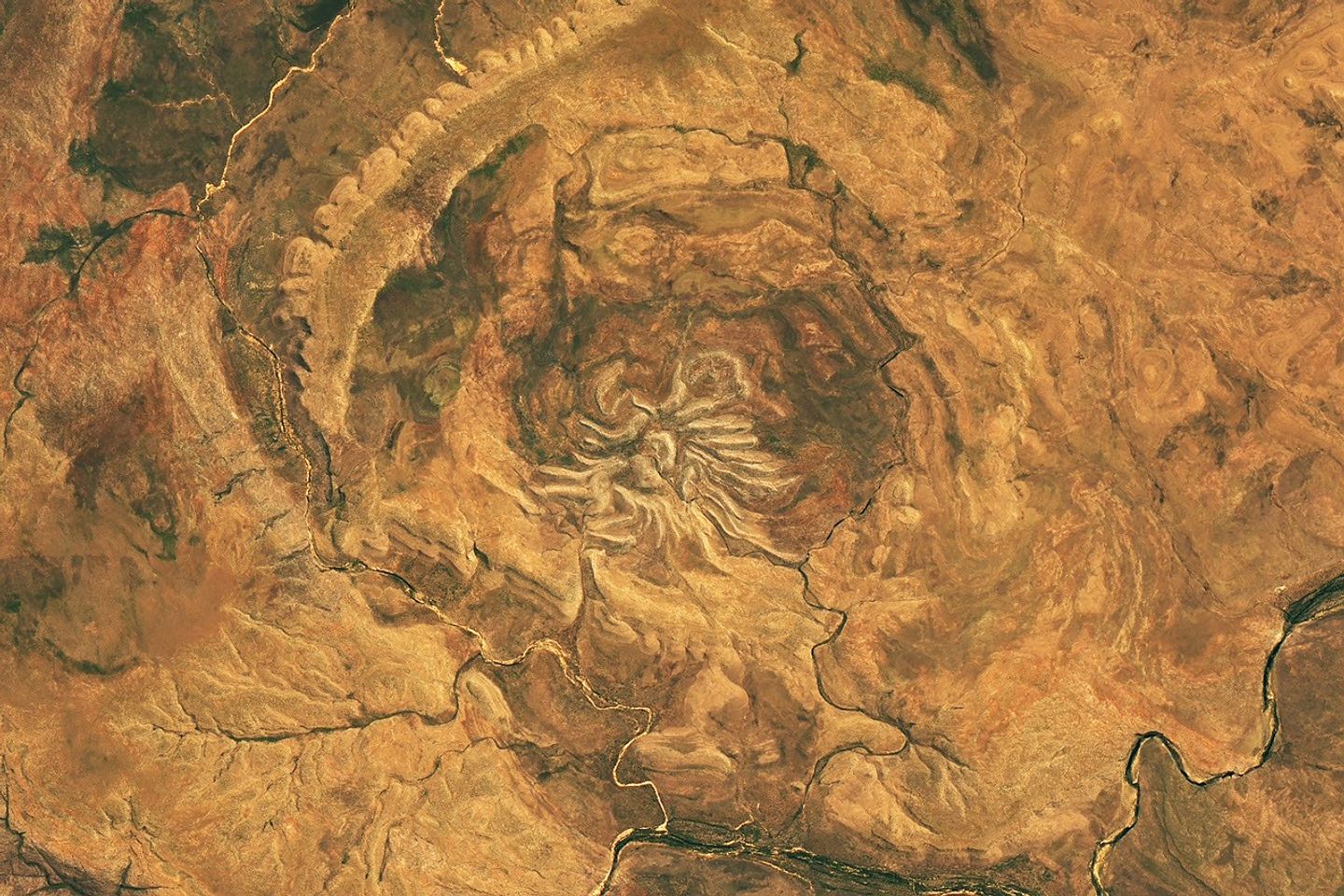
Every month, NASA Earth Observatory features a puzzling satellite image. The October 2026 puzzler appears above.
Your Challenge
Identify the location shown in this satellite image. Share what clues you see, where you think it is, and what makes this place interesting or unique to you.
How to Answer
Submit your response using this form and select “Puzzler Answer” as the topic. Please include your preferred name or alias.
You can keep it simple and just guess the location. Want to impress us? Tell us which satellite and instrument captured the image, which spectral bands were used, or point out a subtle detail about the geology or history of the area. If something catches your eye, or if this is your home or means something to you, we’d love to hear about it.
The Prize
We can’t offer prize money or a trip to space to see Earth like satellites and astronauts do. But we can offer something almost as rewarding: puzzler bragging rights.
About a week after the challenge, we’ll post the answer at the top of this page, along with a link to an Earth Observatory Image of the Day story that explains the image in more detail. We’ll recognize the first person who correctly guesses the location, and we may also highlight readers who share especially thoughtful or interesting answers. By submitting a response, you acknowledge that your comments may be edited, excerpted, and published on this page.
Until then, zoom in, look closely, and enjoy the challenge. See you at the reveal!
Lunar Grounding Challenge
2026-10-06 18:22
2 min read
Preparations for Next Moonwalk Simulations Underway (and Underwater)
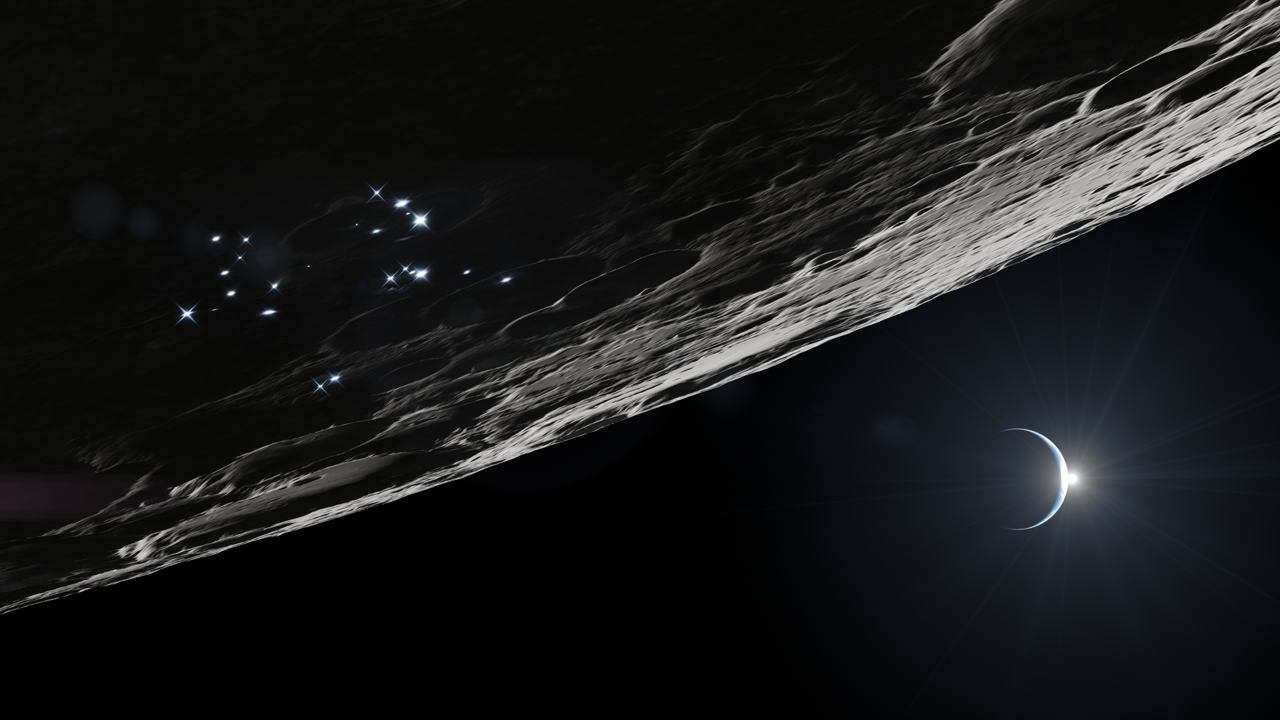
As an astronaut traverses the lunar South Pole, tribocharging from walking on the lunar surface and plasma charging from the ambient plasma generate electric charge on the spacesuit. This problem is severely compounded when entering lunar shadows and Permanently Shadowed Regions (PSRs). In these dark zones, the spacesuit can buildup a substantial negative potential due to a lack of ambient ion flux and the absence of photoelectron emission to balance ambient electron collection.
The risk occurs when an astronaut returns to the spacecraft. Because the lunar surface lacks a natural environmental mechanism to bleed the charge accumulated on spacesuit away, the astronaut may become a walking, high voltage capacitor.
In the sunlit region, the stationary lander will hold slightly positive electrical potential. When a highly negatively-charged astronaut approaches the vehicle, the extreme voltage differential can trigger electrostatic discharge (an instantaneous electrical arc, or a spark) during physical contact. A rapid discharge from the astronaut to the lander risks degrading vital suit layers, damaging sensitive suit electronics, threatening the oxygen-rich environment inside the suit, and delivering dangerous electrical shocks to the crew.
Through the Lunar Grounding Challenge, NASA is seeking innovative designs and operational solutions to provide a lunar bringing to equilibrium capability to safely discharge a suited astronaut from high triboelectric charge buildup during lunar surface EVAs in the South Pole. This challenge seeks innovative concepts for an Electrostatic Discharge (ESD) mitigation solution to neutralize the astronaut in a safe and timely manner under this extreme charge differential before astronauts directly interact with the lander.
Award: Up to $150,000 in prizes
Challenge Open Date: October 5, 2026
Submissions Close Date: January 15, 2027
For more information, visit: https://work.crowdplat.com/challenge/lunar-grounding-challenge
NASA Glenn Invites Phase 1 Proposals for Aerospace Power Systems Laboratory
2026-10-06 17:55
NASA’s Glenn Research Center in Cleveland is seeking Phase 1 proposals for the design and construction of the Aerospace Power Systems Laboratory. The principal purpose of this procurement is to deliver a laboratory facility to support the testing and development of power systems, with associated site work, infrastructure, and systems.
The laboratory will provide modern test facilities to advance power research and enable NASA to meet current and future mission needs. Glenn’s expertise in power is crucial to the Artemis program, the Moon Base, and the exploration of Mars and beyond.
Proposals submitted in response to this solicitation are due no later than Oct. 30, 2026, at 1 p.m. EST.
NASA will conduct this acquisition as a full and open competition. The North American Industry Classification System (NAICS) code for this acquisition is 236220, and the small business size standard of $45 million.
The anticipated contract award date is Dec. 16, 2026. The contract will be performed on-site at NASA Glenn and off-site at the contractor’s facilities.
Proposals for this solicitation are required to be submitted through NASA’s Enterprise File Sharing and Sync Box (EFSS Box), a FedRAMP Moderate certified platform.
All questions regarding this request should be submitted electronically, in writing, to John Christel, contracting officer, at john.a.christel@nasa.gov on or before Oct. 12, 2026. Offerors are encouraged to submit questions as soon as possible for consideration.
For more information about NASA and agency programs, visit:
-end-
Kristen Parker
Glenn Research Center, Cleveland
216-990-4386
kristen.m.parker@nasa.gov
Astronomers Solve Cosmic Cold Case with NASA Hubble Data
2026-10-06 16:09
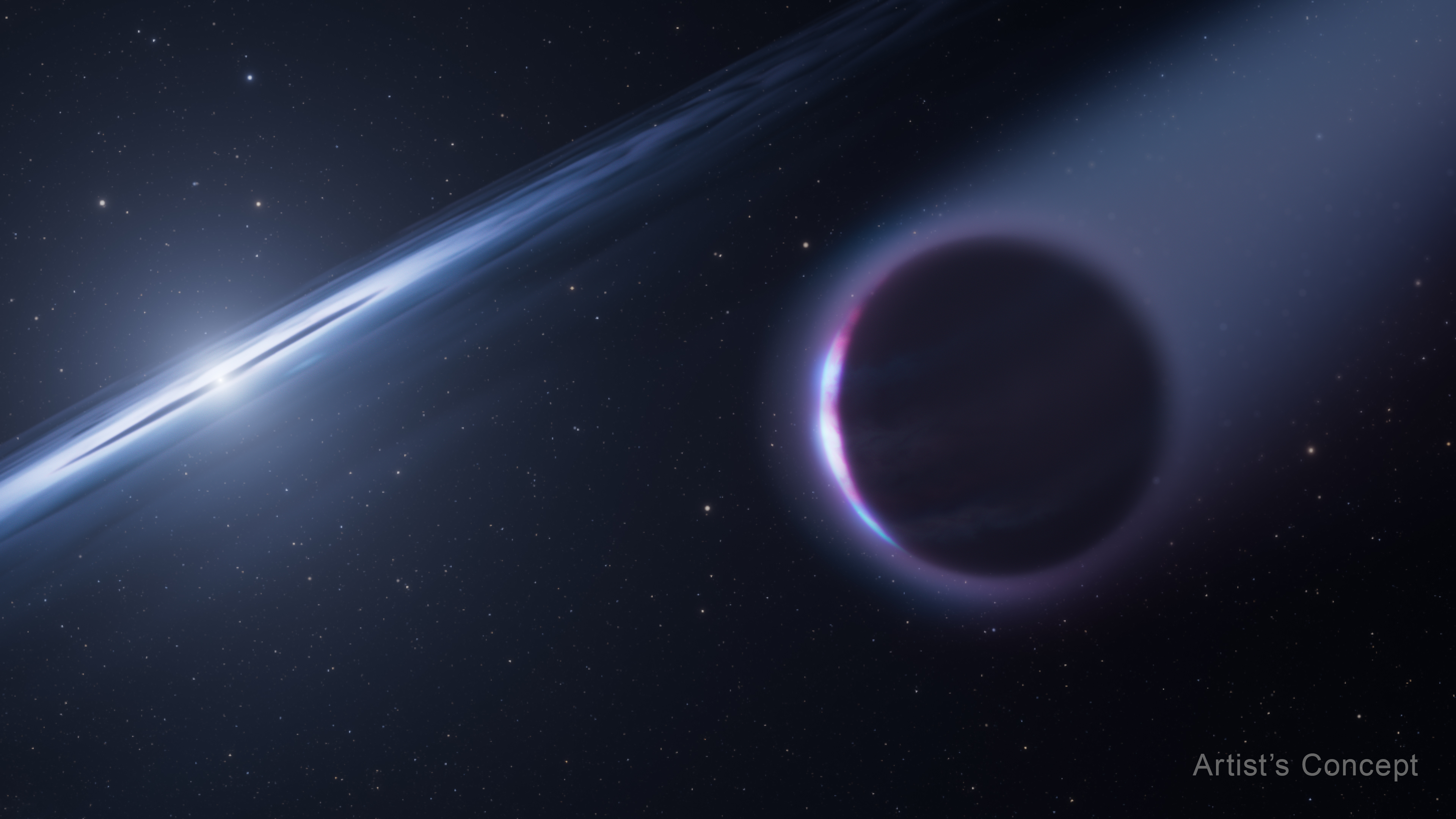
Diligent sleuthing by astronomers uncovered a surprising chemical clue that indicates the white dwarf star HS 0209+0832 may host a second-generation planet. This artist’s concept released on Oct. 5, 2026, depicts that possible explanation.
The white dwarf is the “dead” core of a star that burned through all of its nuclear fuel and lost its outer envelope of gas and dust to space. The second-generation planet formed from that cast-off gas and dust, which is why its chemical content is very different from a planet that formed as its host star was forming.
Learn more about this scientific discovery.
Image credit: NASA, ESA, Leah Hustak (STScI)
TechCrunch - Latest
Hark releases an AI personal assistant with a focus on privacy
2026-10-06 18:22
India’s JioHotstar takes partnership route for Middle East expansion
2026-10-06 17:14
Mirror Particle is building a ‘world model’ of human behavior
2026-10-06 16:35
Furientis lands $25M from Benchmark to mass-produce low-cost missile interceptors
2026-10-06 16:29
Learn all about scaling, fundraising, founder how-tos, and more at TechCrunch Founder Summit, November 4
2026-10-06 16:18