dernier Landing Page

dernier News Guide

Get updated News about latest trends, and more Get updated News about latest trends and updates products
dernier Service
>

Dernier Trends Updates

This website uses cookies to ensure you get the best experience on our website. By clicking "Accept", you agree to our use of cookies. Learn more

Trending Topics

📰 Trending Topics

Google News - Trending

Google News - Technology

NASA - Breaking News

A Fresh Look at the Crab Nebula

2026-04-21 15:30

Colorful nebula in space with a white haze throughout that is more concentrated in the center with a rippling effect. Colorful gas filaments appear to splash outward from the nebula center, colored yellow, magenta, and blue. A faint black border with right angles at the corners of the images show where the telescope’s field of view stops. Small white stars dot the background.
This image that NASA’s Hubble Space Telescope captured of the Crab Nebula, paired with its past observations and those of other telescopes, allows astronomers to study how the supernova remnant is expanding and evolving over time.
NASA, ESA, STScI, William Blair (JHU); Image Processing: Joseph DePasquale (STScI)

This observation from NASA’s Hubble Space Telescope, released on March 23, 2026, gives an unparalleled, detailed look at the aftermath of a supernova and how it has evolved over the telescope’s long lifetime.

Hubble captured the nebula’s intricate filamentary structure, as well as the considerable outward movement of those filaments over 25 years, at a pace of 3.4 million miles per hour.

Learn more about the Crab Nebula.

Image credit: NASA, ESA, STScI, William Blair (JHU); Image Processing: Joseph DePasquale (STScI)

NASA’s Curiosity Finds Organic Molecules Never Seen Before on Mars

2026-04-21 15:00

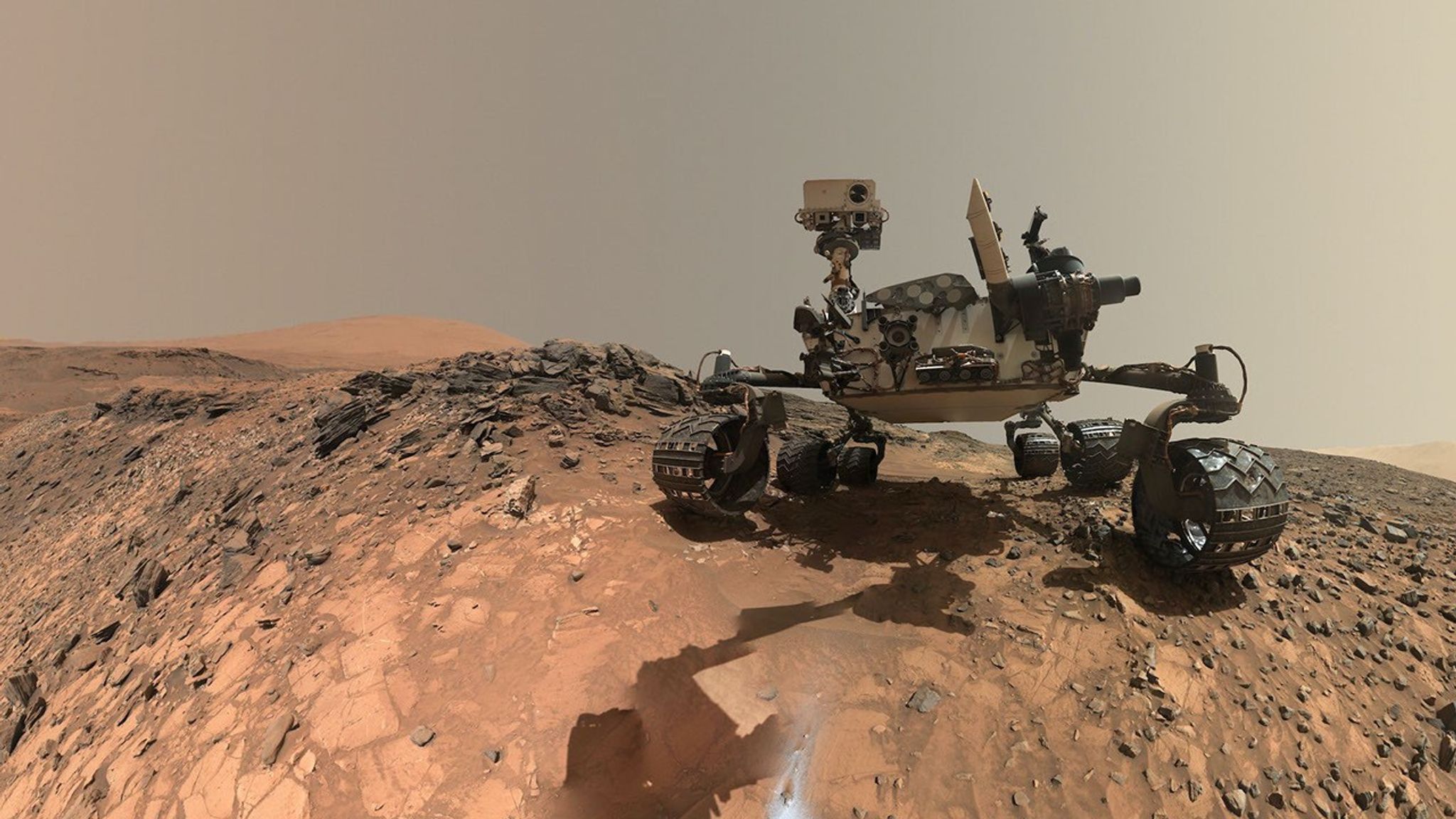
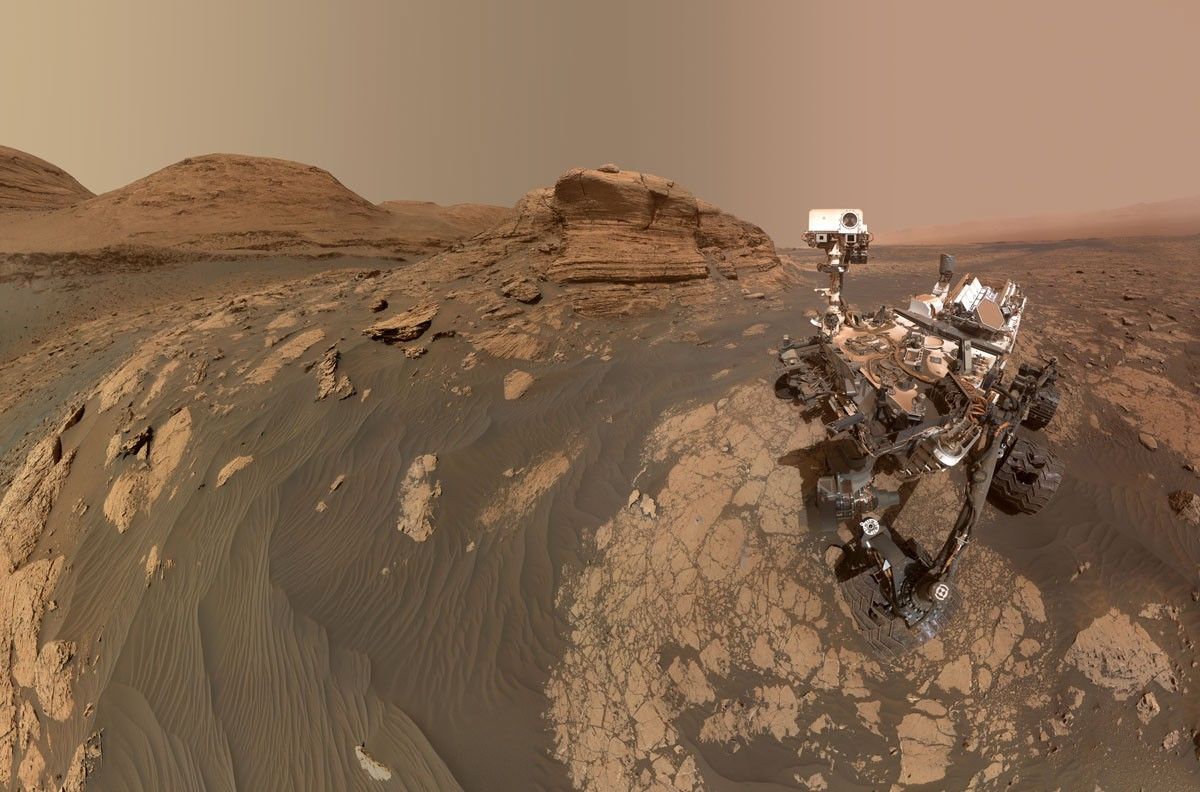
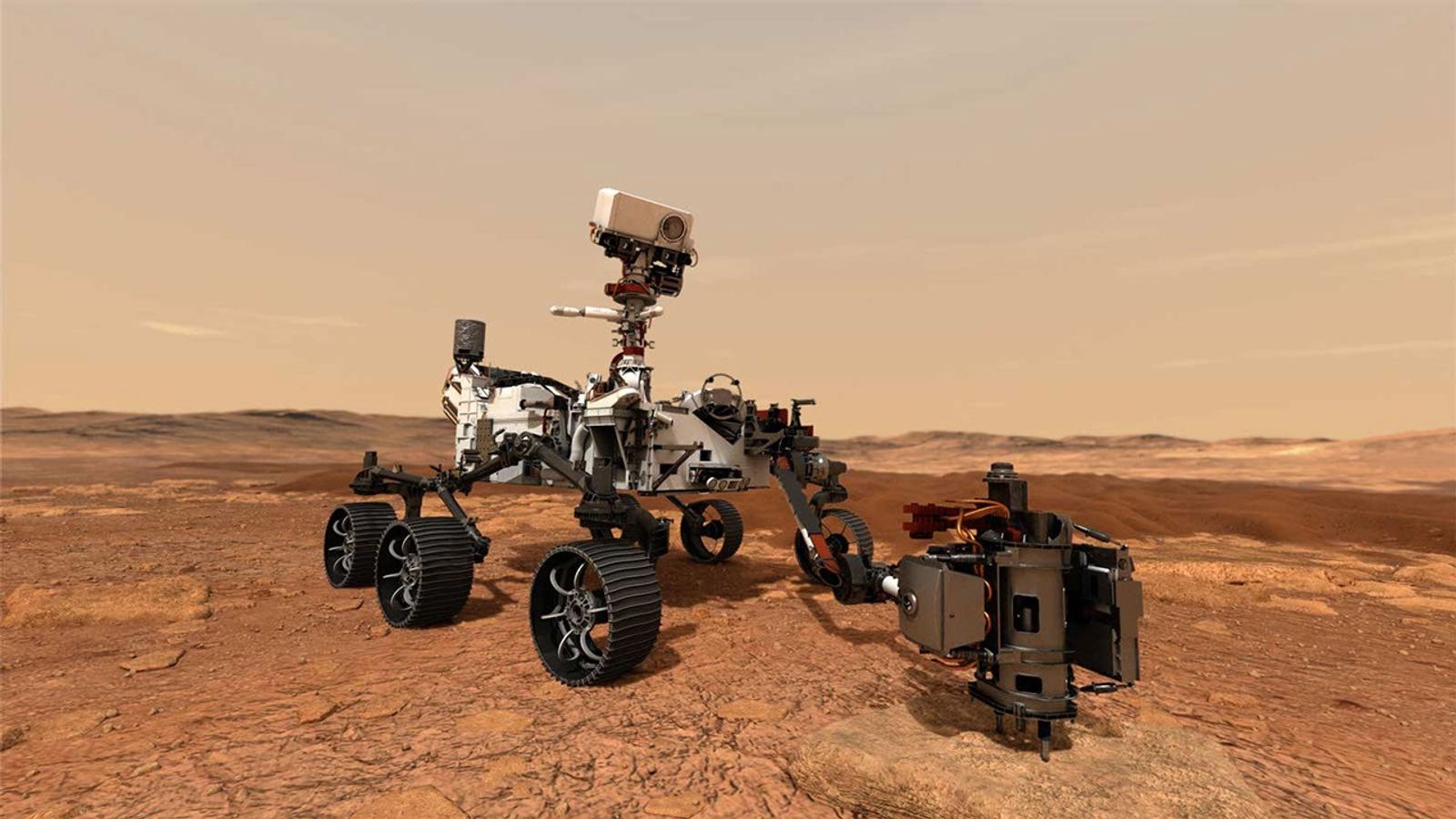
The six-wheeled Curiosity rover is positioned in the right side of the frame on a rugged, rock-strewn, brownish-red Martian plain. The rover’s articulated robotic arm and camera mast are raised. Distant hills and a hazy, dusty orange-brown sky are in the background.
NASA’s Curiosity Mars rover took this selfie on Oct. 25, 2020, after drilling a rock sample from a spot nicknamed “Mary Anning.” After years of extensive analysis, the sample has revealed the greatest diversity of organic molecules ever found on Mars.
NASA/JPL-Caltech/MSSS

After years of lab work, the results are in: A rock that NASA’s Curiosity Mars rover drilled and analyzed in 2020 includes the most diverse collection of organic molecules ever found on the Red Planet. Of the 21 carbon-containing molecules identified in the sample, seven of them were detected for the first time on Mars.

Scientists have no way of knowing whether these organic molecules were created by biologic or geologic processes — either path is possible — but their discovery renewed confirmation that ancient Mars had the right chemistry to support life. What’s more, the molecules join a growing list of compounds known to be preserved in rocks even after billions of years of exposure on Mars to radiation, which can break down these molecules over time.

The findings are detailed in a new paper published Tuesday in Nature Communications.

A vast, desolate Martian landscape features wind-swept sand ripples under a hazy salmon sky, with jagged rock formations in the foreground and rolling reddish-brown hills in the background.
Curiosity’s Mastcam captured this mosaic on Feb. 3, 2019, of a region on Mount Sharp with lots of clay-bearing rocks that formed when lakes and streams were present billions of years ago. The “Mary Anning 3” sample was found in this clay-enriched region.
NASA/JPL-Caltech/MSSS

The rock sample, nicknamed “Mary Anning 3” after an English fossil collector and paleontologist, was collected on a part of Mount Sharp covered by lakes and streams billions of years ago. This oasis surged and dried up multiple times in the planet’s ancient past, eventually enriching the area with clay minerals, which are especially good at preserving organic compounds — carbon-containing molecules that are the building blocks of life and are found throughout the solar system.

Among the newly identified molecules is a nitrogen heterocycle, a ring of carbon atoms that includes nitrogen. This kind of molecular structure is considered a predecessor to RNA and DNA, two nucleic acids that are key to genetic information.

“That detection is pretty profound because these structures can be chemical precursors to more complex nitrogen-bearing molecules,” said the paper’s lead author, Amy Williams of the University of Florida in Gainesville. “Nitrogen heterorcycles have never been found before on the Martian surface or confirmed in Martian meteorites.”

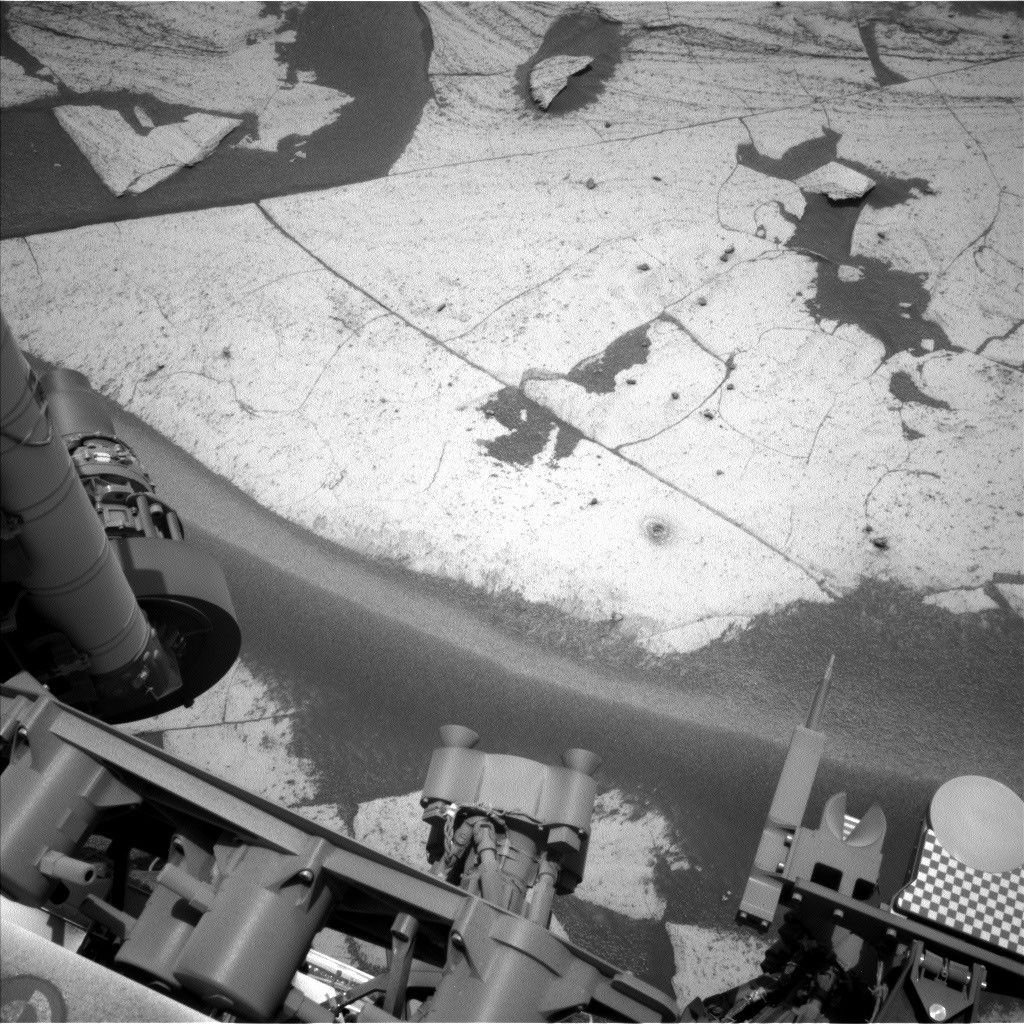
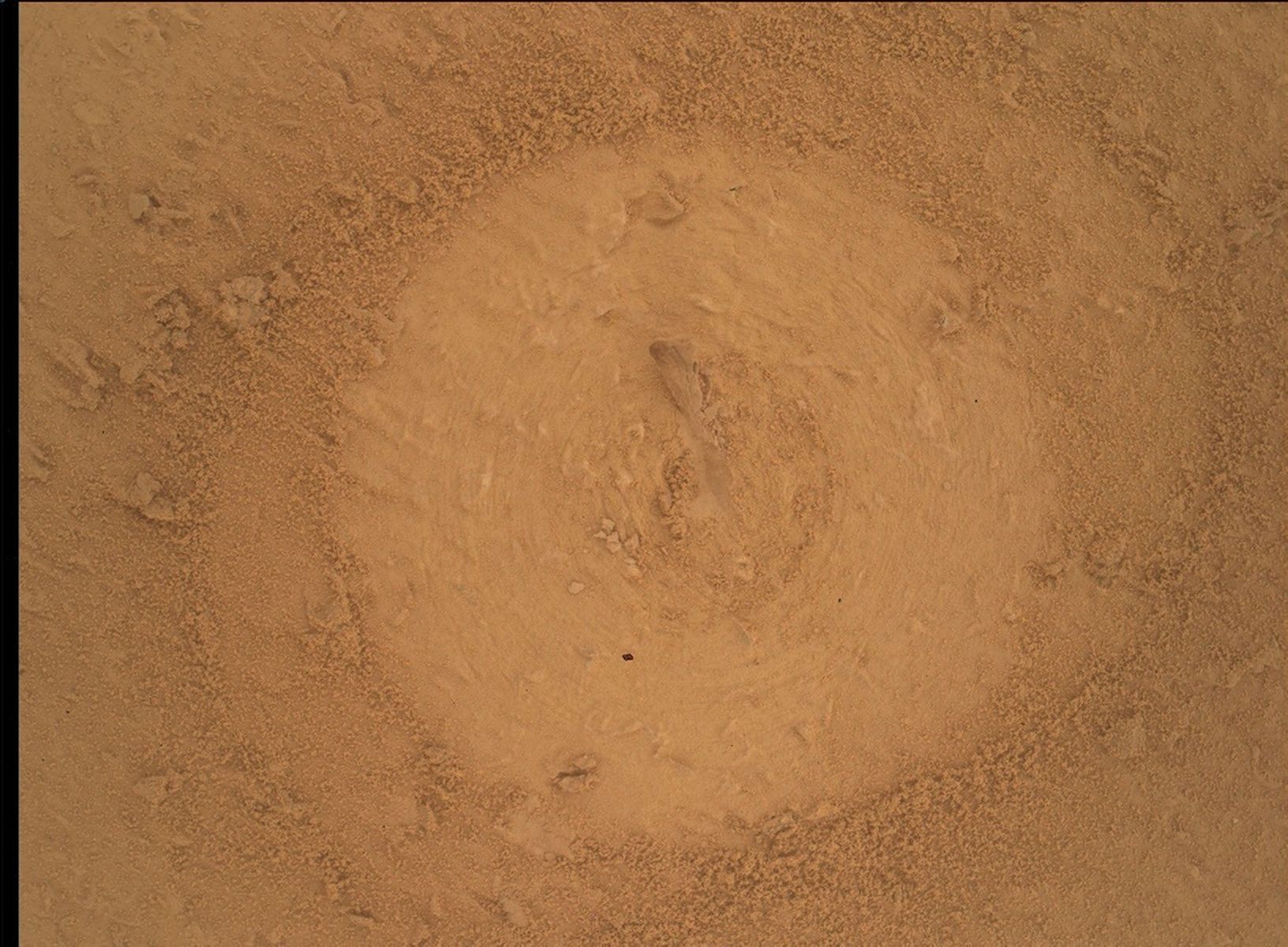
A downward view shows the Curiosity rover’s robotic arm over a flat, cracked, brown Martian rock. Yellow arrows and text indicate three distinct circular holes in the rock — “Groken,” “Mary Anning,” and “Mary Anning 3” — made by the rover’s drill.
This is an annotated close-up of three holes NASA’s Curiosity drilled into Martian rock at a location nicknamed “Mary Anning” in October 2020. The sample where the rover found a diverse number of organic molecules came from “Mary Anning 3.” (A nearby spot nicknamed “Mary Anning 2” went unused.)
NASA/JPL-Caltech/MSSS

Another exciting discovery was benzothiophene, a carbon- and sulfur-bearing molecule that’s been found in many meteorites. These meteorites, along with the organic molecules within them, are thought by some scientists to have seeded prebiotic chemistry across the early solar system.

Martian chemistry

The new paper complements last year’s finding of the largest organic molecules ever discovered on Mars: long-chain hydrocarbons, including decane, undecane, and dodecane.

“This is Curiosity and our team at their best. It took dozens of scientists and engineers to locate this site, drill the sample, and make these discoveries with our awesome robot,” said the mission’s project scientist, Ashwin Vasavada of NASA’s Jet Propulsion Laboratory in Southern California. “This collection of organic molecules once again increases the prospect that Mars offered a home for life in the ancient past.”

Both sets of findings were made with a sophisticated minilab called Sample Analysis at Mars (SAM), located in Curiosity’s belly. A drill on the end of the rover’s robotic arm pulverizes a carefully selected rock sample into powder and then trickles it into SAM, where a high-temperature oven heats the material, releasing gases that instruments in the lab analyze to reveal the rock’s composition.

In addition, SAM can perform “wet chemistry,” dropping samples into a small cup of solvent. The resulting reactions can break apart larger molecules that would be difficult to detect and identify otherwise. While the instrument has several such cups, only two contain tetramethylammonium hydroxide (TMAH), a powerful solution reserved for the highest-value samples. The Mary Anning 3 sample was the first to be exposed to TMAH.

To verify TMAH’s reactions with otherworldly materials, the paper’s authors also tested the technique on Earth with a piece of the Murchison meteorite, one of the most studied meteorites of all time. More than 4 billion years old, Murchison contains organic molecules that were seeded throughout the early solar system. A Murchison sample exposed to TMAH was found to break much larger molecules into some of the ones seen in Mary Anning 3, including benzothiophene. That result verifies that the Martian molecules found in Mary Anning 3 could have been generated from the breakdown of even more complex compounds relevant to life.

Curiosity recently used its second and final TMAH cup while exploring weblike boxwork ridges, which were formed by ancient groundwater. The mission team will be analyzing those results for a future peer-reviewed paper.

Trailblazing for future missions

Built by NASA’s Goddard Space Flight Center in Greenbelt, Maryland, SAM is based on larger, commercial-grade lab instruments. Getting such complex equipment into the rover required engineers to dramatically shrink it down and develop a way for it to run on less power. Scientists had to learn how to heat up SAM’s oven more slowly over longer periods in order to conduct some of these experiments.

“It was a feat just figuring out how to conduct this kind of chemistry for the first time on Mars,” said Charles Malespin, the instrument’s principal investigator at NASA Goddard and a study coauthor. “But now that we’ve had some practice, we’re prepared to run similar experiments on future missions.”

In fact, NASA Goddard has provided several components, including the mass spectrometer, for a next-generation version of SAM, called the Mars Organic Molecular Analyzer, for ESA’s (European Space Agency) Rosalind Franklin Mars rover. A similar instrument, the Dragonfly Mass Spectrometer, will explore Saturn’s moon Titan on NASA’s Dragonfly rotorcraft. Both instruments will be able to perform wet chemistry with the TMAH solvent.

More about Curiosity

Curiosity was built by JPL, which is managed by Caltech in Pasadena, California. JPL leads the mission on behalf of NASA’s Science Mission Directorate in Washington as part of NASA’s Mars Exploration Program portfolio.

To learn more about Curiosity, visit:

https://science.nasa.gov/mission/msl-curiosity

News Media Contacts
Andrew Good
Jet Propulsion Laboratory, Pasadena, Calif.
818-393-2433
andrew.c.good@jpl.nasa.gov

Karen Fox / Alana Johnson
NASA Headquarters, Washington
240-285-5155 / 202-672-4780
karen.c.fox@nasa.gov / alana.r.johnson@nasa.gov

2026-024

NASA to Cover Progress 95 Spacecraft Launch, Docking

2026-04-21 14:55

The Progress 94 cargo spacecraft, loaded with nearly three tons of food, fuel, and supplies, nears the International Space Station ahead of its docking on March 24, 2026. Credit: NASA
The Progress 94 cargo spacecraft, loaded with nearly three tons of food, fuel, and supplies, nears the International Space Station ahead of its docking on March 24, 2026.
Credit: NASA

NASA will provide live coverage of the launch and docking of a Roscosmos cargo spacecraft carrying about three tons of food, fuel, and supplies for the crew aboard the International Space Station.

The unpiloted Progress 95 resupply spacecraft is scheduled to launch at 6:21 p.m. EDT on Saturday, April 25 (3:21 a.m. Baikonur time on Sunday, April 26), on a Soyuz rocket from the Baikonur Cosmodrome in Kazakhstan.

Watch NASA’s live coverage beginning at 6 p.m., on NASA+, Amazon Prime, and the agency’s YouTube channel. Learn how to watch NASA content through a variety of online platforms, including social media.

After a two-day trip to the space station, Progress will dock autonomously to the aft port of the Zvezda module at 8 p.m., Monday, April 27. NASA’s live rendezvous and docking coverage will begin at 7:15 p.m., on NASA+, Amazon Prime, and the agency’s YouTube channel.

The Progress 95 spacecraft will remain docked to the orbiting laboratory for about seven months before departing for a re-entry into Earth’s atmosphere to dispose of trash loaded by the crew. Prior to this spacecraft’s arrival, Progress 93 undocked from the space station on April 20, re-entered the Earth’s atmosphere and harmlessly burned up over the Pacific Ocean.

For more than 25 years, people have lived and worked continuously aboard the International Space Station, advancing scientific knowledge and making research breakthroughs that aren’t possible on Earth. The space station helps NASA understand and overcome the challenges of human spaceflight, expand commercial opportunities in low Earth orbit, and build on the foundation for long-duration missions to the Moon, as part of the Artemis program, and to Mars.

Learn more about the International Space Station, its research, and crew, at:

https://www.nasa.gov/station

-end-

Joshua Finch
Headquarters, Washington
202-358-1100
joshua.a.finch@nasa.gov

Sandra Jones
Johnson Space Center, Houston
281-483-5111
sandra.p.jones@nasa.gov

Share

Details

Last Updated
Apr 21, 2026
Editor
Jessica Taveau
A School of Mud Volcano Islands in Azerbaijan

2026-04-21 04:00

Satellite view of a tadpole-shaped brown land area encircled by blue-green water.
Long spits of muddy sediment are visible behind islands created by mud volcanoes in an image captured on August 30, 2025, by the OLI (Operational Land Imager) on Landsat 8.
NASA Earth Observatory/Lauren Dauphin

Today’s story is the answer to the April 2026 puzzler.  

With its abundance of naturally occurring gas seeps and fires, Azerbaijan has long been called “the land of fire.” Yet burning mountains are just one of the geologic wonders found in the small Eurasian country on the Caspian Sea.

Azerbaijan is also home to at least 220 mud volcanoes, according to data from the Azerbaijani government, though some researchers put the total number closer to 350. That is thought to be one of the highest concentrations of mud volcanoes on Earth.

Mud volcanoes—as well as gas seeps—are found within sedimentary basins where geologic conditions have allowed hydrocarbons to accumulate. Such basins typically have fluids and gases, such as oil and methane, trapped beneath sedimentary rocks and under high pressure. Instead of erupting molten lava, mud volcanoes typically eject cold slurries of mud, water, methane, and other gases. Oil and gas form from the remains of marine organisms, such as phytoplankton and algae, which settle on the ocean floor and are later transformed by pressure and heat.

Many of Azerbaijan’s mud volcanoes are clustered near the cities of Baku and Qobustan on the Absheron Peninsula, an area where structural folds and faults in the landscape have created cracks that allow methane-rich mud to move up toward the surface. On land, mud volcanoes typically form conical structures anywhere from 20 to 400 meters (70 to 1,300 feet) tall and 100 to 4,500 meters in diameter.

There are also at least 140 underwater mud volcanoes in the South Caspian Sea along Azerbaijan’s coast, including eight islands in the Baku archipelago. The satellite image above shows one of them, the tadpole-shaped Xərə Zirə Adası (also known in Russian as Ostrov Bulla), which had violent eruptions in 1961 and 1995 and still has two “weakly active” mud volcano vents, said Adelaide University geologist Mark Tingay. The neighboring island to the northwest, Duvannı (Ostrov Duvannyy), is visible in the wide view below. It erupted in 2006 and still has active vents on its northern side.

“The islands’ ‘tails’ are most likely caused by currents eroding their weak mud deposits,” Tingay said. “They look like spits of eroded and redeposited sediment that formed on the lee of the island, where current and wave action have the least effect.”

Satellite view of a tadpole-shaped brown land area encircled by blue-green water.
Four tadpole-shaped mud volcano islands are visible along the Caspian Sea in this image captured on August 30, 2025, by the OLI (Operational Land Imager) on Landsat 8.
NASA Earth Observatory/Lauren Dauphin

There are two more tadpole-shaped islands to the south, with sediment “tails” also oriented to the southwest. One of these—Səngi Muğan Adası (Ostrov Svinoy)—is known for producing particularly violent eruptions, most recently in 2002 and 2008, Tingay said. One of its most notorious events occurred in 1932 when, without warning, it released a 150-meter-tall fireball in an eruption that caused 13 injuries and almost destroyed the island’s lighthouse, he added. 

Though mud volcanoes are interesting to geologists and often indicators of underground fossil fuels, they can be unpredictable and pose risks. “They have the potential for ‘paroxysmal eruptions’—short but extremely violent eruptions,” Tingay said. “They sometimes fuel huge fireballs and have created whole new islands in the space of a few minutes.”

NASA Earth Observatory images by Lauren Dauphin, using Landsat data from the U.S. Geological Survey. Story by Adam Voiland.

References & Resources

You may also be interested in:

Stay up-to-date with the latest content from NASA as we explore the universe and discover more about our home planet.

Islands of Fire and Ice Veiled in Cloud

3 min read

Puffs of low-level clouds mingle with the volcanic terrain of Candlemas and Vindication islands in the remote South Atlantic.

Article

A Hot and Fiery Decade for Kīlauea

6 min read

The volcano in Hawaii is one of the most active in the world, and NASA tech makes it easier for…

Article

Home Reef Adds On

3 min read

The Tongan volcano expanded its mid-Pacific real estate during its latest eruptive phase.

Article

NASA on Track for Future Missions with Initial Artemis II Assessments

2026-04-20 22:10

Four astronauts aboard NASA’s Orion spacecraft on top of the SLS (Space Launch System) rocket launch on the agency’s Artemis II test flight, at 6:35 p.m. ET on Wednesday, April 1 from Launch Complex 39B at NASA’s Kennedy Space Center in Florida.
Credit: NASA/Michael DeMocker

Following NASA’s Artemis II mission successfully splashing down on Earth, engineers started diving into detailed analysis of data to assess how key systems and subsystems on the Orion spacecraft, SLS (Space Launch System) rocket, and systems at the launch pad at the agency’s Kennedy Space Center in Florida performed. The Artemis II test flight successfully began a new era of exploration, laying the groundwork for the third Artemis mission next year, lunar surface missions, a Moon base, and future missions to Mars.

Orion spacecraft

After its 694,481-mile journey around the Moon and back, the agency’s Orion spacecraft successfully reentered Earth’s atmosphere and splashed down off the coast of San Diego on April 10. The crew and spacecraft were safeguarded by Orion’s thermal protection system as they traveled nearly 35 times the speed of sound during reentry. Initial inspections of the system found it performed as expected, with no unusual conditions identified. Diver imagery of the spacecraft’s heat shield initially taken after splashdown and further inspections on the recovery ship found the char loss behavior observed on Artemis I was significantly reduced, both in terms of quantity and size. Performance also was consistent with arc jet facility ground testing performed after Artemis I.

Airborne imagery of Orion’s crew module also was obtained during re-entry and will be reviewed in the coming weeks. This imagery will provide insight into the timing of when minimal char loss occurred as well as other heat shield data.

Luis Saucedo, NASA’s acting Orion vehicle integration manager, left, inspects the Orion spacecraft with Richard Scheuring, NASA Flight Surgeon, and NASA astronaut Reid Wiseman, CSA (Canadian Space Agency) astronaut Jeremy Hansen, and NASA astronauts Christina Koch and Victor Glover in the well deck of USS John P. Murtha, on Saturday, April 11, 2026, in the Pacific Ocean off the coast of California.
Credit: NASA/Bill Ingalls

The crew module is expected to return to NASA Kennedy this month for additional examination of the heat shield during Orion de-servicing in the Multi-Payload Processing Facility. Teams will conduct detailed inspections, retrieve post-flight data, remove reusable components such as avionics, and eliminate remaining hazards such as excess fuel and coolant.

Over the summer, the heat shield will be transported to NASA’s Marshall Space Flight Center in Huntsville, Alabama, for sample extraction and internal x-ray scans to provide further insight into the system and material behavior.

The ceramic tiles on the upper conical backshell of the crew module also performed as expected. Reflective thermal tape, which is expected to burn off upon re-entry, is still present in numerous locations. This reflective tape is used to help control vehicle temperatures while in space and serves no function for thermal protection upon re-entry.


Orion splashed down with precision, just 2.9 miles from the targeted landing site. Initial assessments showed entry interface velocity was within one mile-per-hour of predictions.

Shortly after Artemis II splashdown on Friday, April 10, 2026, U.S. Navy divers captured underwater imagery of the Orion spacecraft’s heat shield.
Credit: U.S. Navy


After splashdown, several Orion components were removed in San Diego for post flight analysis and future reuse prior to the spacecraft’s return to Kennedy. These items included seats, video processing units, crew module camera controllers, stowage containers and bags, and Orion Crew Survival System suit umbilicals.


The team currently is assessing the hardware and gathering data to support the post flight investigation of the urine vent line issue during the Artemis II mission. Teams will work to identify root cause and initiate corrective action for Artemis III.

America’s Moon rocket

The SLS rocket that launched the Artemis II mission also performed well, meeting its mission objectives for the test flight. While engineers continue studying the data, an early assessment indicates the rocket accurately placed Orion where it needed to be in space. At main engine cutoff, when the core stage’s RS-25 liquid engines shutdown, the spacecraft was traveling at over 18,000 miles per hour, achieving its insertion velocity for orbit, and executing a precise bullseye for its intended location.

A side view shows one of the twin SLS (Space Launch System) solid rocket boosters, core stage, Orion spacecraft, and launch abort system of NASA’s Artemis II rocket at Launch Complex 39B at NASA’s Kennedy Space Center in Florida on Tuesday, Feb. 10, 2026.
Credit: NASA/Ben Smegelsky

Exploration Ground Systems

Engineers conducted a detailed post-launch pad and mobile launcher assessment, following the launch of the Artemis II crew and rocket. Application of lessons learned from Artemis I to harden and reinforce ground support equipment at the pad proved successful as the mobile launcher and launch pad sustained minimal damage in the wake of the powerful booster ignition. 

In addition to performing washdowns of the mobile launcher and pad ground systems immediately following launch, some components were made more rigid, like elevator doors, while others were made more compliant, such as gaseous distribution panels in the base of the mobile launcher, modified to flex with the blast effects. Other components were protected with blast-resistant walls or covers. These allowed the pneumatics system, which involves air and gas, to remain operational postlaunch and the critical cooling and washdown water flows to proceed.

Teams returned NASA’s mobile launcher that supported the integration and launch of the Artemis II rocket to NASA Kennedy’s Vehicle Assembly Building to undergo repairs and prepare for support of future Artemis missions.

The agency’s recovery teams, alongside their military partners, successfully conducted recovery operations after the safe splashdown of the crew inside their spacecraft. Navy divers retrieved each crew member and brought them aboard USS John P. Murtha before helping to recover the Orion spacecraft and return to Naval Base San Diego.

Using data from the first crewed mission under the Artemis program, NASA continues preparing the hardware and teams to launch and fly the Artemis III mission in 2027 ahead of subsequent missions to the Moon’s surface beginning in 2028.

To learn more about NASA’s exploration of the Moon, Mars, and beyond, visit:

https://www.nasa.gov/artemis

TechCrunch - Latest

Clarifai deletes 3 million photos that OkCupid provided to train facial recognition AI, report says

2026-04-21 17:11

The photo deletion comes after an FTC settlement with Clarifai. The company had asked OkCupid — whose executives had invested in Clarifai — to share data in 2014, according to court documents.
Former Pinterest team redesigns email with Extra — and it’s actually good

2026-04-21 16:00

Extra, from a team of former Pinterest designers and engineers, reimagines email around your life instead of the traditional inbox.
AI Dungeon maker Latitude unveils Voyage, a platform for creating AI-powered RPGs

2026-04-21 16:00

Latitude's new AI-native platform, Voyage, aims to help gamers create their very own role-playing game.
Ransomware negotiator pleads guilty to helping ransomware gang

2026-04-21 15:56

A former employee of a cybersecurity firm pleaded guilty to aiding ransomware criminals to maximize their profits, with the goal of taking a cut of the ransom.
Bond, a new social media platform, wants to use AI to help you kick your doomscrolling habit

2026-04-21 15:24

Bond wants you to get off the couch and get back into the real world, its creator says. The new platform's AI system is designed to motivate users to do things away from the app.
×
Useful links
Home
Definitions Terminologies
Socials
Facebook Instagram Twitter Telegram
Help & Support
Contact About Us Write for Us


1 year ago Category :
Choosing the Best of Both Worlds: Beauty & Cosmetics Products Inspired by Latest Bollywood Movies

Choosing the Best of Both Worlds: Beauty & Cosmetics Products Inspired by Latest Bollywood Movies

Read More →
1 year ago Category :
Bangladesh is a country that has seen significant growth in the use of streaming services in recent years. With the increasing availability of high-speed internet and affordable smartphones, more and more people in Bangladesh are turning to streaming platforms to consume their favorite movies, TV shows, music, and more.

Bangladesh is a country that has seen significant growth in the use of streaming services in recent years. With the increasing availability of high-speed internet and affordable smartphones, more and more people in Bangladesh are turning to streaming platforms to consume their favorite movies, TV shows, music, and more.

Read More →
1 year ago Category :
Bangladesh has a growing number of movie enthusiasts who eagerly await the latest Hollywood releases. From action-packed blockbusters to heartwarming dramas, there is something for everyone in Bangladesh when it comes to Hollywood movies.

Bangladesh has a growing number of movie enthusiasts who eagerly await the latest Hollywood releases. From action-packed blockbusters to heartwarming dramas, there is something for everyone in Bangladesh when it comes to Hollywood movies.

Read More →
1 year ago Category :
Bangladesh, a country known for its rich cultural heritage and vibrant film industry, has always had a special connection with Bollywood movies. The latest Bollywood movies are often eagerly anticipated by Bangladeshi audiences, who have a deep love for Indian cinema.

Bangladesh, a country known for its rich cultural heritage and vibrant film industry, has always had a special connection with Bollywood movies. The latest Bollywood movies are often eagerly anticipated by Bangladeshi audiences, who have a deep love for Indian cinema.

Read More →
1 year ago Category :
Bangladesh is making significant strides in the audio equipment industry, with the latest advancements in technology and cutting-edge designs. From headphones to speakers, the market is filled with a diverse range of products that cater to the needs of music enthusiasts, gamers, and professionals alike.

Bangladesh is making significant strides in the audio equipment industry, with the latest advancements in technology and cutting-edge designs. From headphones to speakers, the market is filled with a diverse range of products that cater to the needs of music enthusiasts, gamers, and professionals alike.

Read More →
1 year ago Category :
The Latest Streaming Services: Attestation and Certification Guide

The Latest Streaming Services: Attestation and Certification Guide

Read More →
1 year ago Category :
The Importance of Attestation and Certification for the Latest Audio Equipment

The Importance of Attestation and Certification for the Latest Audio Equipment

Read More →
1 year ago Category :
The Assyrians are an ancient ethnic group with a rich history that dates back thousands of years. While they are known for their cultural and historical significance, they also have a strong presence in modern society, including Hollywood. In this blog post, we will explore some of the latest Hollywood movies that feature Assyrians or touch on Assyrian themes.

The Assyrians are an ancient ethnic group with a rich history that dates back thousands of years. While they are known for their cultural and historical significance, they also have a strong presence in modern society, including Hollywood. In this blog post, we will explore some of the latest Hollywood movies that feature Assyrians or touch on Assyrian themes.

Read More →
1 year ago Category :
The Assyrians are an ancient people with a rich cultural heritage spanning thousands of years. Today, they are scattered across the world, with communities in different countries keeping their traditions alive. Despite facing challenges and persecution over the centuries, the Assyrians have persevered and continue to thrive as a unique ethnic group.

The Assyrians are an ancient people with a rich cultural heritage spanning thousands of years. Today, they are scattered across the world, with communities in different countries keeping their traditions alive. Despite facing challenges and persecution over the centuries, the Assyrians have persevered and continue to thrive as a unique ethnic group.

Read More →
1 year ago Category :
Are you looking to level up your audio equipment game for your assistantship program? Staying current with the latest audio gear can help you enhance your productivity and deliver top-notch results in your work. In this blog post, we will explore some of the latest audio equipment that can benefit your assistantship program.

Are you looking to level up your audio equipment game for your assistantship program? Staying current with the latest audio gear can help you enhance your productivity and deliver top-notch results in your work. In this blog post, we will explore some of the latest audio equipment that can benefit your assistantship program.

Read More →