dernier Landing Page

dernier News Guide

Get updated News about latest trends, and more Get updated News about latest trends and updates products
dernier Service
>

Dernier Trends Updates

This website uses cookies to ensure you get the best experience on our website. By clicking "Accept", you agree to our use of cookies. Learn more

Trending Topics

📰 Trending Topics

Google News - Trending

Google News - Technology

NASA - Breaking News

NASA Takes Flight For America’s 250th

2026-07-06 18:38

NASA/Keegan Barber

NASA Administrator Jared Isaacman leads a flyover featuring his personally owned Northrop F-5 Tiger during the Great American State Fair on July 4, 2026, on the National Mall in Washington, D.C.

For 250 years, America has pushed the boundaries of what’s possible. From the earliest days of exploration, to the first steps on the Moon and the missions shaping our future, NASA represents the spirit of discovery that defines our nation.

As the United States celebrates its semiquincentennial, Freedom 250 highlights how innovation, courage, and scientific leadership have carried America forward — and how NASA continues to expand the frontier for the next generation.

NASA Seeks Industry Input on Second Phase of Commercial Space Stations

2026-07-06 15:33

Credit: NASA

On Monday, NASA released a draft Request for Proposals (RFP) seeking feedback from American companies on the next phase of its commercial space stations strategy, aimed at ensuring a seamless transition of activities in low Earth orbit from the International Space Station.

 “NASA’s review reflects what we’ve been hearing from industry throughout this process. Industry believes it can meet the timelines and that a viable commercial marketplace exists where NASA is one customer among many,” said NASA Administrator Jared Isaacman. “We’re focused on supporting those efforts, enabling the capabilities that make this transition possible, and doing all we can to ensure the United States maintains a continuous human presence in low Earth orbit.”

The draft RFP builds on the agency’s request for information released March 25. Based on industry’s input, NASA will proceed with its original plan to procure commercial services through FAR-based contract(s) awarded via full and open competition. Industry has indicated there is significant capital investment behind this approach and expressed high confidence in their ability to attract additional capital investment and expand future market opportunities after NASA makes an award.

NASA intends to award firm-fixed-price, multi-award, indefinite-delivery/indefinite-quantity contracts supporting development, certification, and services. This approach would allow NASA to select two or more contractors through early development, followed by a competitive task order for final design, test, evaluation, as well as certification and services from one or more contractors.

Industry feedback is due Monday, July 27. NASA also will hold an informational industry briefing on Thursday, July 9, at the agency’s Johnson Space Center in Houston to provide a top-level summary of the documents and expectations.

The draft RFP gives companies the opportunity to review and comment on the planned acquisition approach for future commercial space station services, helping shape the agency’s path forward as it proceeds with its original commercial strategy. This strategy will provide the government with reliable, safe, cost-effective services through commercial partners, enabling NASA to focus on the next step in humanity’s deep space exploration while also continuing to use low Earth orbit as an ideal training environment and proving ground for Artemis missions to the Moon and future human exploration of Mars.

Learn more about commercial space stations at:

https://www.nasa.gov/commercialspacestations

Share

Details

Last Updated
Jul 06, 2026

Related Terms

NASA’s CAPSTONE Completes Extended Mission Testing Lunar Technologies

2026-07-06 15:00

5 Min Read

NASA’s CAPSTONE Completes Extended Mission Testing Lunar Technologies

An artist's rendering of a small spacecraft with extended solar panels orbiting over the lunar surface.
The Cislunar Autonomous Positioning System Technology Operations and Navigation Experiment (CAPSTONE) has achieved all primary and extended mission objectives.
Credits: NASA

As NASA prepares for a sustained human presence on the Moon, missions will increasingly require spacecraft that can navigate and communicate without a direct connection to Earth.

NASA’s Cislunar Autonomous Positioning System Technology Operations and Navigation Experiment, or CAPSTONE, validated and advanced these capabilities.

Designed to test and validate technologies in lunar orbit, CAPSTONE launched in June 2022 and became the first U.S. commercial mission at the Moon. The spacecraft tested operations in three-body orbits around the Moon, using the combined gravity of Earth and the Moon to reduce the fuel needed to maintain a stable lunar path. It became the first spacecraft to fly and characterize this orbit for future exploration and science missions. Owned and operated by Advanced Space, the microwave-sized spacecraft then received a 15-month mission extension, becoming a testbed for advanced communications, networking, autonomous navigation, and software-defined satellite technologies.

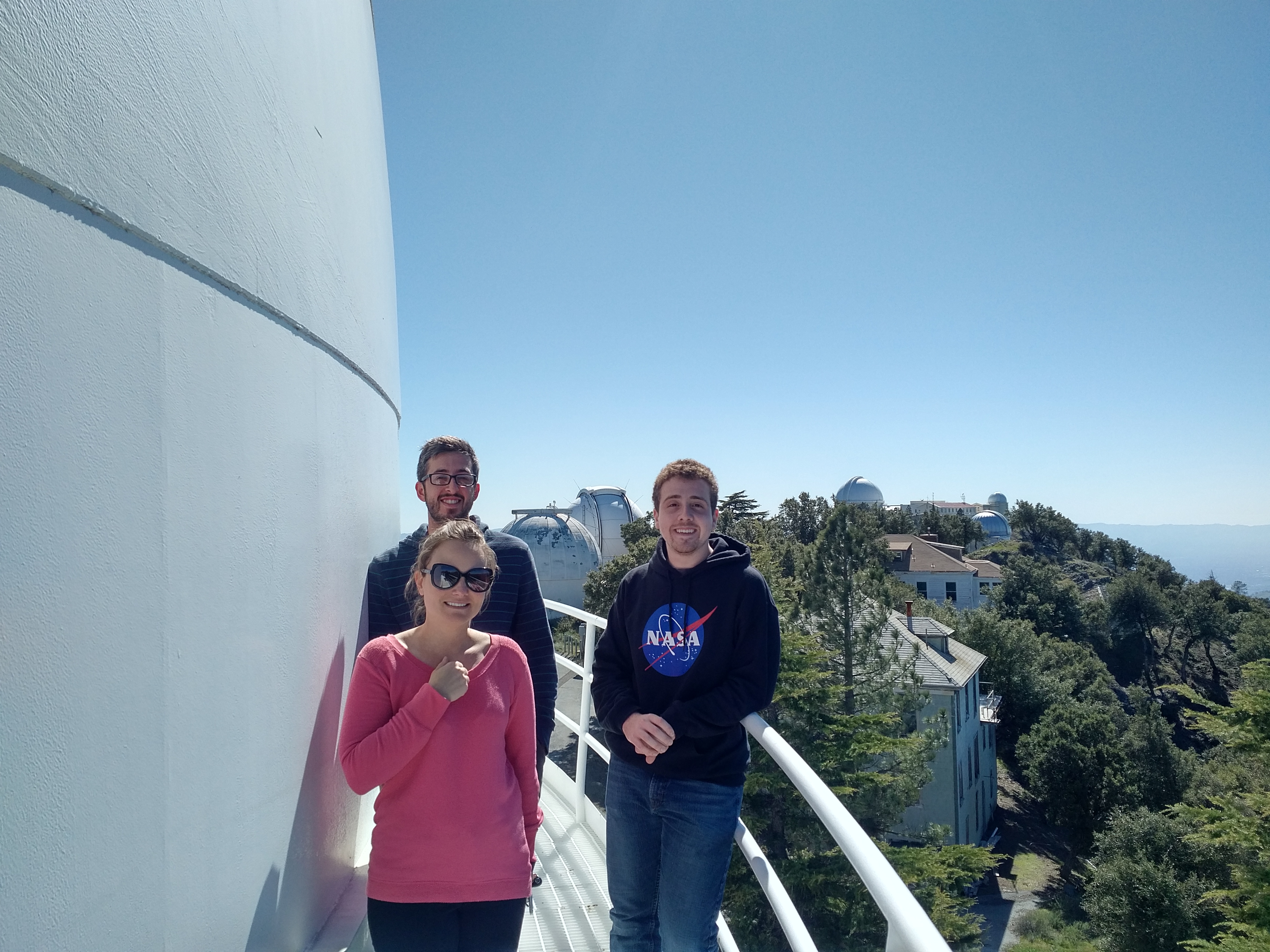
Team members install solar panels onto the CAPSTONE spacecraft – short for Cislunar Autonomous Positioning System Technology Operations and Navigation Experiment – at Tyvak Nano-Satellite Systems Inc. in Irvine, California.
Dylan Schmidt, CAPSTONE assembly integration and test lead, right, and Lachlan Moore, systems integration engineer, left, install solar panels onto the CAPSTONE spacecraft at Tyvak Nano-Satellite Systems, Inc., in Irvine, California.
NASA/Dominic Hart

Rather than launch a new satellite, NASA’s Research and Technology Mission Directorate demonstrated that CAPSTONE’s existing hardware could host new applications after launch, transforming the spacecraft into a cost-effective, flexible lunar technology demonstration platform. NASA’s SCaN (Space Communications and Navigation) Division will now use the data to demonstrate innovative networking and navigation techniques on future experiments.

“Operating multiple experiments simultaneously aboard the same spacecraft allows NASA to evaluate how these technologies perform together in a real lunar environment,” said Greg Stover, director of the Advanced Research and Technology Division within NASA’s Research and Technology Mission Directorate at NASA Headquarters in Washington. “Investments in autonomous operations and resilient communications infrastructure are essential to ensuring U.S. leadership as activity around the Moon continues to increase.”

Two experiments aboard CAPSTONE used software-defined infrastructure to advance two future mission essentials: autonomous navigation and deep space communications. The autonomous Navigation, Guidance, and Control software, or autoNGC, is designed to allow a spacecraft to determine where it is, where it is going, and how to get where it needs to be without waiting for instructions from the ground. While portions of the software had previously flown in Earth orbit, CAPSTONE marked the first time autoNGC was tested at the Moon.

“To really demonstrate that something works, you have to fly it,” said Sun Hur-Diaz, principal investigator for the autoNGC technology development project at NASA’s Goddard Space Flight Center in Greenbelt, Maryland. “The real environment is key.”

To really demonstrate that something works you have to fly it. The real environment is key.

Sun Hur-Diaz

Sun Hur-Diaz

Principal Investigator for the autoNGC Project, NASA Goddard Space Flight Center

Researchers also evaluated how autoNGC performed with limited contact to Earth. While NASA’s Deep Space Network antennas were supporting the Artemis II crewed test flight around the Moon, CAPSTONE’s communications window dropped to just a few passes per week.

Those gaps became one of the experiment’s most valuable tests. Without data from Earth, autoNGC determined CAPSTONE’s location using an onboard star tracker camera to image the Moon, Earth, and other celestial bodies. The camera-based system, known as optical navigation, at times outperformed ground-based methods for real-time onboard navigation, advancing technologies for future deep-space missions.

Alongside autonomous navigation testing, CAPSTONE also tested delay/disruption tolerant networking (DTN), a communications architecture designed for deep space. Unlike Earth-based internet systems, deep space communications must function despite long delays and frequent signal gaps. The DTN system addresses those challenges by storing information on the spacecraft when no connection is available and automatically forwarding it once communications are restored. With these demonstrations, CAPSTONE became the first to fly the latest DTN protocols beyond Earth orbit and the first to run them in NASA’s core Flight System, an open-source framework that can be implemented on any spacecraft.

In one demonstration, engineers began transmitting data from CAPSTONE to Earth, but the connection ended before the transfer was complete. The spacecraft stored the remaining data until the next communications opportunity, and transmission resumed automatically. Every piece of data made it home.

Artist’s rendering of a future Moon Base on the lunar surface. Two astronauts work near habitats and surface equipment while lunar rovers and cargo systems operate nearby. Tall solar arrays stand in the background alongside landed spacecraft and orbiting vehicles above the Moon’s horizon.
Artist’s rendering depicting astronauts, habitats, rovers, power systems, and cargo operations supporting sustained human activities at the Moon Base near the lunar South Pole. The technologies CAPSTONE tested may be key to NASA’s growing lunar communications and navigation infrastructure.
NASA

“You can imagine an astronaut walking behind a lunar hill or descending into a crater and temporarily losing connectivity,” said Ben Anderson, a systems engineer for the Near Space Network at NASA’s Goddard Space Flight Center in Greenbelt, Maryland. “This technology allows that data to be automatically retransmitted once communications are restored.”

In addition to its primary achievements, CAPSTONE’s second life as a software-defined testing platform demonstrated that new technologies can be affordably tested and proven directly in their operational environment.

After nearly four years of technology maturation, NASA’s activities on CAPSTONE concluded in June 2026, while Advanced Space will continue to use the spacecraft as a technology development testbed.

The CAPSTONE spacecraft was designed and built by Terran Orbital and is owned and operated by Advanced Space. NASA’s Research and Technology Mission Directorate managed the mission through the Small Spacecraft and Distributed Systems program, based at NASA’s Ames Research Center in California’s Silicon Valley. Elements of the CAPSTONE technology suite were supported by NASA’s Small Business Innovation Research program. The autoNGC and DTN demonstrations conducted during CAPSTONE’s extended mission were managed by NASA’s SCaN Division, based at NASA Headquarters in Washington.

About the Author

Korine Powers

Korine Powers

Lead Writer and Communications Strategist

Korine Powers, Ph.D. is a writer for NASA's SCaN (Space Communications and Navigation) Program office and covers emerging technologies, commercialization efforts, exploration activities, and more.

NASA Webb Uncovers Unusual Galaxy Shaped by Cosmic Collision

2026-07-06 14:00

6 min read

NASA Webb Uncovers Unusual Galaxy Shaped by Cosmic Collision

6 Min Read

NASA Webb Uncovers Unusual Galaxy Shaped by Cosmic Collision

A horizontal image of the galaxy Centaurus A stretches across a black background filled with thousands of tiny purple, pink, and white points of light. The galaxy is brightest at its center, where a brilliant white and pale pink glow radiates outward. Eight diffraction spikes extend from the central glow. Delicate loops and wispy ribbons of pink and lavender arc above and below the center of the image in the shape of an ‘S’. A band of gray and white dust in the shape of a parallelogram cuts across the middle of the galaxy. Mottled patches and bright knots are scattered throughout the dusty band. The galaxy’s outer edges fade into soft, cloud-like plumes with feathery textures that stretch toward the left and right sides of the image. Against the surrounding darkness, a few bright foreground stars shine with Webb’s distinctive diffraction spikes, while countless fainter stars create a speckled backdrop.

The mid-infrared view of Centaurus A from NASA’s James Webb Space Telescope reveals dusty structures and hidden activity within the nearby, active galaxy.

Credits:
Image: NASA, ESA, CSA, STScI; Image Processing: Alyssa Pagan (STScI), Joseph DePasquale (STScI), Macarena Garcia Marin (ESA Office at STScI)

In new images from NASA’s James Webb Space Telescope to celebrate its fourth science anniversary, a familiar galaxy transforms into something far richer, and far more complex, than ever seen before. Webb’s unprecedented sensitivity across near- and mid-infrared wavelengths cuts through the thick lanes of dust that obscure Centaurus A’s center in visible light, showing a densely packed tapestry of individual stars and an active, everchanging galaxy. These images mark four years of better-than-anticipated performance and successful science operations for the most powerful space telescope in history.

Centaurus A is 11 million light-years away from Earth, relatively close in cosmic terms. Yet, unlike most nearby galaxies, it is very active, making it a powerful laboratory for understanding how galaxies and black holes grow and evolve together.

Image: Centaurus A (MIRI Image)

The mid-infrared view of Centaurus A from NASA’s James Webb Space Telescope reveals dusty structures and hidden activity within the nearby, active galaxy.
Image: NASA, ESA, CSA, STScI; Image Processing: Alyssa Pagan (STScI), Joseph DePasquale (STScI), Macarena Garcia Marin (ESA Office at STScI)

At its core sits a supermassive black hole actively feeding on surrounding material. As it does, the black hole launches powerful jets and releases enormous amounts of energy, shaping the galaxy around it. At the same time, Centaurus A bears the scars of a dramatic past: a major collision with another galaxy roughly two billion years ago. The aftermath of that merger is still visible today in its unusual structure and ongoing star formation.

Visible light observations from NASA’s Hubble Space Telescope could not reveal the central region where dust blocked the view, while NASA’s retired Spitzer Space Telescope revealed large scale structures in the infrared without resolving individual stars. Now, Webb brings both clarity and depth, exposing the galaxy’s inner workings star by star.

Interactive: Journey into Centaurus A

Use this interactive tool to journey into NASA’s James Webb Space Telescope’s mid-infrared view of Centaurus A, where dust gives way to a rich landscape of stars and hidden features.
NASA / STScI

“No single telescope tells the whole story,” said Shawn Domagal-Goldman, division director, Astrophysics, NASA Headquarters in Washington. “Discoveries build over time and new observatories expand on the foundations laid by earlier missions. Webb represents the most powerful step forward yet, opening a window into wavelengths and details never before accessible. This allows astronomers to examine structures and processes that other telescopes could not see.” 

Dust, awe

Webb’s mid-infrared vision highlights the galaxy’s rich dust structures, which glow in intricate shapes that surprise and even perplex astronomers. A warped, parallelogram-like band cuts across the galaxy’s center, while wisps of material stretch outward like cosmic clouds. 

An “S” shaped feature, most notable in the image from Webb’s MIRI (Mid-Infrared Instrument), is also unusual and invites questions that need further study to answer. What created this shape? How does the black hole influence it? Is it influenced by merger-induced star formation?

Many of the glowing red points in the MIRI image are dust-rich stars or stellar nurseries, where aging stars are shedding material back into space or new stars are forming. This dust is the raw ingredient for future generations of stars and planets, making it central to the ongoing life cycle of the galaxy.

Image: Centaurus A Crop (NIRCam & MIRI)

In the combined mid- and near-infrared view of Centaurus A, the NIRCam (Near-Infrared Camera) on NASA’s James Webb Space Telescope brings out the galaxy’s dense field of millions of stars.
Image: NASA, ESA, CSA, STScI; Image Processing: Alyssa Pagan (STScI), Joseph DePasquale (STScI), Macarena Garcia Marin (ESA Office at STScI)

Written in its stars

With Webb’s high resolution, astronomers can now study Centaurus A star by star, even in its long-obscured central region. What looks “grainy” in the image from Webb, most obvious in the combined MIRI and NIRCam (Near-Infrared Camera) view, is actually a densely packed field of individual stars, together carrying information about the galaxy’s past.

With Webb’s view of Centaurus A, it becomes a case of galactic archaeology. Each star revealed helps to reconstruct when different events happened: when older stars first formed, when activity slowed down, a burst of star formation during the collision, and stars born from gas stirred in its aftermath. Together, they form a timeline of the galaxy’s evolution.

Dynamic black hole

Webb’s capabilities go beyond imaging. By analyzing light with spectroscopy, astronomers can measure how gas moves within the galaxy.

Early findings from Webb show fast-moving ionized gas flowing outward, likely driven by the black hole’s activity, and warmer molecular hydrogen in a warped rotating disk near the center. These observations help explore one of astronomy’s biggest questions: How does a black hole influence an entire galaxy?

The answer appears to be complex. The black hole can trigger star formation by compressing gas, but also limit it by pushing material away. Centaurus A offers a rare, nearby view of this cosmic interplay.

By tracing dust in never-before-seen detail, resolving millions of stars, and revealing the motion of gas near a supermassive black hole, Webb transforms Centaurus A into a vivid record of cosmic history.

The James Webb Space Telescope is the world’s premier space science observatory. Webb is solving mysteries in our solar system, looking beyond to distant worlds around other stars, and probing the mysterious structures and origins of our universe and our place in it. Webb is an international program led by NASA with its partners, ESA (European Space Agency) and CSA (Canadian Space Agency).

To learn more about Webb, visit:

https://science.nasa.gov/webb

Downloads & Related Information

The following sections contain links to download this article’s images and videos in all available resolutions followed by related information links, media contacts, and if available, research paper and Spanish translation links.

Related Links

Read more:  What Are Active Galactic Nuclei?

WatchBlack Hole Snapshot

Explore more: ViewSpace: Black Holes: Centaurus A

InfographicDissecting Supermassive Black Holes

WatchGalaxy collisions: Simulation vs Observations

More Webb: News | Images | Science | Home Page


Share

Details

Last Updated

Jul 06, 2026

Contact

Media

Laura Betz
NASA’s Goddard Space Flight Center
Greenbelt, Maryland
laura.e.betz@nasa.gov

Hannah Braun
Space Telescope Science Institute
Baltimore, Maryland

Christine Pulliam
Space Telescope Science Institute
Baltimore, Maryland

Examining Algal Blooms in Blue Mesa

2026-07-06 04:01


November 15, 2017
November 17, 2021

The first of a pair of satellite images shows the reservoir in November 2017, when water levels were relatively high and its color was mostly blue.
Cyanobacteria blooms turned Blue Mesa Reservoir green from September through November 2021, when water levels were among the lowest on record. The OLI (Operational Land Imager) on Landsat 8 captured this image (right) of a bloom on November 17, 2021, when the water was near its lowest level; the left image shows the same area on November 15, 2017, when water levels were closer to normal.
NASA Earth Observatory / Lauren Dauphin

The second image in the pair shows the same part of the reservoir in November 2021, when water levels were much lower and its color was much greener.
Cyanobacteria blooms turned Blue Mesa Reservoir green from September through November 2021, when water levels were among the lowest on record. The OLI (Operational Land Imager) on Landsat 8 captured this image (right) of a bloom on November 17, 2021, when the water was near its lowest level; the left image shows the same area on November 15, 2017, when water levels were closer to normal.
NASA Earth Observatory / Lauren Dauphin

The first of a pair of satellite images shows the reservoir in November 2017, when water levels were relatively high and its color was mostly blue.
Cyanobacteria blooms turned Blue Mesa Reservoir green from September through November 2021, when water levels were among the lowest on record. The OLI (Operational Land Imager) on Landsat 8 captured this image (right) of a bloom on November 17, 2021, when the water was near its lowest level; the left image shows the same area on November 15, 2017, when water levels were closer to normal.
NASA Earth Observatory / Lauren Dauphin

The second image in the pair shows the same part of the reservoir in November 2021, when water levels were much lower and its color was much greener.
Cyanobacteria blooms turned Blue Mesa Reservoir green from September through November 2021, when water levels were among the lowest on record. The OLI (Operational Land Imager) on Landsat 8 captured this image (right) of a bloom on November 17, 2021, when the water was near its lowest level; the left image shows the same area on November 15, 2017, when water levels were closer to normal.
NASA Earth Observatory / Lauren Dauphin


November 15, 2017

November 17, 2021


Cyanobacteria blooms turned Blue Mesa Reservoir green from September through November 2021, when water levels were among the lowest on record. The OLI (Operational Land Imager) on Landsat 8 captured this image (right) of a bloom on November 17, 2021, when the water was near its lowest level; the left image shows the same area on November 15, 2017, when water levels were closer to normal.

The summers of 2021 and 2022 were tough seasons for Colorado’s Blue Mesa Reservoir. A severe drought gripped much of the western U.S., prompting emergency water releases that brought the reservoir to its lowest level since 1984. Marinas and boat ramps closed, remnants of a ghost town emerged from the muck, and parts of the reservoir turned greenish and swirled with toxic cyanobacteria blooms.

Research conducted by scientists at the U.S. Geological Survey and the National Park Service analyzed decades of Blue Mesa Reservoir data and found a connection between low water levels, warm water temperatures, and harmful blooms.

“Algal blooms were more common when water levels were below 7,470 feet and water temperatures were above approximately 19.5 degrees Celsius (67.1 degrees Fahrenheit),” said Tyler King, a research hydrologist with U.S. Geological Survey. Water levels that low are relatively common and have occurred every few years in recent decades.  

While some cyanobacteria, also called blue-green algae, are always present in the reservoir in small numbers, problems occur when certain types proliferate. Aphanizomenon, Dolichospermum, and Woronichinia, for instance, thrive when the reservoir’s waters become warm and stagnant, releasing a toxin called microcystin that can cause skin and eye irritation, respiratory problems, and liver damage. Children and pets are particularly vulnerable to microcystin poisoning because of their size and tendency to ingest more water than adults.

King and colleagues analyzed in situ water samples and satellite observations from the European Space Agency’s Sentinel-2 mission and the NASA/U.S. Geological Survey Landsat satellites. A Sentinel-2 sensor that detects the light-harvesting pigment chlorophyll was particularly useful for mapping the blooms, while Landsat sensors were used to map water temperatures over time.

The National Park Service and U.S. Geological Survey launched the project in 2021 after anecdotal reports and water sampling suggested elevated cyanobacteria concentrations, King said. The scientists collected water samples but also turned to historical records and satellite data—”like a time machine,” he said—to examine conditions before regular water sampling had begun. Their analysis included satellite records of chlorophyll levels that extended back to 2016 and temperature records that reached back to 2000. The research team also studied in situ data on water levels dating to the 1970s.

A photograph taken from a rocky shoreline along the Iola Basin show mats of green growth coating the surface of the water.
A cyanobacteria bloom turned the water surface of Iola Basin green on September 8, 2021. Photo by Nicole Gibney/National Park Service.

The satellite data showed that blooms typically start in the eastern end of the reservoir, an area known as Iola Basin. The basin, where the Gunnison River flows into the reservoir, is the shallowest part of the reservoir. Occasionally, the satellite data showed, blooms spread westward into other parts of the reservoir, sometimes moving about two-thirds of the way across. However, concentrations of toxins rarely reached levels that posed health concerns beyond Iola Basin.

The same dynamics that caused challenges for Blue Mesa in 2021 and 2022 are present in 2026, said King. Drought again plagues much of the western U.S., the mountains hold little snow, and water levels in Blue Mesa are low. On June 27, 2026, the reservoir stored about 43 percent of the water it typically does on that date, the lowest value observed for that day in the past 30 years. Water levels are expected to continue dropping until October, according to U.S. Bureau of Reclamation projections

If cyanobacteria blooms emerge in 2026, the researchers expect that satellites will help scientists track them. The researchers use the U.S. Geological Survey’s WaterMAP (Water Monitoring Above the Planet) tool to monitor for potential bloom conditions within hours of satellite overpasses. NASA’s STREAM (Satellite-based Tool for Rapid Evaluation of Aquatic Environments) project also uses data from Landsat and Sentinel-2 to map potential blooms within hours of a satellite overpass, and the multi-agency CyAN (Cyanobacteria Assessment Network) project collects daily data from other satellites to map blooms in larger water bodies.

“It’s amazing that we can use satellites to map the impacts of microscopic organisms from almost 500 miles away,” King said. Yet it will still be crucial to get people out on the water taking samples and directly testing for toxins, he emphasized. “The satellites aren’t definitive,” he added. “They can tell us where there might be a problem, but toxins often aren’t present until the later stages of a bloom.”

A photograph shows two female researchers collecting green, algae-rich water in a cylindrical container.
Satellite observations can help managers decide where to send personnel to collect water samples for more detailed analysis of bloom toxicity. Photo by Katie Walton-Day/USGS.

NASA Earth Observatory images by Michala Garrison, using Landsat data from the U.S. Geological Survey. Photos by Katie Walton-Day (USGS) and Nicole Gibney (NPS). Story by Adam Voiland.

References & Resources

You may also be interested in:

Stay up-to-date with the latest content from NASA as we explore the universe and discover more about our home planet.

Low Water at San Carlos Reservoir

4 min read

Drought and water releases drained the Arizona reservoir to levels that have led to widespread fish deaths.

Article

Rising Waters Swamp Lake Naivasha

6 min read

Relentless rains are threatening a lake in Kenya’s Great Rift Valley that has become a key hub in the global…

Article

Snow Is Scarce in the Upper Colorado Basin

5 min read

The mountains of Utah and Colorado are among the areas of the western U.S. that are low on snow and…

Article

TechCrunch - Latest

Vercel CEO Guillermo Rauch on the fight to split off models from agents

2026-07-06 19:49

"The reality is, when you're optimizing for production, you start looking at a price/performance," Guillermo Rauch tells TechCrunch.
You can now customize Siri’s pace and expressivity in the latest iOS 27 beta

2026-07-06 19:01

The update is part of Apple's broader effort to make Siri feel more natural and personal, as it rebuilds the assistant around generative AI.
Every major tech layoff in 2026 that has name-checked AI

2026-07-06 18:35

A running look — in reverse chronological order — at the bigger tech companies that have announced significant layoffs this year with AI as a stated factor.
Amazon competitor Bookshop.org says Kobo eReader support will happen this year after all

2026-07-06 18:12

Bookship.org seemed to delay this anticipated partnership again, but tells TechCrunch that it has settled business terms and is working on integration.
If you use Google, you’re training its AI. Here’s how to opt out.

2026-07-06 17:04

Consider this a belated PSA: A recent change to Google’s privacy settings is allowing the company to store more of your data, including media such as “images, files, and audio and video recordings,” to improve its AI models.
×
Useful links
Home
Definitions Terminologies
Socials
Facebook Instagram Twitter Telegram
Help & Support
Contact About Us Write for Us


2 years ago Category : Up-to-date-Travel-Accessories
Aujourd'hui, les accessoires de voyage et les gadgets peuvent rendre nos déplacements encore plus pratiques et agréables. Que vous partiez en vacances ou en voyage d'affaires, il est toujours bon d'avoir les bons accessoires à portée de main. Voici quelques-uns des accessoires et gadgets de voyage les plus tendance et pratiques du moment.

Aujourd'hui, les accessoires de voyage et les gadgets peuvent rendre nos déplacements encore plus pratiques et agréables. Que vous partiez en vacances ou en voyage d'affaires, il est toujours bon d'avoir les bons accessoires à portée de main. Voici quelques-uns des accessoires et gadgets de voyage les plus tendance et pratiques du moment.

Read More →
2 years ago Category : Up-to-date-Travel-Accessories
À l'heure actuelle, les accessoires de voyage sont devenus indispensables pour les voyageurs modernes, facilitant grandement leurs déplacements. Parmi ces accessoires, les bagages de voyage occupent une place prépondérante. Ils se déclinent dans une grande variété de styles, de tailles et de fonctionnalités pour répondre aux besoins de chacun.

À l'heure actuelle, les accessoires de voyage sont devenus indispensables pour les voyageurs modernes, facilitant grandement leurs déplacements. Parmi ces accessoires, les bagages de voyage occupent une place prépondérante. Ils se déclinent dans une grande variété de styles, de tailles et de fonctionnalités pour répondre aux besoins de chacun.

Read More →
2 years ago Category : Latest-Photography-Gear
Les passionnés de photographie et les professionnels de l'image savent à quel point il est essentiel d'avoir le bon équipement pour capturer des images de haute qualité. Dans le monde de la photographie en studio, l'équipement essentiel peut faire toute la différence dans la réussite d'une séance photo. Découvrons ensemble les derniers équipements de photographie indispensables pour un studio photo professionnel.

Les passionnés de photographie et les professionnels de l'image savent à quel point il est essentiel d'avoir le bon équipement pour capturer des images de haute qualité. Dans le monde de la photographie en studio, l'équipement essentiel peut faire toute la différence dans la réussite d'une séance photo. Découvrons ensemble les derniers équipements de photographie indispensables pour un studio photo professionnel.

Read More →
2 years ago Category : Latest-Photography-Gear
Aujourd'hui, la photographie par drone est de plus en plus populaire parmi amateurs et professionnels. Grâce aux avancées technologiques récentes, le matériel de photographie par drone ne cesse de s'améliorer, offrant des possibilités créatives infinies. Dans cet article, nous allons explorer les derniers équipements de photographie par drone pour vous aider à capturer des images époustouflantes et uniques.

Aujourd'hui, la photographie par drone est de plus en plus populaire parmi amateurs et professionnels. Grâce aux avancées technologiques récentes, le matériel de photographie par drone ne cesse de s'améliorer, offrant des possibilités créatives infinies. Dans cet article, nous allons explorer les derniers équipements de photographie par drone pour vous aider à capturer des images époustouflantes et uniques.

Read More →
2 years ago Category : Latest-Photography-Gear
Les accessoires pour appareils photo sont essentiels pour améliorer la qualité de vos prises de vue et explorer de nouvelles perspectives créatives. Que vous soyez un photographe amateur ou professionnel, investir dans le bon équipement peut faire toute la différence. Découvrons ensemble les derniers accessoires pour appareils photo qui peuvent enrichir votre expérience de la photographie.

Les accessoires pour appareils photo sont essentiels pour améliorer la qualité de vos prises de vue et explorer de nouvelles perspectives créatives. Que vous soyez un photographe amateur ou professionnel, investir dans le bon équipement peut faire toute la différence. Découvrons ensemble les derniers accessoires pour appareils photo qui peuvent enrichir votre expérience de la photographie.

Read More →
2 years ago Category : Latest-Photography-Gear
Les objectifs d'appareil photo sont des outils essentiels pour les photographes qui cherchent à capturer des images de haute qualité. Que vous soyez un professionnel expérimenté ou un amateur passionné, choisir le bon objectif peut faire toute la différence dans la qualité de vos photos. Dans cet article, nous allons explorer les dernières nouveautés en matière d'objectifs d'appareil photo pour vous aider à trouver celui qui convient le mieux à vos besoins.

Les objectifs d'appareil photo sont des outils essentiels pour les photographes qui cherchent à capturer des images de haute qualité. Que vous soyez un professionnel expérimenté ou un amateur passionné, choisir le bon objectif peut faire toute la différence dans la qualité de vos photos. Dans cet article, nous allons explorer les dernières nouveautés en matière d'objectifs d'appareil photo pour vous aider à trouver celui qui convient le mieux à vos besoins.

Read More →
2 years ago Category : Latest-Photography-Gear
Les appareils photo professionnels sont des outils essentiels pour les photographes qui cherchent à capturer des images de haute qualité et à atteindre un niveau supérieur dans leur métier. Avec les avancées technologiques constantes dans le domaine de la photographie, il est important de rester à jour avec les derniers équipements disponibles sur le marché. Dans cet article, nous allons explorer certains des derniers appareils photo professionnels qui ont attiré l'attention des photographes du monde entier.

Les appareils photo professionnels sont des outils essentiels pour les photographes qui cherchent à capturer des images de haute qualité et à atteindre un niveau supérieur dans leur métier. Avec les avancées technologiques constantes dans le domaine de la photographie, il est important de rester à jour avec les derniers équipements disponibles sur le marché. Dans cet article, nous allons explorer certains des derniers appareils photo professionnels qui ont attiré l'attention des photographes du monde entier.

Read More →
2 years ago Category : Trending-Smart-Home-Devices
Les concentrateurs domotiques, également connus sous le nom de hubs domotiques, sont des dispositifs essentiels dans un foyer intelligent. Ces appareils jouent un rôle central en permettant la communication entre différents appareils connectés dans la maison, tels que des ampoules intelligentes, des thermostats, des caméras de sécurité, et bien d'autres. Aujourd'hui, les hubs domotiques sont de plus en plus populaires en raison de leur capacité à centraliser le contrôle et la gestion des appareils connectés, offrant ainsi une expérience domotique cohesive et pratique.

Les concentrateurs domotiques, également connus sous le nom de hubs domotiques, sont des dispositifs essentiels dans un foyer intelligent. Ces appareils jouent un rôle central en permettant la communication entre différents appareils connectés dans la maison, tels que des ampoules intelligentes, des thermostats, des caméras de sécurité, et bien d'autres. Aujourd'hui, les hubs domotiques sont de plus en plus populaires en raison de leur capacité à centraliser le contrôle et la gestion des appareils connectés, offrant ainsi une expérience domotique cohesive et pratique.

Read More →
2 years ago Category : Trending-Smart-Home-Devices
Les solutions d'éclairage intelligent sont de plus en plus populaires dans les maisons connectées d'aujourd'hui. Ces dispositifs intelligents offrent non seulement un aspect esthétique moderne, mais apportent également des avantages pratiques et économiques aux utilisateurs.

Les solutions d'éclairage intelligent sont de plus en plus populaires dans les maisons connectées d'aujourd'hui. Ces dispositifs intelligents offrent non seulement un aspect esthétique moderne, mais apportent également des avantages pratiques et économiques aux utilisateurs.

Read More →
2 years ago Category : Trending-Smart-Home-Devices
Les assistants vocaux sont devenus une tendance incontournable dans le domaine des appareils connectés pour la maison intelligente. Ces dispositifs, tels que Amazon Echo, Google Home et Apple HomePod, offrent aux utilisateurs la facilité de contrôler divers appareils et fonctions de leur maison uniquement par la voix.

Les assistants vocaux sont devenus une tendance incontournable dans le domaine des appareils connectés pour la maison intelligente. Ces dispositifs, tels que Amazon Echo, Google Home et Apple HomePod, offrent aux utilisateurs la facilité de contrôler divers appareils et fonctions de leur maison uniquement par la voix.

Read More →