📰 Trending Topics
Google News - Trending
Why young America is trending socialist - Financial Times
2026-06-02 11:27
Are the Houston Astros Trending in the RIGHT DIRECTION? - The Crawfish Boxes
2026-06-01 21:55
Google News - Technology
Nvidia chases $200B CPU market with AI agent PCs from Microsoft, Dell, and HP - TechCrunch
2026-06-01 21:35
- Nvidia chases $200B CPU market with AI agent PCs from Microsoft, Dell, and HP TechCrunch
- Nvidia's new PC chips represent CEO Huang's bid to win at every layer of AI stack CNBC
- Apple Loses Big Because Of Nvidia PC Chips Yahoo Finance
- Introducing Surface Laptop Ultra: Made for world makers Windows Blog
- NVIDIA DGX Station for Windows Puts a Trillion-Parameter AI Supercomputer on Every Enterprise Desk NVIDIA Newsroom
Get Another Look At Star Fox On Switch 2 In New Overview Trailer - Nintendo Life
2026-06-02 12:55
- Get Another Look At Star Fox On Switch 2 In New Overview Trailer Nintendo Life
- I played 'Star Fox' on Switch 2. Multiplayer mode rules. Mashable
- Nintendo's New Switch 2 StarFox Feels Like the Game I Always Wanted to Play CNET
- Star Fox on Switch 2 hands-on: Has Nintendo finally perfected Star Fox? Polygon.com
- With ‘Star Fox,’ Nintendo Finally Has a Reason to Use the Switch 2’s GameChat Gizmodo
Apple Releases iOS 26.5.1 to Fix Charging Issue on iPhone Air and iPhone 17 Models - MacRumors
2026-06-01 17:23
- Apple Releases iOS 26.5.1 to Fix Charging Issue on iPhone Air and iPhone 17 Models MacRumors
- Apple releases iOS 26.5.1. See what's in the iPhone update USA Today
- macOS 26.5.1 is out with an important fix for enterprise users 9to5Mac
- Apple just issued critical updates for iPhone 17 and M5 Macs Macworld
- iOS 26.5.1 fixes charging issues on iPhone Air and iPhone 17 models. The Verge
Leaker reveals new iPhone Ultra feature, release timing update - 9to5Mac
2026-06-01 15:51
- Leaker reveals new iPhone Ultra feature, release timing update 9to5Mac
- Photo of the iPhone Fold (in white/silver) shared by Ice Universe - GSMArena.com news GSMArena.com
- The iPhone Ultra's first confirmed color is out, and it hints Apple is following the same playbook that made the iPhone X a phenomenon PhoneArena
- Leaker: Foldable 'iPhone Ultra' Will Feature Liquid Metal Hinge MacRumors
- Passport foldables are taking over as iPhone Ultra dummy leaks in white Android Authority
ASRock Radeon RX 9070 GRE Steel Legend Review - TechPowerUp
2026-06-02 00:02
- ASRock Radeon RX 9070 GRE Steel Legend Review TechPowerUp
- AMD Radeon RX 9070 GRE Review: A Cheaper GPU For A Wildly Expensive Era Engadget
- Acer Radeon RX 9070 GRE Nitro Review TechPowerUp
- AMD’s RX 9070 GRE Graphics Card Is a Compromise No Matter How You Slice It Gizmodo
- AMD Announces Radeon RX 9070 GRE, Ryzen AI Max PRO 400 Series Phoronix
NASA - Breaking News
NASA Testing Wastewater Treatment Facility for Future Moon Base
2026-06-02 14:31

A mobile wastewater treatment system built at NASA’s Kennedy Space Center in Florida that can help prepare for long-duration missions on the Moon and Mars departed the spaceport and arrived at the University of North Dakota in Grand Forks. Graduate students at the university will test the technology under conditions designed to closely mimic the challenges of operating on another planetary surface.
The Divergent Deployable Wastewater Treatment Facility is designed to turn crew wastewater into useful resources, which future explorers will need every day. At the University of North Dakota, teams will integrate this new wastewater system with the university’s Integrated Lunar/Martian Analog Habitat. Student operators and NASA researchers will study how the facility performs when connected to a habitat-like environment and exposed to the kinds of operational limits crews could face on another planet.
“NASA’s Artemis program is laying the groundwork for a sustained human presence on the Moon, where habitats will need to operate far from the steady resupply chain that supports astronauts in partial gravity,” said Luke Roberson, surface water systems lead within the Mars Campaign Office at NASA Kennedy. “To solve that challenge, we are developing the future of sustainable lunar surface systems to process wastewater into nutrient feedstocks for plants and biomanufacturing.”
How Treatment System Works
Housed inside an 8.5-by-24-foot trailer, the facility brings together three biological reactor systems, a vertical garden, water-polishing hardware, environmental monitoring, autonomous control software, and safety systems. The trailer was outfitted at NASA Kennedy to function as a deployable laboratory and to travel between at least two simulation test sites as the technology matures.
Unlike wastewater systems on Earth, this facility keeps waste streams separate. That divergent approach is important for small crews, because wastewater from four to eight people can be highly concentrated. Urine, hygiene water, laundry water, fecal waste, and food waste each contain different levels of salts, solids, carbon, nitrogen, phosphorus, and other compounds. Treating them separately allows each stream to be processed by the reactor best suited for the job.
To do that, the system uses three different bioreactors to treat waste streams. The Anaerobic Phototrophic Membrane Bioreactor processes fecal and food waste and converts it into a nutrient-rich wastewater that can support plant growth. The Suspended Aerobic Membrane Bioreactor processes urine and flush water. The Membrane Aerated Biological Reactor treats graywater from hygiene and laundry activities. Collectively, the bioreactors process nutrients to feed the facility’s vertical garden and prepare the water for reuse. Inside that garden, crops will grow hydroponically, or without using soil, by using nutrient solutions derived from the bioreactors. Researchers will compare crop performance with plants grown using standard hydroponic nutrients.
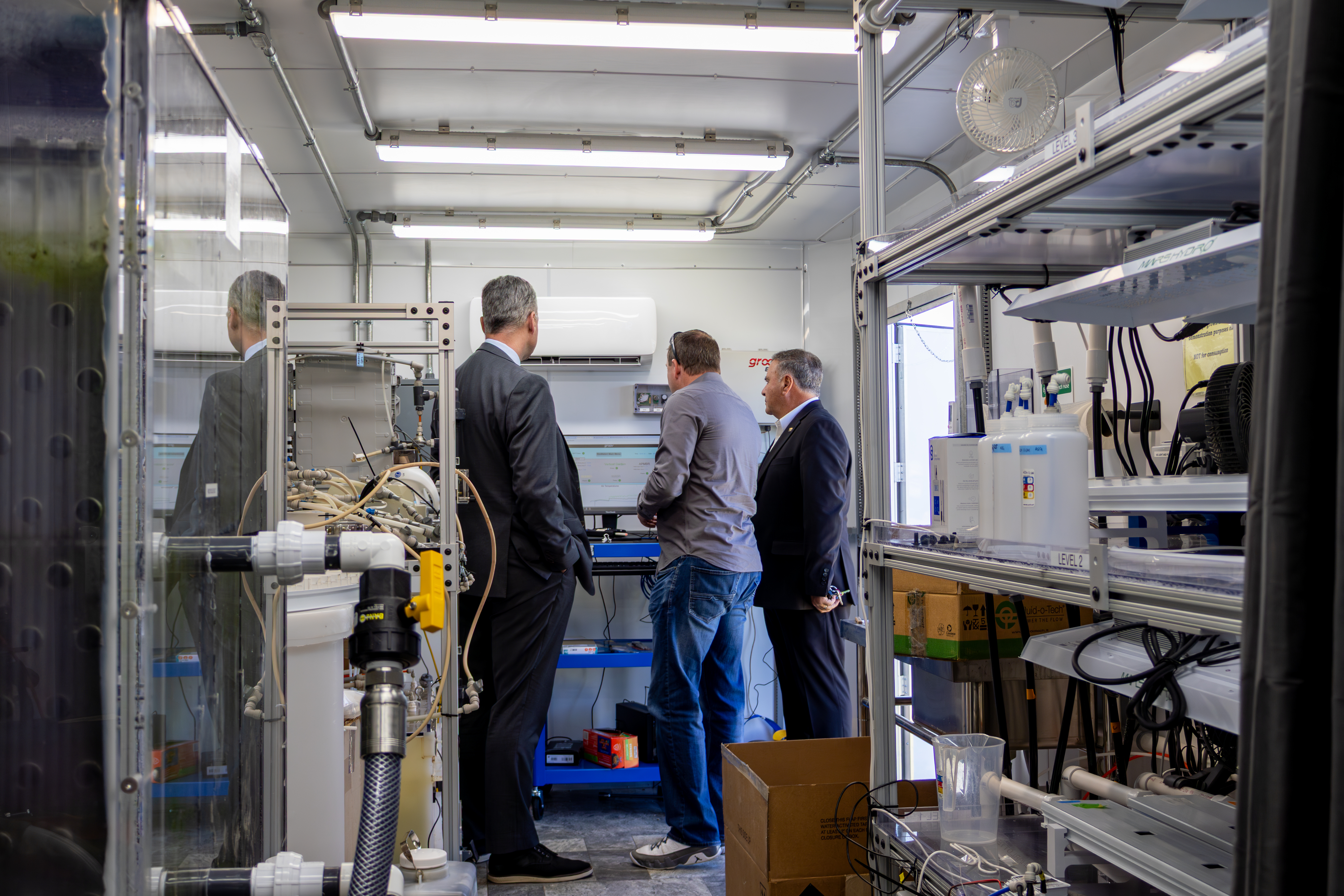
At North Dakota, under a NASA EPSCoR (Established Program to Stimulate Competitive Research) grant, the facility was connected to the Integrated Lunar/Martian Analog Habitat through a bathroom interface that includes a urine-diverting toilet. The setup will allow different waste streams to be separated at the source and sent to the correct treatment systems. In parallel, Ali Alshami’s team is developing novel membrane-based separation technologies intended for future integration into the divergent wastewater facility to improve water recovery efficiency, contaminant rejection, and overall system resilience for long-duration habitation missions.
“The tests will help NASA evaluate real-world operation, crew training needs, system reliability, and how wastewater simulants compare with actual human metabolic waste in an analog mission environment,” said Alshami.
These efforts are focused on advancing compact, energy-efficient treatment approaches capable of handling complex wastewater streams generated in closed-loop extraterrestrial environments.
“The testing campaign at the University of North Dakota supports the facility’s technology maturation from laboratory-scale validation toward demonstration in a relevant Inflatable Lunar/Martian Analog Habitat environment,” said Pablo De Leon, professor and department chair of Space Studies at the University of North Dakota.
Lessons learned could inform future higher-fidelity tests, including potential integration with NASA’s next generation of yearlong simulated Mars missions via isolation analogs at the agency’s Johnson Space Center in Houston.
Technology for Making Moon Base Sustainable
The work is part of NASA’s broader Bioregenerative Life Support Systems effort, which is developing biological approaches to reduce dependence on Earth-supplied consumables. In future lunar or Martian habitats, systems like the wastewater treatment facility could help close life support loops by recovering water, recycling nutrients, supporting crop production, and reducing the amount of waste that must be stored or discarded. Further NASA research completed trade studies demonstrating how bioregenerative life support becomes more effective for space travel over current life support technologies.
NASA researchers also are exploring how wastewater-recovered resources could support in-space manufacturing. One effort is studying how nutrient-rich water from bioregenerative wastewater systems could feed microbes that produce lactic acid, which can be turned into polylactic acid. The material could one day serve as a binder for 3D printing with lunar or Martian regolith, the loose, fragmental surface material, or could be used for replacement parts, extending the value of recovered waste beyond water and food systems.
“By sending the facility from NASA Kennedy to North Dakota, the agency is moving a key part of that circular economy out of the lab and into a real-world test,” said J.J. Edelmann, surface systems domain lead for the Mars Campaign Office at NASA Headquarters in Washington. “The work may begin with wastewater, but its goal is much larger. We want to help future crews live sustainably on the Moon, learn how to operate farther from Earth, and carry those lessons forward to Mars.”
To learn more about the agency’s lunar and Mars exploration, visit:
Be a Clump Scout and Help Reveal Secrets of Stellar Nurseries
2026-06-02 13:19
In the mid-20th century, astronomers discovered strange “clumpy” galaxies filled with mysterious bright blobs – massive stellar nurseries where stars are born at an explosive rate. Curiously, these clumpy galaxies were much more common in the early universe than they are today. We still don’t know why they vanished.
The Euclid space telescope, an ESA (European Space Agency) mission with critical contributions from NASA, has begun to capture images of millions of galaxies. These images – far more than any team of professional scientists could ever catalog alone – include high-definition views of clumpy galaxies that promise to reveal structure within and among the clumps. Astronomers hope to use these images to obtain new information about which galaxies host clumps, where the clumps are, how and why they evolved, and more – but they need your help!
To tackle this mountain of data, scientists are creating a “digital assistant” in the form of machine learning, a kind of artificial intelligence. The machine algorithm has been partially trained with results from an earlier project called “Galaxy Zoo: Clump Scout.” Now, as a volunteer for the new Galaxy Zoo: Clump Scout II project, you’ll improve and train this tool further. You’ll examine images of galaxies that the machine has labelled with squares where it thinks it sees a real clump. The machine often gets confused by distant stars or camera glitches. So you’ll gently move those squares around, delete them, or add new ones, to help the algorithm learn.
As a part of Galaxy Zoo: Clump Scout II, you will help investigate how giant star-forming nurseries formed, solve the mystery of their disappearance over cosmic time, and reveal more about how star formation really works in galaxies. All you need is a laptop or smartphone. Click here to learn more!


Spacewalking With Scott Wray, Artemis EVA Training Lead
2026-06-02 09:00
Spacewalking With Scott Wray, Artemis EVA Training Lead
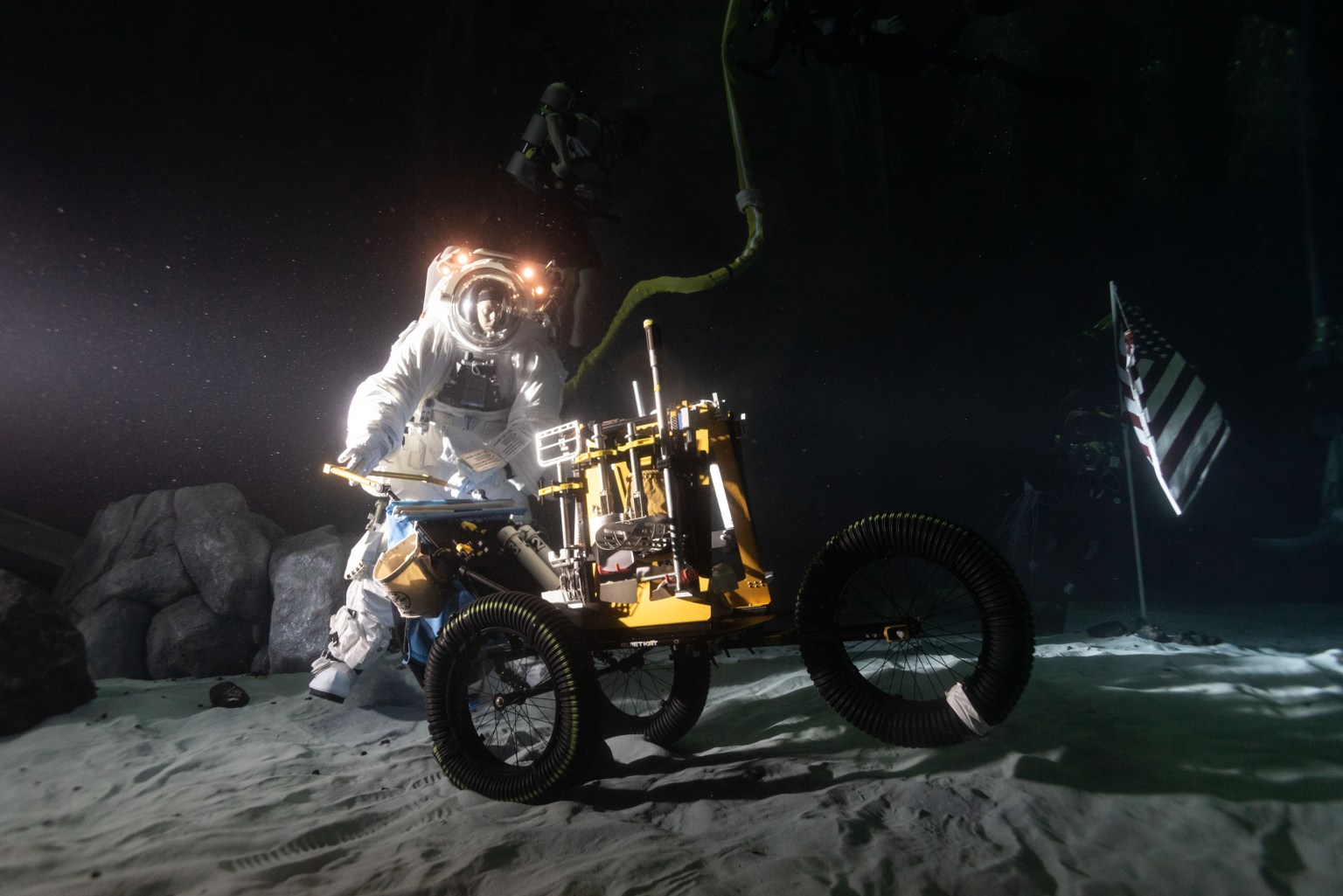
Scott Wray’s experience with spacewalks started when he was about 6 years old. A tent resembling a lunar lander provided the perfect imaginary spacecraft. “I would lie on my back with my feet propped up on a pillow as I imagined going through a launch countdown sequence,” he said. “Then I would exit the tent into a darkened bedroom and hop around just like the footage I had seen of Apollo astronauts.”
Today, with more than 16 years at NASA’s Johnson Space Center under his belt, Wray is proud to have shaped spacewalk training across three eras of human spaceflight.
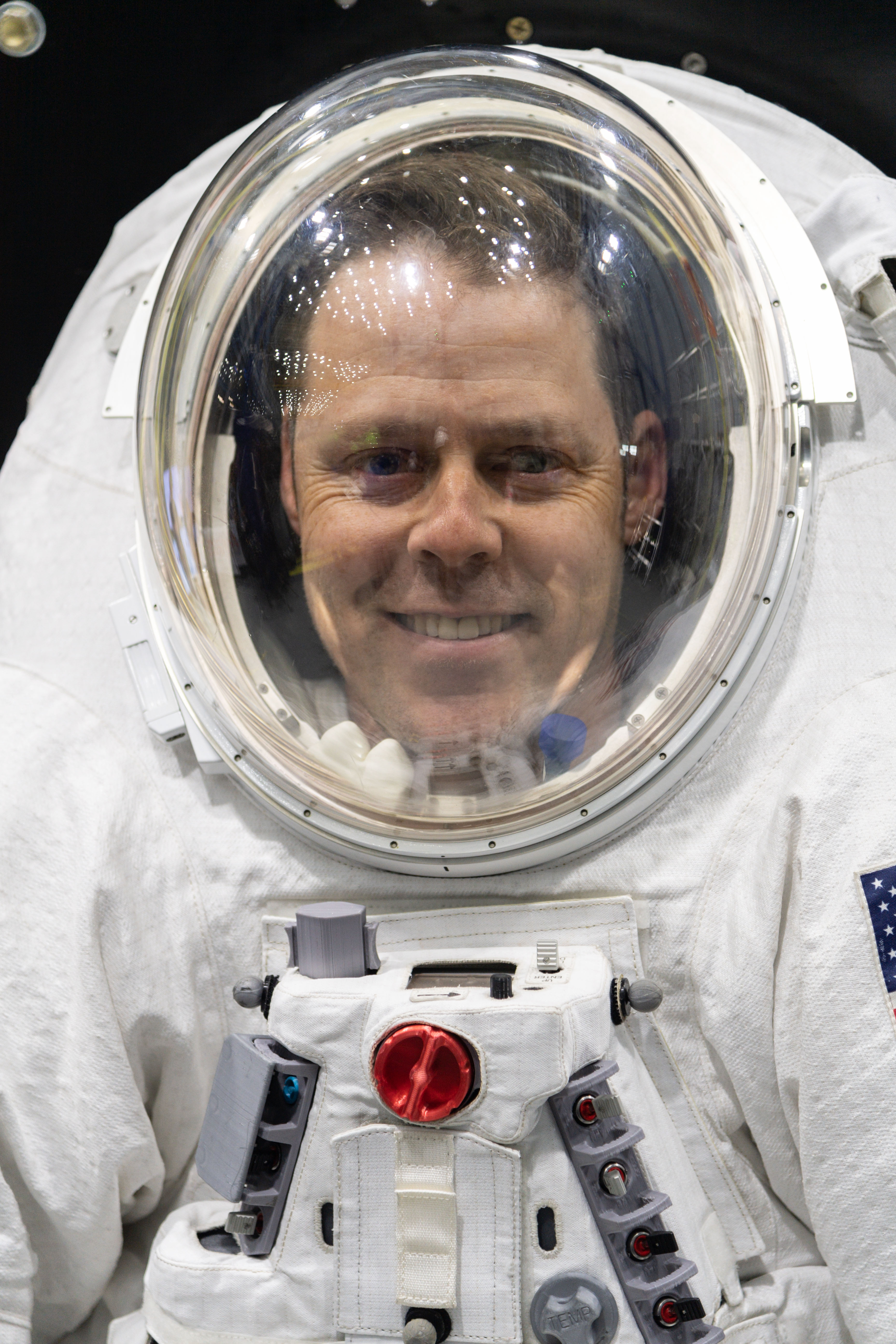
The childhood fascination with spaceflight evolved into a passion for engineering, demonstrated through countless LEGO and airplane model builds and voracious readership of aircraft design books. His path to NASA was cemented by a week-long camp at Space Center Houston, which included several tours of Johnson’s signature facilities and a visit by former NASA Flight Director Gene Kranz. “I was so inspired by the facilities and the incredible history of this place, I knew that I had to work here someday,” he said.
Wray participated in NASA’s Contractor Co-op Program with United Space Alliance while studying aerospace engineering at Embry-Riddle Aeronautical University and completed several tours with different organizations at Johnson. At the time, astronauts were training to conduct spacewalks, also known as EVAs, for both the Space Shuttle and International Space Station programs. During one co-op experience with the shuttle’s In-Flight Maintenance Team (IFM), Wray observed the IFM and EVA teams collaborating with the STS-117 crew to fix the peeled-back thermal blanket on space shuttle Atlantis’s Orbital Maneuvering System pod. He helped the teams develop crew procedures for practicing the repair inside the shuttle, using surgical staples and pins to tack the blanket down. “This real-time troubleshooting is where I learned about the EVA group and set my sights on working there during my final co-op tour,” he said. “I love to be hands-on, to take things apart and come up with creative solutions – that’s what really attracted me to EVA.”
EVA work also reminded Wray of time spent as a dog mushing guide in Alaska. “That is where I got my first taste of expeditionary skills,” he said. “We lived in a remote glacier camp, taking care of 250 Alaskan Huskies. I learned how to make do with the tools you have and make repairs to a broken sled miles away from home.” At times, Johnson’s EVA team must create similar workarounds. “Some of our best moments as a team have come when our hardware or vehicle has malfunctioned, requiring us to devise a real-time solution,” he said. “It sounds scrappy, but I think it’s how we put the human into human spaceflight.”
Wray became a full-time EVA team member at Johnson after graduation, working under various contracts until he transitioned to a civil servant position in 2021. He started as an EVA instructor focused on tools and hardware and teaching astronauts how to perform their maintenance and repair duties. As NASA’s astronaut corps evolved to include a wider range of backgrounds and body types, Wray worked to develop new EVA techniques and tools that could accommodate any crew member. “That meant creating a curriculum that capitalized on individual strengths while building teamwork and resilience,” he said.
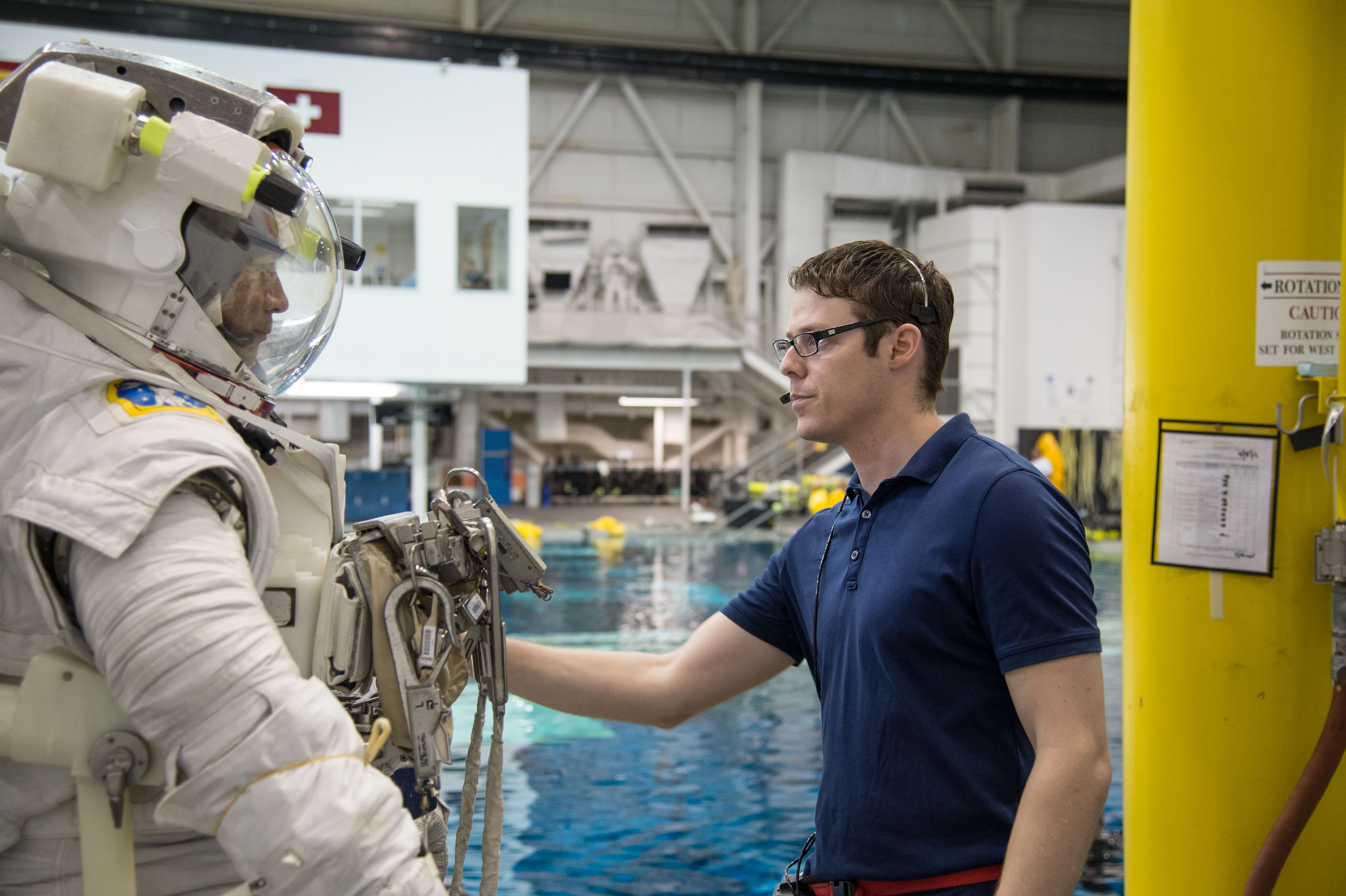
Wray also served as a flight controller for shuttle and space station EVAs. He remembers being on console in Johnson’s Mission Control Center during a space station EVA in July 2013. That excursion was terminated early after water began filling the spacesuit helmet of ESA (European Space Agency) astronaut Luca Parmitano, and the team could neither determine its source nor stop its flow. “That incident taught me that even after decades of operating a spacesuit, there are still failure modes we haven’t imagined,” he said. “It reinforced the need for vigilance, adaptability, and continuous learning—because in human spaceflight, lives depend on it.”
In the last few years, Wray’s responsibilities shifted to preparing Artemis crew members for missions to the Moon. Now the Artemis EVA training lead, Wray oversees the development of training flows that will ready astronauts for lunar surface operations – a challenge NASA has not faced in over 50 years.
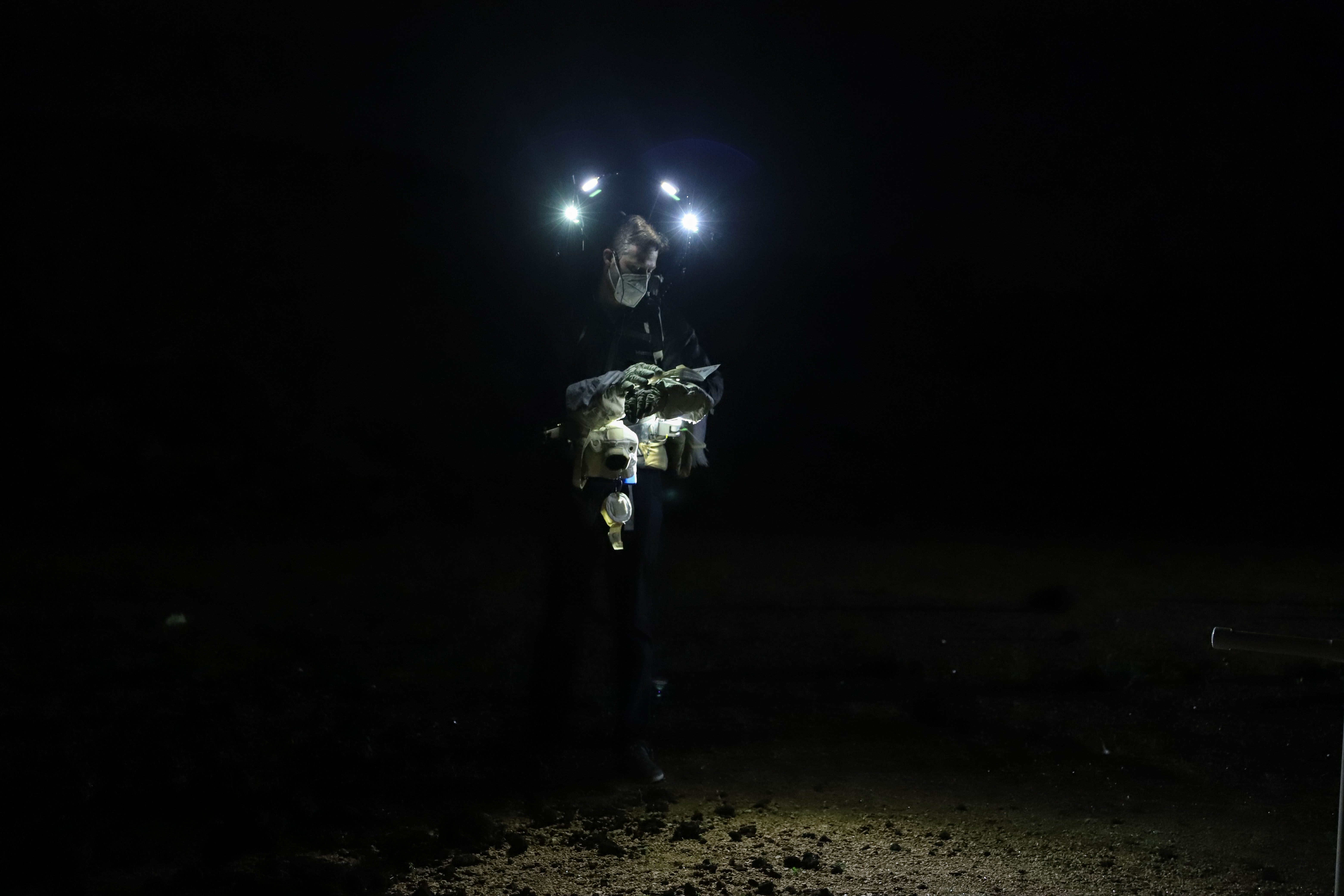
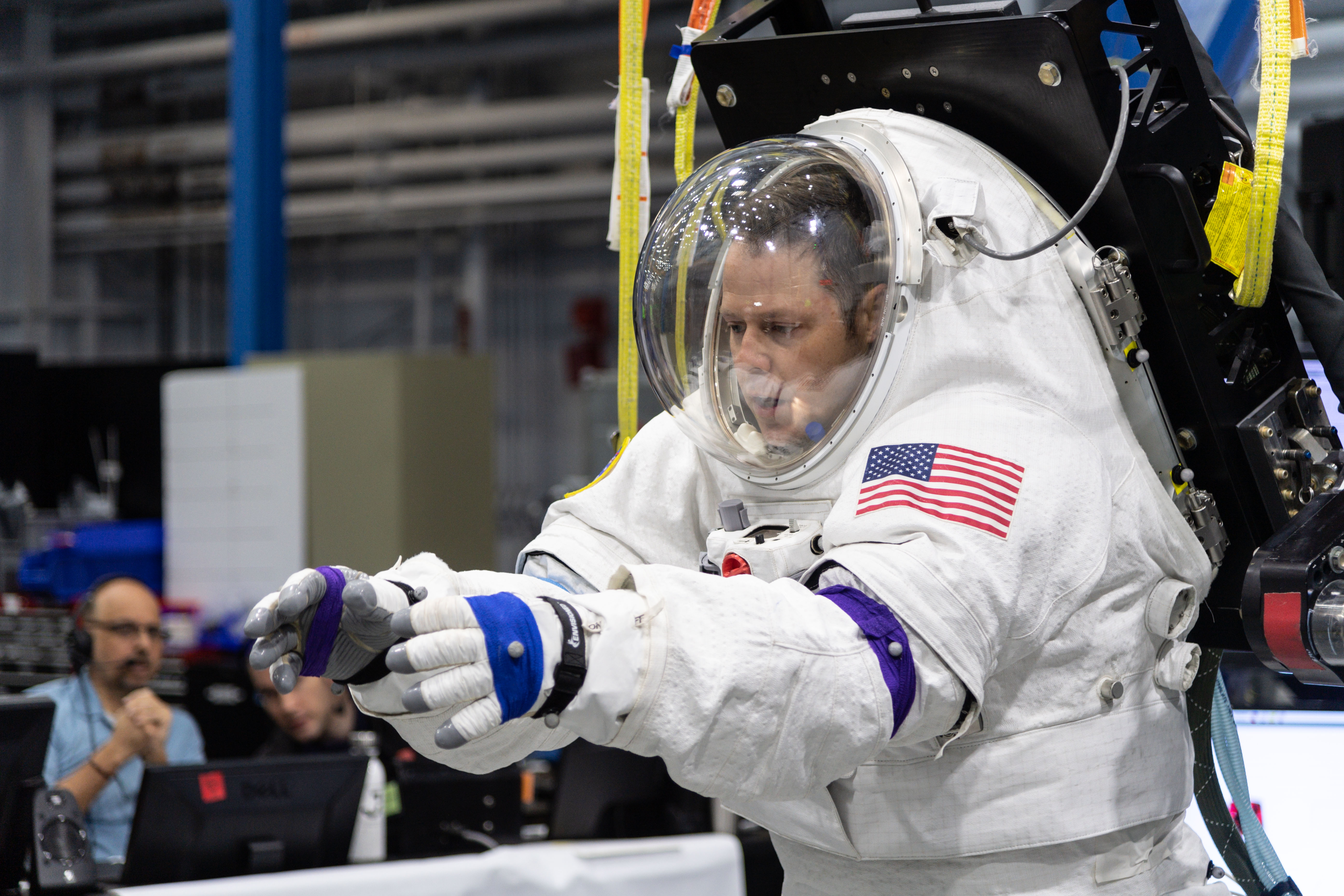
While many astronauts have completed space station training or an EVA, the skills required for lunar exploration will be different. “It’s going to be a completely new spacesuit, new vehicles, new environment,” Wray said. “And now they’re going to be walking instead of translating with their hands like we do on station.” At the same time, trainings must go beyond these foundational spacewalk techniques. “Our curriculum integrates geology, covering topics like impact cratering, volcanology, sample collection, and traverse planning,” Wray explained. “It’s about enabling astronauts to become effective field scientists while mastering complex EVA operations.”
To build these skills, the team uses multiple training environments. The Neutral Buoyancy Laboratory has been NASA’s flagship EVA training facility since it opened in 1997, but the team also uses the Active Response Gravity Offload System for suited mobility practice. Additional training systems include virtual reality, lighting laboratories that simulate the Moon’s harsh South Pole lighting conditions, field sites for geology training and sample collection, and suit simulators that prepare astronauts to respond to caution-and-warning scenarios.
“Spearheading this effort as EVA training lead allows me to ensure every element—from science to operations—is integrated into a program that will prepare astronauts for success on the Moon and beyond,” Wray said. “This effort is more than preparation, it’s the foundation for future exploration and a steppingstone toward Mars. Knowing that our work will help shape the next era of human spaceflight is incredibly rewarding.”
Amid these complex preparations, Wray still finds time for new pursuits outside of the office. His daughter inspired him and his wife to try an acting class at a local fine arts studio, leading to Wray’s on-stage debut in a performance of “Rock of Ages.” He starred as William Shakespeare in this year’s production of “Something Rotten.” “I never would have thought I’d have so much fun acting, singing, and dancing on stage,” he said. “The community we are part of and the ability to join our daughter in activities she enjoys has been so rewarding.”
Wray said he is incredibly grateful to play another role off-stage – being part of missions that will conduct meaningful science on the lunar surface. “Returning to the Moon is something I’ve dreamed about since I was a kid,” he said. “Artemis isn’t just about going back—it’s about shaping the future. When we choose to push the boundaries of exploration, the advancements we make don’t just expand knowledge, they create lasting benefits for all of humanity.”
About the Author

Linda E. Grimm
Share
Details
Related Terms
Explore More





Fire’s Footprint on Santa Rosa Island
2026-06-02 04:01




May 16, 2026
May 24, 2026
On May 15, 2026, a fire was spotted from aircraft on the southeastern side of Santa Rosa Island, part of California’s Channel Islands National Park. The blaze spread over the next several days, ultimately burning 18,379 acres (7,438 hectares)—about one-third of the island.
These images show the expansion of the fire’s burned area between May 16 (left), the day after it was discovered, and May 24 (right), after the fire’s growth had stabilized. The Landsat satellite images are false-color to help distinguish burned areas (brown) from healthy vegetation (green). Officials reported the fire was 97 percent contained by the evening of May 26.
NASA tools utilizing satellite observations, namely FIRMS (Fire Information for Resource Management System) and the Fire Event Explorer, show how the fire spread to the north and east over several days. As it advanced, it consumed areas of grassland, coastal sage scrub, and island chaparral.
Santa Rosa Island, like the other Channel Islands, is known for its diversity of plant and animal species, some of them rare. Observers were concerned that the fire threatened the island’s Torrey pines, a rare type of tree that in the United States grows naturally only on the northeastern coast of Santa Rosa Island and near San Diego.
Initial post-fire surveys by firefighters and unmanned aircraft indicated the Torrey pine stand remained largely intact. The fire mostly burned at lower intensity through the pine areas and spared the canopy. However, some pockets of forest sustained damage where intensity was higher. Along the northwest edge of the fire, suppression crews worked to protect another vulnerable area—the cloud forests—by cooling fuels ahead of the fire’s front.
Local reports suggest the Santa Rosa Island fire is the largest on record on any of California’s Channel Islands. Some of the islands’ chaparral and tree species are adapted to fire but less dependent on it than their mainland counterparts, according to the National Park Service, because naturally occurring fire is less frequent on the Channel Islands.
NASA Earth Observatory images by Lauren Dauphin, using Landsat data from the U.S. Geological Survey. Story by Lindsey Doermann.


References & Resources
- Capital Public Radio (2020) California Wildfire History Map. Accessed May 29, 2026.
- InciWeb (2026, May 28) Santa Rosa Island Fire. Accessed May 29, 2026.
- NASA Earth Observatory (2026, May 20) Fire Chars Santa Rosa Island. Accessed May 29, 2026.
- National Park Service, Channel Islands. Accessed May 29, 2026.
- Santa Barbara Independent (2026, May 21) What We’re Losing in the Santa Rosa Island Fire. Accessed May 29, 2026.
You may also be interested in:
Stay up-to-date with the latest content from NASA as we explore the universe and discover more about our home planet.

The blaze spread across the southern side of the second-largest island in California’s Channel Islands National Park.
Dry, warm, and windy conditions across the U.S. Great Plains led to extreme fire activity in March 2026.

The National fire has burned tens of thousands of acres within the Florida preserve, fueled by vegetation dried by prolonged…




NASA Awards Modification Contract for Reduced Gravity Test Aircraft
2026-06-01 23:45
1 min read
Preparations for Next Moonwalk Simulations Underway (and Underwater)

NASA selected Denmar Technical Services of Nevada to provide aircraft modifications, maintenance, and testing services to the Human Spaceflight Mission Directorate at NASA’s Armstrong Flight Research Center in Edwards, California, and Johnson Space Center in Houston.
The award is a firm-fixed-price contract and will be time and material for any over and above and unforeseen work. This contract has a maximum potential value of $8.4 million, which runs through Feb. 1, 2027.
The contractor will modify a Boeing 737-700 aircraft to perform lunar-gravity parabolic flights to test NASA space equipment. Once modifications are complete, NASA Armstrong will own the aircraft and oversee aircraft operations out of NASA Johnson.
The aircraft will be used to validate astronaut lunar suits and associated crew systems required to support Artemis mission objectives. This can be done with the modified 737 aircraft in an operationally relevant, reduced-gravity environment prior to lunar mission execution.
For information about NASA and agency programs, visit:
-end-
Dede Dinius
Armstrong Flight Research Center, Edwards, Calif.
661-276-5701
darin.l.dinius@nasa.gov
Share
Details
Related Terms
TechCrunch - Latest
OpenAI launches new Codex tools for white-collar work
2026-06-02 16:00
Board, the new game startup from Mirror founder Brynn Putnam, raises $20M, has already sold thousands
2026-06-02 15:56
Password manager Dashlane says hackers stole some customers’ password vaults
2026-06-02 15:40
Turning your purse into a cyberdeck is the most fun way to resist big tech
2026-06-02 15:24
How Europe’s AI strategy diverges from Silicon Valley’s
2026-06-02 15:05