📰 Trending Topics
Google News - Trending
Google News - Technology
Nvidia Stock Jumps After New PC Push Triggers Selloff in Intel, AMD - Yahoo Finance
2026-06-01 17:40
- Nvidia Stock Jumps After New PC Push Triggers Selloff in Intel, AMD Yahoo Finance
- Nvidia Introduces First PCs Designed for AI Agents WSJ
- Microsoft’s Surface Laptop Ultra looks like its first true MacBook Pro competitor Ars Technica
- NVIDIA and Microsoft Reinvent Windows PCs for the Age of Personal AI NVIDIA Newsroom
- Nvidia jumps into PCs with new Arm-based chip debuting in laptops from Microsoft, Dell, HP CNBC
Sony’s new fight stick and gaming monitor launch in August - The Verge
2026-06-01 16:36
- Sony’s new fight stick and gaming monitor launch in August The Verge
- Sony Shares Release Date, Pricing Details for Newest PlayStation Accessories CNET
- New PlayStation Hardware Hands-On: Here’s All the New Gear Joining the PlayStation Ecosystem This Year IGN
- Official PS5 Wireless Gaming Gear: FlexStrike and PULSE Elevate Inven Global
- Sony confirms new PlayStation hardware releases for 2026 Polygon.com
Computex 2026: All the news and announcements - The Verge
2026-06-01 20:02
- Computex 2026: All the news and announcements The Verge
- Live From Computex 2026: We're in Taipei Bringing You Every Big PC Hardware Reveal As It Happens PCMag
- Computex 2026 Live: Every update and announcement from day one in Taipei Tom's Hardware
- Intel Computex 2026: Tan Meets TSMC as 200% Stock Surge Faces Its Toughest Test Yet Tech Times
- Computex 2026 LIVE — Nvidia RTX Spark to 'reinvent the PC', Intel Arc G3 is a gaming handheld breakthrough and more Tom's Guide
MacBook Neo rival launched at $599; Nvidia PC chip takes on Apple Silicon - 9to5Mac
2026-06-01 12:00
- MacBook Neo rival launched at $599; Nvidia PC chip takes on Apple Silicon 9to5Mac
- Dell Rivals Apple’s MacBook Neo With $699 Touch-Screen XPS 13 Laptop Bloomberg.com
- Dell’s $599 XPS 13 is coming for the MacBook Neo’s lunch money PCWorld
- At Computex, Dell’s $700 XPS 13 Sets Its Sights on the MacBook Neo PCMag
- Dell is bringing back the XPS 13 as a MacBook Neo competitor — with a temporary discount to $599 The Verge
Cheaper, Lighter Apple Vision Pro Successor Could Arrive in Late 2028 - MacRumors
2026-06-01 09:30
- Cheaper, Lighter Apple Vision Pro Successor Could Arrive in Late 2028 MacRumors
- Apple Seeks to Disrupt the Glasses Market the Way It Did With Watches Bloomberg.com
- Apple's smart glasses have been delayed into 2027, report claims Mashable
- Apple’s strategy for smart glasses is the same as for smart watches The Verge
- Latest Apple Glasses leak has me way more excited for the product 9to5Mac
NASA - Breaking News
NASA to Conduct Low-Altitude Flights Near Houston
2026-06-01 18:29
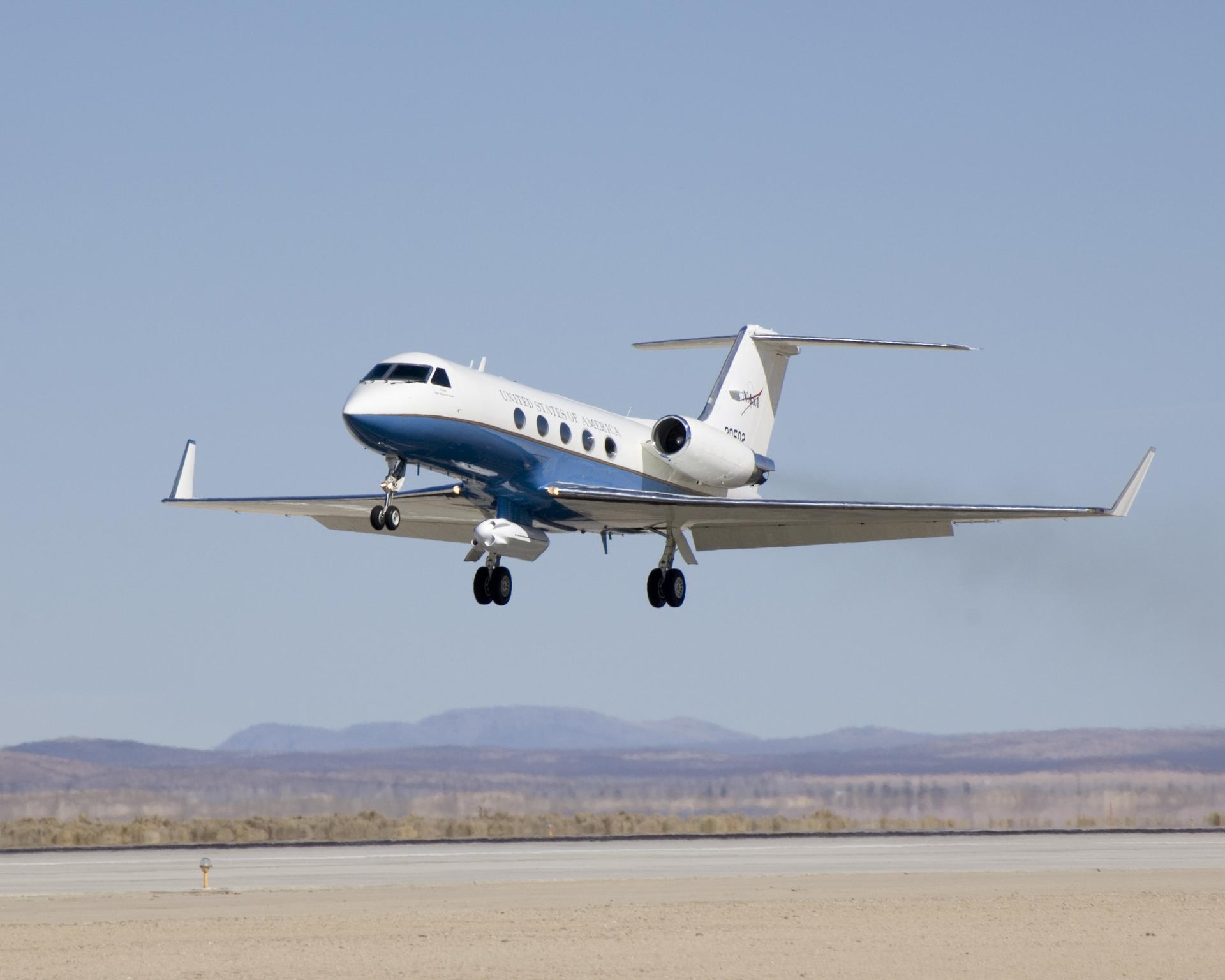
Five research aircraft will support a Student Airborne Research Program (SARP) mission out of Ellington Field in Houston. Flights are expected from Wednesday, June 3 to Saturday, June 13. During the mission, select maneuvers will be conducted at low altitudes over the Houston area.
Pilots will fly remote sensing payloads in raster patterns, or parallel back-and-forth lines. The instruments flown could help researchers map the movement of the gases and particles that make up Earth’s atmosphere, changes to the lowest part of the atmosphere near the coastline, and the natural processes affecting the land and water in that area. The flights will primarily take place in the Houston area, with some extending over the Gulf of America.
While many of the flights will operate at higher altitudes, a WP-3D Orion will conduct maneuvers as low as 1,000 feet above ground level. Owned and operated by the National Oceanic and Atmospheric Administration (NOAA), this aircraft is used as a hurricane hunter and has supported several airborne science missions for NASA. It is equipped with a multitude of scientific instrumentation, radars, and recording systems for both in-flight and remote sensing measurements of the atmosphere, the Earth, and its environment.
The NASA-operated aircraft participating in the mission also are equipped with a variety of remote sensing instruments, including two lidars, a synthetic-aperture radar, an imaging spectrometer, and two spectrometers.
The operations will involve the agency’s Gulfstream V (N95NA), Gulfstream C-20A (N802NA), and Gulfstream III (N520NA), as well as NOAA’s WP-3D Orion (N43RF) and a King Air B200 aircraft (N46L) owned by Dynamic Aviation and contracted by NASA. The flights can be tracked in real time at NASA Airborne Science Program Tracker.
The SARP effort is an eight-week summer internship program that provides undergraduate students with hands-on experience by engaging in field research and data analysis and with access to one or more NASA Airborne Science Program flying science laboratories.
For more information about the NASA Airborne Science program, visit:
What’s Up: June 2026 Skywatching Tips from NASA
2026-06-01 18:13
Venus and Jupiter meet after sunset, the Moon passes in front of Venus, summer begins, and deep-sky treasures rise into view.
Skywatching Highlights
- June 9: Venus and Jupiter conjunction
- June 11–15: Mercury joins Venus and Jupiter after sunset
- June 17: Moon passes in front of Venus & close Moon and Venus pairing
- June 21: June solstice & start of astronomical summer
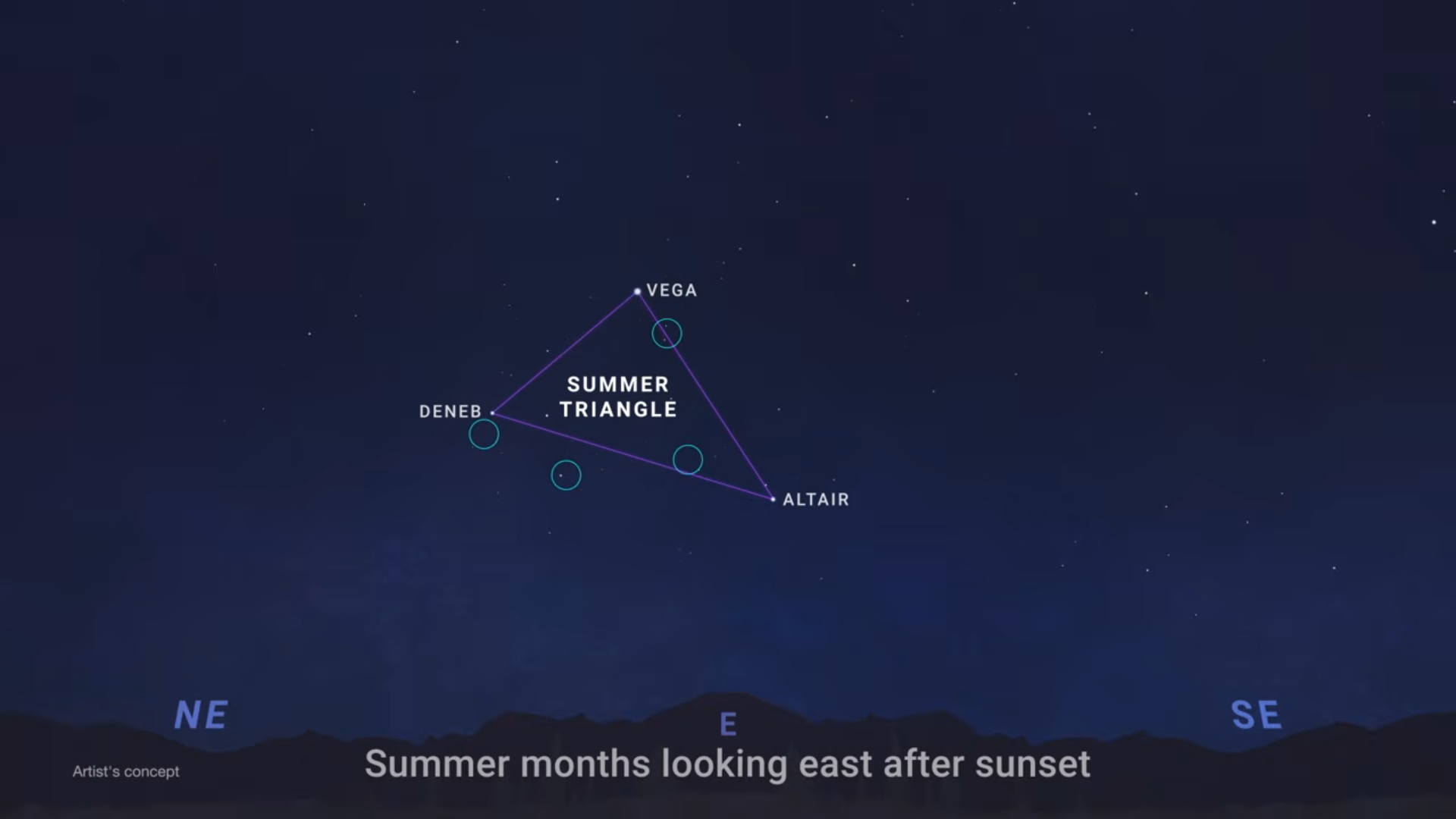
- June: Summer Triangle and deep-sky observing targets rise into view
Transcript
Planets gather after sunset, the Moon passes in front of Venus, summer officially begins and deep sky treasures rise into view. That’s What’s Up for June.
Early this month, look west shortly after sunset to see Venus and Jupiter. They are two of the brightest planets in our sky and around June 9th, they’ll appear close together after sunset. This is called a planetary conjunction—when two planets appear near each other from our point of view on Earth, even though they’re still millions of miles apart in space.
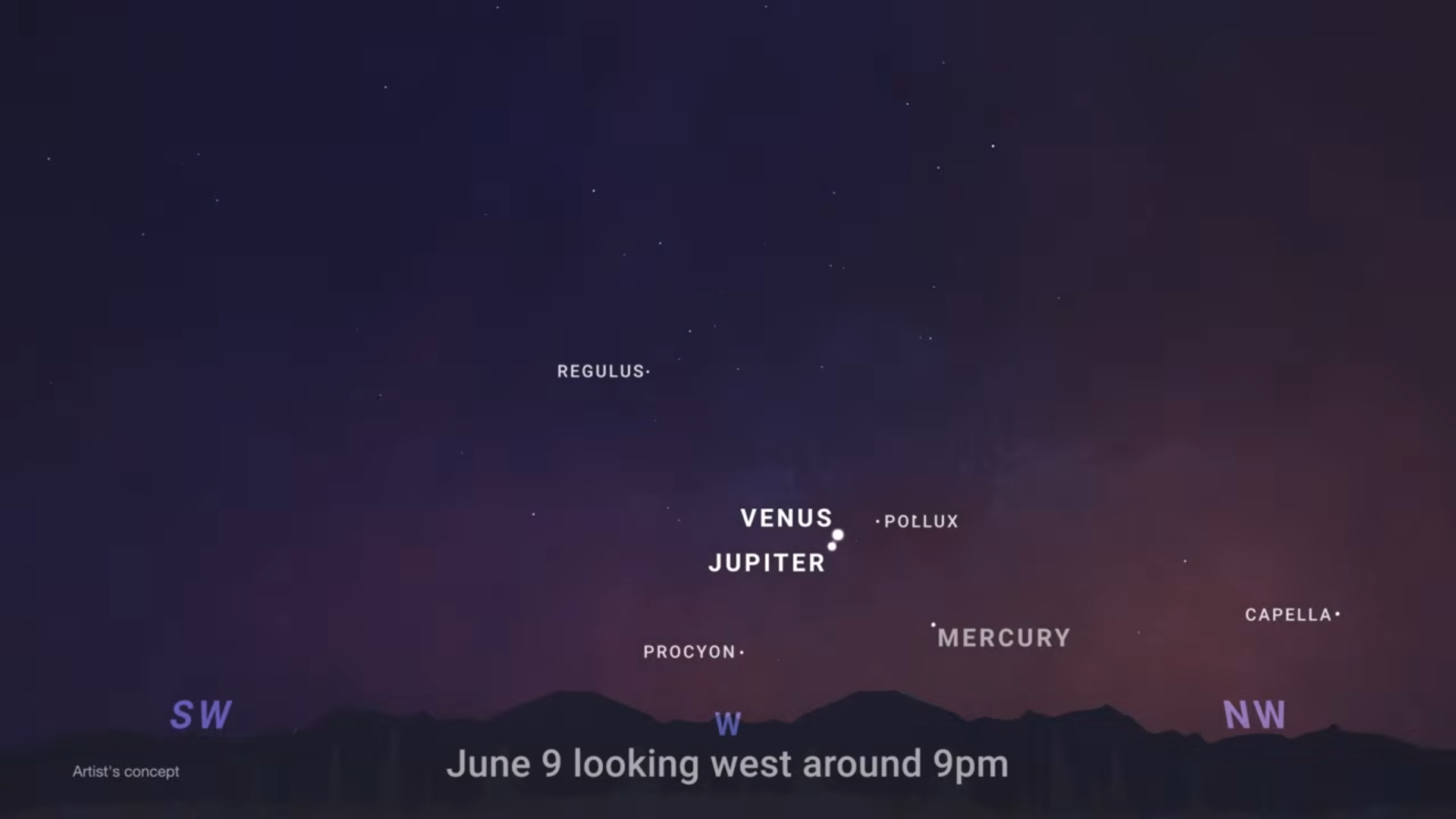
From June 11th through June 15th, Mercury joins the scene, creating a mini parade of planets low in the western sky. This happens because the planets orbit the sun along nearly the same path in our sky, called the ecliptic. So from our point of view on Earth, they sometimes appear to gather in the same part of the sky.
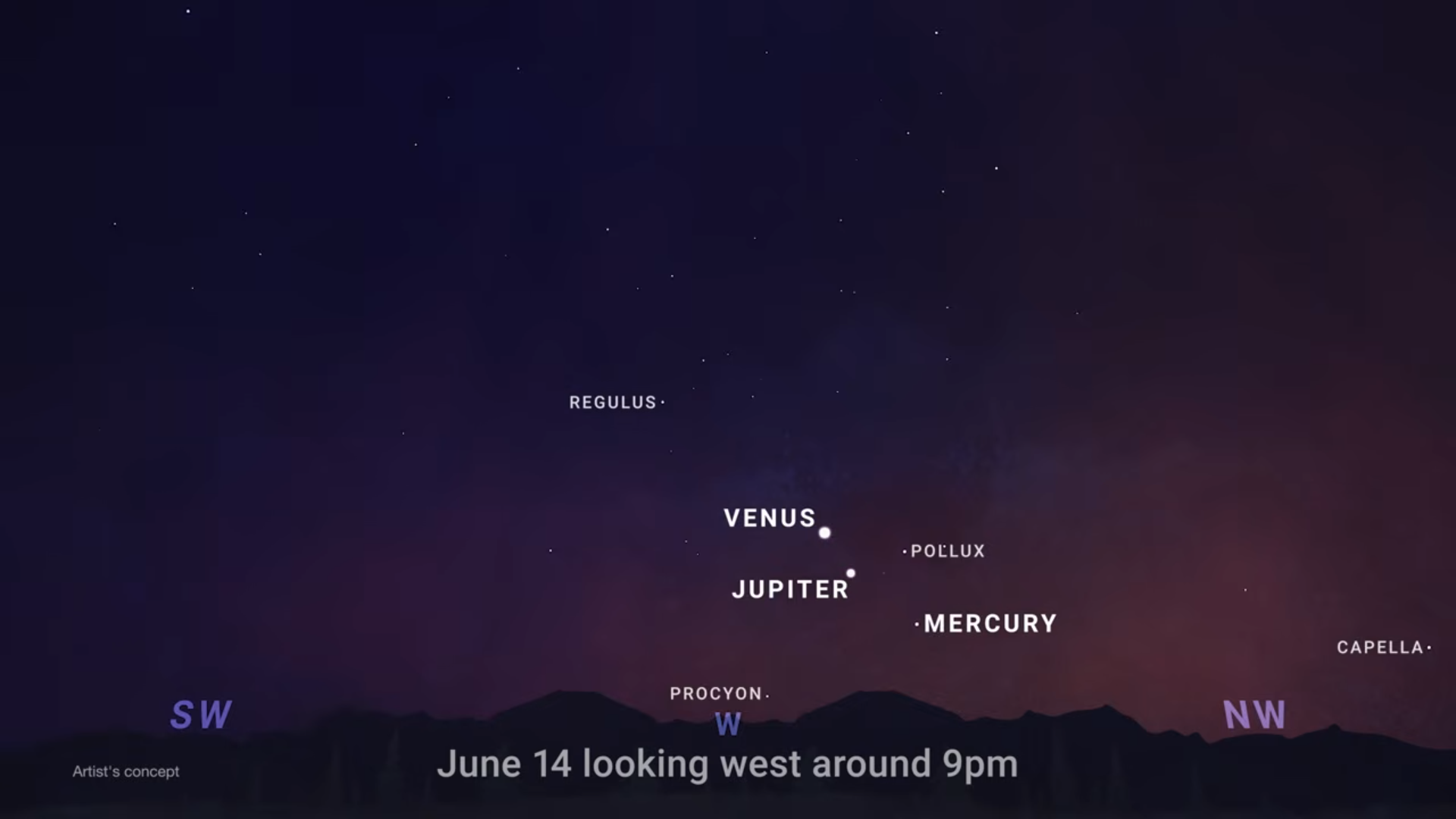
Venus will be the brightest and easiest to spot with Jupiter nearby. Mercury will sit lower toward the horizon, so you will need a clear view to the west to catch it in the glow of twilight.
On June 17th, from some locations the Moon will pass in front of Venus. This is called a lunar occultation. For viewers in the right viewing path, Venus will look like it disappears behind the Moon, then reappears later. The event will be visible from parts of the United States, Canada, Brazil and Venezuela. Outside of the exact viewing path, many skywatchers may still see a close pairing of the Moon and Venus, but this comes with an important safety note. For many viewers this will happen during the daytime.
If you’re trying to observe the occultation, do not point binoculars, a telescope, or a camera near the sun unless you’re using proper solar safety equipment. Looking at or near the sun through optics can cause serious eye injury.
June also brings the summer solstice. In the Northern Hemisphere, the June solstice marks the start of the astronomical summer. In Pacific time, it happens on Sunday, June 21st at 1:24 a.m.
Around the solstice, the Northern Hemisphere gets its longest days and shortest nights of the year.
But here’s a fun fact, the longest day does not usually line up exactly with the earliest sunrise or latest sunset. For example, in Los Angeles, the earliest sunrise comes before the solstice, while the latest sunset comes after it.
And once the sky gets dark, summer brings some favorite targets for telescope users and astrophotographers. First, look for the Summer Triangle, formed by the bright stars Vega, Altair, and Deneb. Inside and around this region are deep sky objects like the Dumbbell Nebula, the Ring Nebula, the North America Nebula, and the Veil Nebula. The Dumbbell Nebula, also known as Messier 27, was the first planetary nebula ever discovered.
These objects are not bright like planets, but with telescopes or long exposure photography, they reveal glowing gas, dying stars, and stellar nurseries in our galaxy.
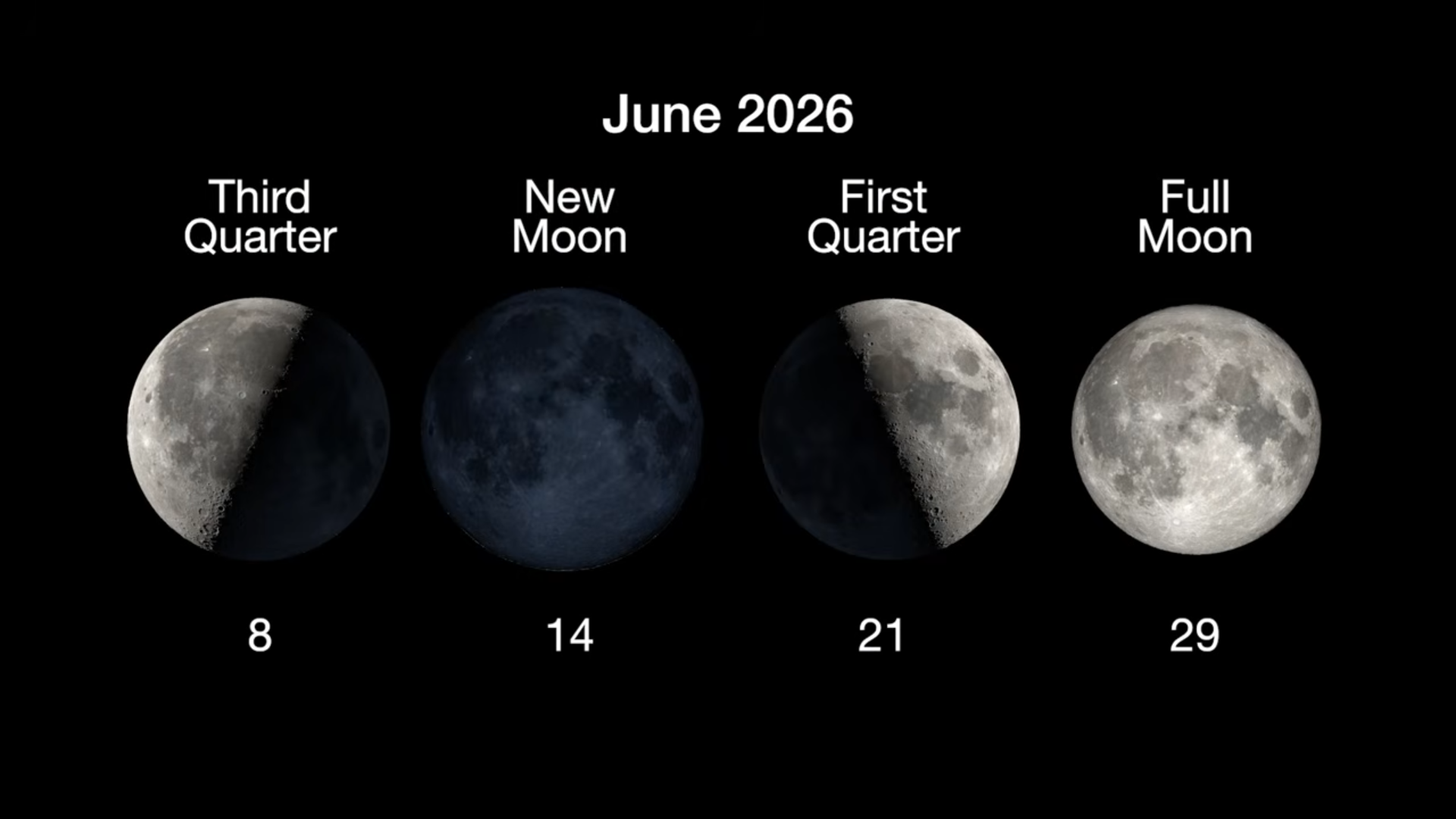
Here are the phases of the Moon for June. You can stay up to date on all of NASA’s missions exploring the solar system and beyond at science.nasa.gov. I’m Raquel Villanueva from NASA’s Jet Propulsion Laboratory, and that’s What’s Up this month.

Pretty in Pink
2026-06-01 14:30
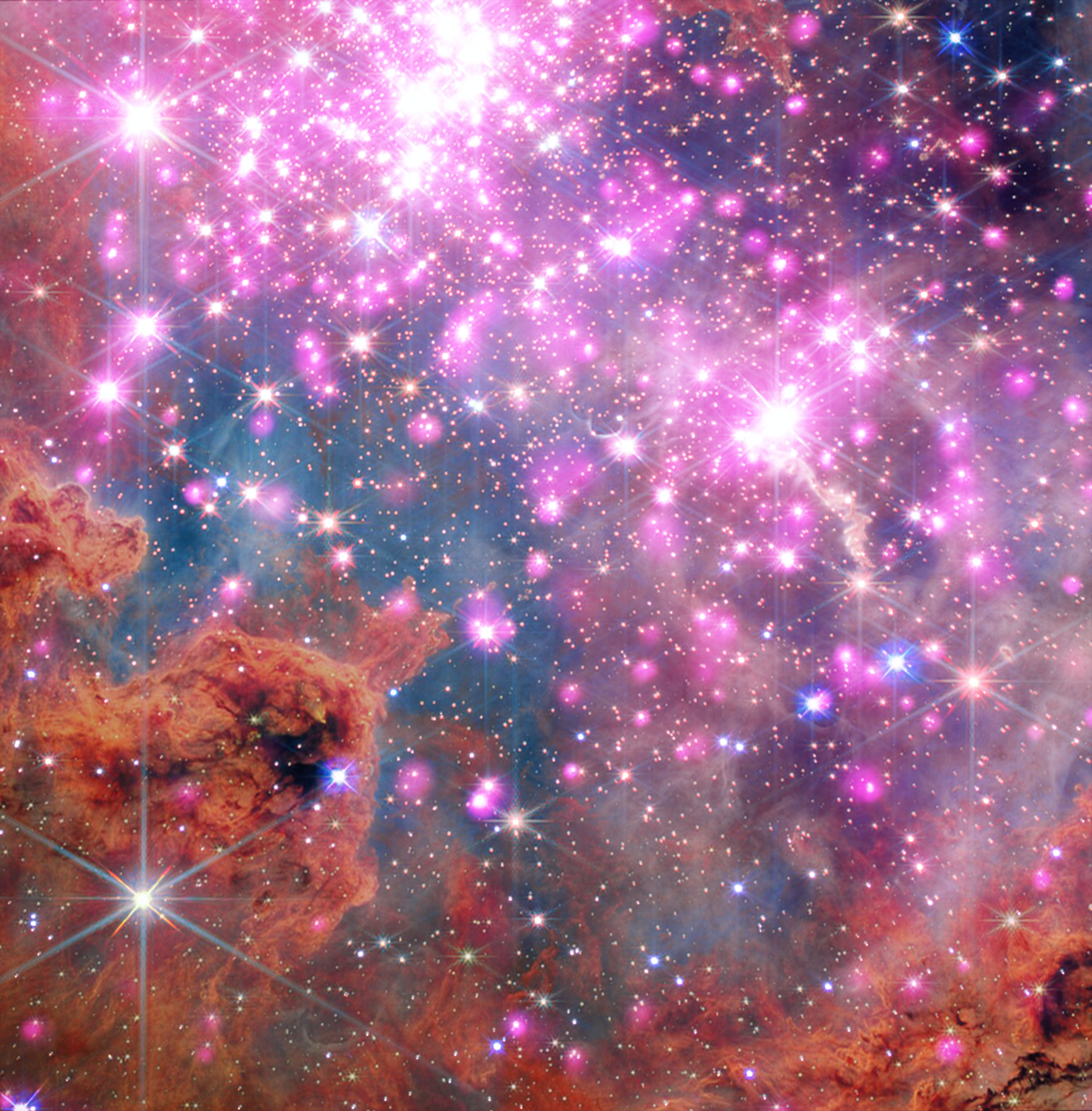
This image of Westerlund 2 released on March 19, 2026, features Chandra X-ray Observatory data (pink) and infrared data from NASA’S James Webb Space Telescope (red, orange, green, cyan, and blue). Scores of gleaming stars ringed in neon pink stretch across the frame, highlighting a cluster where stars are between one and three million years old. Brick-orange dust clouds along the bottom edge illustrate the raw materials of this active stellar nursery.
Westerlund 2 resides in a raucous stellar breeding ground known as Gum 29, located 20,000 light-years away from Earth in the constellation Carina.
See a different view of Westerlund 2.
Image credit: X-ray: NASA/CXC/SAO/Sejong Univ./Hur et al; JWST: ESA/Webb, NASA & CSA, V. Almendros-Abad, M. Guarcello, K. Monsch, and the EWOCS team. Image Processing: NASA/CXC/SAO/L. Frattare and K. Arcand
Space Out This Summer with Variety of NASA STEM Activities
2026-06-01 12:03
Space Out This Summer with Variety of NASA STEM Activities

Summer is “Go” for launch, and NASA has a universe of ways to help you to jump in, explore, and create! Whether you prefer to spend this season fueling your creativity, going outdoors into nature, or daydreaming about your future, NASA offers ways to take your interests to the next level.
Here are some opportunities to level up your skills with NASA STEM this summer.
Rise to Stardance Challenge
From Monday, June 1, through Sept. 30, students ages 13 to 18 are invited to flex their creativity in the online Stardance Challenge, a partnership between NASA and the education non-profit Hack Club. Whether you’re into space, coding, hardware, or just love building cool things, this is your chance to work with real NASA mission data from programs like Artemis, the James Webb Space Telescope, and more.
Participants can create anything from code and apps to electronics, circuit boards, models, and simulations. Hack Club will offer peer and expert reviews, prizes, and plenty of opportunities to show off your work. Meanwhile, NASA will provide access to publicly available datasets, mission materials, multimedia, and virtual sessions with subject matter experts who can share insights on space science, engineering, and careers. Ready to start brainstorming? Visit the Hack Club: Stardance Challenge website to explore project options, check out prizes, and RSVP to get a reminder when the challenge opens

Go Behind Scenes of NASA Careers
Think NASA is only for astronauts, scientists, and tech experts? Think again. It takes a wide range of professionals and specialists to bring the nation’s aerospace goals to life. Summer is the perfect time to discover how your skills and interests could make a difference at NASA.
Connect directly with NASA experts through online events designed to spark your curiosity and help you explore real STEM career paths. These virtual sessions provide a behind‑the‑scenes look at NASA’s workforce, plus the chance to ask questions.
- Tuesday, June 2: NASA’s Career Technical Education Day at Goddard Space Flight Center dives into robotics, AI, autonomous systems, and the skilled technical careers that keep NASA missions running. Register by May 26.
- Thursday, June 11: Virtual Career Connection: Aviation Technology and Maintenance introduces you to aircraft mechanics and technicians who support NASA’s flight programs and explores pathways into aviation technology careers. Register by June 2.
Looking for more? Check out the Next Gen STEM for Careers web page for videos, articles, and more ways to learn about the variety of jobs at NASA.
Dive into NASA Research Through Citizen Science
NASA invites people of all ages and backgrounds to do NASA science as a part of real science projects that rely on volunteers. Citizen Science is a great way to make new friends, meet some scientists, and help NASA solve mysteries of the universe this summer – using just a phone or computer. You can join from anywhere, participate on your own schedule, and dive right into real research using actual mission data. Here are two examples:
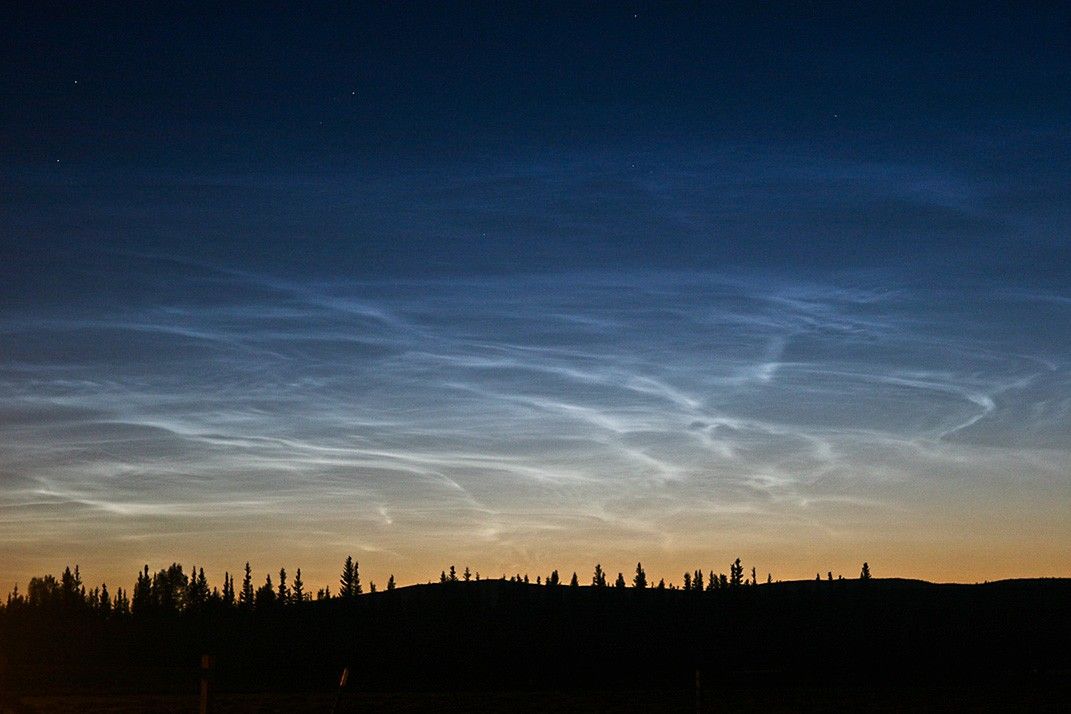
- Through Space Cloud Watch, you can help NASA study noctilucent clouds. Noctilucent means “night-shining,” and that’s exactly what they do! During summer twilight at high latitudes, these clouds catch sunlight and appear to glow even in a darkened sky. Take a photo and submit a report to help scientists track how these rare clouds are changing.
- Take your cloud‑watching to another planet with Cloudspotting on Mars, where you review real NASA images to identify clouds above the Red Planet and help scientists understand Martian weather.
Curious about what other projects you might enjoy? See all current Citizen Science opportunities available through NASA’s Science Mission Directorate.
No matter how you spend your summer – building projects like the Hack Club’s Stardance Challenge, jumping into real NASA research through citizen science, or exploring possible NASA career paths – there’s a launch pad waiting for you. And remember, NASA’s STEM Resources website is available year-round to serve as your one-stop hub for hands-on activities, videos, articles, and more to spark curiosity and fuel big ideas.
Gravity Waves From Super Typhoon Sinlaku
2026-06-01 04:01
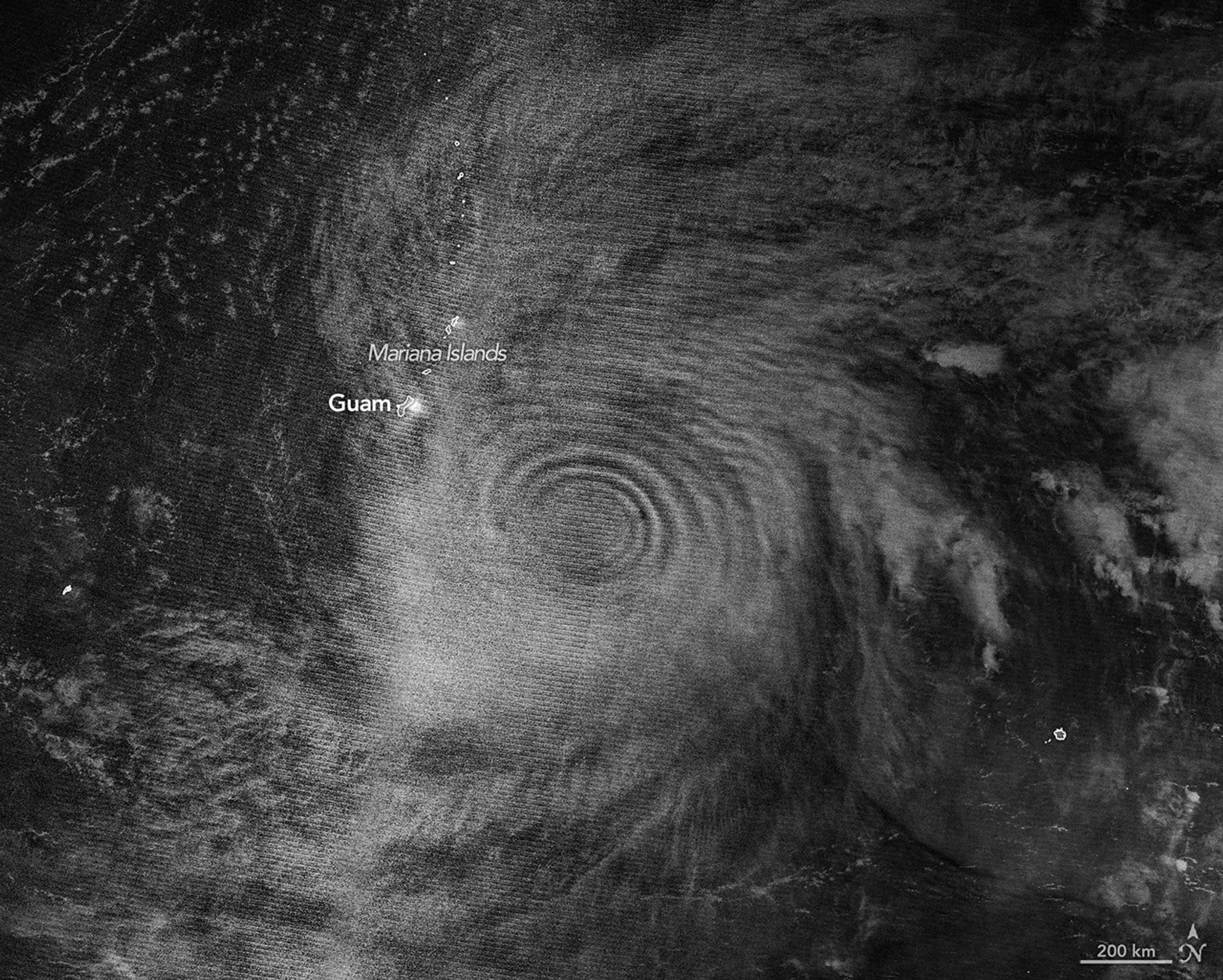
In mid-April 2026, Super Typhoon Sinlaku churned across the North Pacific Ocean and brought heavy rain and flooding to the Mariana Islands. The storm reached “violent typhoon” status—the highest intensity on the scale used by the Japan Meteorological Agency and roughly equivalent to a category 5 storm on the Saffir-Simpson wind scale. Sinlaku was one of only a handful of tropical cyclones of that intensity known to have occurred so early in the year in the region, meteorologists noted.
Sinlaku rapidly intensified over the ocean before its impacts reached land. Around the time of this strengthening, satellites began to detect that the typhoon’s effects also extended upward, into the upper atmosphere.
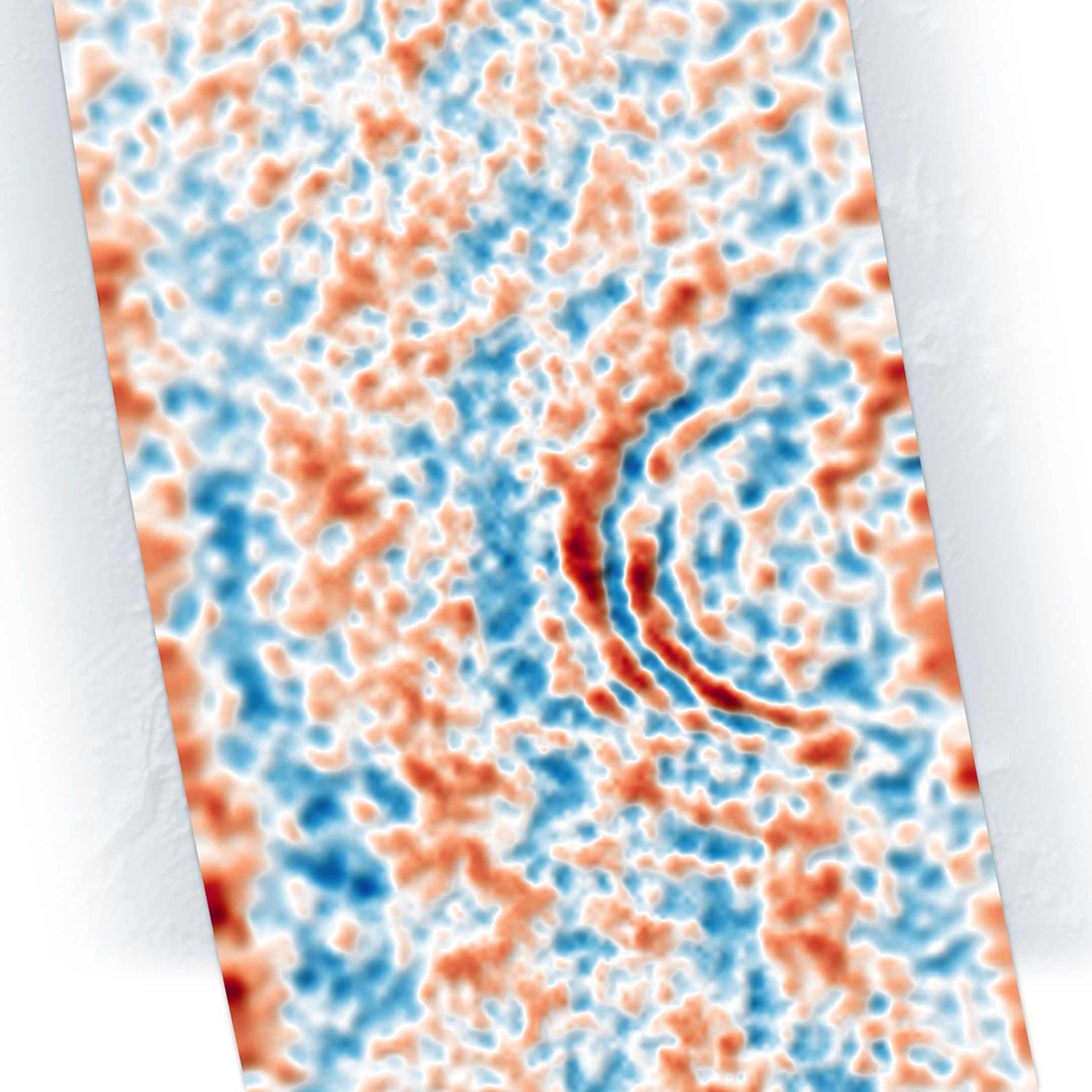
The nighttime image above, acquired with the VIIRS (Visible Infrared Imaging Radiometer Suite) on the NOAA-20 satellite, shows atmospheric gravity waves radiating from the typhoon. These waves, resembling ripples on a pond, were made visible to the sensor via airglow in the mesosphere. Airglow occurs when atoms and molecules, excited by sunlight during the day, later emit light to release excess energy.
The release of latent heat near the eyewalls of tropical cyclones is known to drive convection and the formation of tall cumulonimbus clouds. These “hot towers” can rise out of the troposphere, the lowest layer of the atmosphere, and generate waves that propagate into the stratosphere and mesosphere above. An analysis of past tropical cyclones revealed that gravity waves often occur around the time that storms are intensifying. Indeed, in the 24 hours prior to the acquisition of the image above, Sinlaku had strengthened from a category 2 to a category 5 storm.
“We’re seeing waves propagating radially and upward, in a cone-like shape,” said Joan Alexander, senior research scientist at NorthWest Research Associates. Alexander was surprised to see nearly complete rings in the mesospheric airglow above the storm. Winds in the upper atmosphere can dissipate the waves before they reach such high altitudes, Alexander explained, but relatively light stratospheric winds at the storm’s latitude in April 2026 may have helped preserve them.
A relatively low amount of moonlight was fortuitous, as well. The VIIRS day-night band is sensitive to airglow in the mesosphere but also observes reflected moonlight. The Moon was about 25 percent illuminated on April 12, so some light reflected off clouds in the troposphere was visible, but not enough to overpower the signal from the airglow.
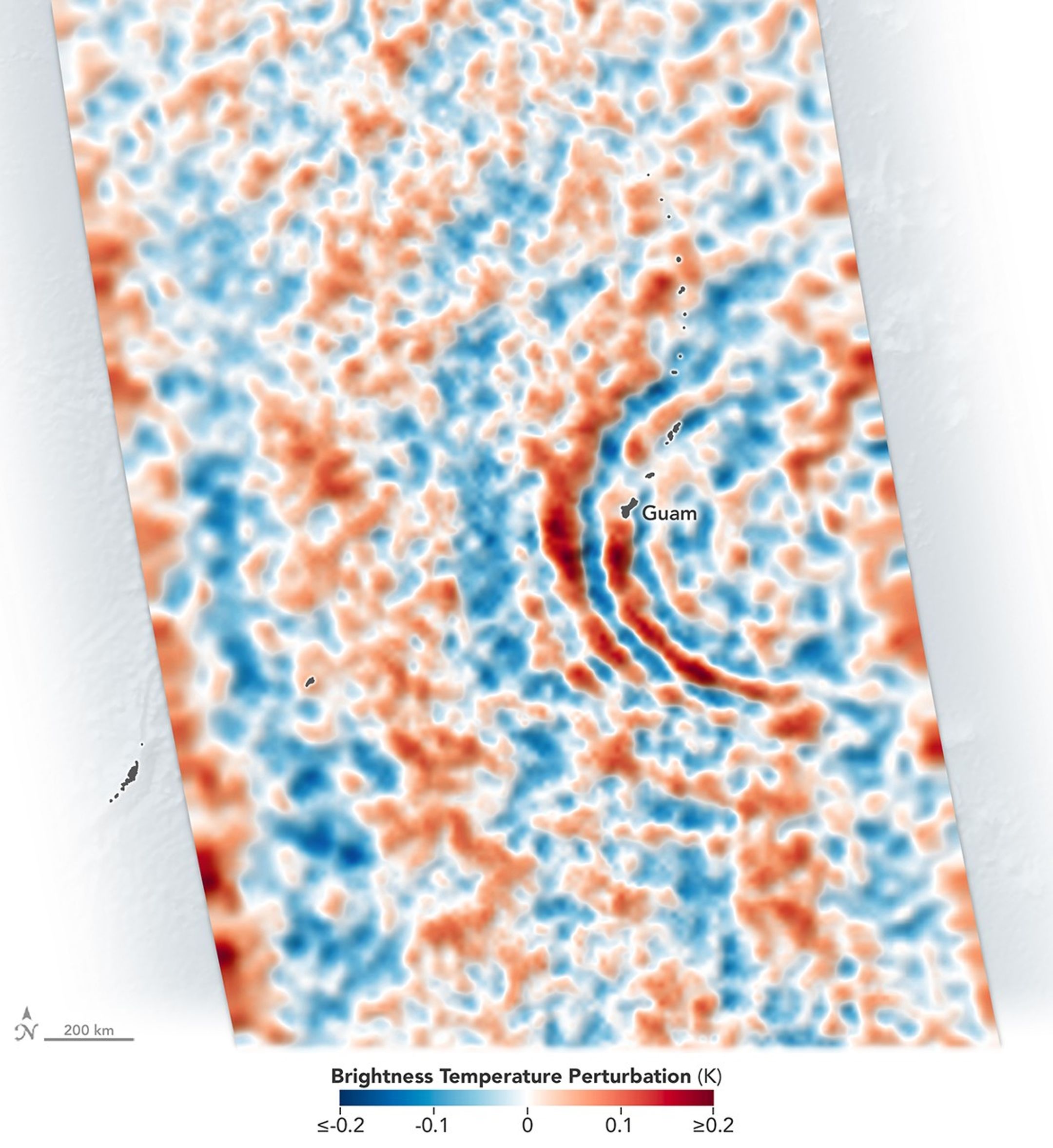
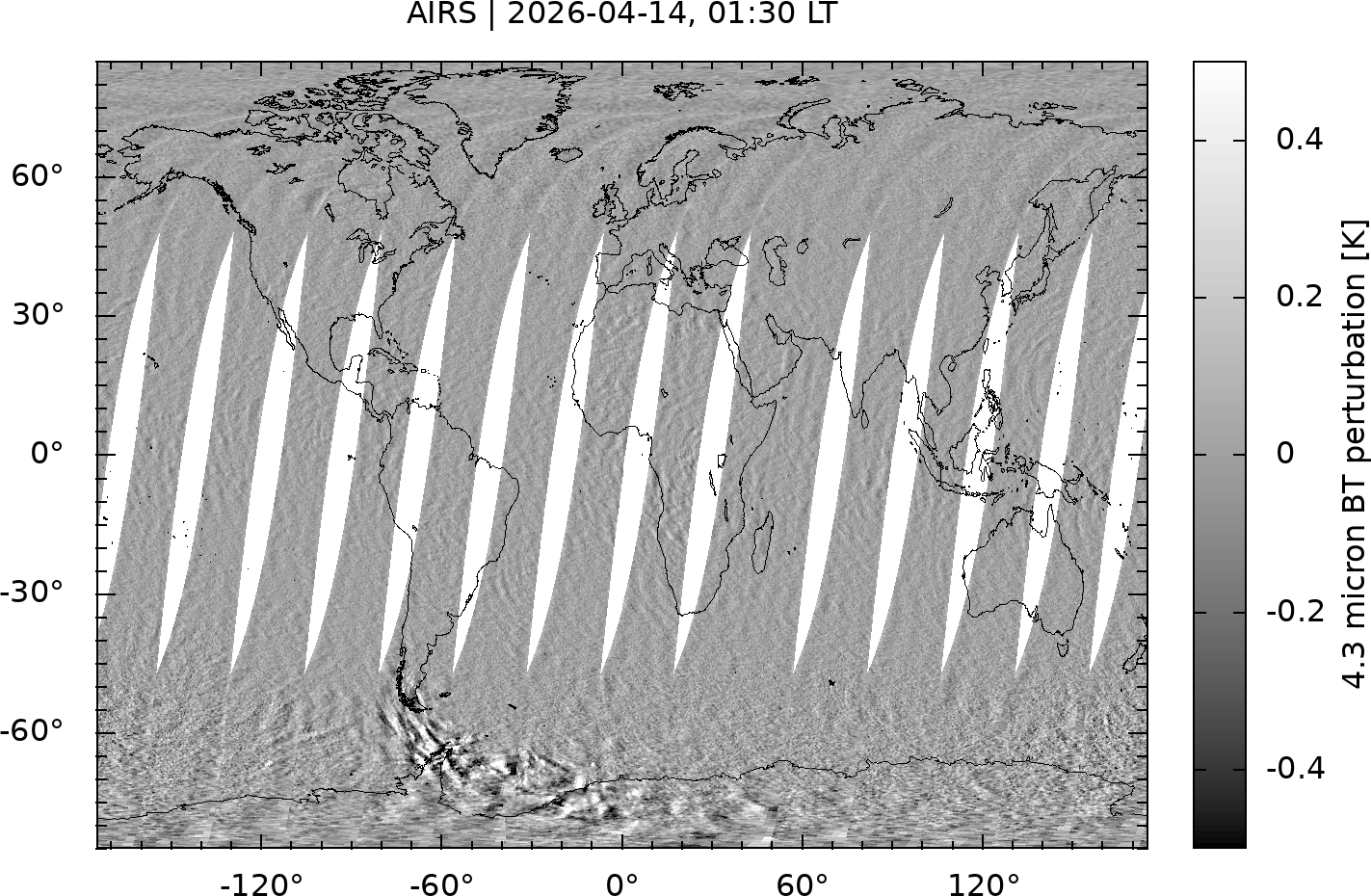
Sinlaku’s gravity waves, in addition to appearing high in the atmosphere via airglow, were observed lower in the atmosphere by the AIRS (Atmospheric Infrared Sounder) instrument on NASA’s Aqua satellite. The image above depicts thermal emissions from gravity waves in the stratosphere on April 13. The rippling pattern appeared in April 14 observations, as well, indicating the storm’s continuing effects on the atmosphere.
Observing atmospheric gravity waves, particularly those caused by tropical cyclones, goes beyond scientific curiosity. Practical implications could include improved monitoring of storm development. “We’d like to use gravity waves to tell us if a storm is intensifying,” Alexander said, “which can be difficult to know, especially over the open ocean.” A geostationary satellite with the proper infrared imager would be able to observe gravity waves and track tropical cyclone evolution, she and colleagues have argued.
Furthermore, it’s critical to account for processes in the stratosphere in weather models, said Laura Holt, also a senior research scientist at NorthWest Research Associates. Stratospheric wind patterns are factors in long-term forecasts of the next Northern Hemisphere winter, for example, and tropical cyclones have a disproportionate influence because their sustained, intense convection drives prolonged gravity wave forcing of the stratosphere.
The effect of gravity waves even reaches into the realm of space weather. “For a while, people have seen signatures of hurricanes in ionospheric weather,” Holt said. Gravity waves can lead to traveling ionospheric disturbances—large-scale ripples in plasma density—and in some cases plasma bubbles, both of which can disrupt satellite signals and radio communications. “With space weather in particular,” Holt added, “a single event such as a tropical cyclone can be very important.”
NASA Earth Observatory images by Michala Garrison, using VIIRS day-night band data from NASA EOSDIS LANCE, GIBS/Worldview, and the Joint Polar Satellite System (JPSS), and AIRS data from Hoffmann, L. Story by Lindsey Doermann.
References & Resources
Hoffmann, L., et al. (2018) Satellite observations of stratospheric gravity waves associated with the intensification of tropical cyclones. Geophysical Research Letters, 45, 1692–1700.
NASA (2018, October 22) Why NASA Watches Airglow, the Colors of the (Upper Atmospheric) Wind. Accessed May 28, 2026.
NASA Earth Observatory (2026, April 14) Super Typhoon Sinlaku. Accessed May 28, 2026.
Nolan, D. S. (2020) An Investigation of Spiral Gravity Waves Radiating from Tropical Cyclones Using a Linear, Nonhydrostatic Model. Journal of the Atmospheric Sciences, 77, 1733–1759.
You may also be interested in:
Stay up-to-date with the latest content from NASA as we explore the universe and discover more about our home planet.
The violent storm aimed at the U.S. Northern Mariana Islands and Guam in mid-April 2026.
The powerful storm lashed the northern edge of the continent with damaging winds and drenching rain as it made landfall…
Widespread flooding affected tens of thousands of people after cyclones Fytia and Gezani drenched the island.




TechCrunch - Latest
From the stage to the future: Where are Startup Battlefield’s alumni now?
2026-06-01 20:26
Florida sues OpenAI, Sam Altman, in first-of-its-kind lawsuit over violent incidents
2026-06-01 20:03
Hackers hijacked Instagram accounts by tricking Meta AI support chatbot into granting access
2026-06-01 18:34
Water access is now a risk factor in SpaceX’s IPO
2026-06-01 18:19
A new app, The Mall, is building a universal feed for online shopping
2026-06-01 17:50