dernier Landing Page

dernier News Guide

Get updated News about latest trends, and more Get updated News about latest trends and updates products
dernier Service
>

Dernier Trends Updates

This website uses cookies to ensure you get the best experience on our website. By clicking "Accept", you agree to our use of cookies. Learn more

Trending Topics

📰 Trending Topics

Google News - Trending

Google News - Technology

NASA - Breaking News

NASA’s Webb Discovers Hidden Planet in Famous Star System

2026-07-15 12:00

6 Min Read

NASA’s Webb Discovers Hidden Planet in Famous Star System

Artist's concept of the Beta Pictoris planetary system. One edge of a smooth, dusty disk that looks like cloud wisps extends across the upper third of the image at an angle from 9 o’clock to 2 o’clock. Just below that, in the left third of the image, the star glows white and is small. Just to the left of the star there is a tiny white dot, planet Beta Pictoris c. To the right of the star, about twice the distance between Beta Pictoris c and the star is another bright dot, representing planet Beta Pictoris b. A third planet, Beta Pictoris d is larger than the other two, and appears in the right third of the illustration. The planet has subtle orange cloud bands, and the side facing the star is illuminated. Below this planet, the other wispy edge of the dusty disk that circles the star crosses the bottom right corner of the illustration below Beta Pictoris d from 4 o’clock to 7 o’clock. The black background of space is speckled with distant stars. The words

This artist’s concept shows the Beta Pictoris system with the discovered giant exoplanet Beta Pictoris d at the right. It has the widest orbit of the known three exoplanets within the system.

Credits:
Illustration: NASA, ESA, CSA, STScI, Ralf Crawford (STScI)

Astronomers using NASA’s James Webb Space Telescope have discovered a giant planet outside our solar system, called an exoplanet, hiding within one of the most intensely studied planetary systems in our Milky Way galaxy.

The young, nearby star Beta Pictoris was already known to host two giant planets: Beta Pictoris b, one of the first exoplanets ever directly imaged, and Beta Pictoris c. The newly identified Beta Pictoris d makes it only the second planetary system known to contain at least three imaged planets. Unlike Beta Pictoris b and c, however, Beta Pictoris d was discovered not by identifying a bright point of light, but by detecting the unique chemical fingerprint of its atmosphere, a technique that could transform the search for worlds around other stars.

“This discovery adds another piece to an already fascinating planetary system,” said Aidan Gibbs, lead author of a new study published Wednesday in the Astrophysical Journal Letters and a postdoctoral researcher at the University of California, San Diego. “Beta Pictoris has long served as a laboratory for understanding how planetary systems form and evolve, and now we have another planet helping us tell that story.”

Image: Beta Pictoris System (Artist’s Concept)

Artist's concept of the Beta Pictoris planetary system. One edge of a smooth, dusty disk that looks like cloud wisps extends across the upper third of the image at an angle from 9 ou2019clock to 2 ou2019clock. Just below that, in the left third of the image, the star glows white and is small. Just to the left of the star there is a tiny white dot, planet Beta Pictoris c. To the right of the star, about twice the distance between Beta Pictoris c and the star is another bright dot, representing planet Beta Pictoris b. A third planet, Beta Pictoris d is larger than the other two, and appears in the right third of the illustration. The planet has subtle orange cloud bands, and the side facing the star is illuminated. Below this planet, the other wispy edge of the dusty disk that circles the star crosses the bottom right corner of the illustration below Beta Pictoris d from 4 ou2019clock to 7 ou2019clock. The black background of space is speckled with distant stars. The words
This artist’s concept shows the Beta Pictoris system with the discovered giant exoplanet Beta Pictoris d at the right. It has the widest orbit of the known three exoplanets within the system.
Illustration: NASA, ESA, CSA, STScI, Ralf Crawford (STScI)

Familiar system, new surprise

Located 63 light-years from Earth and about 23 million years old, Beta Pictoris is a nearby system in the Milky Way offering a rare glimpse of the interactions between newborn planets and the disk of dust and debris left behind from their formation. 

The team estimates that the newfound Beta Pictoris d is likely at least two times the mass of Jupiter, making it the smallest of the three known giant planets in the system. Modeling suggests it likely circles around its star at about 30 astronomical units, comparable to the region occupied by Neptune in our own solar system. It’s the widest orbit of the known three planets, but still located inside the inner edge of the debris disk.

Although astronomers were not searching for another planet with Webb, Beta Pictoris d emerged while the team was using the telescope’s NIRSpec (Near-Infrared Spectrograph) to study the atmosphere of Beta Pictoris b. Specifically, they used NIRSpec’s Integral Field Unit, which obtains both an image and a spectrum from each pixel in an image.

“We weren’t looking for a new planet,” said Gibbs. “We were trying to understand one we already knew existed. Then, this telltale signal appeared in the data where we didn’t expect it.”

This signal was a series of peaks and troughs within the spectroscopic data where the team expected to see a smooth spectrum from light bouncing off dust. It was a distinctive pattern of carbon monoxide absorption lines, spread out like a barcode, an expected feature in giant planet atmospheres.

Because spectroscopy not only reveals chemical composition, but the motion of an object, the team was able to also extract radial velocity from the data. The team determined the planet’s speed, position, and alignment with the debris disk were all consistent with something orbiting Beta Pictoris rather than a background star or brown dwarf with carbon monoxide in its atmosphere.

“There was an unexpected bright source of light within the Integral Field Unit imaging, but we’ve learned not to trust bright blobs in images,” said Jean-Baptiste Ruffio, a research scientist at University of California, San Diego and principal investigator of the first Webb observations where the discovery was made. “They can be instrumental artifacts or other structures in the debris disk. By obtaining a spectrum at the same time as the image, we were able to quickly confirm our suspicions.”

Follow-up observations with Webb’s MIRI (Mid-Infrared Instrument) through a Director’s Discretionary Time request detected water vapor and methane, further confirming the planet’s identity while providing a richer look at the atmosphere of the planet.

Unlike traditional imaging, the spectroscopic approach allowed researchers to identify the planet and begin studying its atmosphere from the very first observation. 

“A spectrum contains an incredible amount of information,” Ruffio said. “You don’t just learn that something is a planet; you immediately begin learning about its temperature, chemistry, and motion.”

A separate imaging study led by Benjamin Sutlieff of the University of Edinburgh and Markus Bonse of the European Southern Observatory complements the team’s findings with data from the European Southern Observatory’s Very Large Telescope and Webb’s NIRCam (Near-Infrared Camera) and independently confirmed the existence of Beta Pictoris d.

Image: Beta Pictoris System (NIRSpec IFU Image and Spectrum)

Infographic titled “Gas Giant Exoplanet Beta Pictoris d; Atmospheric Composition.” The image at the left shows two exoplanets of the Beta Pictoris system. At the center, there is a white star symbol, which represents light blocked from the host star. Immediately to the left of the star symbol, there is a bright orange-whitesh smudge, labeled b. To the right of the star symbol is a blurry orange smudge labeled d. There is a white circle around this smudge with lines drawn to the spectrum at the right. The x-axis is labeled “Wavelength of Light” and extends from 4.2 to 5.2 microns. The y-axis is labeled “Brightness.” An up arrow is labeled “brighter,” a down arrow “dimmer.” There are two jagged horizontal lines across the graph. One is white, then other is maroon (the former labeled “Webb data”, the latter labeled “Best fit model” in the bottom left corner). A blue vertical column spanning from about 4.3 microns to 5 microns is labeled Carbon Monoxide, CO.
Researchers used the NIRSpec (Near-Infrared Spectrograph) Integral Field Unit on NASA’s James Webb Space Telescope to map chemical contents of the Beta Pictoris system. As a result, they discovered a third planet, Beta Pictoris d, orbiting the young star.
Image: NASA, ESA, CSA, STScI, Leah Hustak (STScI); Science: Aidan Gibbs (UC San Diego), Jean-Baptiste Ruffio (UC San Diego), Alexis Bidot (STScI); Image Processing: Alyssa Pagan (STScI)

Image: Beta Pictoris System (NIRSpec IFU Image Annotated)

An image of the Beta Pictoris system, with two exoplanets shown. The view is black. At the center of the image, there is a white star symbol, which represents light blocked from the host star. Immediately to the left of the star symbol, there is a bright orange-whitesh smudge, labeled b. To the right of the star symbol, further away, is a blurry orange smudge labeled d. There is a blue dashed circle around the entire system, labeled “size of Neptune’s orbit.”
The newly discovered third planet orbiting Beta Pictoris, Beta Pictoris d, is seen in reconstructed imagery from NASA’s James Webb Space Telescope’s NIRSpec (Near-Infrared Spectrograph).
Image: NASA, ESA, CSA, STScI; Science: Aidan Gibbs (UC San Diego), Jean-Baptiste Ruffio (UC San Diego); Image Processing: Alyssa Pagan (STScI)

Seeing through cosmic fog

Beta Pictoris d remained hidden for years because it lies within one of the brightest debris disks known.

The dusty disk acts like fog, scattering light from the star, making it difficult for conventional imaging techniques to distinguish planets from surrounding structures. The team’s spectroscopic method with Webb effectively ignored that dust, isolating only the narrow molecular signatures unique to a planetary atmosphere.

Scientists say the planet’s presence may help explain why the famous debris disk has such a sharply defined inner edge and other puzzling structures. In fact, astronomers had already predicted the existence of a planet like Beta Pictoris d to account for the disk’s unusual structure.

Beyond expanding our understanding of Beta Pictoris, the discovery demonstrates a powerful new way to find exoplanets.

This is the first directly imaged planet discovered primarily through moderate-resolution spectroscopy, showing that astronomers can identify worlds in complex environments through their atmospheric fingerprints rather than relying solely on traditional coronagraphic imaging.

The researchers plan to continue analyzing Webb’s observations to better determine the planet’s temperature, atmospheric composition, and orbit, providing an even more detailed view of one of astronomy’s most iconic planetary systems.

The James Webb Space Telescope is the world’s premier space science observatory. Webb is solving mysteries in our solar system, looking beyond to distant worlds around other stars, and probing the mysterious structures and origins of our universe and our place in it. Webb is an international program led by NASA with its partners, ESA (European Space Agency) and CSA (Canadian Space Agency).

To learn more about Webb, visit:

https://science.nasa.gov/webb

Downloads & Related Information

The following sections contain links to download this article’s images and videos in all available resolutions followed by related information links, media contacts, and if available, research paper and Spanish translation links.

Read more: Webb’s Impact on Exoplanet Research

Read more: NASA’s Webb Discovers Dusty ‘Cat’s Tail’ in Beta Pictoris System

Explore more: Beta Pictoris: Icy Debris Suggests ‘Shepherd’ Planet

Watch: How to Study Exoplanets: Webb and Challenges

Watch: How Do Space Telescopes Break Down Light?

More Webb: News | Images | Science | Home Page


Share

Details

Last Updated

Jul 15, 2026

Contact

Media

Laura Betz
NASA’s Goddard Space Flight Center
Greenbelt, Maryland
laura.e.betz@nasa.gov

Curiosity Blog, Sols 4947-4953: Gale Crater Then and Now

2026-07-15 05:25

3 min read

Curiosity Blog, Sols 4947-4953: Gale Crater Then and Now

A grainy, black-and-white photograph of a barren Martian landscape taken by the Curiosity rover. In the lower left foreground, a prominent, dark hill with rugged textures and sloping sides rises above the terrain. The ground to the right is rocky and uneven, stretching into the distance to the faint, hazy outline of a jagged horizon line. The upper two-thirds of the image is filled with a bright, featureless, gray and hazy sky.
NASA’s Mars rover Curiosity acquired this image looking north through the dusty air of Gale Crater toward the faint crater rim. Curiosity used its Left Navigation Camera on July 8, 2026 — Sol 4948, or Martian day 4,948 of the Mars Science Laboratory mission — at 04:57:40 UTC.
NASA/JPL-Caltech

Written by Alex Innanen, Atmospheric Scientist at York University, Toronto

Earth planning date: Friday, July 10, 2026

Curiosity had a successful long weekend and came into this week ready to explore some more. We’ve been moving fairly rapidly through different mapped “units,” or distinct geological areas of interest, visiting a different one at each of our three stops this week. The terrain all around us can give us clues about the past environment of Gale Crater, and geologists can look at the different compositions and appearances of what may look like ordinary rocks to the rest of us, to infer how it was laid down and altered by its environment in the distant past. 

All three of our stops this week included contact science with MAHLI and APXS, as well as compositional analyses with the ChemCam LIBS instrument. Mastcam and ChemCam also continued to study the broader context of this area with medium and longer-distance imaging of the buttes and other formations we see around us. Among the different layers and textures of bedrock are features that formed from some past erosion and we looked at different examples of these through the week, as well. 

While every rock Curiosity chooses to examine is special (that’s why we give them all names!), two in particular stood out this week. Monday’s and Wednesday’s workspaces both contained rocks that were darker than the ones around them, so they may have been brought in from elsewhere, or could even be meteorites. To help figure out their histories, we turned LIBS on them to look at their compositions.  

Of course we are not only interested in peering into Mars’ past — we also care about its present environment. As we approach the end of the Mars year, moving through summer in Gale Crater and looking towards autumn, the atmosphere almost seems to calm. The turn of the Mars year sees us transition from the dusty season back into the cloudy season, so we’re keeping a keen eye on both dust and clouds. This time of year is the last gasp of the dusty season, what we call the “C” storm season, when mid-size, regional dust storms can form. So we’re keeping an eye out for signs of these with both Mastcam and Navcam. Aside from our dust and cloud imaging, we —  as always — have our trusty suite of REMS instruments adding to our daily meteorological record of Gale Crater with regular measurements.

A rover sits on the hilly, orange Martian surface beneath a flat grey sky, surrounded by chunks of rock.
NASA’s Curiosity rover at the base of Mount Sharp
NASA/JPL-Caltech/MSSS

Share

Details

Last Updated

Jul 15, 2026

Related Terms

Heat Dome Broils the Western U.S.

2026-07-15 04:01

Map of the United States shaded orange to red, with the deepest red over parts of Montana, Wyoming, and Utah, where air temperatures neared or exceeded 45°C (113°F). Deseret, Sheridan, and Miles City are labeled as sites of all-time record highs.
Temperatures soared in the Western U.S. on July 12, 2026, as shown in this map of modeled air temperatures from the GEOS (Goddard Earth Observing System). Numerous weather stations in Montana, Utah, and Wyoming recorded their highest temperatures since record-keeping began.
NASA Earth Observatory/Michala Garrison

It’s still relatively early in the summer season in the Northern Hemisphere, but several parts of North America were sweltering in mid-July.

The latest purveyor of heat was a strong ridge of high pressure that lingered in the upper atmosphere over the northern Rockies on the weekend of July 11-12, 2026. This pushed hot air toward the surface and trapped it there—a weather phenomenon meteorologists call a heat dome.

Heat domes put the brakes on convection and suppress clouds and precipitation. This allows sunlight to reach Earth’s surface relatively unhindered and further elevate air temperatures. As a result of the July heat dome, sites in Montana, Wyoming, and Utah broke all-time temperature records.

The map above shows air temperatures across the United States on July 12, 2026, at 2 p.m. Mountain Time, modeled at 2 meters (6.5 feet) above the ground. It was produced by combining satellite observations with temperatures predicted by a version of the GEOS (Goddard Earth Observing System) model, which uses mathematical equations to represent physical processes in the atmosphere. The darkest reds indicate areas where temperatures approached or exceeded 45 degrees Celsius (113 degrees Fahrenheit).

A preliminary analysis from the National Weather Service office in Billings found that temperature sensors at airports in Billings and Miles City, Montana (111°F and 115°F, respectively), and Sheridan, Wyoming (109°F), all recorded new all-time record highs on July 12. Each of these stations topped its previous record by at least 2°F, with Miles City breaking its record by a full 4°F. The Montana records date to the 1930s; the Sheridan record begins in 1907.

Multiple locations in Utah broke all-time records as well, according to the National Weather Service office in Salt Lake City, including Deseret (111°F), Salt Lake City (109°F, or 4°F above the previous record), and Randolph (100°F, or 6°F above the previous record). These stations in Utah have records that date back to the 1890s.

Extreme heat doesn’t just make people uncomfortable. It can have serious health consequences, particularly for older people. Extreme heat worsens common age-related health conditions such as heart, lung, and kidney disease. Health tracking data from the U.S. Centers for Disease Control and Prevention shows that the rate of heat-related emergency department visits in the Mountain states spiked tenfold during the July heat.

Heat waves like this one have become more frequent in the United States in recent decades, according to researchers at NASA’s Goddard Space Flight Center. Using a NASA modeling system called MERRA-2 (Modern-Era Retrospective analysis for Research and Applications-2), one NASA team found that summer heat waves in the U.S. roughly doubled in number between 1980 and 2023, increasing from an average of two to four per month.

Forecasters expect the heat dome to spread east into the Midwest, New England, and the Mid-Atlantic in the coming days, where triple-digit temperatures are likely in some areas. The United States isn’t alone in facing significant heat. Parts of both Western Europe, Central Asia, and East Asia are also facing heat waves.   

NASA Earth Observatory image by Michala Garrison, using GEOS-FP data from the Global Modeling and Assimilation Office at NASA GSFC. Story by Adam Voiland.

References & Resources

You may also be interested in:

Stay up-to-date with the latest content from NASA as we explore the universe and discover more about our home planet.

A Hot Start to Spring in the Southwest

3 min read

Temperatures in several states climbed over 100 degrees Fahrenheit in March 2026, which in some places was the highest March…

Article

El Niño Is Underway

4 min read

Satellite observations of sea surface height indicated that the 2026 event continued to strengthen in early June.

Article

Gravity Waves From Super Typhoon Sinlaku

4 min read

Satellites observed striking upper-atmosphere phenomena generated by an intensifying tropical cyclone.

Article

NASA Invites Media to Serbia Artemis Accords Signing Ceremony

2026-07-14 21:03

Credit: NASA

The Republic of Serbia will sign the Artemis Accords at 5 p.m. EDT Thursday, July 16, during a ceremony at NASA Headquarters in Washington.

NASA Deputy Administrator Matt Anderson will host Serbia’s Minister of Foreign Affairs Marko Đurić and U.S. State Department Assistant Secretary for Oceans and International Environmental and Scientific Affairs Wesley Brooks for the ceremony.

This event is in person only. Media interested in attending must RSVP no later than 3 p.m. on July 16, to: hq-media@mail.nasa.gov. NASA’s media accreditation policy is online.

In 2020, during the first Trump Administration, the United States, led by NASA and the State Department, joined with seven other founding nations to establish the Artemis Accords, responding to the growing interest in lunar activities by both governments and private companies.

The accords introduced the first set of practical principles aimed at enhancing the safety, transparency, and coordination of civil space exploration on the Moon, Mars, and beyond. Serbia will be the 69th country to sign the Artemis Accords.

https://www.nasa.gov/artemis-accords

-end-

Camille Gallo / Elizabeth Shaw 
Headquarters, Washington 
202-358-1600 
camille.m.gallo@nasa.gov / elizabeth.a.shaw@nasa.gov 

NASA Astronaut Anil Menon, Crewmates Arrive at Space Station

2026-07-14 18:26

The Soyuz rocket launches to the International Space Station with NASA astronaut Anil Menon and Roscosmos cosmonauts Pyotr Dubrov and Anna Kikina onboard, Tuesday, July 14, 2026, at the Baikonur Cosmodrome in Kazakhstan.
Credit: NASA/Bill Ingalls

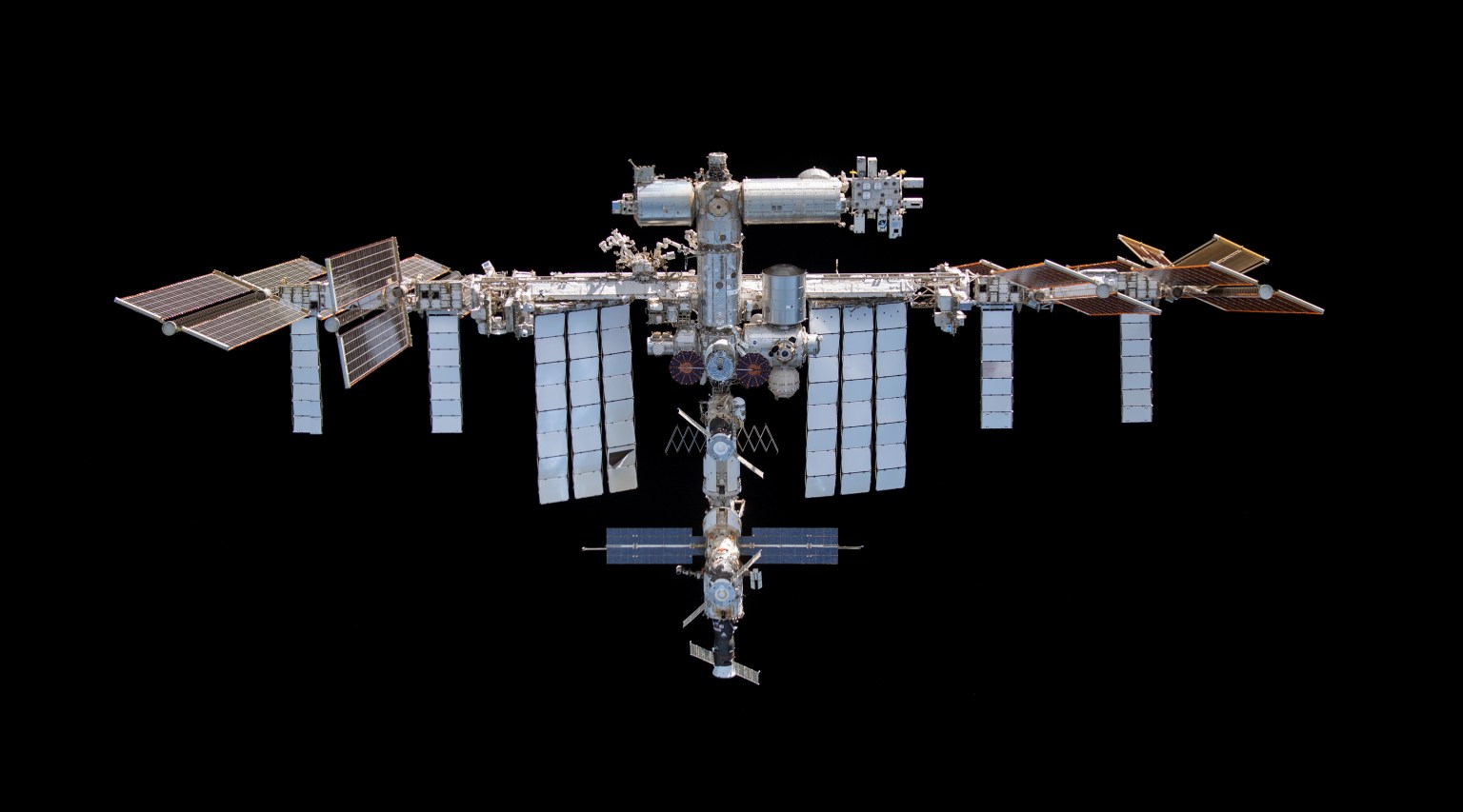
NASA astronaut Anil Menon, along with Roscosmos cosmonauts Pyotr Dubrov and Anna Kikina, arrived safely at the International Space Station Tuesday, bringing the orbiting laboratory’s crew to 10 for about the next two weeks.

The trio launched aboard the Soyuz MS-29 spacecraft at 10:47 a.m. EDT (7:47 p.m. local time) from the Baikonur Cosmodrome in Kazakhstan. After a three-hour, two-orbit journey, the spacecraft docked at 1:52 p.m. with the station’s Prichal module.

Following hatch opening, expected about 4 p.m., the new arrivals will be welcomed by the space station Expedition 74 crew: NASA astronauts Jessica Meir, Jack Hathaway, and Chris Williams; ESA (European Space Agency) astronaut Sophie Adenot; and Roscosmos cosmonauts Sergey Kud-Sverchkov, Sergei Mikaev, and Andrey Fedyaev.

NASA’s live coverage of hatch opening begins at 3:30 p.m. on NASA+, Amazon Prime, and YouTube. Learn how to watch NASA content through a variety of online platforms, including social media.

During his stay aboard the station, Menon will conduct scientific research and technology demonstrations aimed at advancing human space exploration and benefiting life on Earth. He will continue research to refine in-space production of semiconductor crystals to enable the large-scale manufacturing of components needed for high-performance computers, artificial intelligence, and improved medical devices. Menon also will perform ultrasound using augmented reality and artificial intelligence methods that could eliminate the need for medical support from Earth on future space missions. He will be a test subject helping researchers understand how blood flow is affected in space to protect future astronauts. He also will test bioprinting vascular constructs in microgravity to improve understanding of the aging process to advance therapeutic developments.

Expedition 75 is scheduled to begin on Sunday, July 26, following the departure of Williams, Kud-Sverchkov, and Mikaev, as they conclude an eight-month science mission aboard the orbital outpost.

Watch the change of command ceremony at 9:40 a.m. on Saturday, July 25, as station command transfers from Kud-Sverchkov to Meir, live on NASA+.

Learn more about International Space Station, crews, research, and operations at:

https://www.nasa.gov/station

-end-

Joshua Finch / Jimi Russell
Headquarters, Washington
202-358-1100
joshua.a.finch@nasa.gov / james.j.russell@nasa.gov

Sandra Jones
Johnson Space Center, Houston
281-483-5111
sandra.p.jones@nasa.gov

Share

Details

Last Updated
Jul 14, 2026
Editor
Jessica Taveau

TechCrunch - Latest

Indian AI coding startup Emergent becomes a unicorn with $130M Series C

2026-07-15 12:00

The startup has reached a $120 million annualized revenue run rate and more than 200,000 paying customers.
Vint Cerf is working on a plan to unleash AI agents on the open internet

2026-07-15 12:00

The guy behind TCP/IP is working on a standard for identifying AI agents in the wild.
Why Realta Fusion is building a fusion reactor at an old hot dog factory

2026-07-15 12:00

An old Oscar Mayer factory in Wisconsin will become America's latest fusion power research and development hub.
Backed by $60M in funding, Oak steps out of stealth to fix the identity mess that AI agents are making worse

2026-07-15 11:00

Co-founded by serial entrepreneur Shai Morag, Israeli identity management startup Oak is emerging out of stealth with $60 million in seed funding. 
A SpaceX vet raised $65M to pull wire harnesses out of the Cold War era

2026-07-15 10:30

Someone has to bundle all the wires that go into rockets, missiles, and satellites.
×
Useful links
Home
Definitions Terminologies
Socials
Facebook Instagram Twitter Telegram
Help & Support
Contact About Us Write for Us


8 months ago Category :
Latest Trends and Updates in Canadian Startups

Latest Trends and Updates in Canadian Startups

Read More →
8 months ago Category :
Latest Trends and Updates in the Canadian Business Scene

Latest Trends and Updates in the Canadian Business Scene

Read More →
8 months ago Category :
In today's fast-paced world, finding time to unwind and relax is more important than ever. Calming activities have become an essential part of many people's daily routines, helping them to reduce stress, improve mental health, and increase overall well-being. Let's explore some of the latest trends and updates in calming activities to help you find your inner peace.

In today's fast-paced world, finding time to unwind and relax is more important than ever. Calming activities have become an essential part of many people's daily routines, helping them to reduce stress, improve mental health, and increase overall well-being. Let's explore some of the latest trends and updates in calming activities to help you find your inner peace.

Read More →
8 months ago Category :
Exploring the Latest Trends and Updates in Calibration

Exploring the Latest Trends and Updates in Calibration

Read More →
8 months ago Category :
Exploring the Latest Trends and Updates in Business Payment Solutions

Exploring the Latest Trends and Updates in Business Payment Solutions

Read More →
8 months ago Category :
In the fast-paced world of business networking in the UK, staying updated on the latest trends is essential for professionals looking to expand their contacts and grow their businesses. With the rise of technology and changing market dynamics, the landscape of networking has evolved significantly in recent years. Let's take a look at some of the latest trends and updates shaping the business networking scene in the UK.

In the fast-paced world of business networking in the UK, staying updated on the latest trends is essential for professionals looking to expand their contacts and grow their businesses. With the rise of technology and changing market dynamics, the landscape of networking has evolved significantly in recent years. Let's take a look at some of the latest trends and updates shaping the business networking scene in the UK.

Read More →
8 months ago Category :
In recent years, Mexico has seen some significant trends and updates in the field of business legal services. With a rapidly evolving business landscape and a growing emphasis on transparency and compliance, businesses in Mexico are facing new challenges and opportunities when it comes to legal matters. Here are some of the latest trends and updates in the business legal services sector in Mexico:

In recent years, Mexico has seen some significant trends and updates in the field of business legal services. With a rapidly evolving business landscape and a growing emphasis on transparency and compliance, businesses in Mexico are facing new challenges and opportunities when it comes to legal matters. Here are some of the latest trends and updates in the business legal services sector in Mexico:

Read More →
8 months ago Category :
In today's fast-paced business world, staying on top of the latest trends and updates in the realm of business delivery is crucial for success. From new technology advancements to evolving consumer preferences, business owners must adapt and innovate to meet the changing demands of their customers. Let's delve into some of the latest trends and updates in the business delivery landscape.

In today's fast-paced business world, staying on top of the latest trends and updates in the realm of business delivery is crucial for success. From new technology advancements to evolving consumer preferences, business owners must adapt and innovate to meet the changing demands of their customers. Let's delve into some of the latest trends and updates in the business delivery landscape.

Read More →
8 months ago Category :
When planning a trip to Budapest, it’s essential to stay informed about the latest trends and updates to make the most of your travel experience in the vibrant capital city of Hungary. From new attractions to hidden gems, there is always something exciting happening in Budapest that you won’t want to miss. Here is a comprehensive Budapest travel guide with the latest trends and updates to help you plan your next adventure:

When planning a trip to Budapest, it’s essential to stay informed about the latest trends and updates to make the most of your travel experience in the vibrant capital city of Hungary. From new attractions to hidden gems, there is always something exciting happening in Budapest that you won’t want to miss. Here is a comprehensive Budapest travel guide with the latest trends and updates to help you plan your next adventure:

Read More →
8 months ago Category :
Bolivia is a country known for its stunning landscapes, rich culture, and vibrant traditions. In recent years, Bolivian tourism has been on the rise, with more and more travelers flocking to this South American gem. From the breathtaking Andean mountains to the lush Amazon rainforest, Bolivia offers a diverse range of attractions for visitors to explore.

Bolivia is a country known for its stunning landscapes, rich culture, and vibrant traditions. In recent years, Bolivian tourism has been on the rise, with more and more travelers flocking to this South American gem. From the breathtaking Andean mountains to the lush Amazon rainforest, Bolivia offers a diverse range of attractions for visitors to explore.

Read More →