📰 Trending Topics
Google News - Trending
Google News - Technology
Apple releases HomeView smart home hub with screen as showcase for Siri AI - CNBC
2026-10-13 13:34
- Apple releases HomeView smart home hub with screen as showcase for Siri AI CNBC
- Meet Apple HomeView, a new way to enjoy entertainment, stay connected, and manage the home Apple
- Apple Unveils $299 HomeView Hub as Part of New Smart Home Push Bloomberg.com
- Everything Announced At Apple's 'Welcome Home' Event Engadget
- Apple Introduces HomeView, a $299 Tablet for the Home The New York Times
The new Apple TV 4K has built-in microphones so you can talk to Siri AI - The Verge
2026-10-13 13:00
- The new Apple TV 4K has built-in microphones so you can talk to Siri AI The Verge
- Apple unveils the new Apple TV 4K, supercharged by Siri AI Apple
- Apple refreshes its Homepod mini with a new chip and $149 price tag TechCrunch
- Where to preorder the new Apple TV 4K The Verge
- Apple TV 4K is Now Even More Expensive, 128GB Model Priced at $299 MacRumors
NVIDIA DLSS 5 gets 2X faster with 20% lower VRAM usage, now 10X faster than March demo - VideoCardz.com
2026-10-13 12:23
- NVIDIA DLSS 5 gets 2X faster with 20% lower VRAM usage, now 10X faster than March demo VideoCardz.com
- DLSS 5 gets toned down for its Hogwarts Legacy debut next month The Verge
- NVIDIA Unveils "Preset C "DLSS Frame Generation with up to 35% Faster Generation TechPowerUp
- Meet the modders porting ringfenced DLSS features to older GPUs — how DLSS 5 and Multi-Frame Generation were unlocked for older architectures Tom's Hardware
- OptiScaler 1.2.1 delivers a 2x performance boost with DLSS 5 GameGPU
Foldable iPhone sales are reportedly going to be riddled with problems - PhoneArena
2026-10-12 20:19
- Foldable iPhone sales are reportedly going to be riddled with problems PhoneArena
- "iPhone Duo is a waste of money" Carl Pei, Nothing CEO says PhoneArena
- iPhone Duo: Apple To Debut Special Extra For In-Store Buyers Forbes
- iPhone Duo production orders up 30% says report that does math strangely AppleInsider
- Apple increases iPhone Duo orders by 30%: report (AAPL:NASDAQ) Seeking Alpha
OnePlus 16 launches with fastest display refresh and higher price - Notebookcheck
2026-10-12 12:59
- OnePlus 16 launches with fastest display refresh and higher price Notebookcheck
- The OnePlus 16 is the company’s most interesting phone in years The Verge
- OnePlus 16: Another frustratingly China-only 200 MP flagship smartphone Red Shark News
- OnePlus 16 launches with a 9,000mAh battery and 185Hz display Techish Kenya
- OnePlus 16 vs Galaxy S26 Ultra: Which Flagship Is Better? TechRepublic
NASA - Breaking News
NASA JPL Testing Readies Voyager Technologies Lander for Moon Mission
2026-10-13 13:00
4 min read
Preparations for Next Moonwalk Simulations Underway (and Underwater)
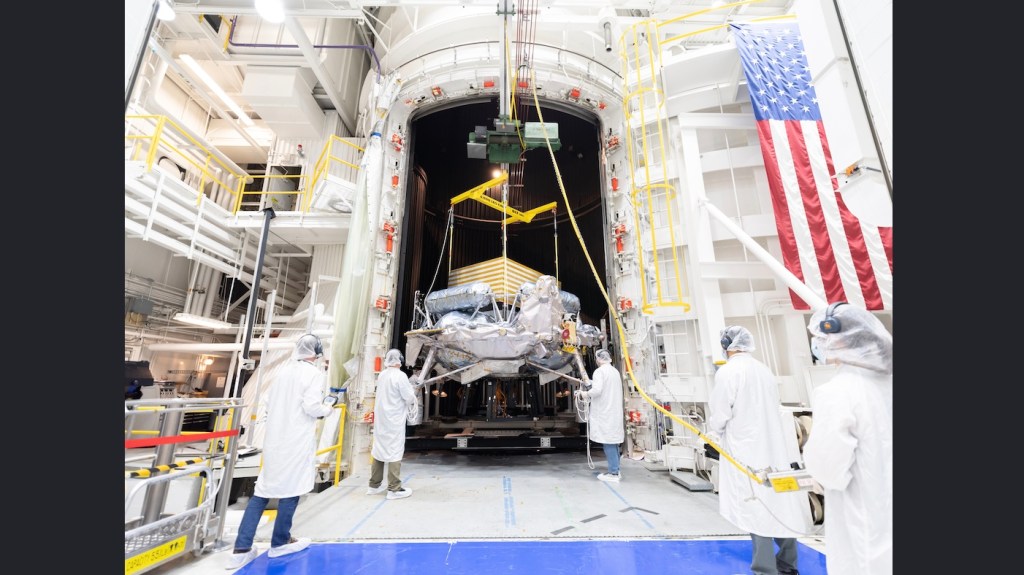
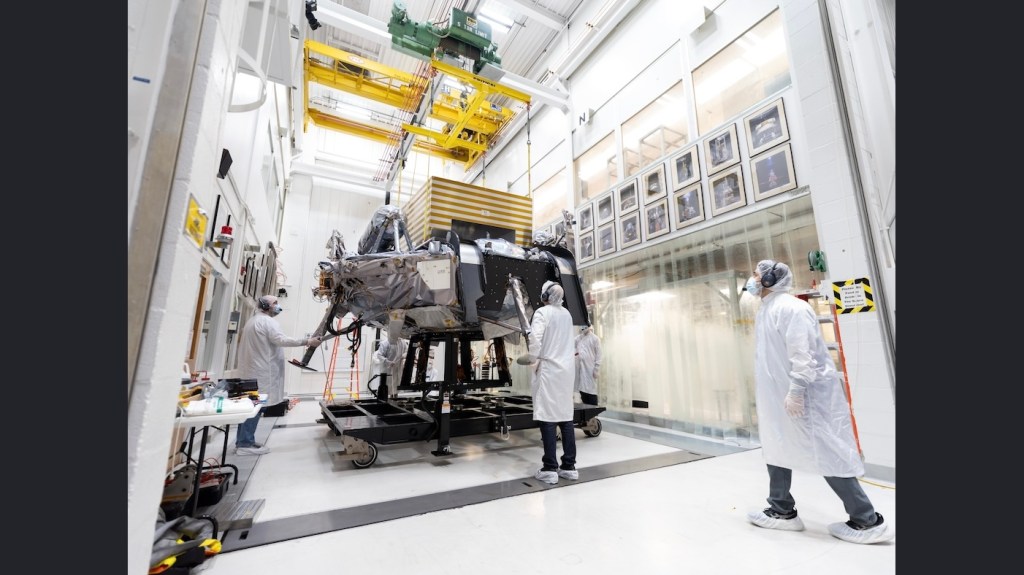
A commercial lander that will be at the forefront of NASA’s efforts to establish a Moon Base, humanity’s first lunar outpost, has passed a series of critical tests at the agency’s Jet Propulsion Laboratory in Southern California. The tests simulated the extreme temperatures and vacuum of space, as well as the intense shaking and ear-splitting roar of launch. Results show that Voyager Technologies’ Griffin Mission One (Griffin-1) spacecraft is ready to survive the rigors of space exploration.
As part of NASA’s CLPS (Commercial Lunar Payload Services) initiative within the Moon Base Program, Griffin-1 is expected to launch later this year aboard a SpaceX Falcon Heavy rocket. It will deliver more than 1,100 pounds (455 kilograms) of cargo to Nobile Crater near the lunar South Pole, which categorizes it as an infrastructure-class lander. Griffin-1 will carry 10 science and technology demonstrations from six countries, including the largest commercial payload ever delivered to the Moon, Astrolab’s FLIP (FLEX Lunar Innovation Platform) rover.
“NASA JPL’s Environmental Test Laboratory has been putting robotic explorers to the test since the Ranger program gave us NASA’s first up-close views of the Moon’s surface in the mid-1960s. We’re proud to provide our expertise and facilities to support this new phase of commercial lunar exploration,” said Charles Whetsel, manager, Exploration Systems Development Office at JPL.
Griffin-1’s testing journey
Testing began in July after the 2,789-pound (1,265-kilogram) spacecraft took a cross-country road trip from Voyager Lunar Systems’ manufacturing facilities in Pittsburgh to JPL in the San Gabriel Mountain foothills. Engineers spun the spacecraft on a special table to measure its mass properties, a test that enables them to look for any unexpected wobbles as they assess how the lander will move through space. Data gathered in mass properties testing is key to understanding the spacecraft’s readiness for navigation in flight and landing on the lunar surface.
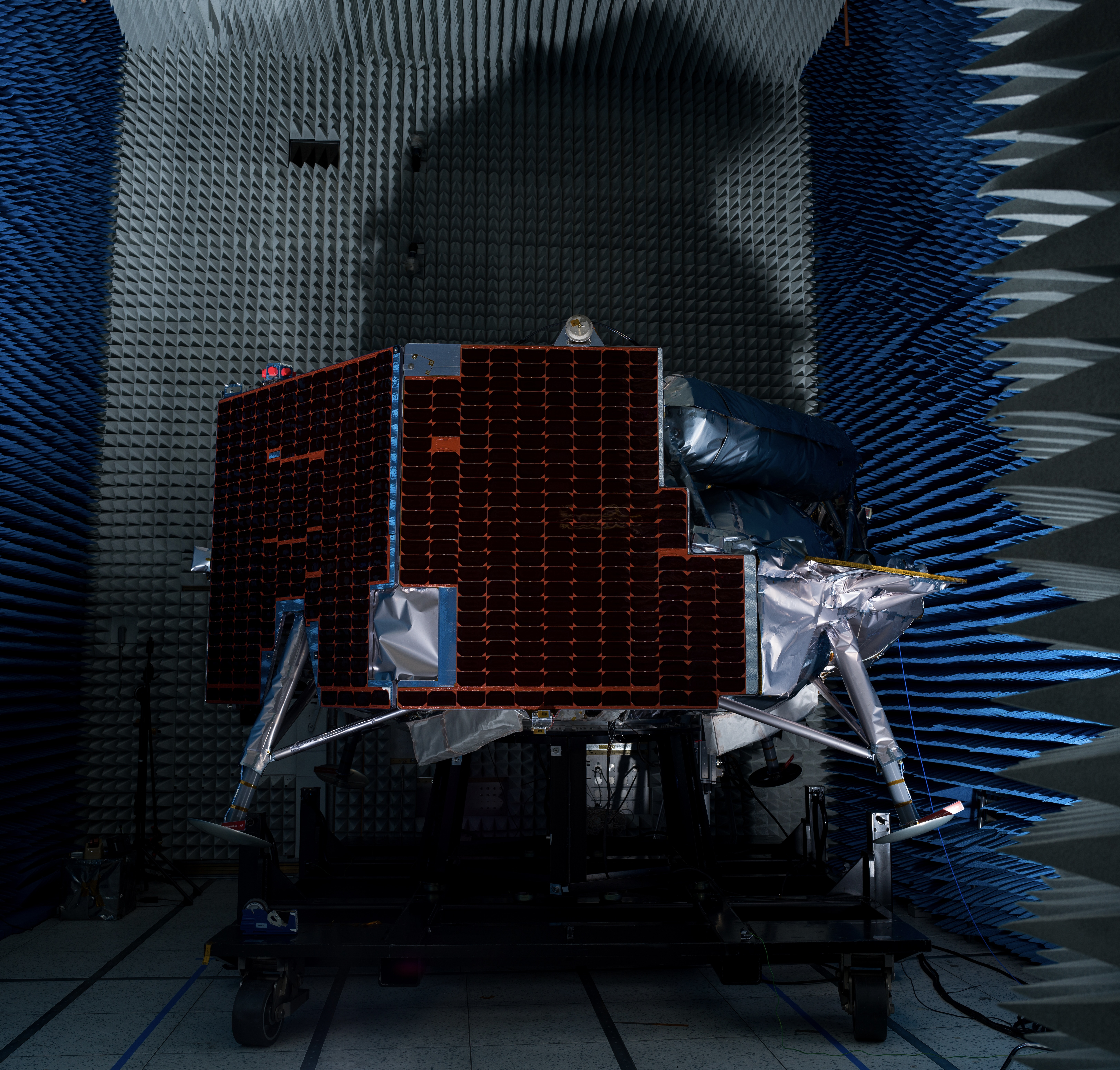
To make sure signals from the spacecraft’s electronic components don’t interfere with one another, Griffin-1 underwent electromagnetic interference and electromagnetic compatibility testing inside what’s called an anechoic chamber, in which long foam spikes line the walls to absorb sound and electromagnetic waves.
During vibration testing, hundreds of sensors monitored Griffin-1 as a “shaker table” rattled it in three directions, with increasingly intense force, to simulate the ride out of Earth’s atmosphere on a massive rocket. To mimic the roar of launch, giant horns, powered by compressed nitrogen gas, blasted the spacecraft with up to 153 decibels inside a sealed acoustic chamber.
Environmental testing took place in several clean-room facilities at JPL, culminating in the 25-Foot Space Simulator, a thermal vacuum chamber listed on the National Register of Historic Places for its role in supporting historic missions like those of the Ranger, Surveyor, Mariner, and Voyager programs. Dozens of other missions (along with plenty of upgrades to the testing facility) have followed over the decades, including the Perseverance Mars rover and Europa Clipper.


Beneath the thermal vacuum chamber’s soaring 85-foot (26-meter) ceiling, for about two weeks, Griffin-1 alternately baked at up to 167 degrees Fahrenheit (75 degrees Celsius) and froze at temperatures as low as minus 148 F (minus 100 C). This testing simulates the temperature extremes the lander will experience during its journey through the vacuum of space and its operations on the lunar surface.
“Griffin-1 is being built for a historic purpose: to deliver the infrastructure and capabilities to the Moon. Seeing the spacecraft complete this demanding environmental testing is a major milestone because it demonstrates that Griffin-1 is ready for the extreme journey ahead: launch, through deep space, to the lunar South Pole,” said John Thornton, executive vice president, Voyager. “This spacecraft represents a new era of commercial lunar exploration, where missions like Griffin-1 are laying the groundwork for the Moon Base and helping turn sustained lunar exploration from a vision into a reality.”
After proving its mettle at JPL, Griffin-1 has returned to Voyager Lunar Systems’ facility for final assembly. Next up: launch-readiness operations before shipment to Cape Canaveral.
To learn more about the Moon Base, visit:
Media Contact
Melissa Pamer
Jet Propulsion Laboratory, Pasadena, Calif.
626-314-4928
melissa.pamer@jpl.nasa.gov
2026-071
Share
Details
Related Terms
Explore More


NASA Science, Cargo Launch on 35th SpaceX Resupply Mission to Station
2026-10-13 11:12
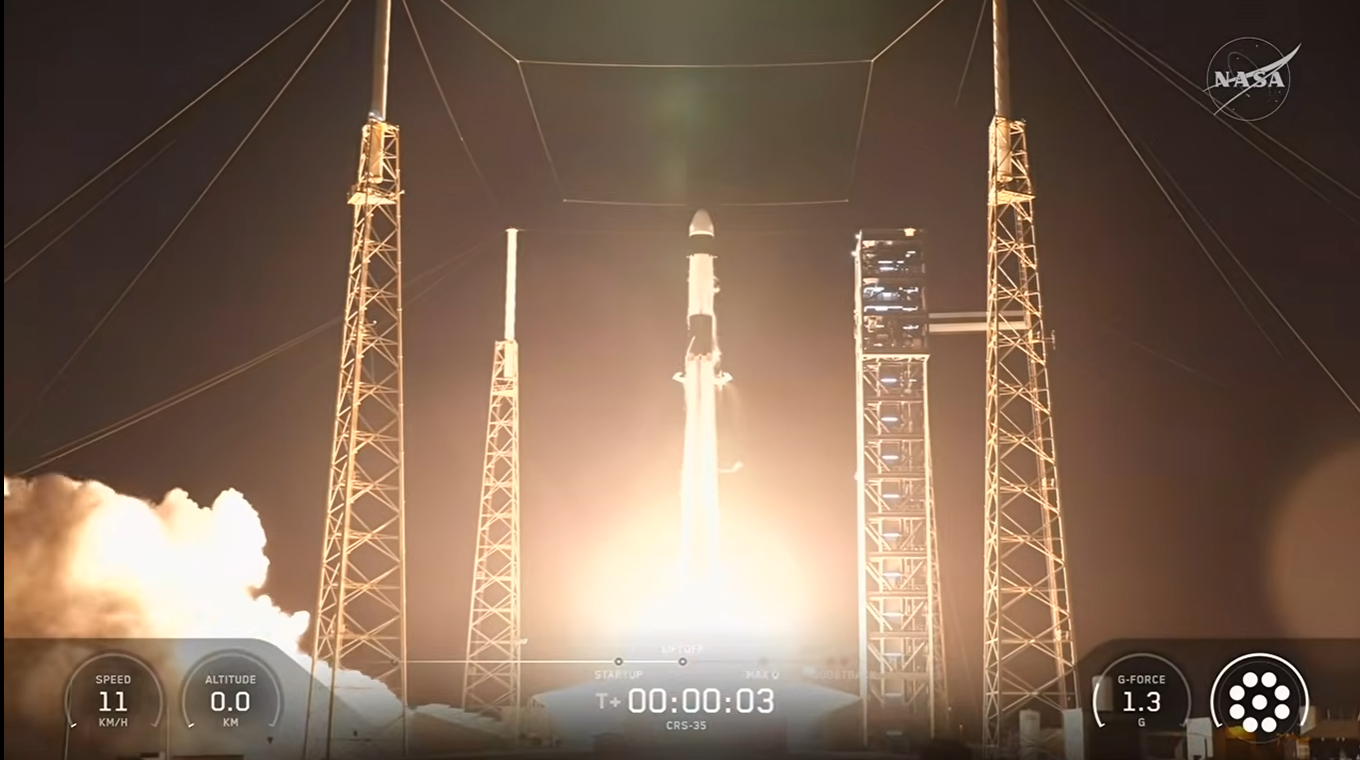
NASA’s SpaceX 35th commercial resupply mission lifted off at 6:33 a.m. EDT Tuesday aboard a Falcon 9 rocket from Space Launch Complex 40 at Cape Canaveral Space Force Station in Florida, carrying more than 6,300 pounds of supplies and hardware, bound for the International Space Station. Following its successful launch, the SpaceX Dragon spacecraft will carry new scientific experiments, cargo, and the final pair of International Space Station Roll-Out Solar Arrays to the orbiting laboratory.
Dragon is scheduled to autonomously dock at 11 a.m., Thursday, Oct. 15, to the space-facing port of the space station’s Harmony module. NASA will stream rendezvous and docking coverage beginning at 9:15 a.m., through a variety of platforms. Learn where to watch online:
The final pair of solar arrays will complete the space station’s power system augmentation, boosting available electricity for research, operations, and the station’s safe, controlled deorbit. Astronauts will install the arrays during a series of spacewalks planned for later this fall.
Dragon also is delivering several new experiments, including hardware to manufacture artificial retinas in microgravity that could help restore vision for patients on Earth and 3D heart tissue models to advance large-scale drug testing on future space missions. Dragon also will carry materials to study how a new type of glass is formed in microgravity, and brain organoids that could uncover potential treatment targets for neurodegenerative diseases like Alzheimer’s, Parkinson’s, and multiple sclerosis.
These are just a sample of the hundreds of investigations conducted aboard the orbiting laboratory in the areas of biology and biotechnology, physical sciences, and Earth and space science. Research and technology investigations taking place aboard the space station benefit people on Earth and lay the groundwork for other agency deep space missions. As part of NASA’s Artemis program, the agency will send astronauts to the Moon to prepare for future human exploration of Mars, inspiring the world through discovery in a new Golden Age of innovation and exploration.
The Dragon spacecraft is scheduled to remain at the space station until mid-November when it will depart and return to Earth with time-critical research and cargo, splashing down off the coast of California.
Learn more about the International Space Station, its research, and crew, at:
-end-
Joshua Finch / Jimi Russell
Headquarters, Washington
202-358-1100
joshua.a.finch@nasa.gov / james.j.russell@nasa.gov
Steven Siceloff
Kennedy Space Center, Fla.
321-876-2468
steven.p.siceloff@nasa.gov
Sandra Jones / Joseph Zakrzewski
Johnson Space Center, Houston
281-483-5111
sandra.p.jones@nasa.gov / joseph.a.zakrzewski@nasa.gov
APOD: 2026 October 13 – Desert Stairway to Heaven
2026-10-13 04:05
APOD
Astronomy Picture of the Day
Discover the cosmos! Each day a different image or photograph of our fascinating universe is featured, along with a brief explanation written by a professional astronomer.
Desert Stairway to Heaven
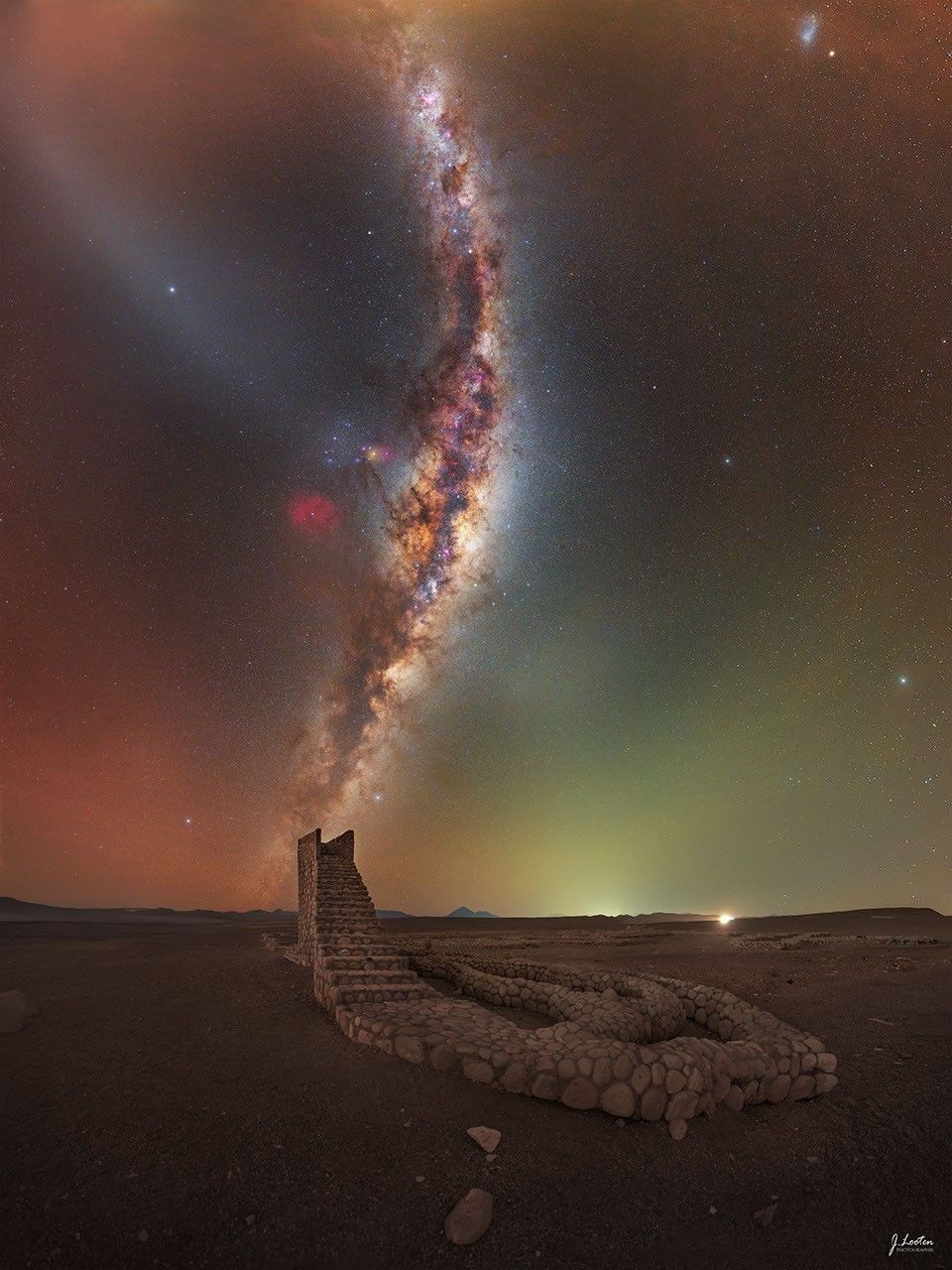
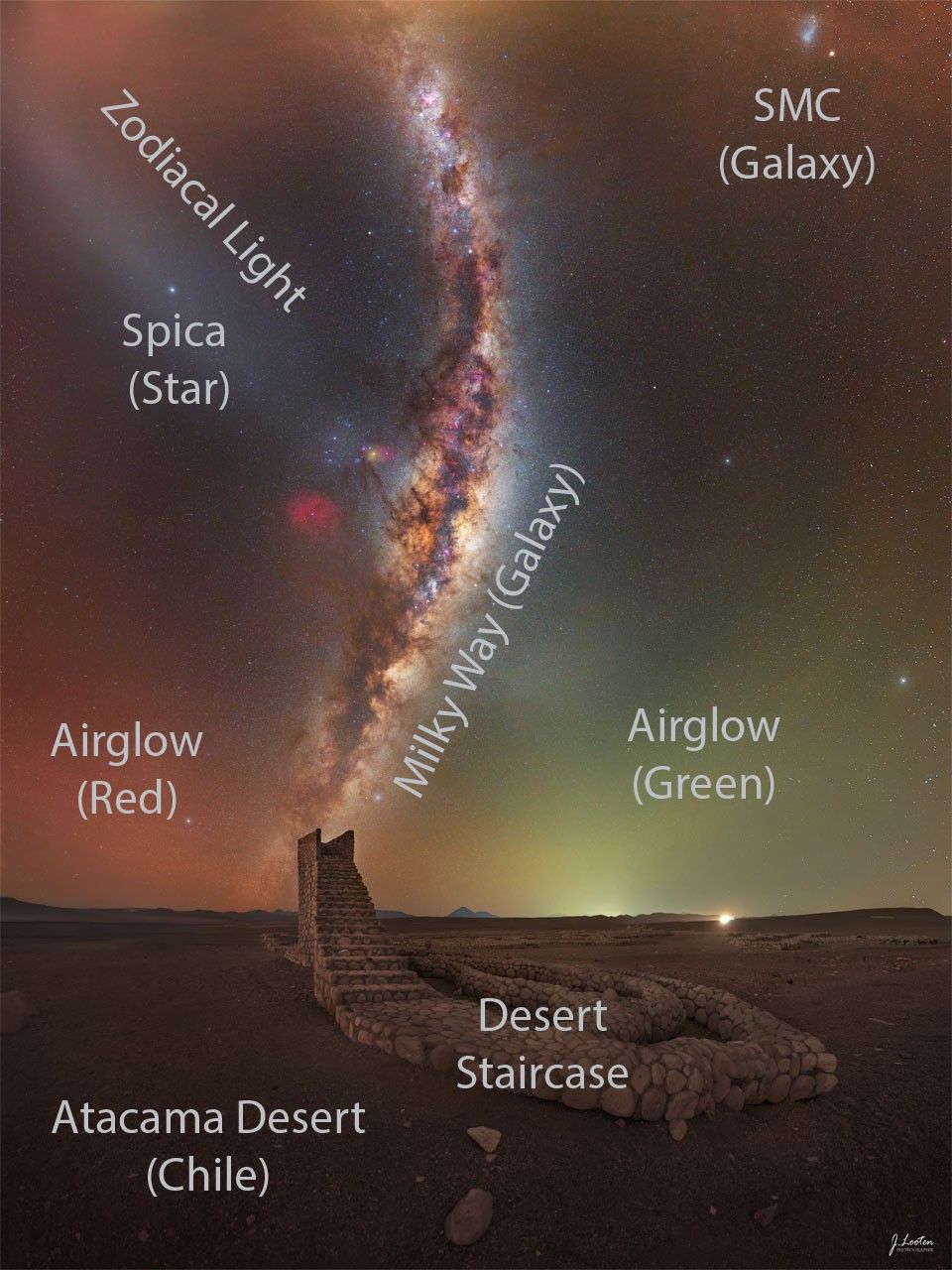
Explanation: This stairway in Chile brings you only a little bit closer to heaven. But ooh, the sky above it makes you wonder. For example, you may wonder about the dark lane of our own Milky Way galaxy rising behind the expansive Atacama Desert in Chile, the band of zodiacal light on the upper left, the green and red airglow just above the horizon, the star Spica in the zodiacal light stripe, and, at the very top on the right, the Small Magellanic Cloud galaxy. The Desert Staircase sculpture is in the foreground, and this image was timed to catch the picturesque peering perch just in front of the near-vertical Milky Way band. Upon close inspection of the horizon you can find, left to right, some Andes Mountains, the Licancabur volcano, and the town lights of San Pedro de Atacama. The featured wide-angle composite was captured in July 2025.
Tomorrow’s picture: open space
| Date | October 13, 2026 |
|---|---|
| Credit & Copyright | Julien Looten |
| Authors & editors: | Robert Nemiroff, Jerry Bonnell, Cecilia Chirenti, Keighley Rockcliffe |
| A service of: |
ASD at NASA / GSFC, NASA Science Activation & Michigan Tech. U. |
An Impact Structure With Legs
2026-10-13 04:01
Editor’s Note: Today’s story is the answer to the October Puzzler.
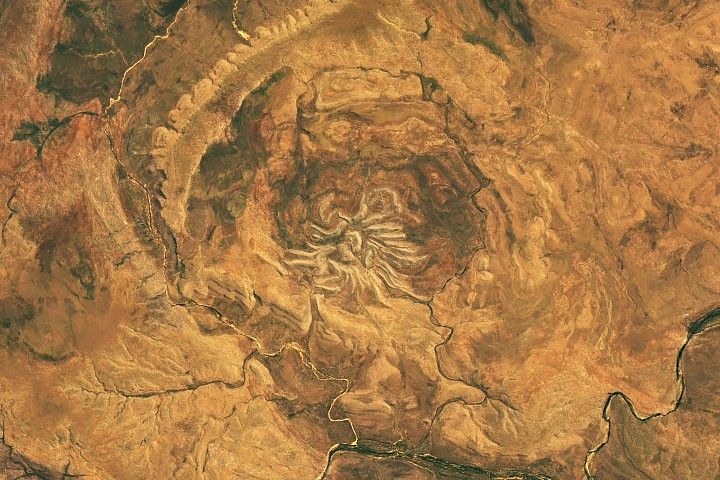
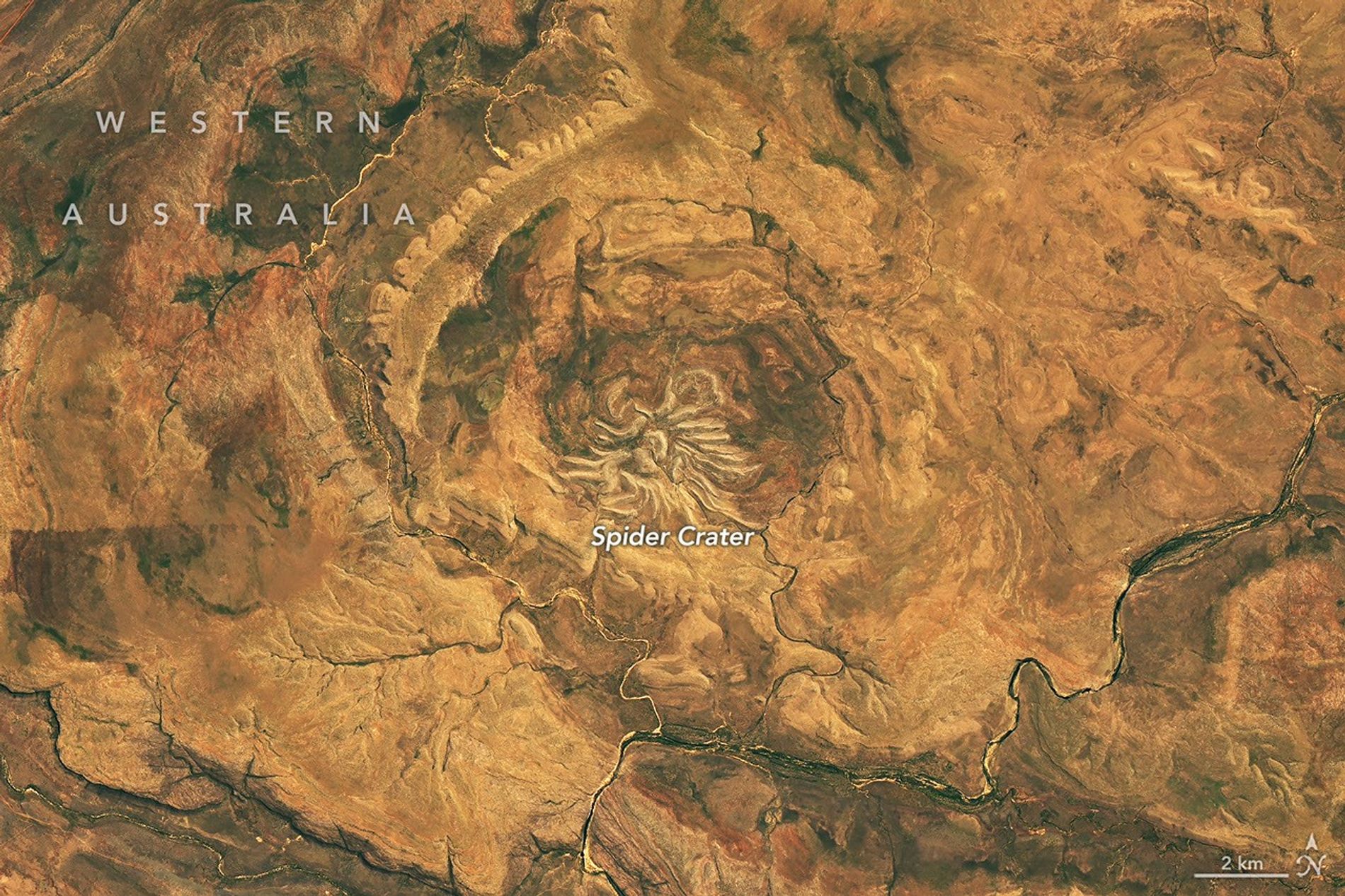
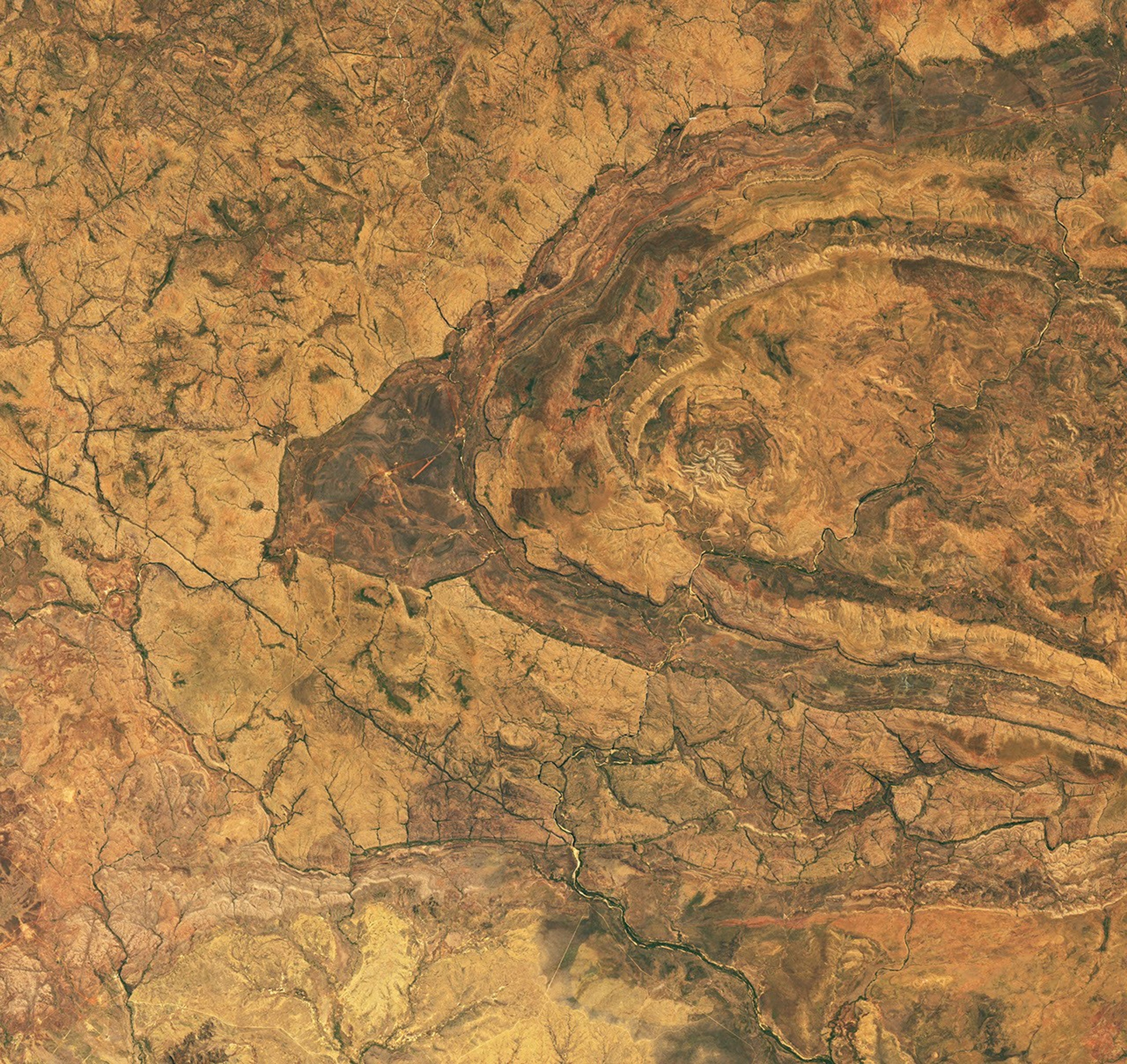
From above, the mere appearance of a curious geologic feature in Western Australia is enough to cause a fright. The aptly named Spider Crater, the product of a meteorite impact followed by hundreds of millions of years of erosion, sprawls across the landscape in the country’s Kimberley region.
The OLI (Operational Land Imager) on the NASA-USGS Landsat 9 satellite captured this image of the crater on September 20, 2026. The full impact structure has an oval shape measuring about 13 kilometers by 11 kilometers (8 miles by 7 miles), with the spiderlike central portion measuring about 4 kilometers (2.5 miles) across.
Geologists believe the unusual arachnoid pattern is the remnant of a central uplift, the raised portion of the crater floor that formed in the rebound of the initial impact shock. The light-colored “legs” are sandstone ridges that have endured while other rock layers in the impact zone have eroded away.
For decades after the feature’s discovery, scientists struggled to weave a tale about its formation. Some proposed it had a volcanic past. But with some legwork in the field, geologists identified telltale signs of a past impact: fan-shaped fractures called shatter cones. These fractures form only when intense shock waves travel through rock, and they are ubiquitous in Spider Crater’s central dome.
Scientists have subsequently performed lab analyses of shocked quartz and zircon crystals from the sandstone, which can help them reconstruct the angle of the meteorite’s impact. The date of the impact is uncertain, but estimates based on rocks in the region place it between about 900 million and 600 million years ago—making Spider Crater a creature of the late Precambrian.
NASA Earth Observatory image by Michala Garrison, using Landsat data from the U.S. Geological Survey. Story by Lindsey Doermann.
References & Resources
- Abels, A. (2005) Spider impact structure, Kimberley Plateau, Western Australia: interpretations of formation mechanism and age based on integrated map-scale data. Australian Journal of Earth Sciences, 52(4–5), 653–664.
- Cox, M.A., el al. (2021) Asymmetric shock deformation at the Spider impact structure, Western Australia. Meteoritics & Planetary Science, 56: 331-351.
- Impact Earth, Spider – Hypervelocity Impact Crater. Accessed October 8, 2026.
- Kenkmann, T. and Poelchau, M. H. (2013) The central uplift of Spider Crater, Western Australia. Large Meteorite Impacts and Planetary Evolution V.
- Lunar and Planetary Institute, Shaping the Planets: Impact Cratering. Accessed October 8, 2026.
- McHone, J.F., el al. (2002) Spider impact structure, Western Australia imaged with Space Shuttle radar. Lunar and Planetary Science XXXIII.
You may also be interested in:
Stay up-to-date with the latest content from NASA as we explore the universe and discover more about our home planet.

An amateur astronomer scouting online satellite maps for campsites in Quebec found an impact crater instead.

Carpets of wildflowers burst from arid, ochre-colored land in Western Australia following winter rains.
A bright lens of anorthosite, a rock type prevalent on the lunar surface, is cradled within sheared rocks in the…




NASA’s SpaceX CRS-35 Mission to Launch Health Research
2026-10-12 17:45
NASA experiments focused on human and plant health and drug-resistant organisms will travel to the International Space Station aboard SpaceX’s 35th Commercial Resupply Services mission for the agency from Cape Canaveral Space Force Station in Florida, advancing research that benefits life on Earth and future exploration.
This research supports astronaut health during long-duration missions through four investigations from the agency’s Biological and Physical Sciences division, including 3D models of the human brain, a crop disease study, a faster way to assess astronaut health, and an analysis of antibiotic-resistant bacteria aboard the space station.
Tiny brain models, big questions
A new precision health investigation helps address a key question: What happens to the human brain in space?
The experiment sends small, lab-grown models of the human brain to the orbiting laboratory for five weeks. Researchers compare tissue models that traveled to space with identical ones kept on Earth to determine how a short spaceflight affects the human brain at the cellular level.
The effort could deepen our understanding of how the human brain responds to stress and help lay the groundwork for methods that counter risks to brain health that astronauts may face on future missions to the Moon and beyond.
Disease-resistant crops for space
A space crops investigation tests whether crop diseases develop faster and more severely in microgravity.
The experiment compares molecular and structural changes between Earth-grown and space station-grown plants infected with a disease-causing fungus. The findings could guide plant breeding on Earth to produce disease-resistant crops and help minimize yield losses in future space agriculture systems.
Space crops provide nutrition, increase dietary variety, and offer psychological benefits for astronauts during extended missions. They also absorb carbon dioxide, produce oxygen, and recycle water, which will become increasingly important as human missions extend farther from Earth.
Analysis helps astronauts thrive
The spacecraft also carries the first test of a compact microplate reader that arrived aboard the space station earlier this year.
The Commercially Enabled Rapid Space Science initiative experiment tests the device’s ability to detect and measure certain biomarkers such as antibodies, antigens, and proteins.
Use of the plate reader would allow scientists to analyze samples aboard the space station and obtain data quickly, rather than wait for the samples to return to Earth for analysis.
Ultimately, the research aims to support the timely detection of infections and other health issues in astronauts while expanding science capabilities in remote exploration locations where resupply will be more difficult.
Tracking antibiotic-resistant bacteria
A precision health investigation returns for its fourth and final planned stay aboard the space station to study how antibiotic-resistant bacteria survive and evolve in microgravity.
As part of the investigation, astronauts repeatedly sample surfaces throughout the space station to monitor for drug-resistant organisms.
The work could help develop ways to protect astronauts against bacterial infections during long-duration missions. On Earth, the findings could provide insight into how superbugs develop from the overuse of antibiotics.
To learn more about NASA’s biological and physical research in space, visit: https://science.nasa.gov/biological-physical/
Biological & Physical Sciences Division
-
NASA’s Biological and Physical Sciences Division pioneers scientific discovery and enables exploration by using space environments to conduct investigations not possible on Earth. Studying biological and physical phenomena under extreme conditions allows researchers to advance the fundamental scientific knowledge required to go farther and stay longer in space, while also benefitting life on Earth.
TechCrunch - Latest
TechCrunch Disrupt 2026: Day 1
2026-10-13 14:00
SpaceXSI bundles X Premium, Grok and Cursor into one subscription
2026-10-13 13:50
Apple refreshes its Homepod mini with a new chip and $149 price tag
2026-10-13 13:38
Apple’s new smart home line-up includes a smart lock, thermostat and video doorbells
2026-10-13 13:37
The final Disrupt Stage lineup: Three days of conversations you won’t hear anywhere outside of TechCrunch Disrupt 2026
2026-10-13 13:28