📰 Trending Topics
Google News - Trending
Google News - Technology
Everything We Expect From Apple’s Surprise Smart Home Event Next Week - CNET
2026-10-09 21:31
- Everything We Expect From Apple’s Surprise Smart Home Event Next Week CNET
- Apple Announces Oct. 13 Smart Home Product Launch in New York Bloomberg.com
- I’m Way Too Excited for Apple’s Home Event and How It Will Level Up My Siri Experience CNET
- The MacRumors Show: Apple's Smart Home Products Are Coming MacRumors
- Apple is reportedly partnering with LG to launch a smart lock, thermostat, and doorbell TechCrunch
Google teases Fitbit Edge launch next week - The Verge
2026-10-09 18:05
- Google teases Fitbit Edge launch next week The Verge
- Exclusive: This Is the Fitbit Edge, Google's Next Fitness Tracker Android Headlines
- Fitbit Edge: 7 Key Facts Leaked About The Next Fitbit Forbes
- Google's Fitbit Edge Leaks Out With A Screen And Pixel 11 Colors Engadget
- Google officially teases Fitbit Edge tracker, confirms October 12 launch 9to5Google
Microsoft’s new Nvidia PCs are cool for extreme power users – but I’ll wait for AI PC 3.0 - ZDNET
2026-10-09 12:22
- Microsoft’s new Nvidia PCs are cool for extreme power users – but I’ll wait for AI PC 3.0 ZDNET
- Building Windows for hybrid intelligence Windows Blog
- Microsoft Debuts Nvidia-Powered PCs with On-Device AI, Following Apple’s Breakout Hit The Information
- Microsoft to sell $2,599 Surface Laptop Ultra containing Nvidia AI chip CNBC
- Microsoft event debuts new AI-friendly hardware and Windows changes Ars Technica
AI disqualification yields new Nikon Small World in Motion winner - Ars Technica
2026-10-09 18:44
- AI disqualification yields new Nikon Small World in Motion winner Ars Technica
- Prize-winning image which sparked backlash was AI-generated, Nikon rules BBC
- Big Controversy Upends a Contest About Microscopic Videos The New York Times
- Contest-Winning Microscope Video Thrown Out for Using Generative AI Gizmodo
- Nikon Disqualifies Winning Video Over AI Use After Weeks of Controversy The Scientist
NASA - Breaking News
NASA Seeks US Industry Plans for Commercial Space Stations
2026-10-09 18:11
NASA is advancing American leadership in space by taking the next step toward a future where commercial space stations lead the way in low Earth orbit. On Friday, the agency released its final Request for Proposals inviting industry to submit plans for the next generation of commercial space stations.
“In alignment with the President’s National Space Policy, NASA is committed to maintaining a sustained American presence in low Earth orbit long after the International Space Station retires,” said NASA Administrator Jared Isaacman. “We will continue to need a place to conduct research, develop technologies, train crews, and prepare for missions to the Moon and Mars. Commercial space stations may provide that capability while creating new opportunities for American industry and allowing NASA to concentrate more of our resources on the near-impossible missions ahead.”
Building on the agency’s Ignition event earlier this year, NASA regularly has engaged with private industry to shape the agency’s future direction in low Earth orbit. This included publishing two Requests for Information in March to gather industry’s perspective on low Earth orbit destinations and transportation. The agency also published a draft Request for Proposals in July, followed by an industry day and one-on-one meetings that allowed interested companies to review and comment on the planned acquisition approach.
“We’ve made it clear that NASA will never give up its presence in low Earth orbit,” said Isaacman. “Since Ignition, we have spent a lot of time listening to industry and working through what it will take to make this transition successful. The opportunity is significant, but the economics ultimately have to work. We want to see credible plans, strong technical execution, and companies prepared to invest in destinations that can serve NASA while developing additional customers and markets of their own.”
Proposals are due Tuesday, Dec. 8, with contract awards expected in spring 2027.
Under the solicitation, NASA outlines requirements for companies interested in designing, building, testing, certifying, and operating commercial low Earth orbit destinations capable of providing end-to-end destination and transportation services for human spaceflight use.
NASA intends to award firm-fixed-price, multi-award, indefinite-delivery/indefinite-quantity contracts supporting development, certification, and services for continued low Earth orbit research and exploration. This will allow NASA to select two or more contractors through early development, followed by a competitive task order for final design, test, and evaluation, as well as certification and services from one or more contractors.
Learn more about NASA’s missions on the agency’s website:
-end-
George Alderman / Joshua Finch
Headquarters, Washington
202-358-1600
george.c.alderman@nasa.gov / joshua.a.finch@nasa.gov
NASA Demonstrates Next-Generation Heat Shield Technologies
2026-10-09 16:59
4 min read
Preparations for Next Moonwalk Simulations Underway (and Underwater)
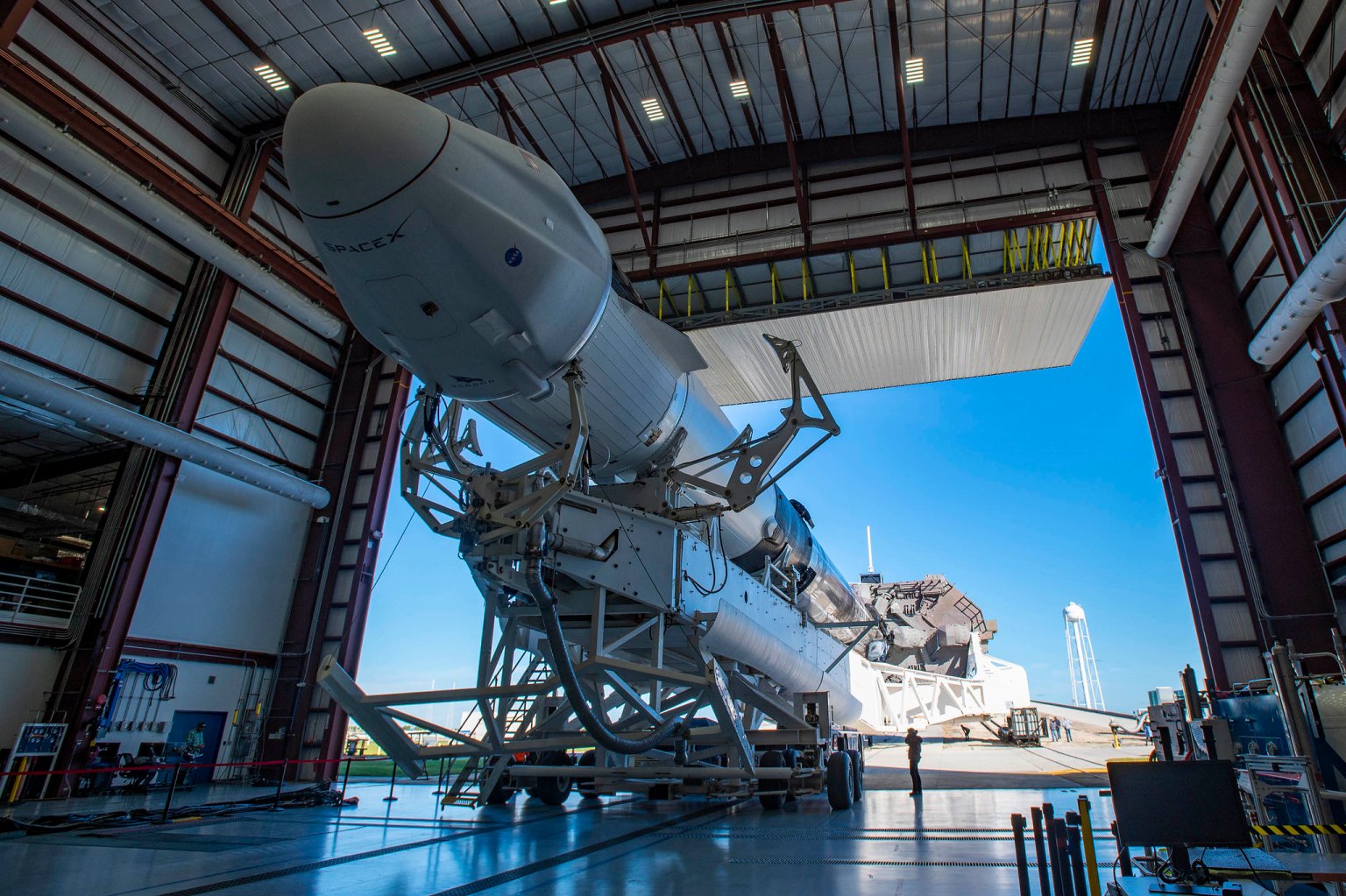
NASA is testing heat shields that can keep astronauts safe as they return from missions to the Moon and Mars in an unusual way: by taking out the trash.
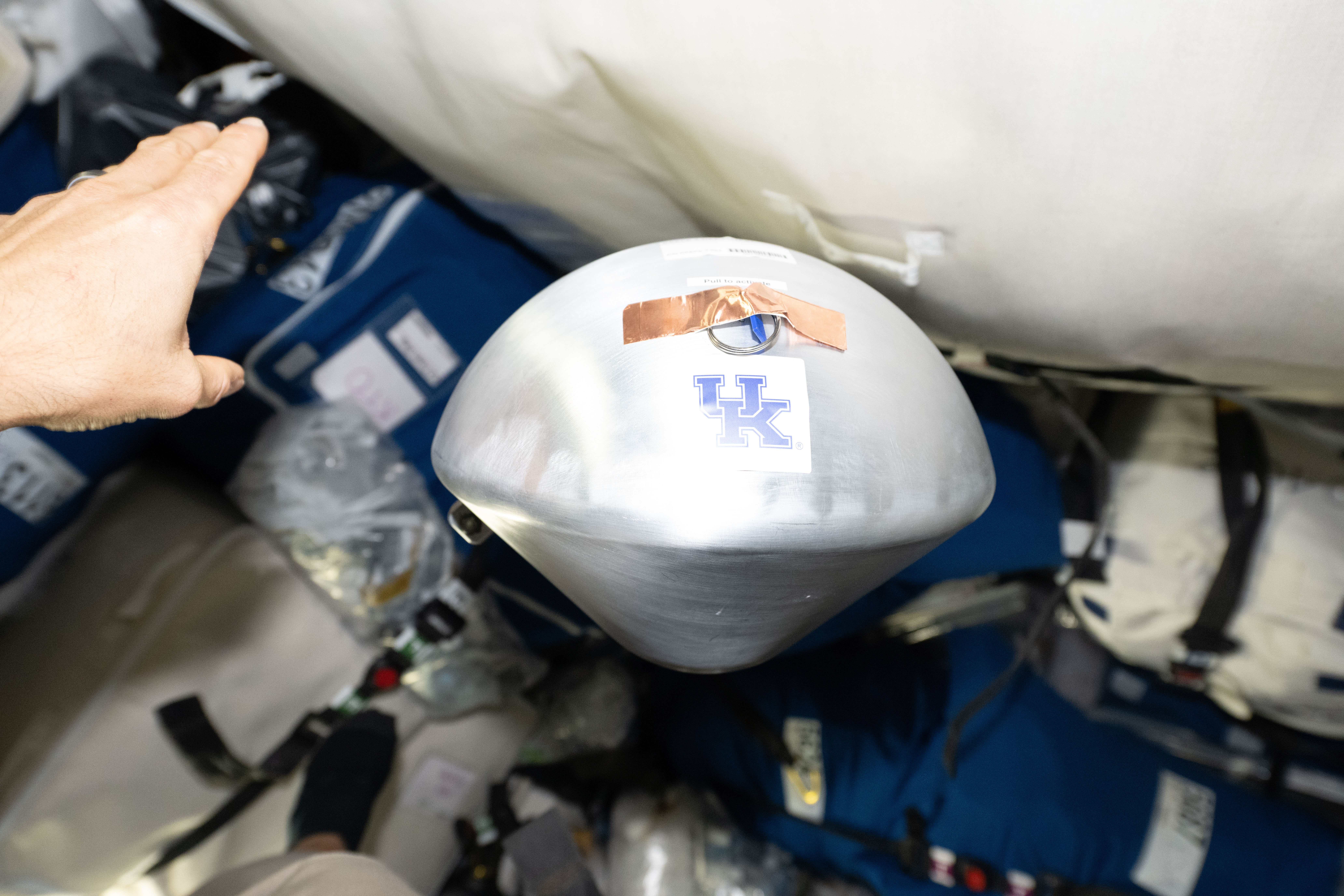
When Northrop Grumman 24th cargo resupply mission for NASA undocked from the International Space Station, it carried a fleet of 12 small, experimental capsules designed to test the next generation of thermal protection materials that could serve as the foundation for future heat shields.
The experiment, called the Kentucky Reentry Probe Experiment (KREPE-3), is the third in a series of low-cost, high-impact missions that use the final moments of the cargo spacecraft’s lifespan to gather valuable data.
The experiment is a collaboration among the University of Kentucky, the state of Kentucky, NASA’s Established Program to Stimulate Competitive Research (EPSCoR), several NASA centers, and other federal and commercial partners.
“KREPE-3 is a great example of the goals of NASA’s EPSCoR program,” said David Berger, EPSCoR program manager at NASA’s Headquarters in Washington. “We are supporting the next generation of scientists and engineers as they develop unique projects that benefit their education and NASA’s mission goals.”
Trash to treasure
Before the mission’s Cygnus XL spacecraft departed the station, astronauts packed it with waste and activated the 12 small capsules carried inside. Designed by University of Kentucky students, the capsules include sensors that will measure temperature, pressure, motion, magnetic field, and light during re-entry.
As the vehicle harmlessly breaks apart in Earth’s atmosphere on its planned route, the capsules will eject and begin collecting data on how each set of experimental heat shield materials performs. Satellite signals will transfer live data to researchers, offering insights into how larger heat shields could protect future cargo or crew.
“It’s a smart way to get flight data on materials that are still in development,” said Keith Peterson, a materials engineer at NASA’s Ames Research Center in California’s Silicon Valley. “We’re essentially hitching a ride on a vehicle that’s already coming back to Earth.”
Heating up innovation
The capsules will carry a variety of thermal protective components, including proven technology such as the ceramic tile material used on the space shuttle. Others will test new options, such as a 3D-printed heat shield from the Additive Manufacturing of Thermal Protective Systems project developed at NASA Johnson and Oak Ridge National Laboratory.
Researchers at NASA Ames are contributing several materials to KREPE-3, including two capsules that will fly a next-generation family of protective coverings known as Materials Engineered for Re-entry using Innovative Needling Operations (MERINO). Made from layers of carbon and phenolic fibers stitched together like felt, the materials are more flexible, faster to produce, and less expensive than traditional protective substances – making them promising candidates for Mars missions. Thanks to Mars’ thinner atmosphere, missions to land on the Red Planet involve lower heat loads and allow for lighter protection.
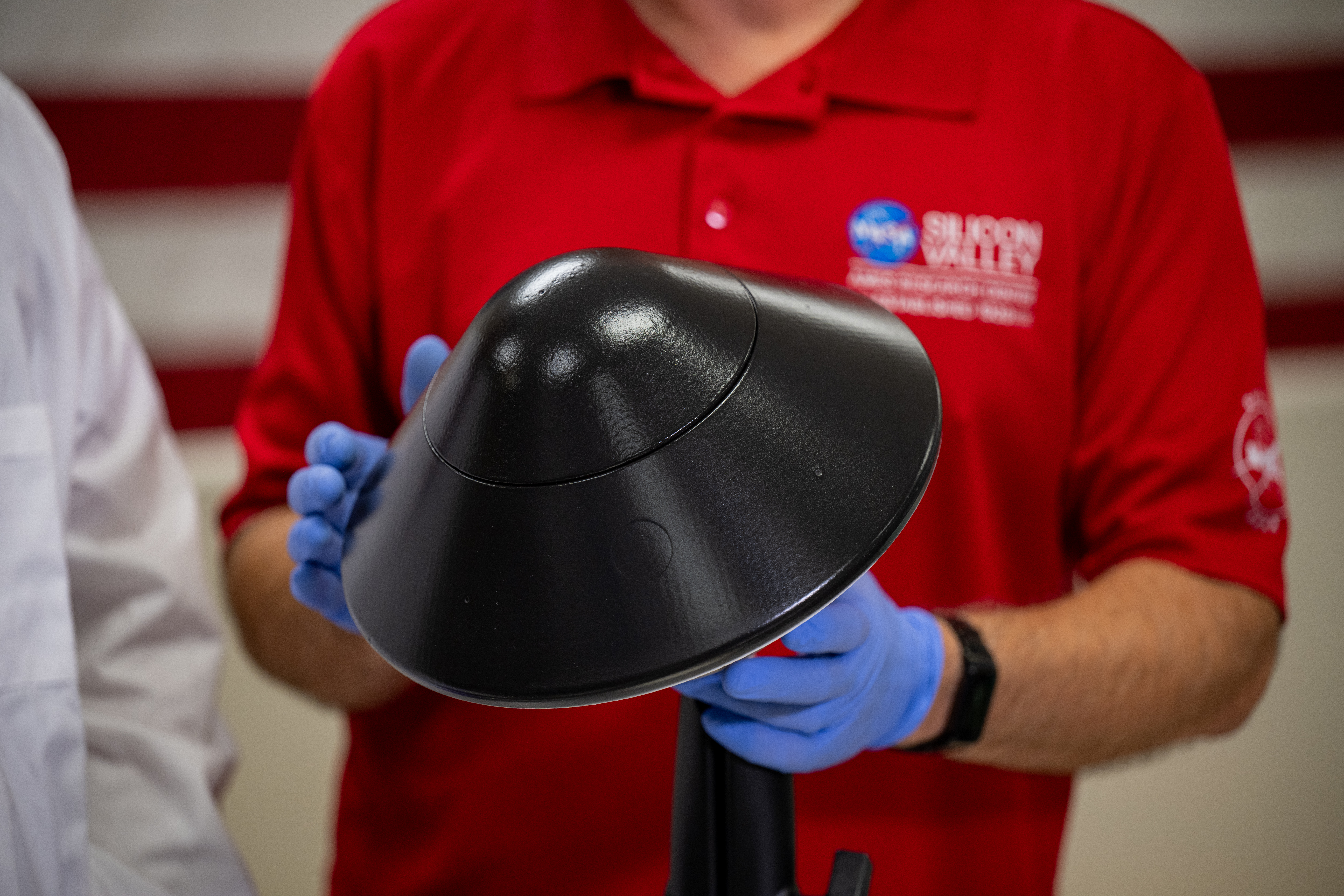
A third capsule will combine those protective coverings with other elements. The Kentucky Instrumented Conical Hypersonic Experiment will utilize a dual-cone shape. It combines a tungsten tip attached to a cone layered with carbon and hear-resistant plastic fibers, and an aft cone wrapped in MERINO. This unique design will validate computer models against real-world data.
Another capsule is shaped like the protective aeroshell that will protect NASA’s upcoming mission, Dragonfly, as it arrives at Saturn’s moon, Titan, and will test the dynamic stability of the design. It is covered in Phenolic Impregnated Carbon Ablator, a material developed at NASA Ames that has applications for commercial vehicles and flew on NASA’s Stardust, Mars Science Laboratory, and Mars 2020 missions.
One capsule will test a deployable heat shield called Adaptable Deployable Entry and Placement Technology, which is shaped like an umbrella to increase surface area and slow descent. At full scale, Adaptable Deployable Entry design could be folded, making it ideal for deploying payloads that are larger than the rockets that launch them into flight.
While some capsules are testing new materials to carry missions to Mars, others are testing new shapes and designs that will further research and understanding of computer modeling and sensor design — technologies that could open doors to another generation of re-entry design innovation.
Additional capsules developed by domestic and international partners will test a variety of known and new materials, including a heat flux sensor developed at the University of Stuttgart in Germany, that will help researchers measure how heat moves across a surface during re-entry.
“We’re pushing the boundaries of what heat shields can do,” said Peterson. “And we’re testing them in a way that’s fast, affordable, and incredibly effective.”
Share
Details
Related Terms
Explore More

Cosmic House of Mirrors
2026-10-09 13:57

Galaxies warp and multiply as if in a house of mirrors in this image from NASA’s James Webb Space Telescope released on Sept. 29, 2026.
The brilliant golden galaxies seen here are part of a galaxy cluster called MACS J0454.1-0300. The orange galaxies bunched together on one side of the image, however, are not actually part of the cluster, but rather galaxies much farther away whose light has been bent and magnified by gravitational lensing. This phenomenon occurs when the enormous mass of a foreground object such as a galaxy cluster bends and magnifies the light from a more distant object in the background.
Learn more about this galaxy cluster.
Image credit: ESA/Webb, NASA & CSA, L. Furtak, S. Fujimoto
APOD: 2026 October 9 – Stickney Crater
2026-10-09 04:05
APOD
Astronomy Picture of the Day
Discover the cosmos! Each day a different image or photograph of our fascinating universe is featured, along with a brief explanation written by a professional astronomer.
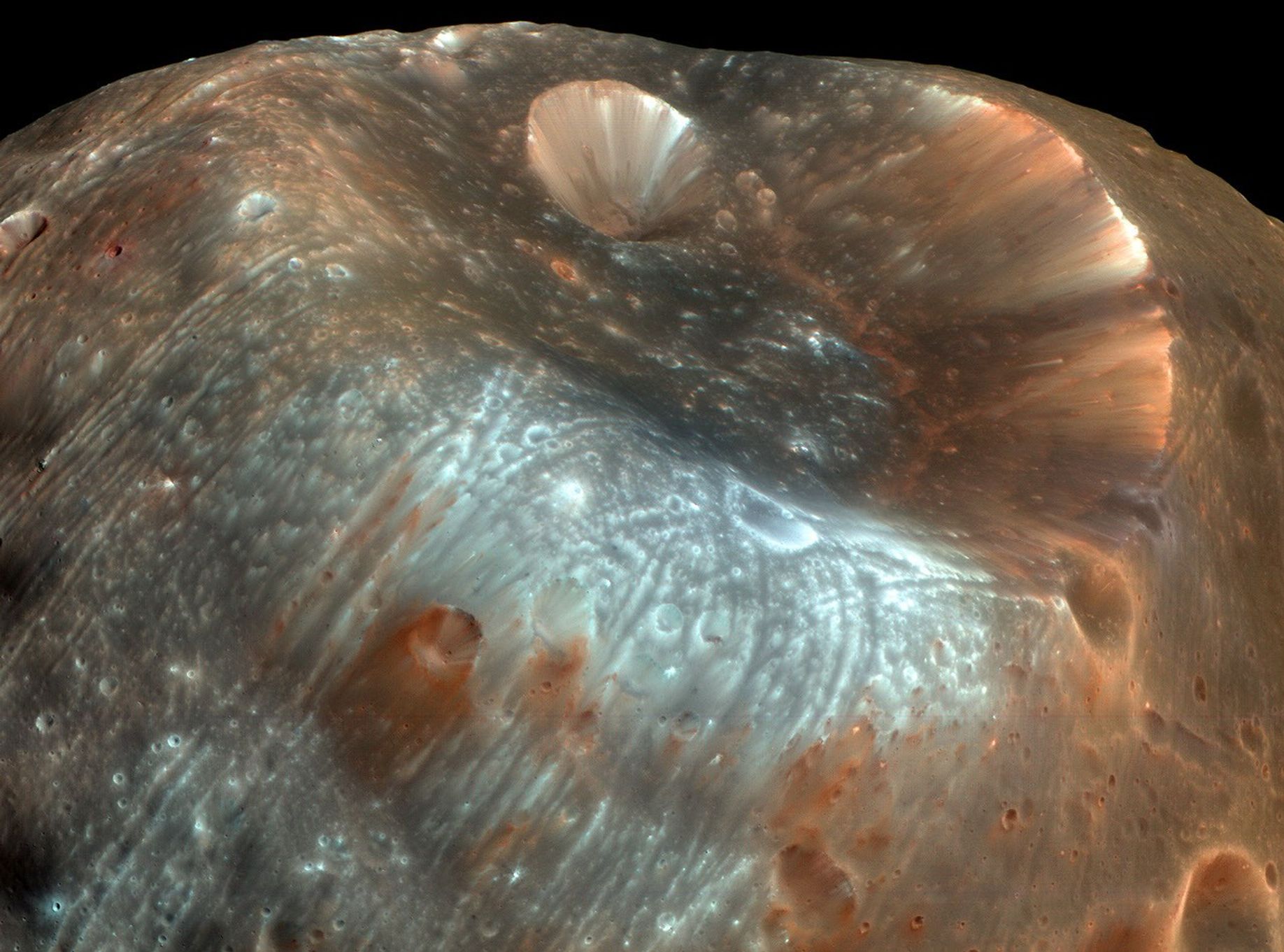
Stickney Crater
Explanation: Stickney Crater, the largest crater on the martian moon Phobos, is named for Chloe Angeline Stickney Hall, mathematician and wife of astronomer Asaph Hall. Asaph Hall discovered both the Red Planet’s moons in 1877. Over 9 kilometers across, Stickney is nearly half the diameter of Phobos itself, so large that the impact that blasted out the crater likely came close to shattering the tiny moon. This enhanced-color image of Stickney and surroundings was recorded by the HiRISE camera onboard the Mars Reconnaissance Orbiter as it passed within some six thousand kilometers of Phobos in March of 2008. Even though the surface gravity of asteroid-like Phobos is less than 1/1000th Earth’s gravity, streaks suggest loose material slid down inside the crater walls over time. Light bluish regions near the crater’s rim could indicate a relatively freshly exposed surface. The origin of the curious grooves along the surface is mysterious but may be related to tidal stresses experienced by close-orbiting Phobos or the crater-forming impact itself.
Tomorrow’s picture: farside
| Date: | October 9, 2026 |
|---|---|
| Credit: | HiRISE, MRO, LPL (U. Arizona), NASA |
| Authors & editors: | Jerry Bonnell, Cecilia Chirenti, Robert Nemiroff, Keighley Rockcliffe |
| A service of: |
ASD at NASA / GSFC, NASA Science Activation & Michigan Tech. U. |
Floodwaters Overwhelm Thailand
2026-10-09 04:01




October 7, 2025
October 2, 2026
September falls in the heart of the monsoon season in Thailand, where cities and towns are accustomed to the afternoon rains and thunderstorms that frequently roll through. But throughout late September and early October 2026, persistent heavy rains punctuated by intense downpours left low-lying areas across the country in Southeast Asia under sustained flooding.
Prachin Buri province was among the areas where flooding was widespread. The right image above shows land along the Bang Pakong River and nearby agricultural areas and aquaculture facilities inundated on October 2, 2026. The left image shows the same area at the same time of year in 2025. Acquired with NASA-USGS Landsat satellites, the images are false-color to better distinguish water from vegetation, developed land, and other surfaces. The bright red shapes are floating solar arrays.
Some of the flooding likely stemmed from a low-pressure system that stalled over the area for several days in late September. Stoked by moisture and energy from the warm Gulf of Thailand nearby, the system delivered especially intense rains to the region. About 100 kilometers (60 miles) to the west, Bangkok received nearly 300 millimeters (11.8 inches) of rain over a 48-hour period, according to news reports, close to the average monthly rainfall total for September of 344 millimeters (13.5 inches).
Since mid-September, flooding has occurred in 50 provinces across the country, affecting over 4 million people and causing dozens of deaths, according to the International Federation of Red Cross and Red Crescent Societies. Government agencies estimate about 270,000 hectares (670,000 acres) of farmland, including rice fields and fruit orchards, have been damaged.
NASA Earth Observatory images by Lauren Dauphin, using Landsat data from the U.S. Geological Survey. Story by Lindsey Doermann.


References & Resources
- ABC News (2026, September 28) Residents brave floodwater for supplies after Bangkok inundated. Accessed October 7, 2026.
- The Conversation (2026, October 5) As the planet warms, cities like Bangkok could be increasingly inundated by deadly floods. Accessed October 7, 2026.
- The Nation (2026, October 7) Thailand floods hit 1.7m rai including over 26,000 rai of orchards. Accessed October 7, 2026.
- ReliefWeb (2026, October 6) THA: Flood – 09-2026 – Heavy rainfall caused flooding #3. Accessed October 7, 2026.
You may also be interested in:
Stay up-to-date with the latest content from NASA as we explore the universe and discover more about our home planet.

After days of torrential rain, the river rose to record-breaking levels in parts of Nepal and India.

Surrounded by wetlands, Manitoba’s northernmost farmland near The Pas turns from green to brown over the 2026 growing season.

It was here the founders shaped the future of American government.




TechCrunch - Latest
Long live the mechanical keyboard
2026-10-09 22:08
The maker of non-text AI model Jev valued at $7.5B just weeks after launch
2026-10-09 21:41
An Anthropic AI model sent a false homicide tip to Philadelphia police
2026-10-09 19:36
Batteries are now cheaper than natural gas turbines used at many data centers
2026-10-09 18:57
TechCrunch Disrupt 2026: Gamma’s Grant Lee, Engine’s Elia Wallen, and GV’s Crystal Huang on landing your first 1,000 customers
2026-10-09 18:57


