dernier Landing Page

dernier News Guide

Get updated News about latest trends, and more Get updated News about latest trends and updates products
dernier Service
>

Dernier Trends Updates

This website uses cookies to ensure you get the best experience on our website. By clicking "Accept", you agree to our use of cookies. Learn more

Trending Topics

📰 Trending Topics

Google News - Trending

Google News - Technology

NASA - Breaking News

NASA Invites Media to Learn About Upcoming X-59 Test Flights

2026-03-16 19:48

An aircraft resting on a section of runway as seen from the side. The X-59 has a long, thin nose that accounts for nearly a third of its length, along with sleek wings and an engine mounted above its body, just below its tail. The early morning sky is dark in the background with the sunrise just starting to emerge.
As its team prepared for second flight, NASA’s X-59 quiet supersonic aircraft underwent engine run testing on Thursday, March 12, 2026, at NASA’s Armstrong Flight Research Center in Edwards, California.
Credit: NASA

NASA will hold a media teleconference at 5:30 p.m. EDT on Thursday, March 19 to highlight plans for its X-59 quiet supersonic aircraft’s upcoming flight tests. The teleconference is set to take place after the X-59 is scheduled to complete its second flight, in California.

For the media call, NASA leadership will join representatives from the Quesst mission and contractor Lockheed Martin Skunk Works. The X-59’s test pilots will be available to answer questions about what it’s like to fly the aircraft and how they prepare for flights.

The news conference will stream on NASA’s YouTube channel. An instant replay will be available online. Learn how to watch NASA content on a variety of platforms, including social media.

Participants include:

  • Amit Kshatriya, NASA associate administrator
  • Cathy Bahm, project manager, Low Boom Flight Demonstrator, NASA’s Armstrong Flight Research Center, Edwards, California
  • Peter Coen, Quesst mission integration manager, NASA’s Langley Research Center, Hampton, Virginia
  • Jim “Clue” Less, X-59 test pilot, NASA Armstrong
  • Nils Larson, X-59 test pilot, NASA Armstrong
  • Pat LeBeau, Lockheed Martin X-59 project manager

To participate in the virtual call, members of the media must RSVP no later than two hours before the start of the event to: kristen.m.hatfield@nasa.gov. NASA’s media accreditation policy is available online.

For second flight, the X-59 will taxi from its hangar at NASA Armstrong, then take off and land at nearby Edwards Air Force Base. The aircraft will fly for roughly an hour, reaching a cruising speed of 230 mph at 12,000 feet before accelerating to 260 mph at 20,000 feet.

This flight will kick off a series of flights known as envelope expansion, during which NASA will gradually take the X-59 faster and higher to ensure the aircraft’s safety and assess its performance. This phase will be followed by flights assessing the X-59’s unique acoustic profile. The X-59 is the centerpiece of NASA’s Quesst mission and was developed to fly supersonic, or faster than the speed of sound, without generating loud sonic booms.

Through Quesst, NASA is working to make commercial supersonic flight over land possible, dramatically reducing travel time in the United States or anywhere in the world.

To learn more about X-59 visit:

https://www.nasa.gov/quesst-media-resources

-end-

Rob Margetta
Headquarters, Washington
202-358-0918
robert.j.margetta@nasa.gov 

Kristen Hatfield
NASA Langley, Virginia
757-817-5522
kristen.m.hatfield@nasa.gov

SPARCS CubeSat ‘First Light’ Images

2026-03-16 18:52

2 Min Read

SPARCS CubeSat ‘First Light’ Images

This pair of images shows stars observed Feb. 6, 2026, by the SPARCS space telescope simultaneously in the near-ultraviolet, left, and far-ultraviolet, right. The fact that one star is seen in the far-UV while multiple are seen in near-UV offers insights into the temperatures of these stars, with the one visible in both colors being the hottest.

PIA26731

Credits:
NASA/JPL-Caltech/ASU

Description

This pair of images shows stars observed by the SPARCS (Star-Planet Activity Research CubeSat) space telescope simultaneously in the near-ultraviolet, left, and far-ultraviolet, right. These observations were recorded on Feb. 6, 2026, three weeks after the cube satellite, or CubeSat, launched aboard a SpaceX Falcon 9 on Jan. 11. The fact that one star is seen in the far-UV while multiple are seen in near-UV offers insights into the temperatures of these stars, with the one visible in both colors being the hottest.

Roughly the size of a large cereal box, SPARCS will monitor flares and sunspot activity on low-mass stars — objects only 30% to 50% the mass of the Sun. These stars are among the most common in the Milky Way and host the majority of the galaxy’s roughly 50 billion habitable-zone terrestrial planets, which are rocky worlds close enough to their stars for temperatures that could allow liquid water and potentially support life.

The SPARCS spacecraft is the first dedicated to continuously and simultaneously monitoring the far-ultraviolet and near-ultraviolet radiation from low-mass stars. Over its one-year mission, SPARCS will target approximately 20 low-mass stars and observe them over durations of five to 45 days. 

Filters for the spacecraft’s camera, SPARCam, were made using a technique that improves sensitivity and performance by enabling them to be directly deposited onto the specially developed UV-sensitive “delta-doped” detectors. The approach of detector-integrated filters eliminated the need for a separate filter element, resulting in a system that is among the most sensitive of its kind ever flown in space.

The filters, detectors, and associated electronics were designed, fabricated, and tested at the Microdevices Laboratory (MDL) at NASA’s Jet Propulsion Laboratory in Southern California. Inventors at MDL harness physics, chemistry, and material science, including quantum, to deliver first-of-their-kind devices and capabilities for our nation.

Funded by NASA and led by Arizona State University in Tempe, SPARCS is managed under the agency’s Astrophysics Research and Analysis program. The agency’s CubeSat Launch Initiative (CSLI) selected SPARCS in 2022 for a ride to orbit. The initiative is a low-cost pathway for conducting scientific investigations and technology demonstrations in space, enabling students, teachers, and faculty to gain hands-on experience with flight hardware design, development, and building.

Blue Canyon Technologies fabricated the spacecraft bus.

To Protect Artemis II Astronauts, NASA Experts Keep Eyes on Sun 

2026-03-16 18:42

7 min read

To Protect Artemis II Astronauts, NASA Experts Keep Eyes on Sun 

As four astronauts travel around the Moon on NASA’s Artemis II mission, they will venture beyond Earth’s protective magnetic field. The crew’s spacecraft, Orion, will carry and protect them as they journey into deep space and serves as the main protection against the Sun’s intense power.  During their 10-day flight, NASA and the National Oceanic and Atmospheric Administration (NOAA) will monitor the Sun around the clock and translate space weather conditions into real-time decisions to protect the astronauts. 

Space weather refers to the changing conditions driven by solar wind and eruptions from the Sun. Solar flares are the most powerful eruptions in the solar system, the strongest unleashing more energy than a billion hydrogen bombs. Coronal mass ejections are giant clouds of solar particles hundreds of times the size of Earth that burst from the Sun.  

While both flares and coronal mass ejections can affect technology, the primary concern for astronauts is the solar particle events they can trigger, accelerating some particles to near light speed. If a significant solar particle event occurs near the Artemis II crew, it could raise radiation levels inside the spacecraft. Too high a total lifetime exposure can contribute to increased risks of developing cancer or health disorders that could impair cognition and performance. During the Artemis II mission, NASA will minimize that risk.

For the first time in half a century, four astronauts are leaving Earth’s protective magnetic field to enter a realm where massive solar eruptions can unleash more energy than a billion hydrogen bombs. The Artemis II crew will fly through a dangerous environment, but they’re not going it alone. On the voyage, the astronauts and their Orion capsule are outfitted with radiation trackers as ground teams monitor solar eruptions 24/7. Here’s how NASA and the National Oceanic and Atmospheric Administration (NOAA) are protecting explorers from the most powerful eruptions in the solar system.
NASA/Joy Ng

Tracking solar eruptions 

“Our focus will be real-time space weather analysis, prioritizing solar energetic particles and events that could produce them,” said Mary Aronne, operations lead for the space weather analysis office at NASA’s Goddard Space Flight Center in Greenbelt, Maryland. “We’re looking for the trigger, which would typically be a flare or a coronal mass ejection.” 

This animation shows a solar eruption that produces a solar flare, a coronal mass ejection, and a flurry of energetic particles. The particles follow the spiral shape of the solar wind’s magnetic fields into interplanetary space.
NASA’s Goddard Space Flight Center Conceptual Image Lab

The Goddard team will track any solar eruptions that occur, measuring how big they are, how fast they’re moving, and how likely they are to generate energetic particles that will cross Orion’s path. To this end, they’ll use real-time data from Sun-watching spacecraft strategically placed across the solar system, such as NASA’s recently launched Interstellar Mapping and Acceleration Probe, NASA’s Solar Dynamics Observatory, the ESA (European Space Agency)/NASA Solar and Heliospheric Observatory, NOAA’s Geostationary Operational Environmental Satellites-19 satellite, and many others. 

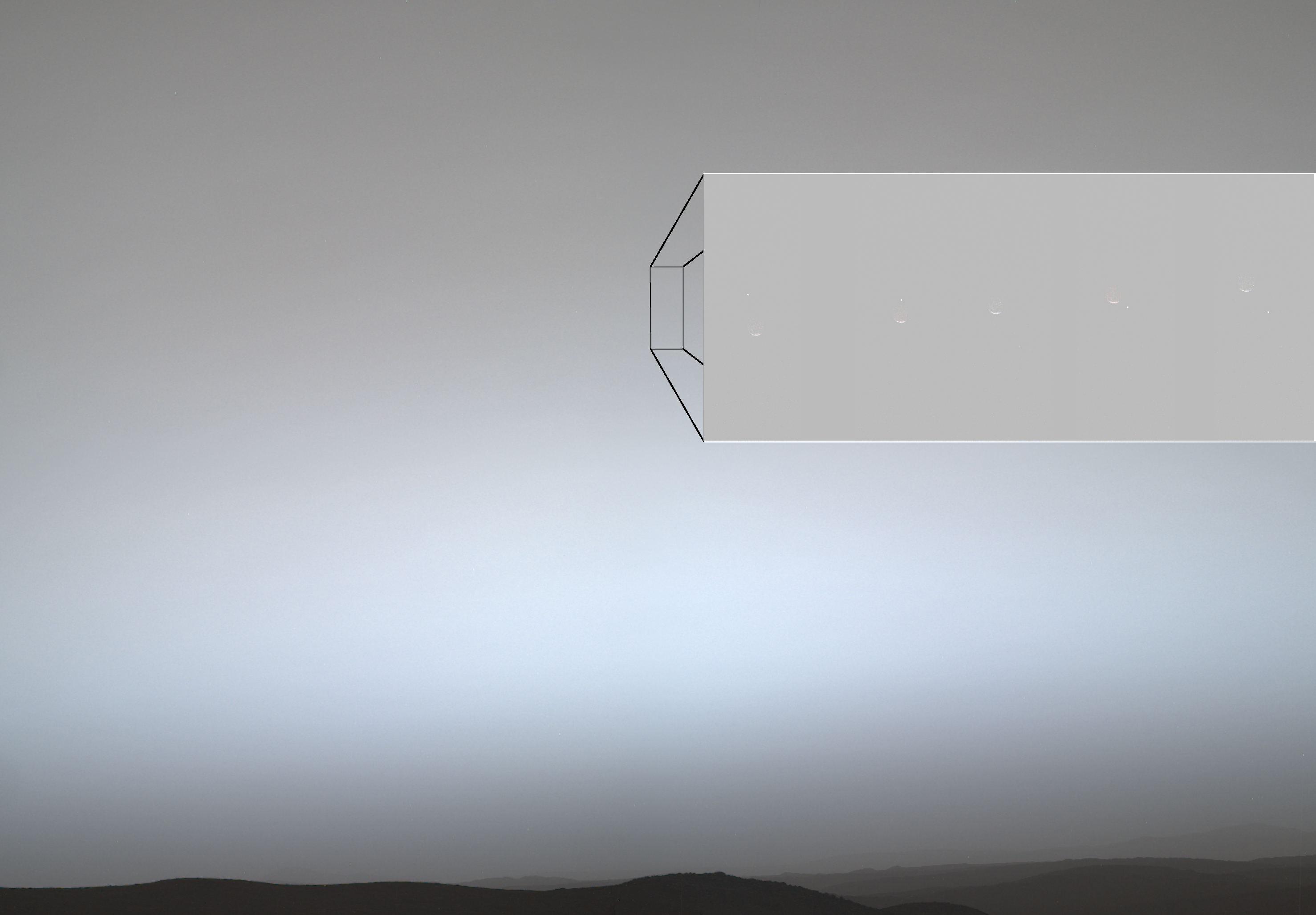
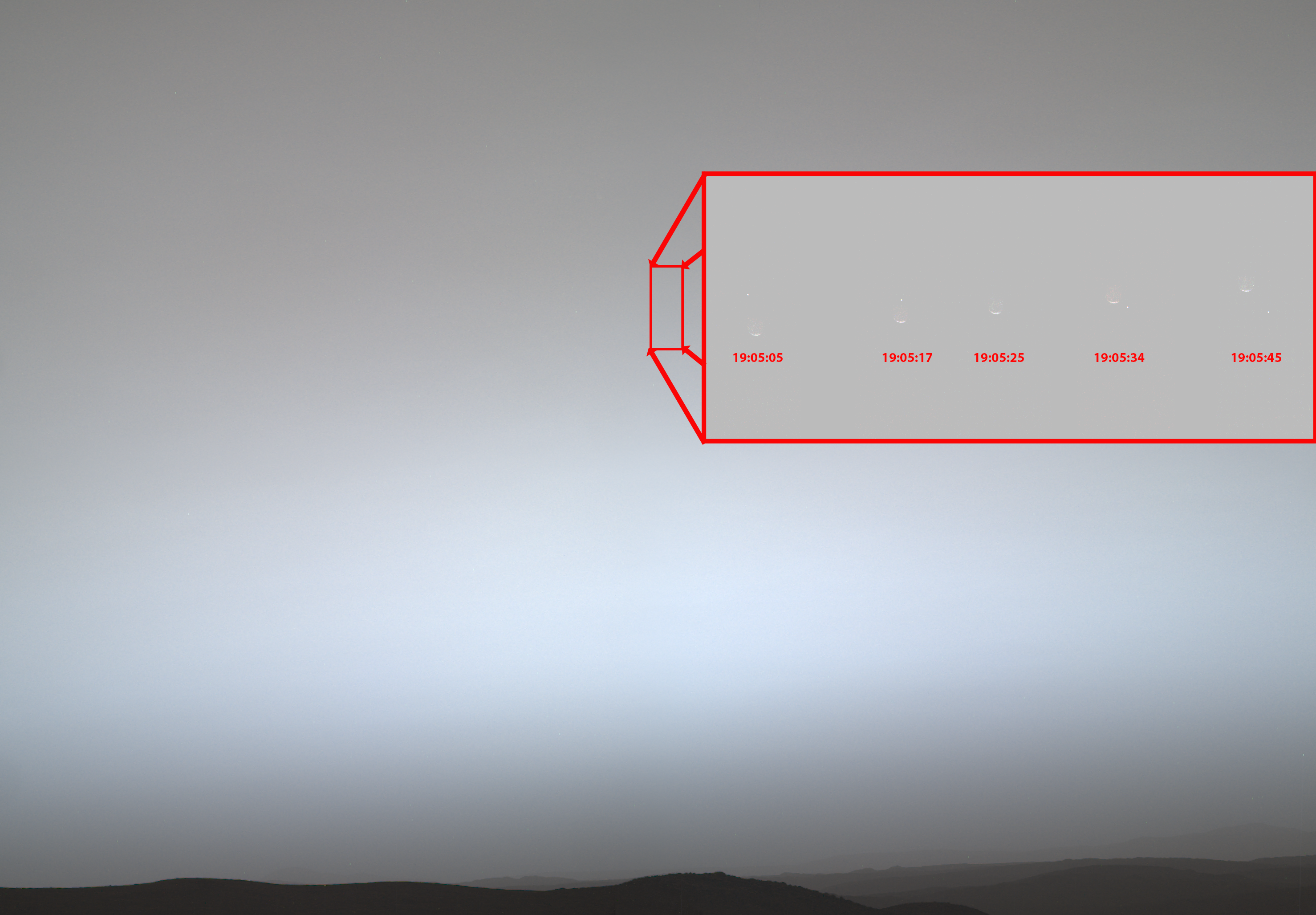
Other NASA spacecraft also will help monitor the Sun. Due to Mars’ current position, NASA’s Perseverance Mars rover can look at the far side of the Sun, where Earth has no view. The rover’s Mastcam-Z cameras can give NASA’s space weather teams a view of the largest sunspots up to two weeks earlier so the team can monitor and prepare for possible solar flares.  

NASA’s Perseverance Rover captured these images of sunspots crossing the Sun from its vantage point on the Martian surface between February 24 – 27, 2026. Mars is currently on the opposite side of the Sun, giving the rover a view of sunspots not visible from Earth. Perseverance will monitor sunspots leading up to and during the Artemis II launch window, giving the Moon to Mars Space Weather Analysis Office (M2M SWAO) and Space Radiation Analysis Group (SRAG) teams advance notice of regions that could produce solar eruptions before they rotate onto the Earth-facing side of the Sun.
NASA/JPL-Caltech/ASU/MSSS/SSI

Monitoring crew exposure 

Energetic solar particles don’t stream straight out from the Sun. They spiral along the Sun’s magnetic field lines, tracing loops tens of thousands of miles across and scattering due to particle collisions along the way. The chaotic swarm is so large that, from inside it, particles seem to be coming from every direction.  

“It’s more like you’re sitting in a bathtub and it’s gradually filling with water,” said Stuart George, a space radiation analyst at NASA Johnson. 

That gradual rise in radiation gives analysts time to evaluate the situation. Inside Orion, six radiation sensors, part of the Hybrid Electronic Radiation Assessor system designed and built by NASA, measure dose rates in different parts of the cabin. Artemis II astronauts also wear personal radiation trackers called crew active dosimeters. If radiation levels increase, Orion’s onboard systems display warnings accompanied by an audible alarm. 

Exploded diagram of NASA's Orion spacecraft showing labeled parts: spacecraft adapter, service module, crew module, and launch abort system, with various components highlighted against a gray background.
Artist’s concept of the components of the Orion spacecraft.
NASA

NASA has dosage level thresholds they’ll look for inside Orion. The first threshold signals a caution, prompting closer monitoring and coordination with medical and flight operations teams. A higher threshold triggers a recommendation for the crew to take shelter. 

Radiation shielding in space is all about mass. Charged particles are slowed and absorbed as they pass through matter. Astronauts are trained to reconfigure their cabin during a solar particle event, removing stowed equipment from storage bays and securing it along areas of the cabin to add mass between themselves and incoming particles. Since Artemis II is the first crewed Artemis mission, testing this procedure in the Orion spacecraft is a major objective of the mission. 

“Once crews add mass to the places that tend to be hotter in terms of radiation exposure, they can then continue to go about their duties,” George said. 

Artist’s concept of the Trajectory for Artemis II, NASA’s first flight with crew aboard SLS and Orion to pave the way for long-term return to the Moon and missions to Mars.
NASA

The complexity of solar particle events is one reason NASA places spacecraft across the solar system. During a solar storm in January, NASA analysts tracked a coronal mass ejection on its way to Earth. When it arrived, satellites detected two distinct spikes in energetic particles where there would normally be one. Measurements from NASA’s BioSentinel CubeSat, deployed during the Artemis I mission, revealed what happened. The spacecraft, about 55 million miles away from Earth, detected a distinct eruption that later merged with the coronal mass ejection headed to Earth. Ultimately, two separate eruptions occurred.

The crew also must account for exposure to Earth’s radiation belts and galactic cosmic rays. The Van Allen Radiation Belts are two rings of high energy particles that surround our planet. Any mission headed to the Moon or farther must pass through them. Galactic cosmic rays are very high-energy particles from sources beyond our solar system. Together, the radiation exposure from these sources is expected to be comparable to a 1-month stay on the International Space Station, or about 5% of an astronaut’s career limit. Any exposure from solar radiation events would add to this baseline. 

The Moon to Mars Space Weather Analysis Office, based at NASA Goddard, continuously assesses solar activity and any eruptions that occur. The team shares its analysis with the Space Radiation Analysis Group, based at NASA’s Johnson Space Center in Houston. Together, their forecasts and those from NOAA’s Space Weather Prediction Center, plus real-time measurements from inside the Orion spacecraft will inform recommendations for the flight control team.  

By Miles Hatfield
NASA’s Goddard Space Flight Center, Greenbelt, Md.

Celebrating 100 Years Since Goddard’s Breakthrough Moment in Modern Rocketry

2026-03-16 13:58

On a snowy March 16, 1926, Dr. Robert H. Goddard rests his hand on the testing frame supporting his liquid fuel rocket at Ward Farm in Auburn, Massachusetts. A wooden door is propped up at an angle next to the frame where Goddard’s assistant, Henry Sachs, later sheltered after lighting the rocket.
Dr. Robert H. Goddard and a liquid oxygen-gasoline rocket in the frame from which it was fired on March 16, 1926, at Auburn, Mass.
Esther Goddard, from the Clark University archive

From the voyages of spacecraft to the Moon and beyond, to the launches of satellites that help us navigate, communicate, and understand our planet and the universe, the use of liquid-fueled rockets has been key to humanity’s use and exploration of space. Today marks 100 years since the first successful test of this technology.

On March 16, 1926, physicist and inventor Dr. Robert H. Goddard achieved a small but significant success when he launched a liquid-fueled rocket for the first time. His rocket, fueled by liquid oxygen and gasoline, was tested at his Aunt Effie’s farm in Auburn, Massachusetts.

While unimpressive by most measures—the rocket flew for just 2.5 seconds, reaching 41 feet (12.5 meters) in altitude and landing in a cabbage patch 184 feet (56 meters) away—it was a breakthrough that heralded the exploration of space.

Over his lifetime, Goddard improved on his design and went on to create other technologies for space travel, including systems to steer rockets, pumps for rocket fuels, and engines that could pivot for better control. His pioneering work laid an important foundation for our achievements in space today.

Photo Credit: Esther Goddard, from the Clark University archive.

A Combination of Techniques Leads to Improved Friction Stir Welding 

2026-03-16 13:52

Download PDF: A Combination of Techniques Leads to Improved Friction Stir Welding

The NESC developed several innovative tools and techniques during an assessment to find the root cause of poor tensile strength and low topography anomalies (LTA) in welds formed using a solid-state welding process called self-reacting friction stir welding (SRFSW).   

Using a combination of machine learning, statistical modeling, and physics-based simulations, the assessment team helped improve the weld process and solve both issues, lifting constraints that had been placed on flight hardware.  

Developing Techniques for LTA Detection 

Determining the root cause of poor tensile strength welds and LTA observed on the weld fracture surfaces involved several techniques: 

  • Deep Learning for LTA Detection: The NESC team developed a machine-learning model to detect and segment LTA in weld images. The model was trained on images annotated by metallurgy experts, with a majority-vote consensus to resolve disagreements. The team then developed an accompanying standard operating procedure for image capture to improve robustness and reduce bias. This model was built on previous NASA work to develop specialty microscopy analysis foundation models by pretraining on 100,000+ microscopy images. This step was crucial to linking process parameters with LTA occurrence in an objective, nonbiased way. 
The team eliminated issues with manual identification of LTA by training a neural network to detect LTA from images of fracture surfaces, pretraining an encoder on a large NASA dataset of microscopy images called MicroNet.
  • Integrated Data-Ingestion Framework: SRFSW is a complex process with many interacting variables. The weld process produces a large amount of data with diverse data types that include dozens of tabular process parameters, dozens of sequential data streams from the production tool, fracture and weld cross-section images, and mechanical-test lab data. A Python-based framework was developed to automatically ingest and validate these diverse data and compile them into a single master spreadsheet and a database. This tool reduced manual effort, minimized transcription errors, and improved data quality for downstream analysis. The team delivered the tool to stakeholders for their ongoing use. 

Diagram labeled ‘Data Ingestion Framework’ showing a three‑step flow. Left circle lists data sources including weld stream data, test data, microstructural measurements, and defect analyses. An arrow leads to a center circle labeled ‘Data Automatically Ingested into Python,’ which then flows to a right circle labeled ‘Master Spreadsheet & Materials Database.’ A caption explains that the pipeline integrates processing parameters, microstructure, and mechanical performance for SRFSW.

  • Data Analysis Web Application: A new web-based visualization and analysis tool allowed engineers and subject matter experts to quickly explore the integrated dataset for faster hypothesis testing and more intuitive insight generation throughout the investigation
  • Space-Filling Design of Experiments: Because SRFSW involves complex, nonlinear relationships between process parameters, the team found traditional factorial designs were insufficient and implemented a space-filling design of experiments (DOE) to efficiently explore the full parameter space. These data-trained machine-learning models capture the underlying weld behavior. The team also developed a software tool for generating such designs and shared it with stakeholders.

Side‑by‑side 3D scatter plots comparing initial data with a space‑filling design of experiments. The left plot shows red points clustered tightly in a narrow band, while the right plot shows red and blue points spread evenly throughout the entire 3D space. Caption states that space‑filling DOE provides better coverage for machine learning

  • Physics-Based SRFSW Simulation: Creating a computational model of the SRFSW process simulated weld conditions, microstructure evolution, and resulting properties, offering insight into aspects of the weld process that are inaccessible to physical sensors. This enhanced understanding and guided improvements. 

Determining LTA Root Cause 

Using these tools and analyses, the team identified two root causes for the LTA and poor tensile strength: 

  1. Overly aggressive post-weld surface preparation in production reduced weld strength. 
  1. Weld power input outside the optimal range led to inconsistent welds and increased risk of LTA. 

The process models helped define a target weld power input window and recommended how to adjust primary control parameters to reliably achieve that target. Follow-up production tests confirmed that these adjustments could be implemented with high precision, eliminating both low-strength welds and LTA.  

Friction Stir Welding 

In SRFSW, a rotating pin is plunged into the seam between two metal plates, generating heat through friction that fuses the sheets together without melting the material. This technique produces stronger joints than traditional welding and enables the use of high-performance but traditionally non-weldable alloys like Aluminum 2219. 

The SRFSW technique uses no blowtorches or solder because friction stirs the materials together at a molecular level.

 Rotating tool applying pinch force to form or fasten sheet material, converting rotation into controlled lateral travel.

Interior of a tall industrial assembly building showing a large yellow‑green cylindrical aerospace structure held within a multi‑story blue steel support and processing tower. Surrounding the assembly are white and yellow access platforms, scaffolding, and bright overhead lighting. A few workers stand near the base, emphasizing the enormous scale of the structure

NASA’s Friction Stir Welding lab resides inside NASA’s Michoud Vertical Assembly Center in New Orleans and is being used to join major components of the SLS rocket. 

For information, contact Donald S. Parker.  donald.s.parker@nasa.gov 

References: NASA/TM-20240016466 and NASA/TM-20230010624 

TechCrunch - Latest

Nvidia’s version of OpenClaw could solve its biggest problem: Security

2026-03-16 22:45

Nvidia announced an open enterprise AI agent platform, called NemoClaw, that is built off of viral OpenClaw.
Jensen Huang just put Nvidia’s Blackwell and Vera Rubin sales projections into the $1 trillion stratosphere

2026-03-16 21:41

Nvidia CEO Jensen Huang said he expects $1 trillion worth of orders for the chips.
Warren presses Pentagon over decision to grant xAI access to classified networks

2026-03-16 20:58

Sen. Elizabeth Warren noted that Grok, xAI's controversial chatbot, has created harmful outputs for users and poses a potential national security risk.
Memories AI is building the visual memory layer for wearables and robotics

2026-03-16 20:30

Memories.ai is building a large visual memory model that can index and retrieve video-recorded memories for physical AI.
Samsung bets this island startup can tame the grid with software and batteries

2026-03-16 20:00

GridBeyond's hardware and software coordinates several gigawatts of supply and demand to help balance the flow of electricity on the grid. The idea has attracted investors like Samsung Ventures.
×
Useful links
Home
Definitions Terminologies
Socials
Facebook Instagram Twitter Telegram
Help & Support
Contact About Us Write for Us


1 year ago Category :
In the constantly evolving world of trade and commerce, keeping up with the latest trends and updates in export-import compensation is crucial for businesses to stay competitive and successful. Export-import compensation refers to the financial rewards and benefits that companies receive for engaging in international trade activities, such as exporting goods to overseas markets or importing products from abroad. Understanding the latest trends in export-import compensation can help businesses make informed decisions and optimize their operations for maximum profitability.

In the constantly evolving world of trade and commerce, keeping up with the latest trends and updates in export-import compensation is crucial for businesses to stay competitive and successful. Export-import compensation refers to the financial rewards and benefits that companies receive for engaging in international trade activities, such as exporting goods to overseas markets or importing products from abroad. Understanding the latest trends in export-import compensation can help businesses make informed decisions and optimize their operations for maximum profitability.

Read More →
1 year ago Category :
In the fast-paced world of electronic parts and tools, staying up-to-date on the latest trends and updates is crucial for professionals and hobbyists alike. Let's dive into some of the recent trends and updates in the electronic parts and tools industry that are shaping the way we work with technology.

In the fast-paced world of electronic parts and tools, staying up-to-date on the latest trends and updates is crucial for professionals and hobbyists alike. Let's dive into some of the recent trends and updates in the electronic parts and tools industry that are shaping the way we work with technology.

Read More →
1 year ago Category :
### Exploring the Latest Trends and Updates in the Electronic Parts Manufacturers Directory

### Exploring the Latest Trends and Updates in the Electronic Parts Manufacturers Directory

Read More →
1 year ago Category :
**Exploring the Latest Trends and Updates in the Electronic Parts Distributors Directory**

**Exploring the Latest Trends and Updates in the Electronic Parts Distributors Directory**

Read More →
1 year ago Category :
In the world of movies, there is a growing trend towards dual audio films, where the movie is available in two languages for viewers to choose from. This trend has gained popularity in recent years due to the increasing global audience for films and the convenience it offers to viewers who prefer to watch movies in their native language.

In the world of movies, there is a growing trend towards dual audio films, where the movie is available in two languages for viewers to choose from. This trend has gained popularity in recent years due to the increasing global audience for films and the convenience it offers to viewers who prefer to watch movies in their native language.

Read More →
1 year ago Category :
The digital power of attorney is a recent trend in the legal world that is gaining popularity as advancements in technology continue to shape how we manage important legal documents. A power of attorney is a legal document that gives someone the authority to make decisions on your behalf in the event that you are unable to do so yourself. Traditionally, this document was created on paper and required physical signatures to be valid. However, with the rise of digital technology, the concept of a digital power of attorney is becoming more prevalent.

The digital power of attorney is a recent trend in the legal world that is gaining popularity as advancements in technology continue to shape how we manage important legal documents. A power of attorney is a legal document that gives someone the authority to make decisions on your behalf in the event that you are unable to do so yourself. Traditionally, this document was created on paper and required physical signatures to be valid. However, with the rise of digital technology, the concept of a digital power of attorney is becoming more prevalent.

Read More →
1 year ago Category :
Deepfake technology has been making waves in recent years, particularly in the realm of news and media. This emerging technology allows for the creation of highly realistic fake videos and images by using artificial intelligence algorithms to swap faces and manipulate audio. While deepfakes have been used for entertainment purposes, such as inserting celebrities into movie scenes or creating humorous videos, they have also raised serious concerns when it comes to spreading fake news.

Deepfake technology has been making waves in recent years, particularly in the realm of news and media. This emerging technology allows for the creation of highly realistic fake videos and images by using artificial intelligence algorithms to swap faces and manipulate audio. While deepfakes have been used for entertainment purposes, such as inserting celebrities into movie scenes or creating humorous videos, they have also raised serious concerns when it comes to spreading fake news.

Read More →
1 year ago Category :
In recent years, the rise of deepfake technology has become a growing concern across the globe. Deepfakes are AI-generated audio, images, or videos that appear incredibly realistic, often depicting individuals saying or doing things that never actually happened. This technology has the potential to spread misinformation, manipulate public opinion, and harm individuals' reputations.

In recent years, the rise of deepfake technology has become a growing concern across the globe. Deepfakes are AI-generated audio, images, or videos that appear incredibly realistic, often depicting individuals saying or doing things that never actually happened. This technology has the potential to spread misinformation, manipulate public opinion, and harm individuals' reputations.

Read More →
1 year ago Category :
Deepfake technology has taken the entertainment world by storm, with its ability to create hyper-realistic videos that can be difficult to distinguish from reality. From viral videos on social media to Hollywood movies, deepfake technology has opened up a new world of possibilities for content creators and viewers alike.

Deepfake technology has taken the entertainment world by storm, with its ability to create hyper-realistic videos that can be difficult to distinguish from reality. From viral videos on social media to Hollywood movies, deepfake technology has opened up a new world of possibilities for content creators and viewers alike.

Read More →
1 year ago Category :
Deepfake technology has been a topic of growing concern in recent years, with advances in artificial intelligence and machine learning making it easier than ever to create convincingly realistic fake videos. While deepfake technology has the potential for various applications, such as in the film industry or for facial reenactment in dubbing, it also presents significant challenges and risks.

Deepfake technology has been a topic of growing concern in recent years, with advances in artificial intelligence and machine learning making it easier than ever to create convincingly realistic fake videos. While deepfake technology has the potential for various applications, such as in the film industry or for facial reenactment in dubbing, it also presents significant challenges and risks.

Read More →