📰 Trending Topics
Google News - Trending
Google News - Technology
The 16GB Raspberry Pi 5 got another ‘unavoidable’ RAM price hike - The Verge
2026-11-02 14:07
- The 16GB Raspberry Pi 5 got another ‘unavoidable’ RAM price hike The Verge
- Price rises for some 16GB Raspberry Pi products Raspberry Pi
- Raspberry Pi 5 16GB Price Rises To $385 USD Phoronix
- Raspberry Pi 5 16 GB Hits $385 Following Latest Price Hikes TechPowerUp
- A Raspberry Pi Just Got 26% Pricier. You Should Be Worried Gizmodo
Dell XPS Googlebook Review: Beautiful Hardware For A Useless Platform - Engadget
2026-11-02 12:30
- Dell XPS Googlebook Review: Beautiful Hardware For A Useless Platform Engadget
- I compared Googlebook and Samsung DeX; Galaxy users have little reason to switch Android Police
- Lenovo's Googlebook 15 is a fantastic laptop held back by an OS that isn't ready for prime time XDA
- Big Googlebook Problem Frustrates Early Adopters BGR
- My brutally honest thoughts on Googlebook after one month [VIDEO] Chrome Unboxed
Inside Apple’s Slog to Create Its First Robot - The Information
2026-11-02 14:16
- Inside Apple’s Slog to Create Its First Robot The Information
- Apple 'HomeView Ultra' With 9-Inch 360º Screen Detailed in New Report MacRumors
- Nine-inch HomeView Ultra again rumored for 2027 or 2028 AppleInsider
- Apple has explored home robots that follow you, fly around, and fold clothes The Apple Post
- Apple’s Home Robot Project Faces Internal Disagreements And Slow Software Progress - The Information TradingView
NASA - Breaking News
NASA Invites Media to Northrop Grumman CRS-25 Station Resupply Launch
2026-11-02 17:33
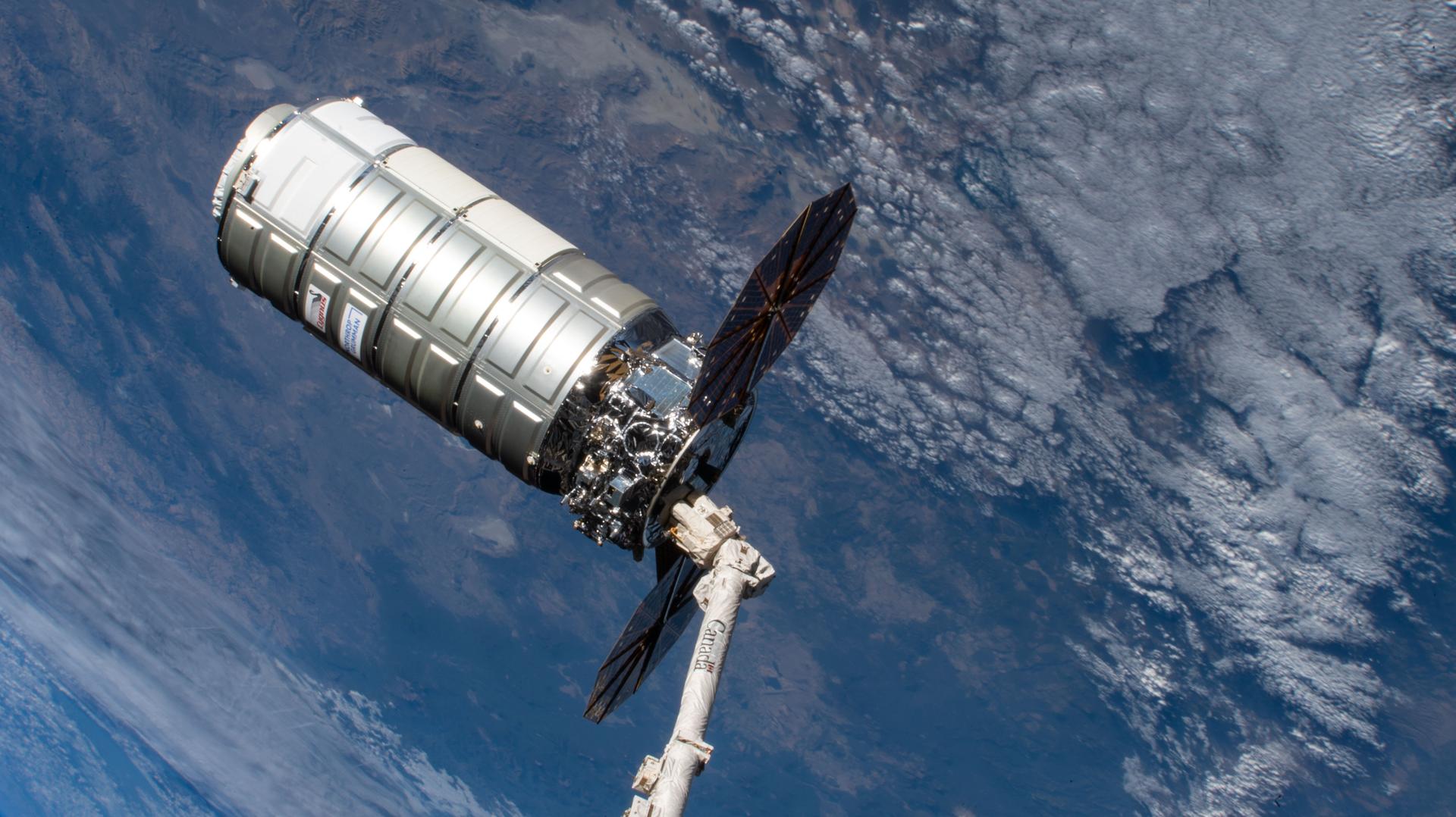
Media accreditation is open for the next launch to deliver NASA science investigations, supplies, and equipment to the International Space Station. A Northrop Grumman Cygnus XL spacecraft will launch in November to the orbital laboratory on a SpaceX Falcon 9 rocket for NASA.
The mission is known as NASA’s Northrop Grumman Commercial Resupply Services 25, or NASA’s Northrop Grumman CRS-25. Liftoff is targeted for no earlier than 10:49 a.m. EST, Sunday, Nov. 29, from Space Launch Complex 40 at Cape Canaveral Space Force Station in Florida.
Following launch, astronauts aboard the space station will use the Canadarm2 robotic arm to capture Cygnus and install the spacecraft to the Unity module’s Earth-facing port for cargo unloading. The spacecraft will remain at the space station until May 2027. This is the company’s 25th spacecraft built to deliver supplies to the International Space Station under contract with NASA.
Credentialing to cover prelaunch and launch activities is open to U.S. media. The application deadline for U.S. citizens is 11:59 p.m. EST, Thursday, Nov. 12. All accreditation requests must be submitted online at:
Credentialed media will receive a confirmation email following approval. NASA’s media accreditation policy is available online. For questions about accreditation, or to request special logistical support, email: ksc-media-accreditat@mail.nasa.gov. For other questions, please contact NASA’s Kennedy Space Center newsroom at: 321-867-2468.
In addition to food, supplies, and equipment for the crew, Cygnus will deliver several new experiments, including hardware to manufacture tiny, DNA-inspired particles in space that could improve drug delivery for cancer and osteoarthritis, as well as a study that could guide cancer treatments by predicting whether a patient’s cancer is likely to spread to other parts of the body. Cygnus also will carry human muscle cells and medications to test therapeutics for muscle loss associated with spaceflight and aging on Earth, and a compact radiation sensor designed to improve crew safety on future missions.
Each resupply mission to the station delivers scientific investigations in the areas of biology and biotechnology, Earth and space science, physical sciences, and technology development and demonstrations. Cargo resupply from U.S. companies ensures a national capability to deliver scientific research to the space station, increasing NASA’s ability to conduct new investigations aboard humanity’s laboratory in space.
For 26 years, people have lived and worked continuously aboard the International Space Station, advancing scientific knowledge and making research breakthroughs that are not possible on Earth. The space station is an important testbed for NASA to understand and overcome the challenges of long-duration spaceflight and to expand commercial opportunities in low Earth orbit. As commercial companies concentrate on providing human space transportation services and destinations as part of a strong low Earth orbit economy, NASA is focusing its resources on deep space missions to the Moon as part of the Artemis and Moon Base programs to build on our foundation for the first astronaut missions to Mars.
Learn more about International Space Station research and operations at:
-end-
Josh Finch / Jimi Russell
Headquarters, Washington
202-358-1100
joshua.a.finch@nasa.gov / james.j.russell@nasa.gov
Steven Siceloff
Kennedy Space Center, Fla.
321-876-2468
steven.p.siceloff@nasa.gov
Sandra Jones / Leah Cheshier
Johnson Space Center, Houston
281-483-5111
sandra.p.jones@nasa.gov / leah.d.cheshier@nasa.gov
NASA’s Hubble Uncovers Case of Missing Oxygen in Nearby Dwarf Galaxies
2026-11-02 15:00
NASA’s Hubble Uncovers Case of Missing Oxygen in Nearby Dwarf Galaxies
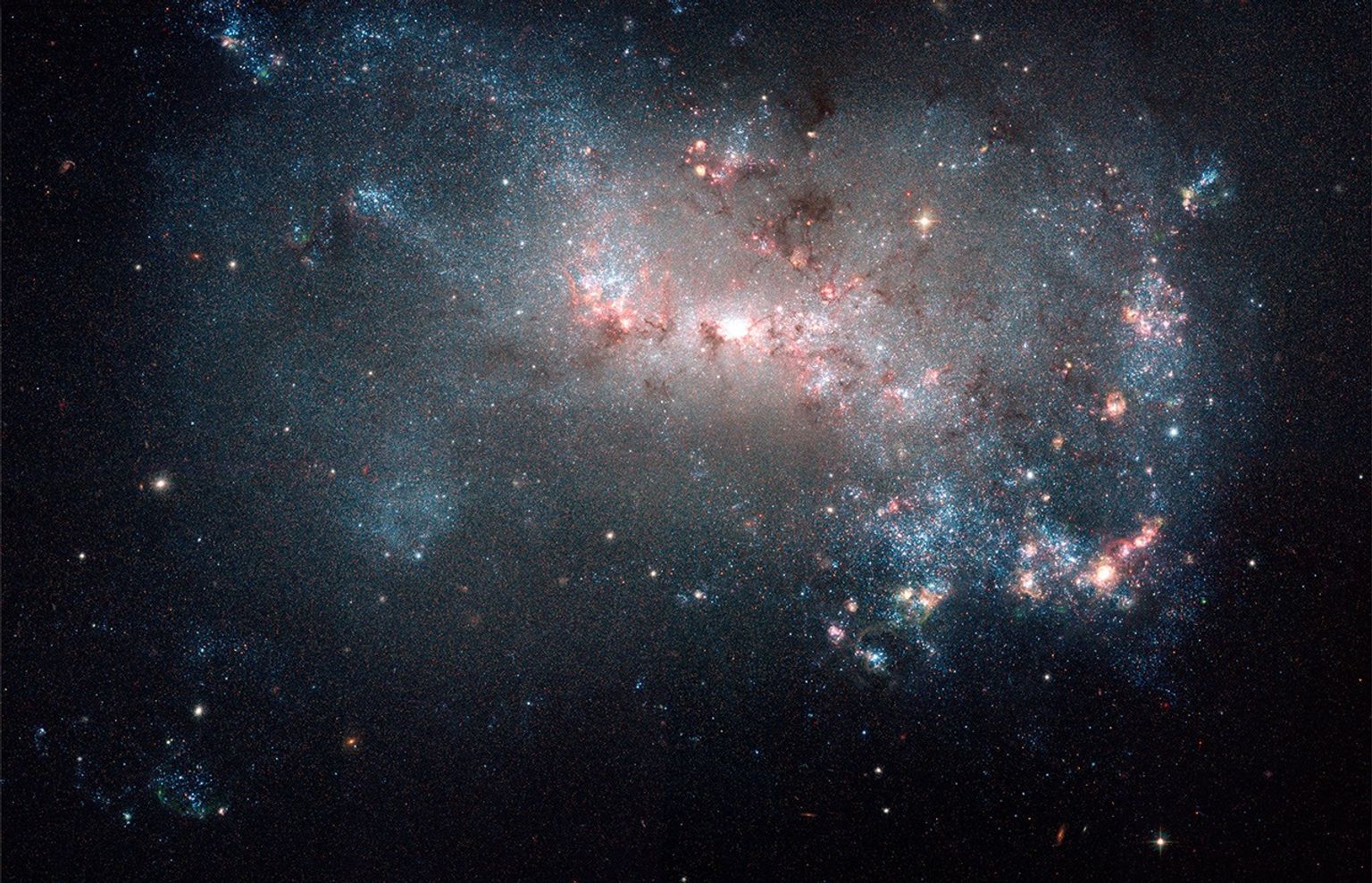
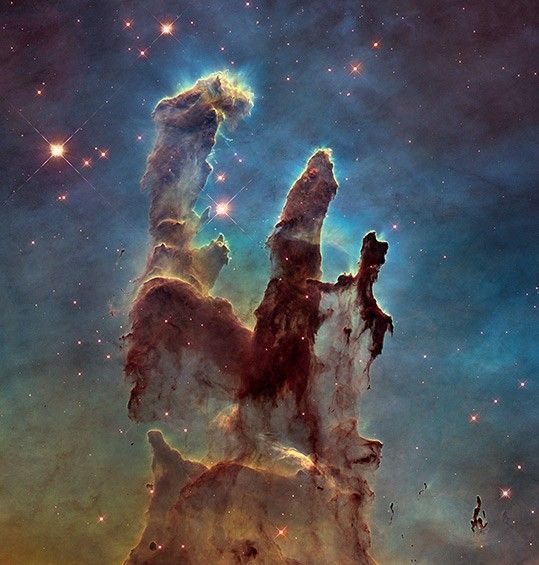
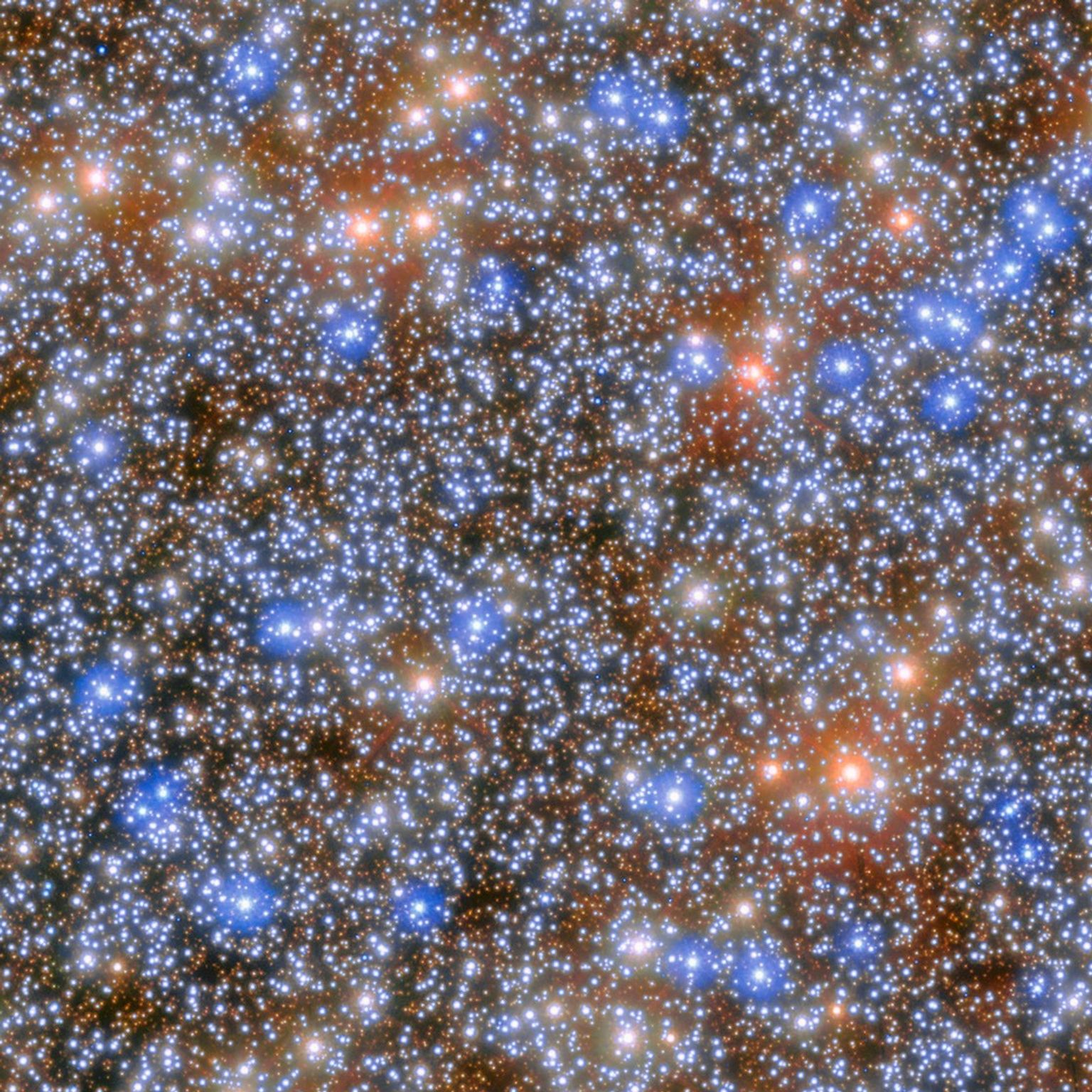
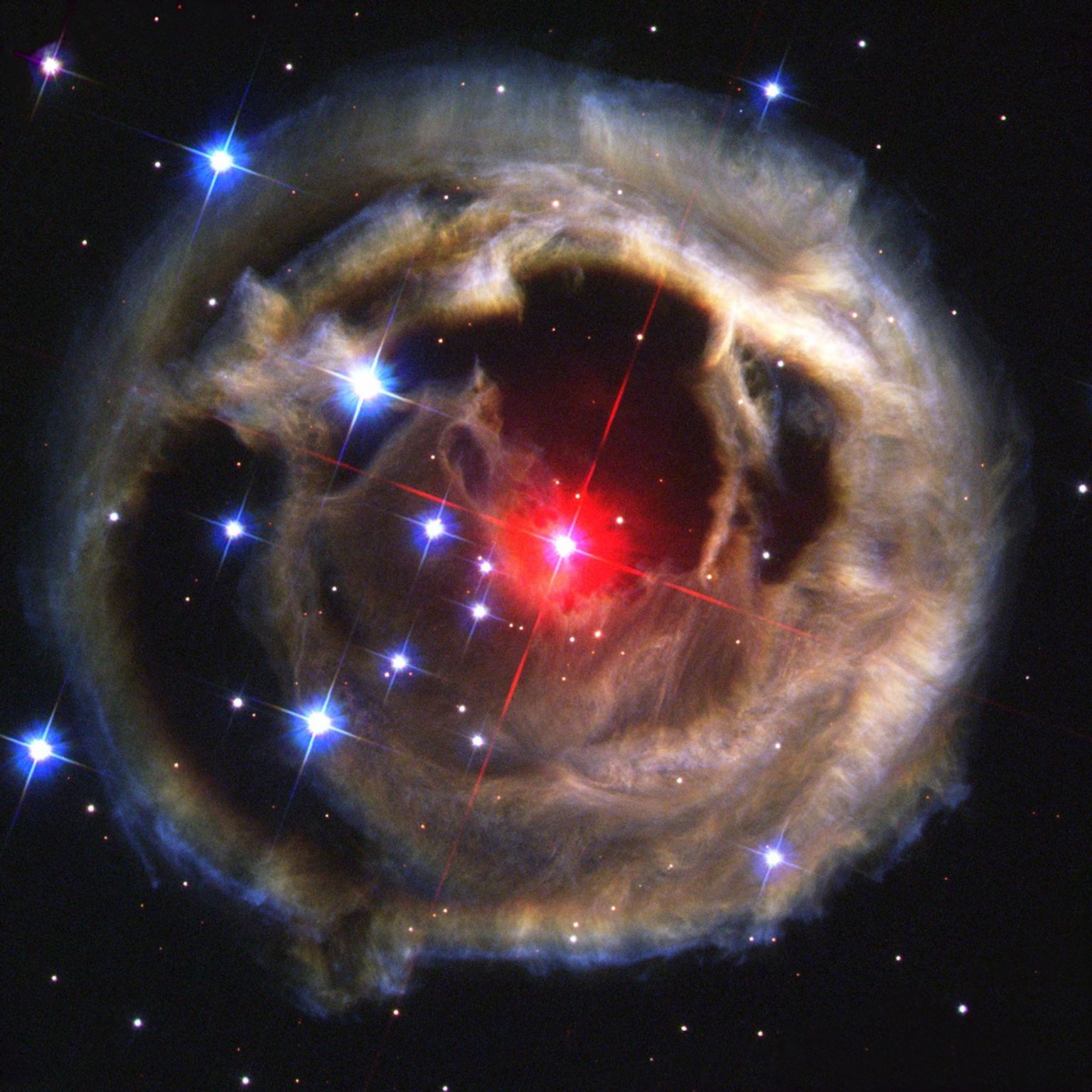
Image: NASA, ESA, Hubble Heritage–ESA/Hubble Collaboration, Alessandra Aloisi (STScI, ESA)
NASA’s Hubble Space Telescope just revealed a mystery in our cosmic neighborhood. In a paper published Monday in The Astrophysical Journal, researchers using Hubble studied 37 nearby dwarf galaxies — small galaxies containing a few thousand to hundreds of millions of stars — and found that much of the oxygen they expected to see is missing.
Simulations predict that significantly more oxygen, a tracer of a wider set of heavy elements, should reside in these galaxies. So where did it go?
“Oxygen is produced by stars, which are inside of galaxies. We know that the oxygen had to be inside of the galaxies at some point in the past, so the oxygen must have been ejected,” said co-investigator Grace Telford, assistant professor in the Department of Physics and Astronomy at the University of Utah. “And to do that, you need energy from massive stars and supernova explosions to drive material out of the host galaxies and into the space between galaxies.”
Galactic winds unleashed by supernovae are apparently more effective at removing oxygen from low-mass galaxies than current models predict, according to the new study. The findings show that dwarf galaxies can hold onto only a small fraction of the oxygen made by stars.
In the Galaxies Losing Oxygen via Winds (GLOW) project, funded by NASA and the National Science Foundation, scientists traced the oxygen to understand how it is distributed inside stars, in the gas between stars, and in the space between galaxies. But, of all the elements in the galaxies, why study oxygen?
Oxygen, the most abundant element after hydrogen and helium, is relatively easy to detect and measure, and its production is well understood — making it a reliable indicator of how chemical elements are distributed in a galaxy.
“So, it’s really for practical reasons that we’ve chosen oxygen,” said Kristen Wingfield McQuinn, GLOW principal investigator and mission head of the Science Operations Center for NASA’s newly launched, panoramic Nancy Grace Roman Space Telescope at the Space Telescope Science Institute in Baltimore, Maryland. She also is an associate professor at Rutgers University in New Brunswick, New Jersey.
“Oxygen is one of the primary elements formed by stars. Being able to trace how much oxygen gets made, and then how much is distributed inside and outside of galaxies, helps us understand galaxy evolution,” said McQuinn. “It also helps us learn where and how much galaxies are enriching the space between galaxies, called the intergalactic medium.”
The study used archival optical imaging data from Hubble to resolve stellar populations and determine star-formation histories and compositions. Along with data from NASA’s retired Spitzer Space Telescope as well as the ground-based Very Large Array and Australian Telescope Compact Array, the researchers analyzed 37 nearby dwarf galaxies to trace oxygen atoms produced by stars.
The team wanted to understand how oxygen is distributed across the stars, gas, and dust in the galaxies. These dwarf galaxies were selected because their masses fall in the range where simulations and theory predict that an increasing amount of their oxygen will be expelled from the galaxies via supernovae explosions. These 37 galaxies also are all close enough for Hubble to resolve their individual stars. That’s not true for the vast majority of known dwarf galaxies, which are too far away for this kind of study.
Although astronomers already suspected that galaxies expel a large fraction of oxygen and other heavy elements, an open question has been where these metals end up. A previous study from 2014 addressed this question for Milky Way-like, star-forming galaxies, finding that these galaxies lost a large fraction of their oxygen, some of which is found in the diffuse haloes of gas surrounding galaxies outside their disks, called the circumgalactic medium.
In the GLOW study, McQuinn and her team extended this research to low-mass galaxies across a wide range of masses and environments. While previous teams have measured oxygen in the circumgalactic medium of dwarf galaxies, it is still unclear if most of the missing oxygen is in this region, or if it has been completely ejected from the galaxy’s surroundings.
In the future, McQuinn hopes to study even lower-mass galaxies in the nearby universe. She has an approved program to use the Roman Space Telescope to find these faint and tiny systems across a wide swath of sky. Once she’s identified these galaxies, McQuinn hopes to use Hubble and NASA’s James Webb Space Telescope to get deeper observations of their stars. This would allow her to reconstruct the galaxies’ histories to understand how they formed stars across cosmic time.
Telford’s future work involves using Hubble to zoom in on the individual, massive stars that produce oxygen and eject it from their host galaxies. She’s using some of the nearby GLOW targets to get very detailed observations to characterize how the massive stars are different in these small galaxies.
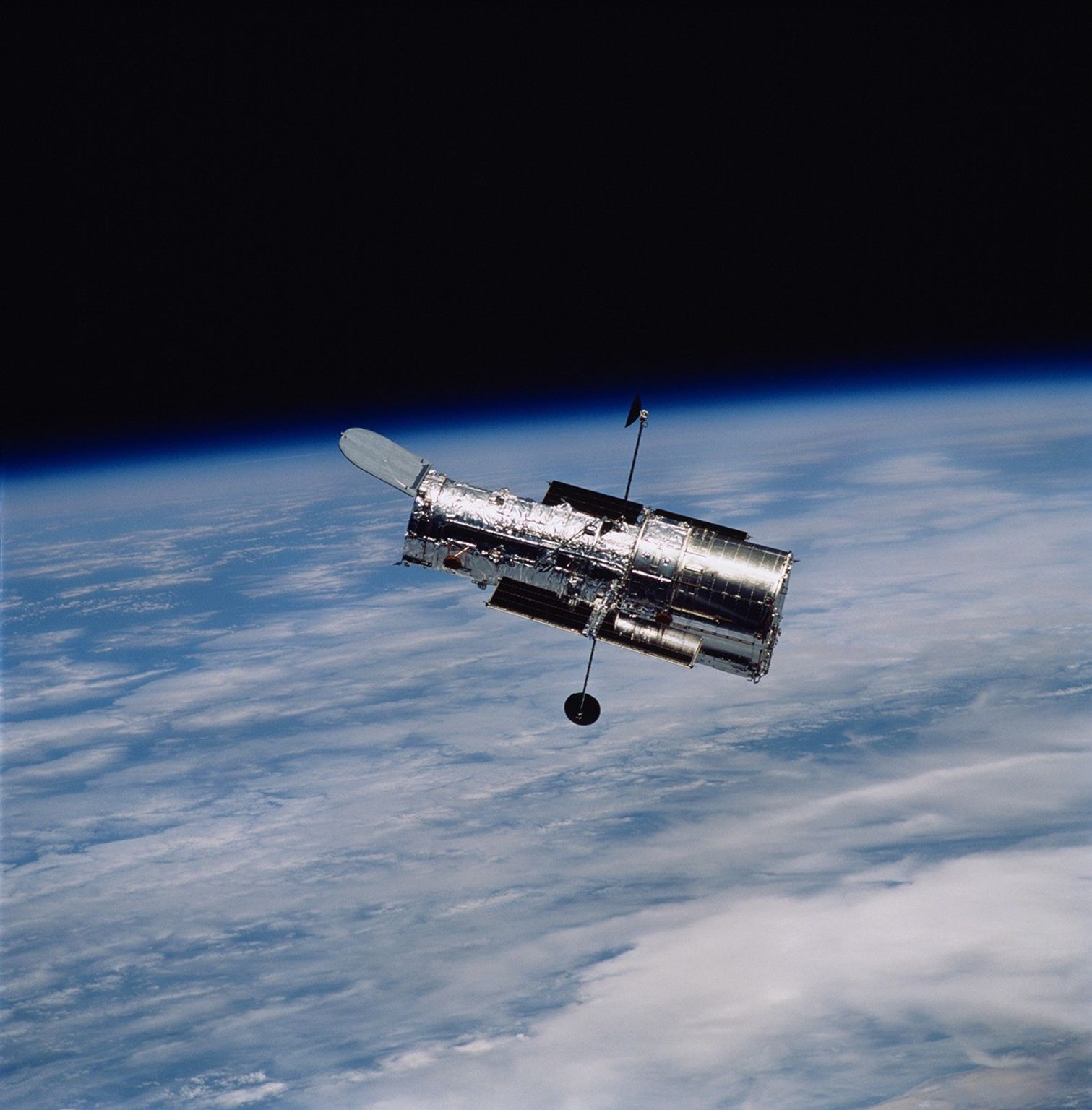
The Hubble Space Telescope has been operating for over three decades and continues to make ground-breaking discoveries that shape our fundamental understanding of the universe. Hubble is a project of international cooperation between NASA and ESA (European Space Agency). NASA’s Goddard Space Flight Center in Greenbelt, Maryland, manages the telescope and mission operations. Lockheed Martin Space, based in Denver, also supports mission operations at Goddard. The Space Telescope Science Institute in Baltimore, which is operated by the Association of Universities for Research in Astronomy, conducts Hubble science operations for NASA.
Share
Details
Claire Andreoli
NASA’s Goddard Space Flight Center
Greenbelt, Maryland
claire.andreoli@nasa.gov
Ann Jenkins, Christine Pulliam
Space Telescope Science Institute
Baltimore, Maryland
Related Terms
APOD: 2026 November 2 – A Long Cloud on Mars
2026-11-02 05:05
APOD
Astronomy Picture of the Day
Discover the cosmos! Each day a different image or photograph of our fascinating universe is featured, along with a brief explanation written by a professional astronomer.
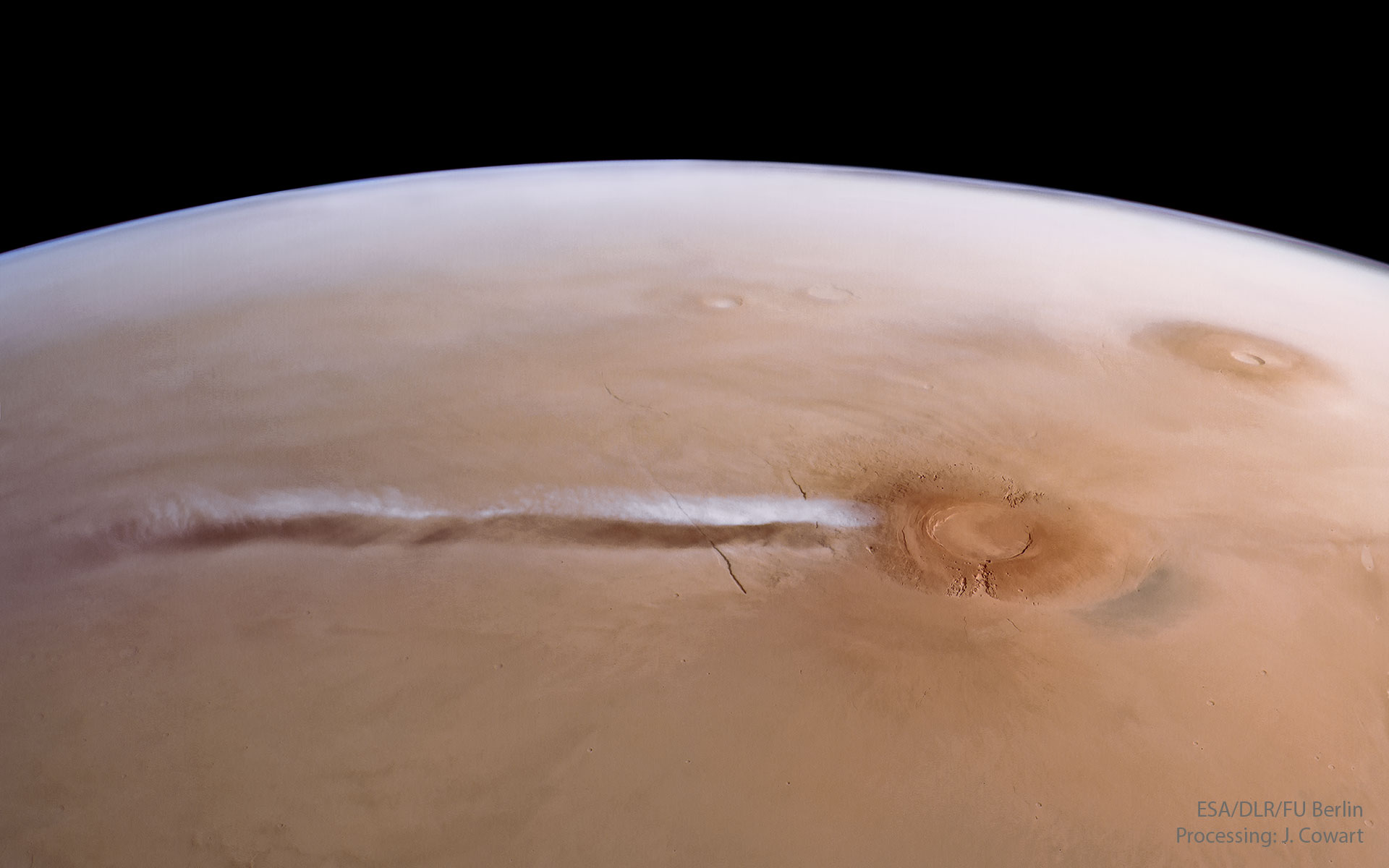
A Long Cloud on Mars
Explanation: What’s causing this unusually long cloud on Mars? Known as the Arsia Mons Elongated Cloud (AMEC) and first recorded by NASA’s Viking Orbiter 2 in 1977, the strange cloud has been imaged in greater detail more recently by ESA’s robotic Mars Express spacecraft. The featured image is from 2018. The cloud forms only during spring and summer seasons and then only during morning hours. Made of water-ice, the most familiar process that causes cloud crystals to form around bits of dust would fail due to the thinness and lack of dust high in the Martian atmosphere. Leading speculation holds that dust is not involved. After the cloud forms near the volcano Arsia Mons, wind blows the cloud downstream — creating a tail that can extend over 1500 kilometers. Efforts to better understand AMECs will continue, an understanding that may bolster a more complete view of cloud formation on Earth.
Tomorrow’s picture: eyeing a cat
| Date: | November 2, 2026 |
|---|---|
| Credit: |
ESA, DLR, FU Berlin; Processing & License: J. Cowart |
| Authors & editors: | Robert Nemiroff, Jerry Bonnell, Cecilia Chirenti, Keighley Rockcliffe |
| A service of: |
ASD at NASA / GSFC, NASA Science Activation & Michigan Tech. U. |
Pennsylvania’s Grand Canyon
2026-11-02 05:01
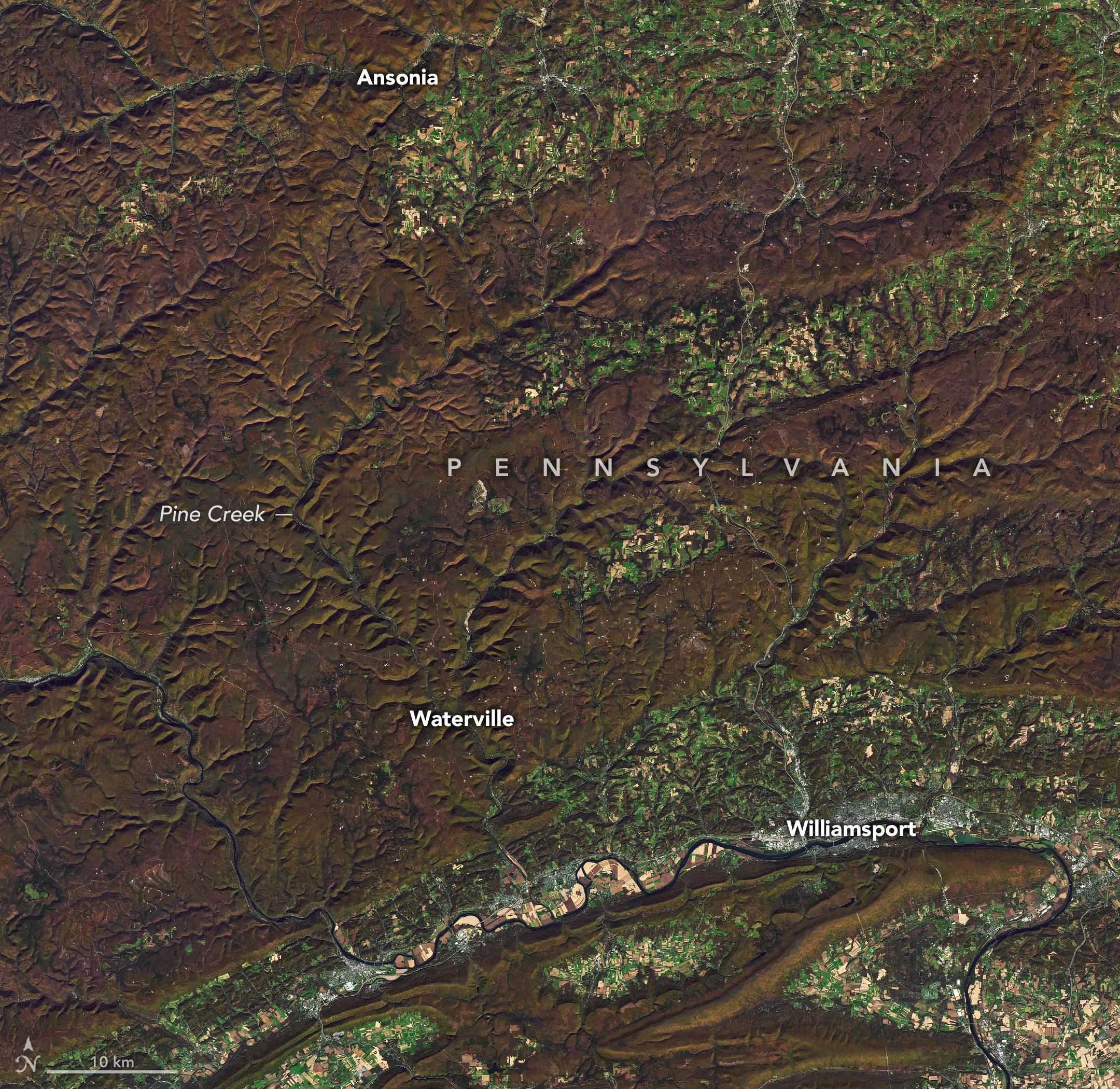
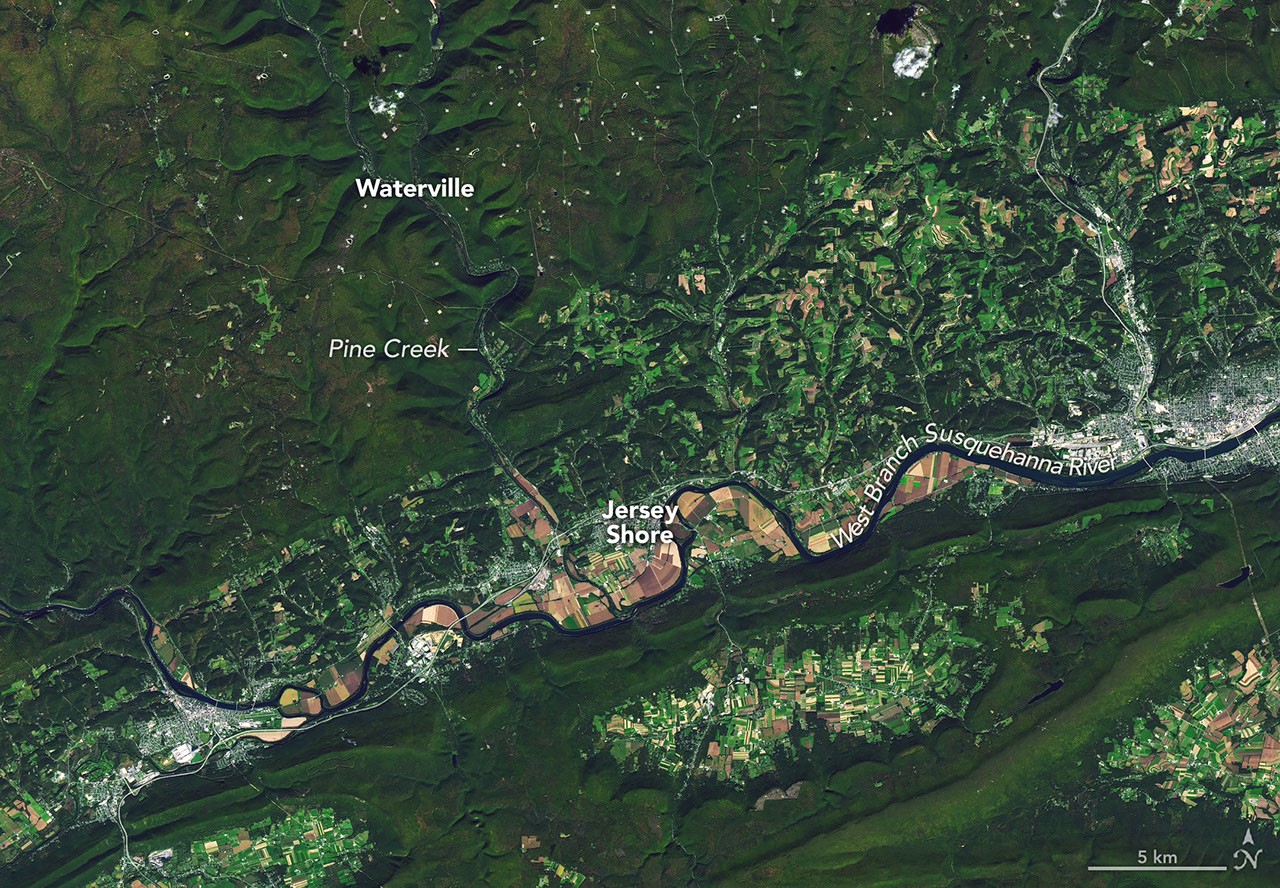
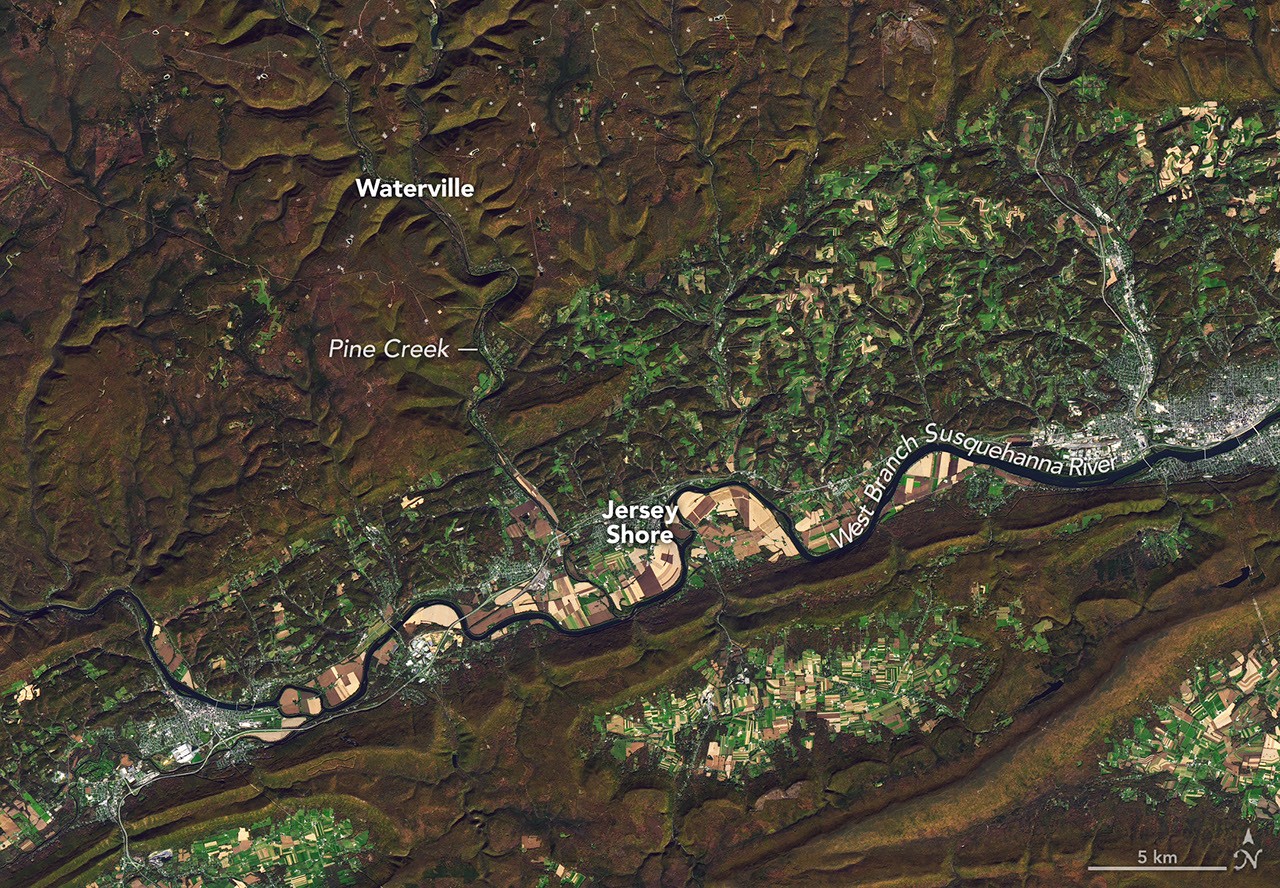
North-central Pennsylvania is canyon country with an Appalachian flair. Pine Creek Gorge reaches depths of about 1,500 feet (460 meters) along its gently curving path through the forests of the Allegheny Plateau. Instead of the steep rock walls characteristic of canyons in the desert Southwest, lushly vegetated slopes outline the dramatic topography. In autumn, greens give way to a palette of reds and golds sought out by leaf peepers.
Nicknamed the “Grand Canyon of Pennsylvania,” the gorge runs for some 45 miles (72 kilometers) from Ansonia south to Pine Creek’s confluence with the West Branch Susquehanna River, reaching its greatest depths around Waterville. The OLI (Operational Land Imager) on the NASA-USGS Landsat 8 satellite captured this image of Pine Creek Gorge on October 25, 2026, when colorful fall foliage was on display.
Glaciers played a key role in the canyon’s formation, though ice itself did not carve it. Pine Creek once flowed to the north, opposite of what it does today. As glaciers advanced into the region from the northeast during the last ice age, they dammed the river and filled the valley with lakes. Those lakes eventually overflowed, sending water streaming to the south.

When the ice receded, Pine Creek was already becoming entrenched in its southward course. Rocks and sand left behind by the melting ice further prevented the water from turning back north. Glacial meltwater continued to rush through the valley, deepening and shaping it into its current form.
Today, the hillsides around the gorge are blanketed in northern hardwood and mixed oak forest, sprinkled with hemlock and white pine. In autumn, the deciduous trees impart red and gold hues to the landscape akin to the rock of the famous Arizona canyon.
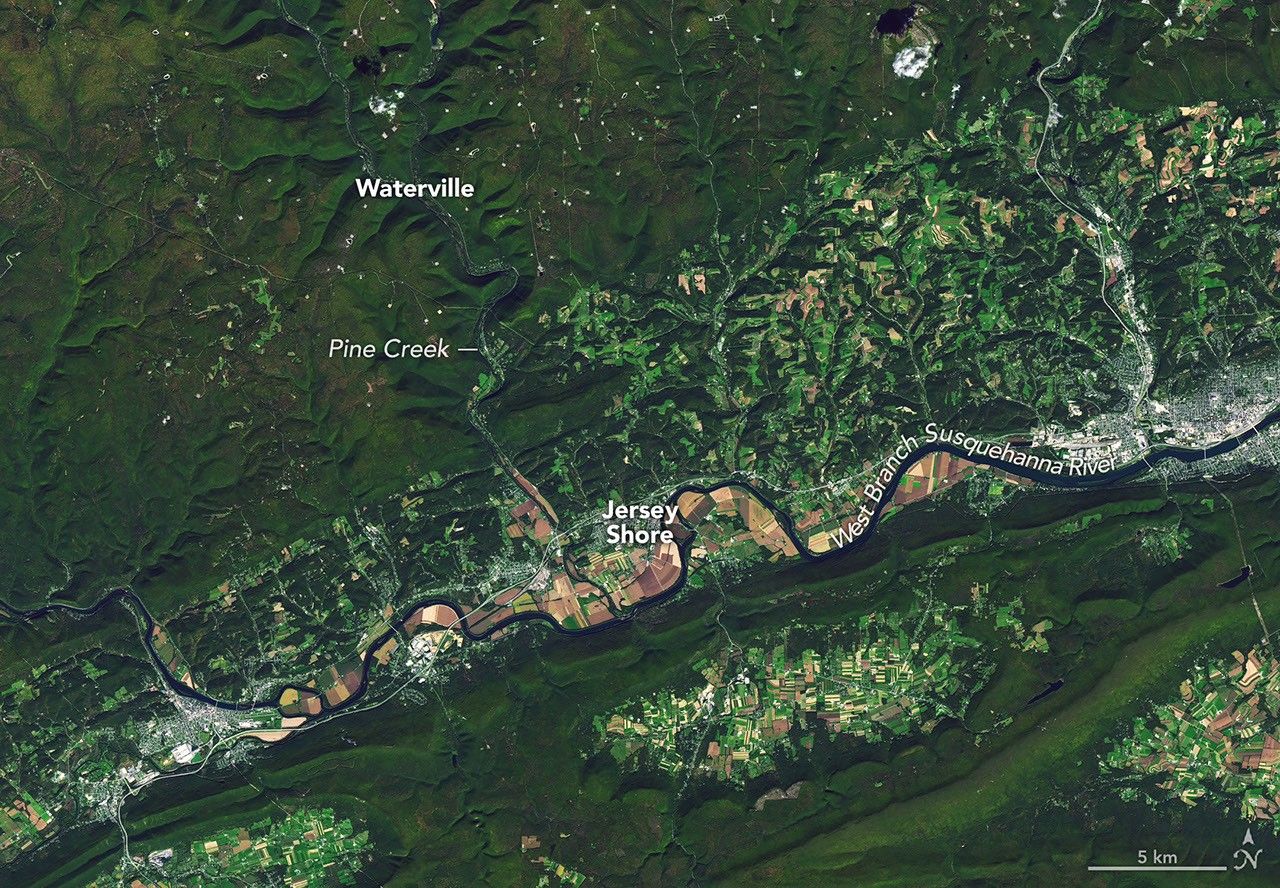
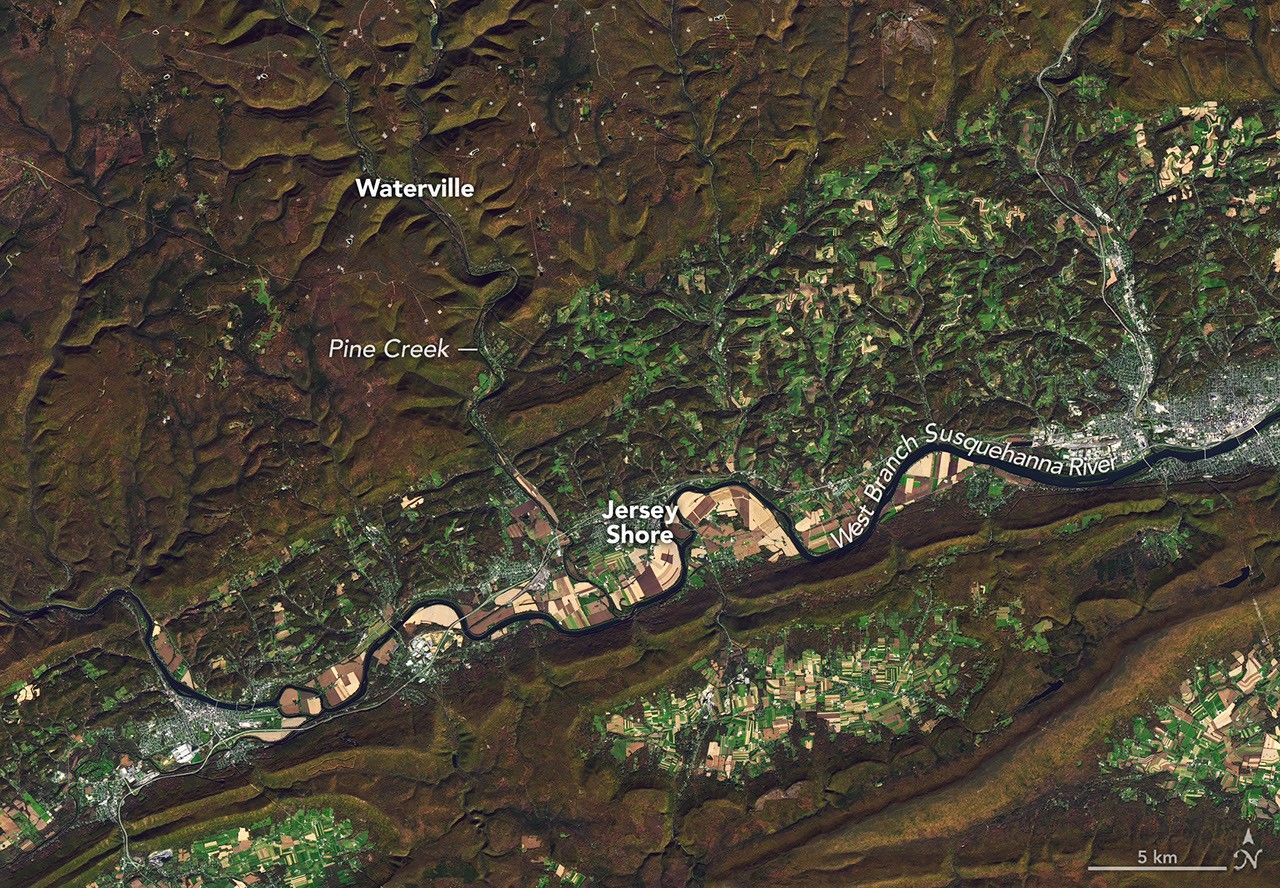
October 9
October 25
This seasonal change around Pine Creek Gorge has not always been so visually pleasing. With increasing demand for wood products in early 19th-century America, loggers found their way to the area’s stately trees. At the time, white pine and hemlock several feet in diameter and towering hardwoods populated the slopes around Pine Creek Gorge. The pines were especially valued for making ship masts, and hemlock bark was used to tan leather. Before railroads, logs were floated down Pine Creek to the Susquehanna in massive drives. By the early 20th century, decades of logging left the land so barren that the area earned the moniker “Pennsylvania Desert.”
The forest has since returned, and with it, wild inhabitants such as black bears, coyotes, bobcats, timber rattlesnakes, and a diversity of songbirds. In 1968, an area of 30,000 acres (12,000 hectares) was designated a National Natural Landmark. Visitors can experience the gorge’s natural splendor at many points along its path, including from multiple state parks and the Pine Creek Rail Trail.
NASA Earth Observatory images by Michala Garrison, using Landsat data from the U.S. Geological Survey. Photo by fishhawk, via Flickr. Story by Lindsey Doermann.

References & Resources
- Lumber Heritage Region, The Lumber Era of Pine Creek Gorge. Accessed October 30, 2026.
- NASA Earth Observatory (2026, October 26) Hunting Red Leaves With Satellites. Accessed October 30, 2026.
- Pennsylvania Department of Conservation and Natural Resources (2026, October 22) 2026 Fall Foliage Report: Week of October 22-28. Accessed October 30, 2026.
- Pennsylvania Department of Conservation and Natural Resources, Pine Creek Gorge Natural Area. Accessed October 30, 2026.
- Pennsylvania Geological Survey (2016) Pine Creek Gorge (PA Grand Canyon), Tioga and Lycoming Counties. Accessed October 30, 2026.
You may also be interested in:
Stay up-to-date with the latest content from NASA as we explore the universe and discover more about our home planet.

One narrowing icefall remains the linchpin for the Alpine glacier—and it may not be long for this world.

The hills and basins of Seattle, Washington, have been sculpted by glaciers and modified by humans.

These glacial landforms jut into northern Lake Huron, surrounded by sheltered channels and coves frequented by fish and small watercraft.



APOD: 2026 November 1 – Colors of the Moon
2026-11-01 04:05
APOD
Astronomy Picture of the Day
Discover the cosmos! Each day a different image or photograph of our fascinating universe is featured, along with a brief explanation written by a professional astronomer.
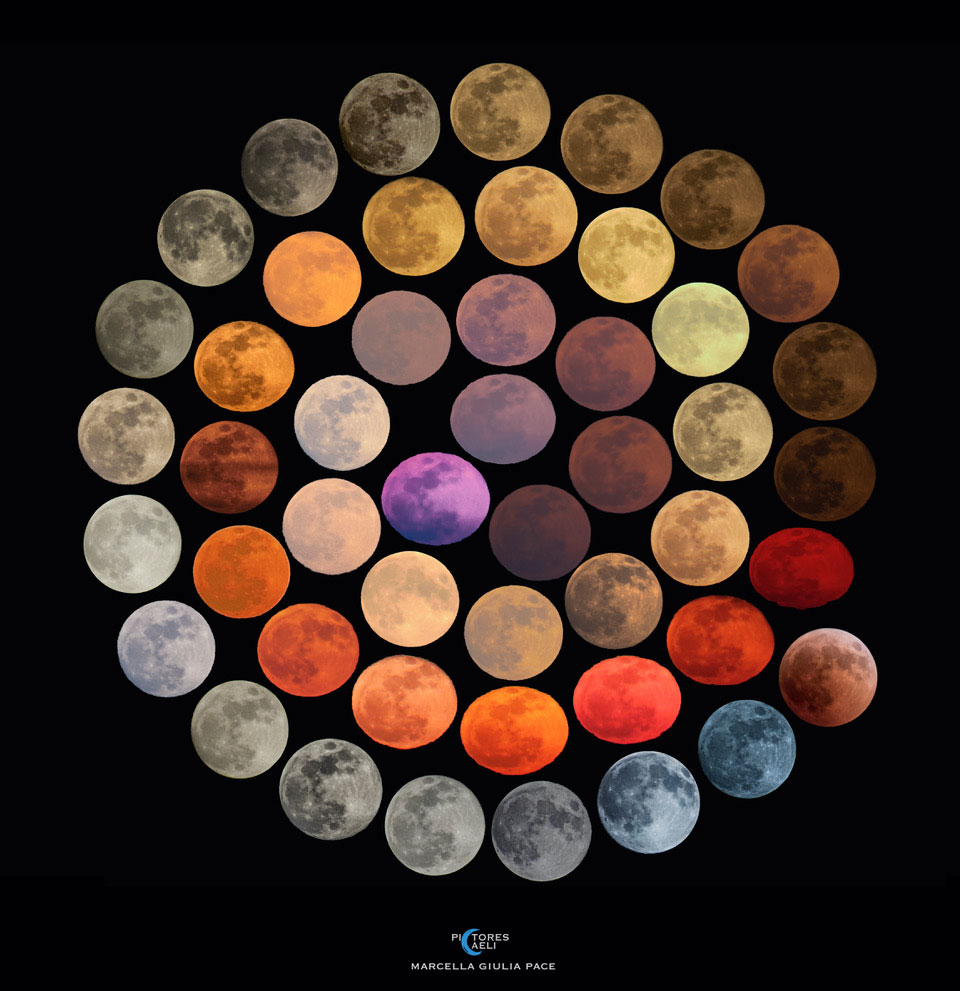
Colors of the Moon
Explanation: What color is the Moon? It depends on the night — and the time. Outside of the Earth’s atmosphere, the dark Moon, which shines by reflected sunlight, appears a magnificently brown-tinged gray. The featured image highlights a collection of apparent colors of the full moon on Earth, documented by one astrophotographer over 10 years from different locations across Italy. A red– or yellow-colored moon usually indicates a moon seen near the horizon. There, some of the blue light has been scattered away by a long path through the Earth’s atmosphere, sometimes laden with fine dust. A blue-colored moon is more rare and can indicate an atmosphere carrying larger dust particles. What created the purple moon is unclear — it may be a combination of several effects. The last image captures the total lunar eclipse of 2018 July — where the moon, in Earth’s shadow, appeared a faint red — due to light refracted through air around the Earth. Have you ever seen an unusually colorful Moon?
Tomorrow’s picture: open space
| Date: | November 1, 2026 |
|---|---|
| Credit & Copyright: | Marcella Giulia Pace |
| Authors & editors: | Robert Nemiroff, Jerry Bonnell, Cecilia Chirenti, Keighley Rockcliffe |
| A service of: |
ASD at NASA / GSFC, NASA Science Activation & Michigan Tech. U. |
TechCrunch - Latest
In one of the largest deals in tech history, Marvell buys Lumentum for $115B
2026-11-02 17:54
Readwise takes on Amazon’s Kindle and Goodreads with its new app for book lovers
2026-11-02 17:49
SpaceX reportedly wants to buy Boost Mobile to compete with AT&T, T-Mobile, and Verizon
2026-11-02 16:44
42AI comes out of stealth with $62.5M and a world model that can ‘predict human behavior’
2026-11-02 16:30
Elon Musk throttles Grok Bot limits due to ‘unsustainably high’ costs
2026-11-02 16:23