📰 Trending Topics
Google News - Trending
Steelers Injury Situation Finally Trending in Right Direction - Sports Illustrated
2026-10-27 12:00
Google News - Technology
Apple hit by ‘Crackgate’ outcry over iPhone Duo screen problems - Financial Times
2026-10-27 17:55
- Apple hit by ‘Crackgate’ outcry over iPhone Duo screen problems Financial Times
- Apple responds to user reports of broken iPhone Duo screens on new foldable phone CNBC
- Here’s why the iPhone Duo’s hinge could be cracking the screen The Verge
- Apple’s Foldable iPhone Duo Draws Early Complaints of the Screen Cracking Bloomberg.com
- Apple Knows Some iPhone Duos Have a Major Issue | What’s News for Oct. 27 WSJ
Apple unveils new 14-inch MacBook Pro with M6 chip - TechCrunch
2026-10-27 14:25
- Apple unveils new 14-inch MacBook Pro with M6 chip TechCrunch
- Apple refreshes the iMac, entry-level MacBook Pro with the M6 chip Ars Technica
- Apple Bets MacBook Pro Buyers Will Pay More for Touch Screens Bloomberg.com
- Apple introduces the new 14-inch MacBook Pro with M6 Apple
- We’ve had touchscreen laptops for years. Can Apple make them better? The Verge
Vivo's X500 Pro Max Is Another Camera-Focused Smartphone With More Video Tricks - Engadget
2026-10-27 15:30
- Vivo's X500 Pro Max Is Another Camera-Focused Smartphone With More Video Tricks Engadget
- vivo X500 Pro Max review GSMArena.com
- Vivo’s X500 series launches globally with MediaTek chips and insane cameras 9to5Google
- These might be the best phones for video capture, and they've just gone global Android Authority
- Vivo X500s may appear in first leak with 2K 144Hz display Mezha.net
CNET Gift of the Year Awards: Supreme Tech for Your Holiday Wish List - CNET
2026-10-27 11:00
- CNET Gift of the Year Awards: Supreme Tech for Your Holiday Wish List CNET
- 2026 Gifts of the Year: Perfect presents for anyone on your list Popular Science
- These Are Lifehacker's 2026 'Gift of the Year' Award Winners Lifehacker
- ZDNET Gift of the Year: Our editors’ top picks ZDNET
- Gift of the Year Awards: 12 Top-Notch Tech Picks Our Experts Want for Themselves PCMag
Google’s next Genie AI model generates more realistic experiences - The Verge
2026-10-27 16:00
- Google’s next Genie AI model generates more realistic experiences The Verge
- Genie 4: A new generation of world simulation Google DeepMind
- Google Upgrades AI World Model That Rattled Video Game Stocks Bloomberg.com
- DeepMind unveils Genie 4 world model promising more realistic physics and humans Ars Technica
- Google’s Genie 4 world model adds audio, more realistic worlds, and real-time steering TechCrunch
NASA - Breaking News
NASA Invites Media to Crew Completion of Yearlong Mars Simulation
2026-10-27 19:27
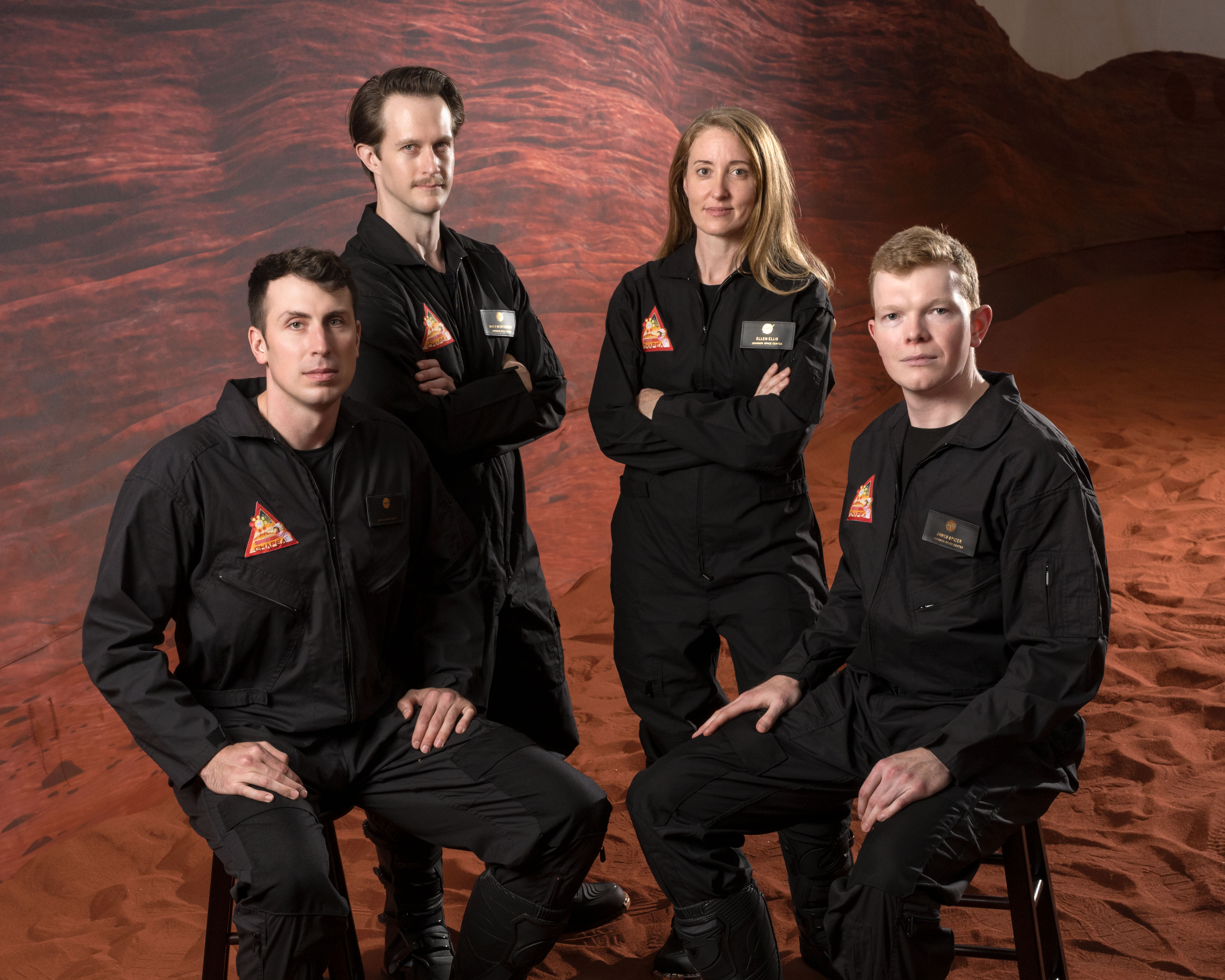
The four volunteers who lived and worked in a simulated NASA Mars mission for more than a year will exit their habitat on Saturday, Oct. 31, after 378 days of isolation in a facility at the agency’s Johnson Space Center in Houston. Health and performance data collected from the simulation can help NASA develop methods to counter human spaceflight risks for future Artemis and Moon Base missions.
Beginning at 3 p.m. EDT, NASA will provide live coverage of the volunteers’ departure from the Crew Health and Performance Exploration Analog (CHAPEA, pronounced cha-pea’-ah) mission habitat. The exit ceremony will be streamed on NASA Johnson’s YouTube and social accounts.
Johnson Center Director Vanessa Wyche and NASA astronaut Jack Hathaway will provide remarks. The CHAPEA crew members Ross Elder, Ellen Ellis, James Spicer, and Matthew Montgomery also will provide remarks.
Media are invited to watch the CHAPEA Mission 2 ceremony live at NASA Johnson on a screen outside the hangar holding the CHAPEA facility, after which a subject matter expert will be available in person to answer questions. Media will have the opportunity to capture the moment the crew exits the building, stepping outside for the first time in more than a year.
U.S. media interested in attending the activities in person, or media interested in speaking virtually with the CHAPEA Mission 2 crew members in the days following completion of their mission, must contact the NASA Johnson newsroom no later than 2 p.m., Friday, Oct. 30, at jsc-newsroom@mail.nasa.gov.
The second CHAPEA mission began on Oct. 19, 2025. Four crew members have lived and worked inside a 3D-printed 1,700-square-foot facility, simulating Mars mission operations, conducting simulated spacewalks, exercising, performing habitat maintenance, growing plants, and more, while operating under stressors that future deep space crews will likely experience. These included communication delays, resource limitations, and isolation.
Data from the mission can aid preparation for NASA’s lunar missions by optimizing food system design, efficient use of crew time, bandwidth on NASA’s Deep Space Network, and other aspects of living in deep space. In addition, data can help flight doctors and psychologists strengthen spaceflight medical care and behavioral support practices to ensure crew readiness and performance.
To learn more about NASA’s CHAPEA mission, visit:
https://www.nasa.gov/humans-in-space/chapea
-end-
Rachel Kraft
Headquarters, Washington
202-358-1600
rachel.h.kraft@nasa.gov
Kelsey Spivey
Johnson Space Center, Houston
281-483-5111
kelsey.m.spivey@nasa.gov
NASA’s Neo Surveyor Sunshade
2026-10-27 17:58

A technician inspects the large sunshade of NASA’s Near-Earth Object (NEO) Surveyor mission in this image released on Oct. 26, 2026. The sunshade structure, which stands 20 feet (6 meters) tall and measures 8 feet (2.4 meters) wide at its base, will keep the infrared space telescope cool as it searches for near-Earth asteroids and comets while also providing the spacecraft with power.
When in space, NEO Surveyor will detect some of the hardest-to-find asteroids and comets, some of which may be located in the direction of the Sun — a region of sky where ground-based optical telescopes have a harder time searching.
Read more about the sunshade and NEO Surveyor.
Image credit: BAE Systems Space & Mission Systems
How a Johnson Mentor Shapes the Next Generation of NASA Talent
2026-10-27 07:07
How a Johnson Mentor Shapes the Next Generation of NASA Talent
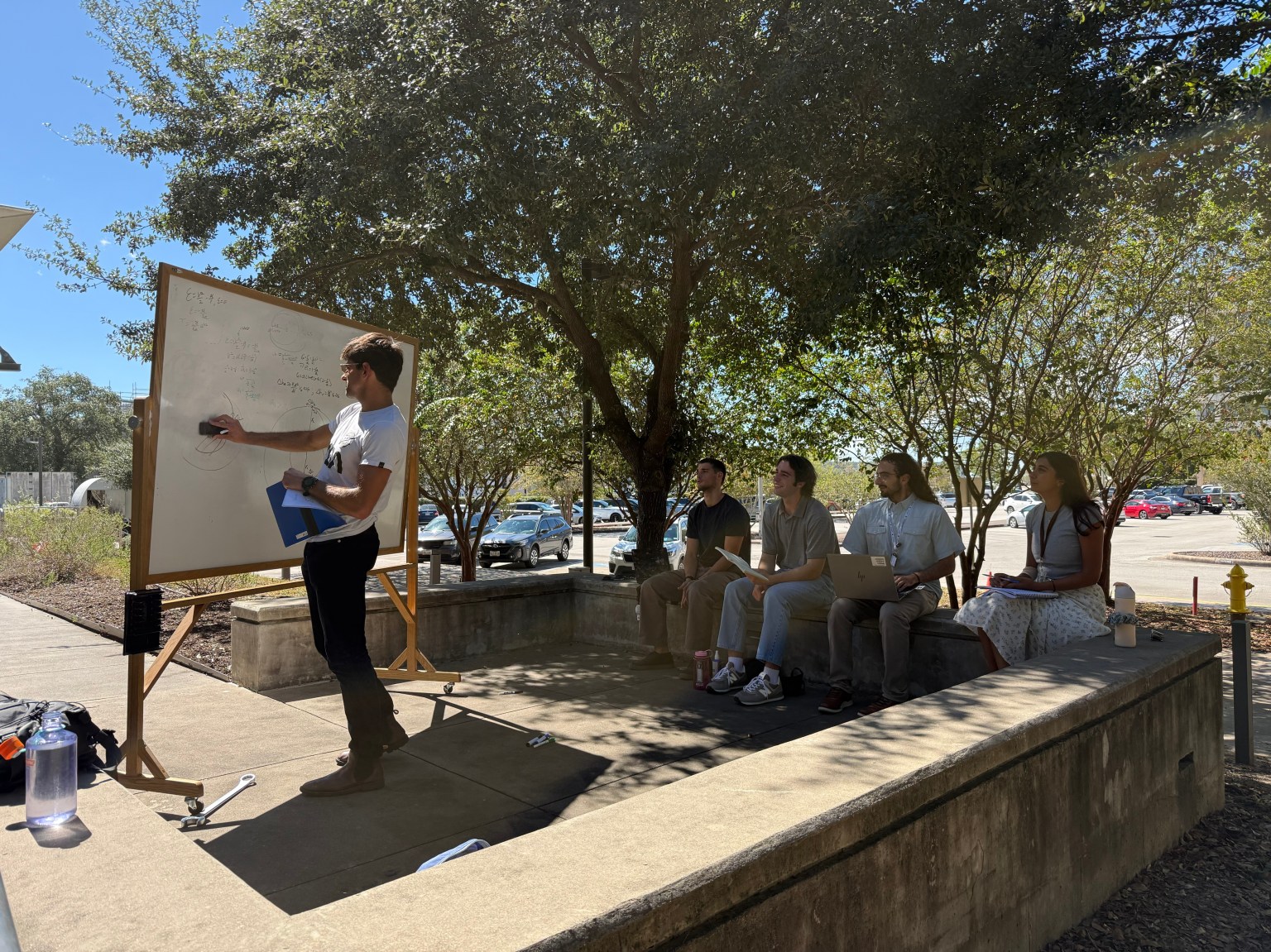
When Rice University student Malvika Bhardwaj asked her mentor Daniel Cohen, a Guidance, Navigation & Control (GN&C) engineer at NASA’s Johnson Space Center, whether he had time to keep teaching interns with his busy workload, he answered, “You decide what’s important.”
In honor of National Mentoring Day on Oct. 27, Bhardwaj reflects on how Cohen’s advice and support has shaped her internship experience at Johnson.
Through NASA’s Office of STEM Engagement, interns like Bhardwaj contribute to agency projects while learning from NASA mentors and gaining technical skills and hand-on experience to build a future career in space exploration.
Bhardwaj studies computational and applied mathematics at Rice University and interns with the GN&C team, which focuses on how spacecraft determine their position and maneuver in orbit. She is developing tools to analyze thruster firings on the U.S. Deorbit Vehicle that will help NASA safely deorbit the International Space Station at the end of its operational life. Bhardwaj also uses computer simulations to test the vehicle’s control system and identify conditions under which it could fail.
“I’ve learned about the culture of community and support at Johnson and NASA as a whole. Daniel made an effort to introduce me to the team and include me in conversations and meetings. I saw how team members step up to help one another and keep the whole unit moving forward,” Bhardwaj said.
Cohen, a Rice University alumnus with a master’s in mechanical engineering, began his NASA career as a flight operations intern in 2020. He later held internships in docking dynamics, propulsion systems, and GN&C analysis before joining Johnson as a full-time engineer in August 2024.
His current work includes developing simulations and models for studies of the U.S. Deorbit Vehicle, analyzing its control algorithms and GN&C performance, and evaluating SpaceX’s design at multiple life-cycle reviews.
He also analyzes settings for the Orion spacecraft’s docking camera, which provides positioning measurements that can help inform navigation during future Artemis rendezvous activities.
Cohen supports Bhardwaj beyond her internship, giving her a closer look at how colleagues collaborate on projects and share ideas. He sets aside a couple of hours each week to teach interns topics such as orbital mechanics and control systems.
Bhardwaj took Cohen’s advice to heart: How she spends her time and energy reflects what she values. She believes that her internship has shown her that problem-solving is rarely an individual effort. Team members bring different perspectives and need to understand how their work connects to a larger project.
Working alongside interns in outreach, social media, and digital design has also broadened Bhardwaj’s view of STEM careers. “No matter what interests you, there’s likely a role for you here,” she said.
She was proud to complete her first project, a set of analysis tools she built from scratch. Working through the debugging process and seeing a finished, functioning product was especially rewarding.
Bhardwaj’s advice to students interested in NASA internships is to apply even if they do not feel fully prepared.
“You’re probably never going to feel 100% ready, but so much of the learning happens on the job,” she said. “Trust in your ability to navigate new environments.”
About the Author

Sumer Loggins
Share
Details
Related Terms
Explore More






APOD: 2026 October 27 – Noctilucent Clouds over Sweden
2026-10-27 04:05
APOD
Astronomy Picture of the Day
Discover the cosmos! Each day a different image or photograph of our fascinating universe is featured, along with a brief explanation written by a professional astronomer.
Noctilucent Clouds over Sweden
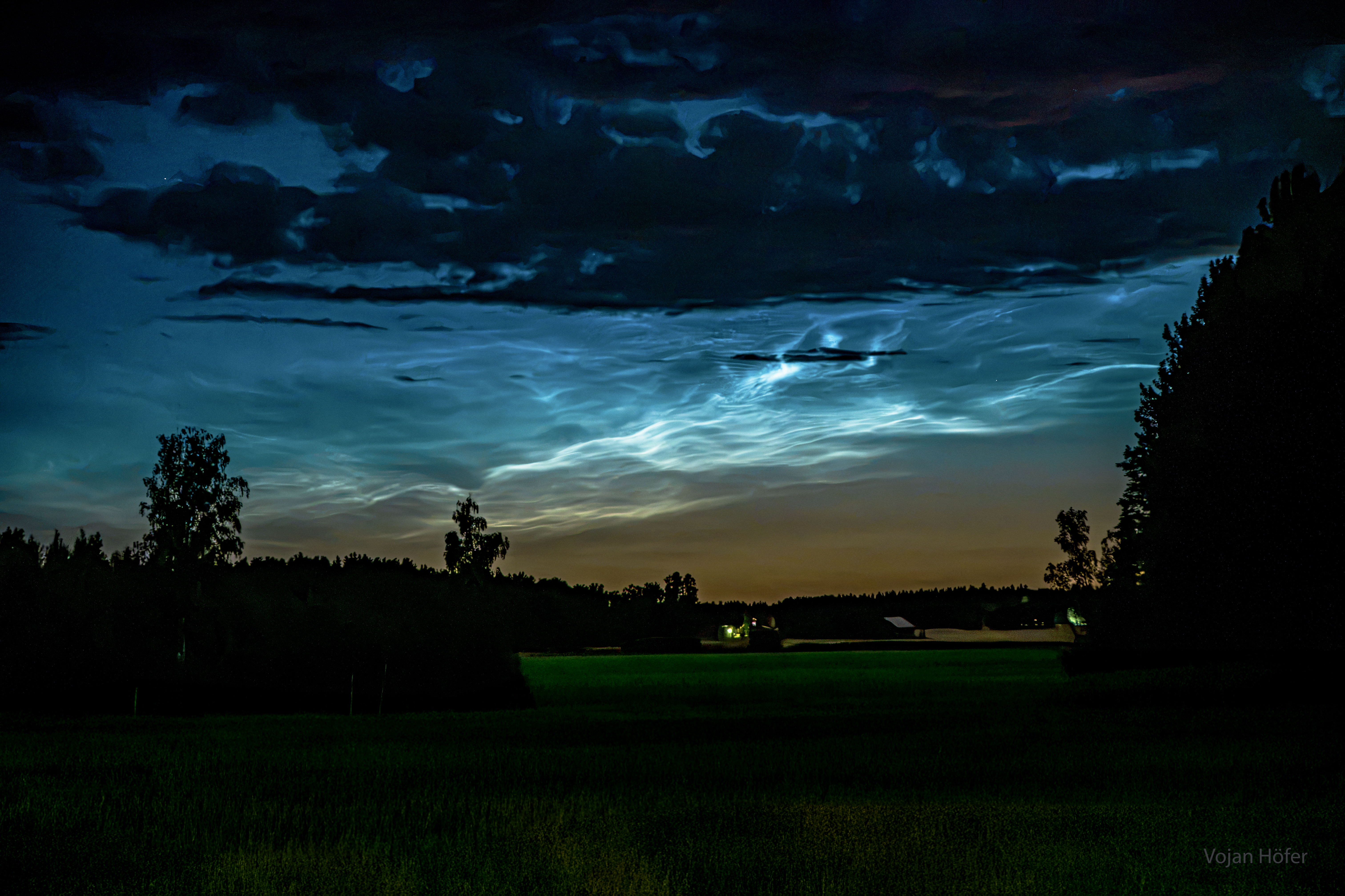
Explanation: Sometimes it’s night on the ground but day in the air. As the Earth rotates to eclipse the Sun, sunset rises up from the ground. Therefore, at sunset on the ground, sunlight still shines on clouds above. Under usual circumstances, a pretty sunset might be visible, but unusual noctilucent clouds float so high up they can be seen well after dark. Normally too dim to be seen, they may become visible just after sunset during the summer when illuminated by sunlight from below the horizon. Noctilucent clouds are the highest clouds and are known more technically as polar mesospheric clouds. Featured here as they appeared in early August 2026, a network of blue noctilucent clouds was captured in the distant sky above a field of green grass near Linköping, Sweden, with trees in stark silhouette across the horizon. Much about noctilucent clouds has been discovered only in the past two decades, and how they form and evolve remains a topic of active research.
Tomorrow’s picture: round and round
| Date | October 27, 2026 |
|---|---|
| Credit & Copyright | V. Höfer, D. Večerník & B. Večerníková |
| Authors & editors: | Robert Nemiroff, Jerry Bonnell, Cecilia Chirenti, Keighley Rockcliffe |
| A service of: |
ASD at NASA / GSFC, NASA Science Activation & Michigan Tech. U. |
A-81 Reaches South Georgia
2026-10-27 04:00
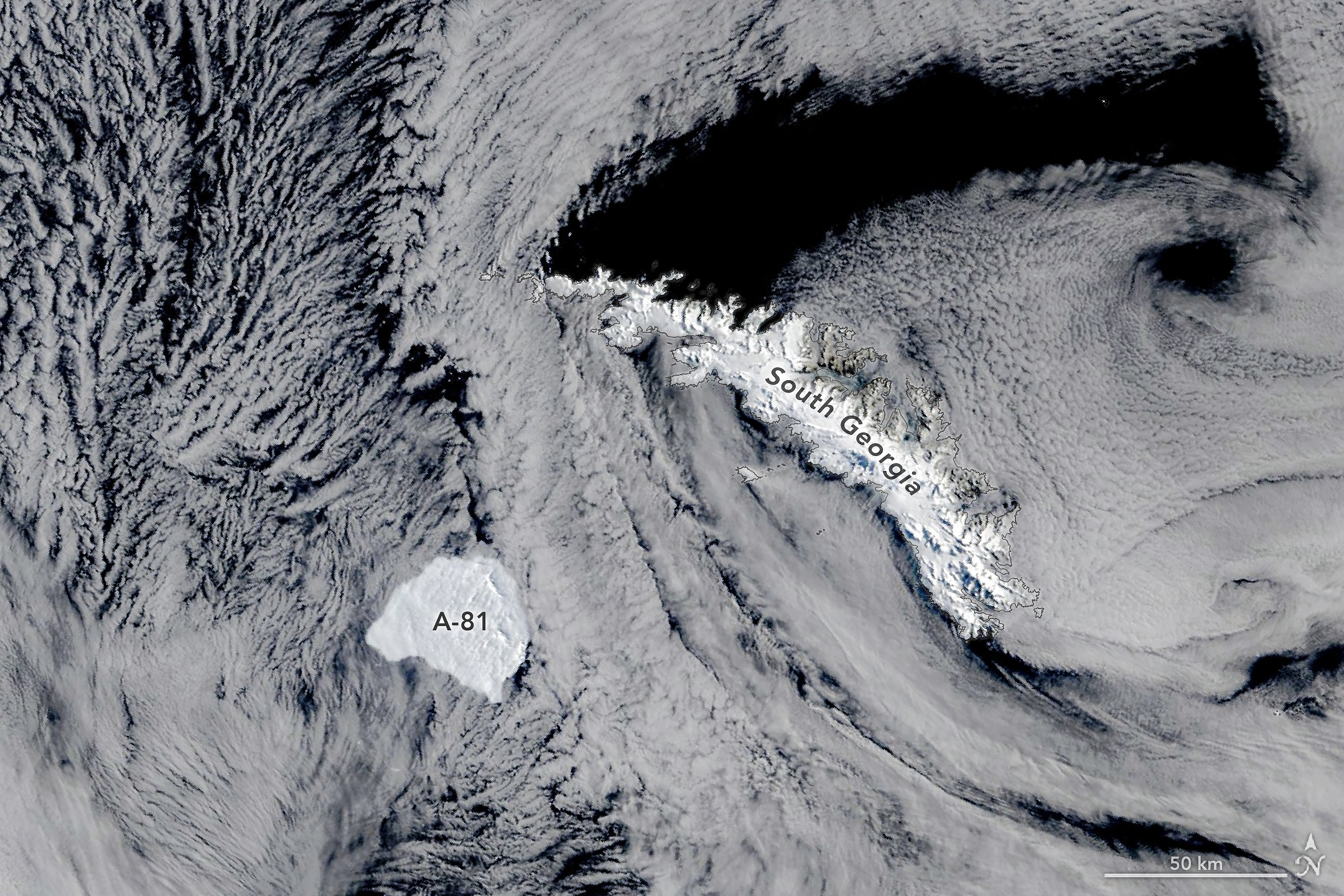
Some Antarctic icebergs linger close to home for decades, running aground near the ice shelves that spawned them or circling partway around the continent on coastal currents. Others, like Iceberg A-81, make a faster exit, heading north out of the Weddell Sea along a route well-traveled by the region’s bergs.
Fast is relative, though. After breaking from the Brunt Ice Shelf in January 2023, the roughly 1,550-square-kilometer (600-square-mile) berg spent more than three years in the Weddell Sea, carried along the coast by the clockwise-flowing Weddell Gyre. By May 2026, it reached the tip of the Antarctic Peninsula. It then moved north into the Scotia Sea, and by late October 2026, it approached the remote island of South Georgia in the South Atlantic Ocean, 2,300 kilometers (1,400 miles) north-northwest of the Brunt Ice Shelf.
This image, acquired by the MODIS (Moderate Resolution Imaging Spectroradiometer) on NASA’s Terra satellite, shows the berg on October 20. In the days before, its progress slowed noticeably, and it appeared to be bumping along the edge of the island’s underwater shelf, according to Jan Lieser of Australia’s Bureau of Meteorology and Christopher Shuman of the University of Maryland (retired). South Georgia has slowed and even stopped icebergs before. In 2025, for instance, Iceberg A-23A ran aground on the shelf and later broke apart.
Though Iceberg A-81 was a steadfast traveler once it broke free, it took its time in becoming an iceberg in the first place. For about 35 years, one of the Brunt Ice Shelf’s rifts known as Chasm 1 was relatively stable. Then, around 2012, it began growing again, and by 2019, it was advancing quickly enough that a break seemed imminent. But the floating glacial ice held on for several more years until finally, in January 2023, the berg let go.
Calving is a normal part of the life cycle of ice shelves, but scientists keep a close eye on Brunt, which has recently shed several large icebergs in quick succession and is home to the British Antarctic Survey’s Halley Research Station, a major base for Earth, atmospheric, and space science research since the 1950s. Besides A-81, the ice shelf calved Iceberg A-74 from the North Rift in 2021 and Iceberg A-83 from the Halloween Crack in 2024. A-74 has since broken up, while A-83 remains intact and is trailing A-81 northward, along with a handful of other icebergs that appear to be clearing out of the Weddell Sea.
NASA Earth Observatory image by Michala Garrison, using MODIS data from NASA EOSDIS LANCE and GIBS/Worldview. Story by Kathryn Hansen.

References & Resources
- NASA Earth Observatory (2025, March 7) Iceberg Grinds to a Stop off South Georgia Island. Accessed October 26, 2026.
- NASA Earth Observatory (2023, January 25) Antarctica’s Brunt Ice Shelf Finally Breaks. Accessed October 26, 2026.
- NASA Earth Observatory (2021, March 3) Breakup at Brunt. Accessed October 26, 2026.
- U.S. National Ice Center (2026, October 22) Antarctic Iceberg Files. Accessed October 26, 2026.
You may also be interested in:
Stay up-to-date with the latest content from NASA as we explore the universe and discover more about our home planet.
A large iceberg, observed in summer 2026, had drifted more than 1,000 kilometers south from the northeastern Greenland bay where…
Experts are analyzing decades of images from Landsat satellites for clues about how the iconic birds have responded to sea…
The ice reached its third-lowest maximum extent since satellite observations began.


TechCrunch - Latest
The data center boom has an upside: innovation for the US grid
2026-10-27 22:55
Guidewire buys Hyperexponential for $1.7B in cash
2026-10-27 22:26
From 8VC to Benchmark, here’s what’s hiding in October SEC filings
2026-10-27 22:17
GM is embracing hybrids now
2026-10-27 21:47
Bank of America kindly asks that you don’t share your banking password with your AI assistant
2026-10-27 21:44