📰 Trending Topics
Google News - Trending
Google News - Technology
The global memory shortage hits the MacBook Air - TechCrunch
2026-08-02 21:33
- The global memory shortage hits the MacBook Air TechCrunch
- Apple's best-selling laptop is in crisis, and its own promotions aren't hiding it PhoneArena
- Apple “Prioritizing Sales” Of Current 14-Inch MacBook Pro to Make Way For M6 Refresh Later This Year, MacBook Air Suffering From Severe Shortage Wccftech
- If You’re Struggling to Find a MacBook Air Right Now, This Is Probably Why Gizmodo
- MacBook Air Experiencing 'Major' Shortage Despite $200 Price Increase MacRumors
Detailed Pixel 11 series leak suggests the situation is worse than expected - PhoneArena
2026-08-02 23:34
- Detailed Pixel 11 series leak suggests the situation is worse than expected PhoneArena
- Exclusive: Google Pixel 11 Series Full Specs + US & EU Price Tags Android Headlines
- Leaked Pixel 11 Pro Fold Photos Also Include Mysterious New Camera Bar Feature Engadget
- Google Pixel 11 leaks in some fresh new renders too - GSMArena.com news GSMArena.com
- Pixel 11 Made by Google 2026 launch event: How to watch and what to expect Android Central
Xbox prices are increasing by up to €200 or £170 - The Verge
2026-08-02 16:14
- Xbox prices are increasing by up to €200 or £170 The Verge
- Xbox Consoles Are Now Much More Expensive In The EU And UK Engadget
- Xbox console price increases in Europe and UK fully revealed, with Series X now costing €200 more Video Games Chronicle
- Microsoft Raises Xbox Prices by Up to 43% in Europe and UK TechPowerUp
- Xbox Series X and S Price Officially Increased Again VGChartz
Samsung One UI 9.5 spotted as Galaxy Z Fold 8 nears retail launch - SamMobile
2026-08-02 08:21
- Samsung One UI 9.5 spotted as Galaxy Z Fold 8 nears retail launch SamMobile
- Galaxy S27 series development reportedly enters an important phase PhoneArena
- Samsung's One UI 9.5 for Galaxy S27 Ultra Shows Up Again as Z Fold 8 Gets First Update Android Headlines
- Samsung Galaxy phones add a Pixel-style dedicated Google Search bar on homescreen [Gallery] 9to5Google
- Samsung Testing One UI 9 on Galaxy S25, S26, A17, and A56 TelecomTalk
For a Day, Google Made It Easy to Spoof Satellite Imagery - The New York Times
2026-08-02 19:25
- For a Day, Google Made It Easy to Spoof Satellite Imagery The New York Times
- Google Just Ruined One of Its Most Important Tools The Atlantic
- Alphabet rolls back AI image generation in Google Earth over policy violations Reuters
- Transform any place with Nano Banana in Google Earth blog.google
- Google withdraws new Earth AI tool after warnings over misinformation risks BBC
NASA - Breaking News
APOD: 2026 August 3 – Vaporizing Meteor Photobombs the Lacerta Nebula
2026-08-03 04:05
APOD
Astronomy Picture of the Day
Discover the cosmos! Each day a different image or photograph of our fascinating universe is featured, along with a brief explanation written by a professional astronomer.

Vaporizing Meteor Photobombs the Lacerta Nebula
Explanation: What’s happening to this meteor? This bright meteor streak appeared and disappeared quickly during a long exposure of the Great Lacerta Nebula, seen faintly in red toward the center of the image. The meteoroid, likely a small pebble, creates its glow partly by heating and exciting surrounding air in Earth’s atmosphere, but itself vaporizes and leaves wind-blown gas and dust with colors that give clues to its composition. The featured image was captured last month from Death Valley Observatories in Nevada, USA. This month, though, is particularly good for seeing meteors. Presently there are three meteor showers ongoing, although they are currently competing for visibility with the glow of a bright gibbous Moon. The most active of these showers, the Perseids, will be busiest in about 10 days — after the Moon has dimmed considerably. This year, the Perseids peak nearly coincides with not only a new Moon, but, from some locations, one that totally eclipses the Sun.
Sky Surprise: What picture did APOD feature on your birthday? (>1995)
Tomorrow’s picture: open space…
| Date: | August 3, 2026 |
|---|---|
| Credit & Copyright: | Tom Burnett |
| Authors & editors: | Robert Nemiroff, Jerry Bonnell, Cecilia Chirenti, Keighley Rockcliffe |
| A service of: |
ASD at NASA / GSFC, NASA Science Activation & Michigan Tech. U. |
APOD: 2026 August 2 – A Fire Rainbow over West Virginia
2026-08-02 04:05
APOD
Astronomy Picture of the Day
Discover the cosmos! Each day a different image or photograph of our fascinating universe is featured, along with a brief explanation written by a professional astronomer.

A Fire Rainbow over West Virginia
Explanation: What’s happening to this cloud? Ice crystals in a distant cirrus cloud are acting like little floating prisms. Known informally as a fire rainbow for its flame-like appearance, a circumhorizon arc appears parallel to the horizon. For a circumhorizontal arc to be visible, the Sun must be at least 58 degrees high in a sky where cirrus clouds present below — in this case cirrus fibratus. The numerous, flat, hexagonal ice-crystals that compose the cirrus cloud must be aligned horizontally to properly refract sunlight in a collectively similar manner. Therefore, circumhorizontal arcs are somewhat unusual to see. The featured fire rainbow was photographed in 2021 near North Fork Mountain in West Virginia, USA.
Tomorrow’s picture: meteoric photobomb
| Date: | August 2, 2026 |
|---|---|
| Credit & Copyright: | Christa Harbig |
| Authors & editors: | Robert Nemiroff, Jerry Bonnell, Cecilia Chirenti, Keighley Rockcliffe |
| A service of: |
ASD at NASA / GSFC, NASA Science Activation & Michigan Tech. U. |
APOD: 2026 August 1 – Buck Moon and Belt of Venus
2026-08-01 04:05
APOD
Astronomy Picture of the Day
Discover the cosmos! Each day a different image or photograph of our fascinating universe is featured, along with a brief explanation written by a professional astronomer.

Buck Moon and Belt of Venus
Explanation: The Buck Moon is a traditional name for the full moon of July. In this colorful Adriatic sea and skyscape captured on July 28 from Krk Island along the coast of Croatia, a full Buck Moon is just rising over distant mountains. Since a full moon rises as the Sun sets, Earth’s shadow also rises in the twilight scene, a diffuse gray band extending above the mountainous southeastern horizon. Above Earth’s shadow band is the pinkish antitwilight arch. That subtly tinted band of backscattered sunlight is more widely known as the Belt of Venus. As it shares the eastern horizon with the atmospheric shadow of Earth and Belt of Venus, this full Buck Moon seems to set the stage for the New Moon to come. The New Moon of August 12 will cast its own shadow on planet Earth in a much anticipated total solar eclipse.
Tomorrow’s picture: fire and rainbow
| Date: | August 1, 2026 |
|---|---|
| Credit & Copyright: | Branko Nadj |
| Authors & editors: | Robert Nemiroff, Jerry Bonnell, Cecilia Chirenti, Keighley Rockcliffe |
| A service of: |
ASD at NASA / GSFC, NASA Science Activation & Michigan Tech. U. |
What’s Up: August 2026 Skywatching Tips from NASA
2026-07-31 22:35
A solar eclipse, the Perseids, bright Venus after sunset, and a deep partial lunar eclipse highlight August’s skywatching.
Skywatching Highlights
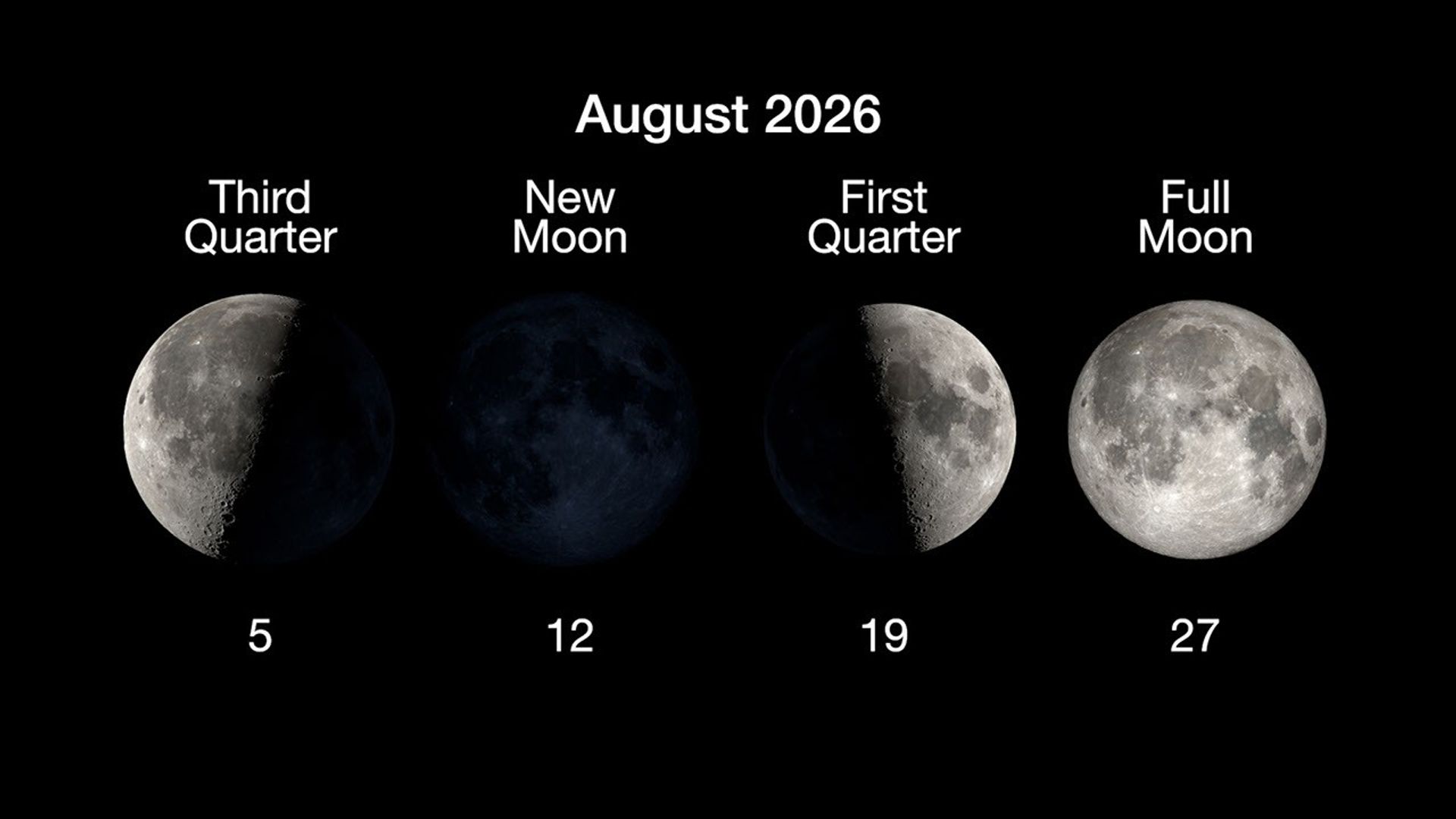
- Aug. 5: Last Quarter Moon
- Aug. 12: Total solar eclipse across northern Russia, Greenland, Iceland, northern Spain, and part of Portugal; partial eclipse in parts of the U.S.; New Moon
- Aug. 12-13: Perseid meteor shower peak under dark skies
- Aug. 14-16: Venus reaches greatest eastern elongation and shines low in the west after sunset
- Aug. 27-28: Partial lunar eclipse visible from much of North and South America and parts of Europe and Africa
Transcript
A solar eclipse, one of the year’s best meteor showers, Venus at its brightest in the evening sky, and a lunar eclipse to close out the month.
That’s “What’s Up” for August.
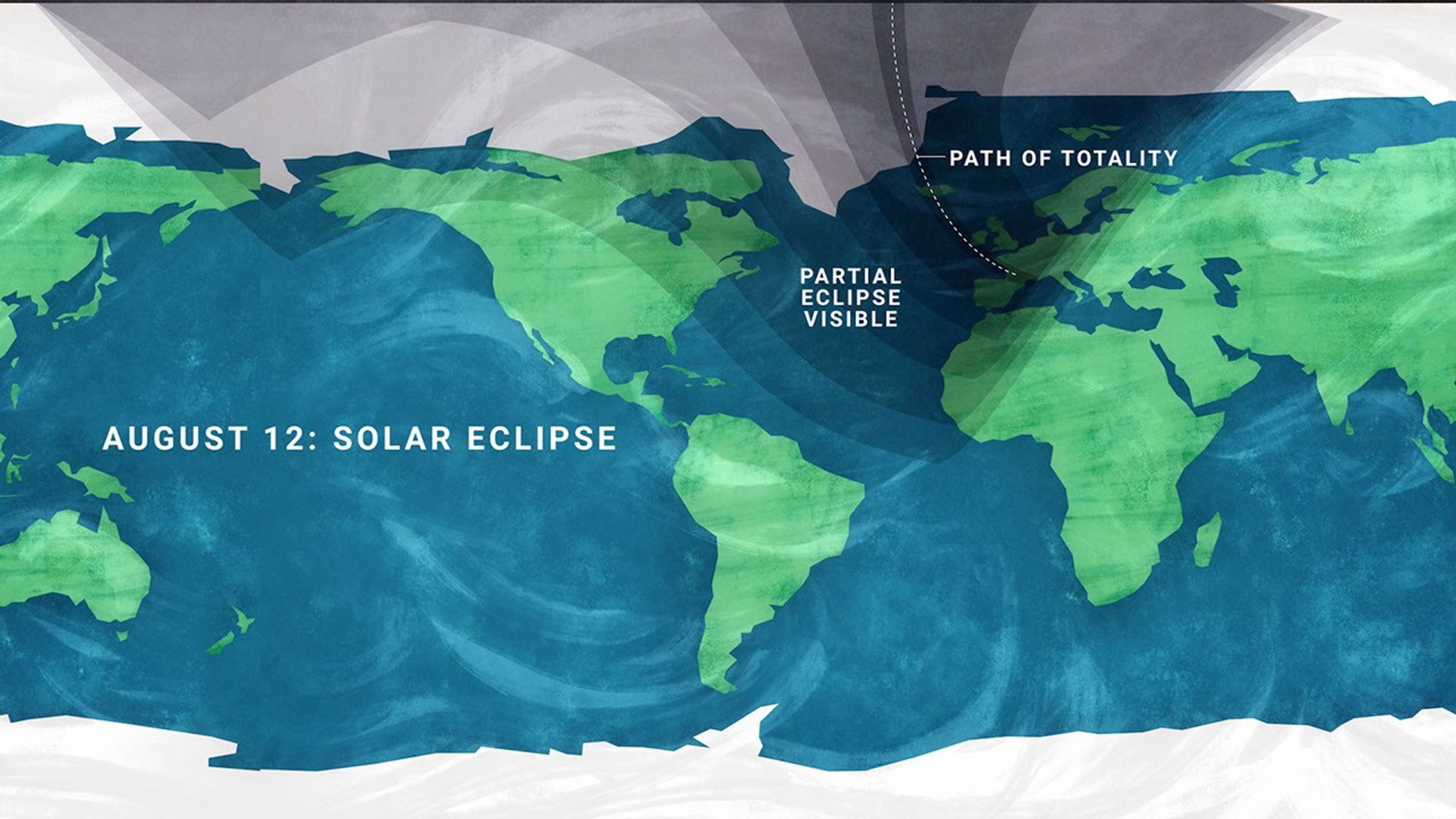
On Aug. 12, a total solar eclipse crosses northern Russia, Greenland, Iceland, and northern Spain, with a small corner of Portugal inside the path of totality.
In parts of the United States, from Alaska to North Carolina, the eclipse is partial. The Moon will take only a small bite out of the Sun, and the amount of coverage will vary with location.
Remember to watch safely. Use certified eclipse glasses or a safe solar viewer any time any part of the Sun is visible. Regular sunglasses are not safe. And never use binoculars, a telescope, or a camera without a solar filter made for the front of the optics.
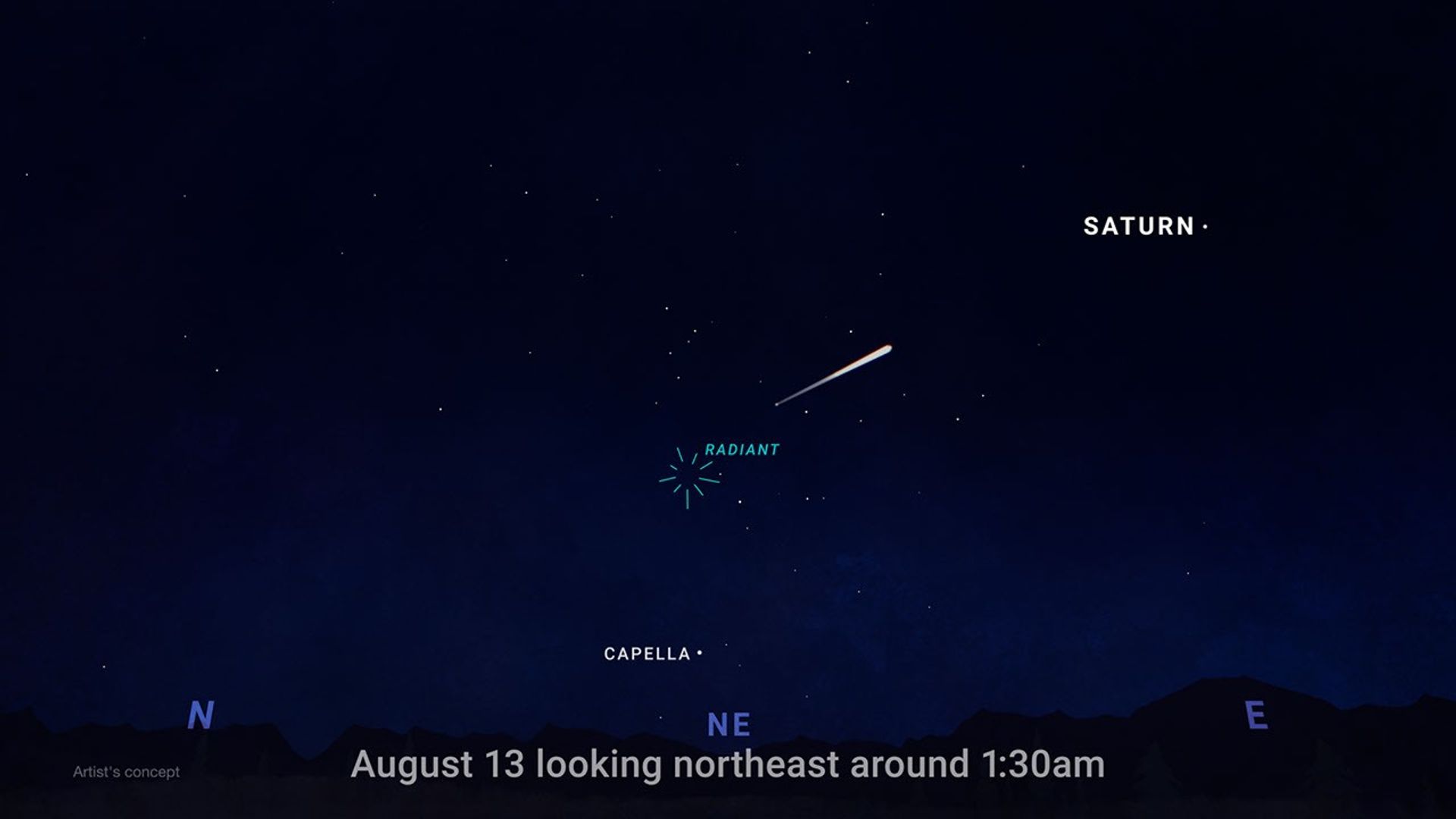
Later that same night, the Perseid meteor shower will light up the sky, peaking the evening of Aug. 12 into the early morning hours of the 13th. And with a New Moon arriving on the 12th, the skies will be ideally dark.
The Perseids happen every year when Earth passes through a debris stream left behind by Comet Swift-Tuttle. As those tiny bits of comet dust hit our atmosphere at high speed, they burn up as bright streaks of light.
To view this meteor shower, look toward the northeast once it’s fully dark and watch for the constellation Perseus to clear the horizon. This is where the meteors originate, but let your eyes wander, because they can flash across any part of the sky.
For the best view, stay out late as the stars climb higher, find a dark open spot, and give your eyes 30 minutes to adjust.
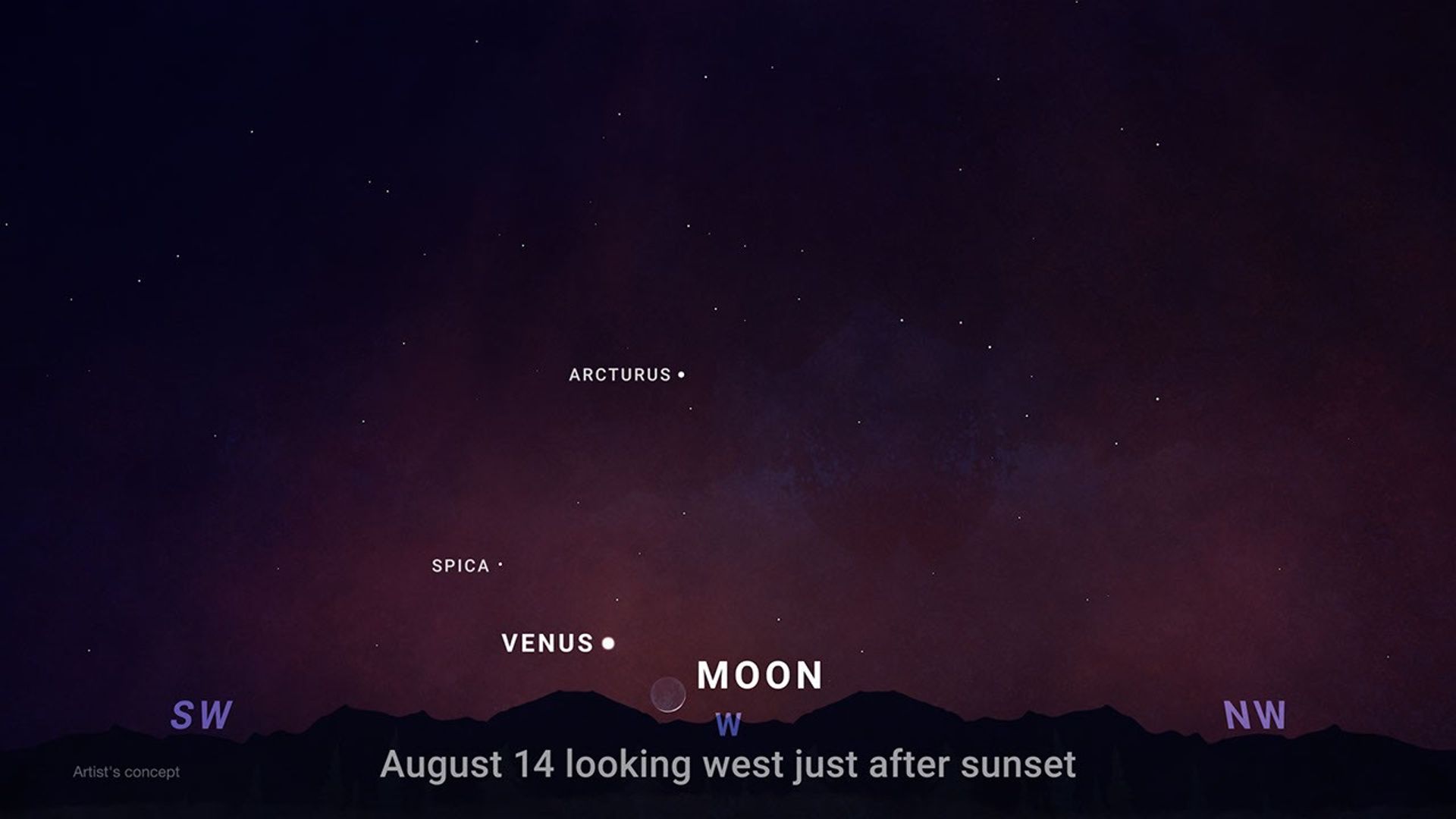
Aug. 14-16, Venus reaches its greatest eastern elongation, which is its widest apparent separation from the Sun during this evening appearance.
Look low in the western sky shortly after sunset for the bright object that will outshine every star around it. Through a telescope after sunset, Venus will look close to half lit, like a tiny lunar phase.
On the night of Aug. 27, continuing into Aug. 28 for some time zones, the Full Moon slips through Earth’s shadow, resulting in a partial lunar eclipse. It will be visible from much of North and South America and parts of Europe and Africa.
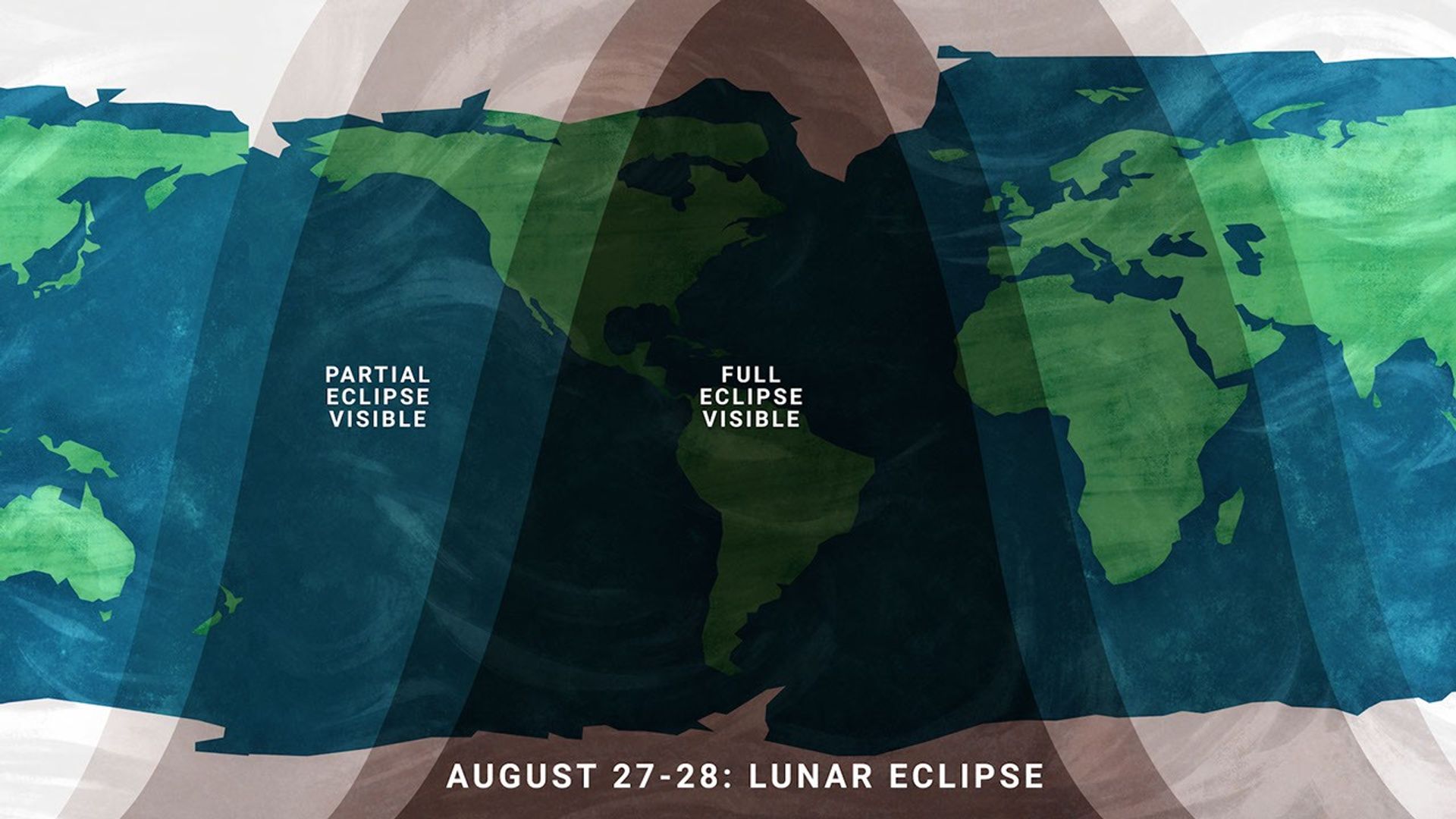
At maximum eclipse, about 93% of the Moon’s diameter will be inside Earth’s dark central shadow, called the umbra. The Moon will not be completely covered, but it can look dramatically darkened, with a rusty, coppery tint along the covered edge.
Unlike a solar eclipse, a lunar eclipse is safe to watch with just your eyes. Binoculars or a small telescope can give you a closer view of Earth’s curved shadow moving across the Moon.
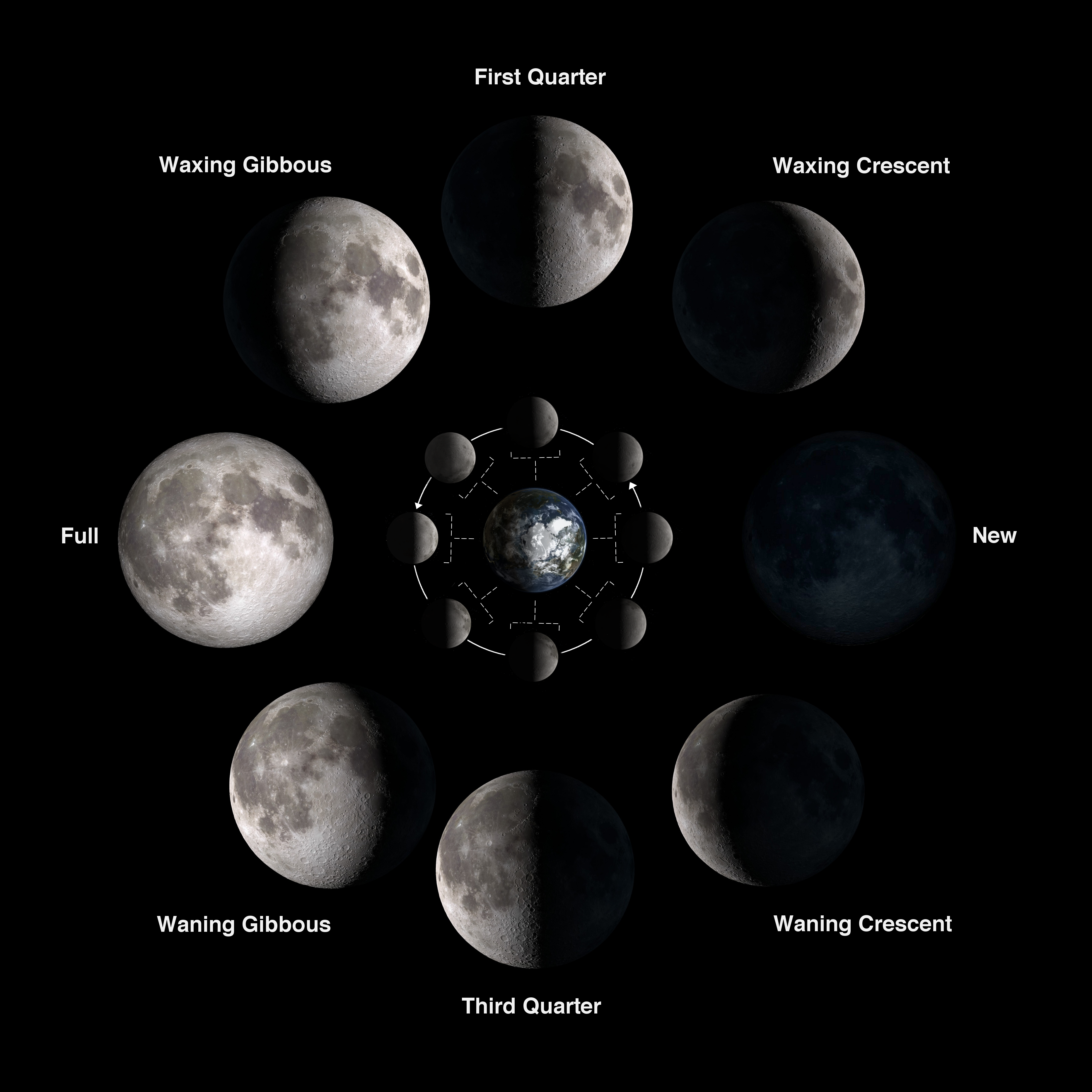
Here are the phases of the Moon for August.
You can stay up to date on all of NASA’s missions exploring the solar system and beyond at science.nasa.gov. I’m Raquel Villanueva from NASA’s Jet Propulsion Laboratory, and that’s What’s Up for this month.
Share
Details
Related Terms

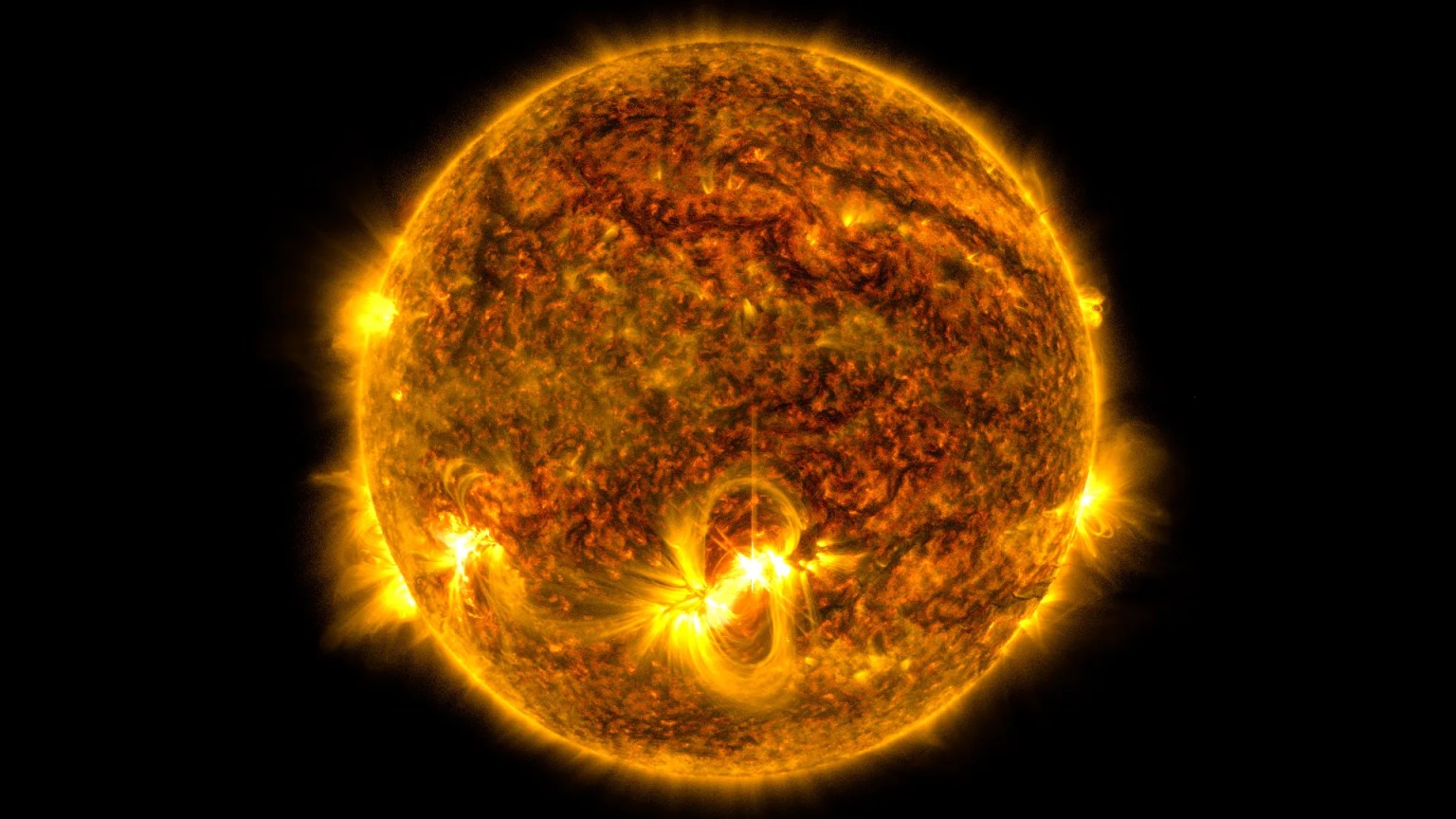
NASA to Host Florida Event Celebrating American Air, Space Leadership
2026-07-31 21:08
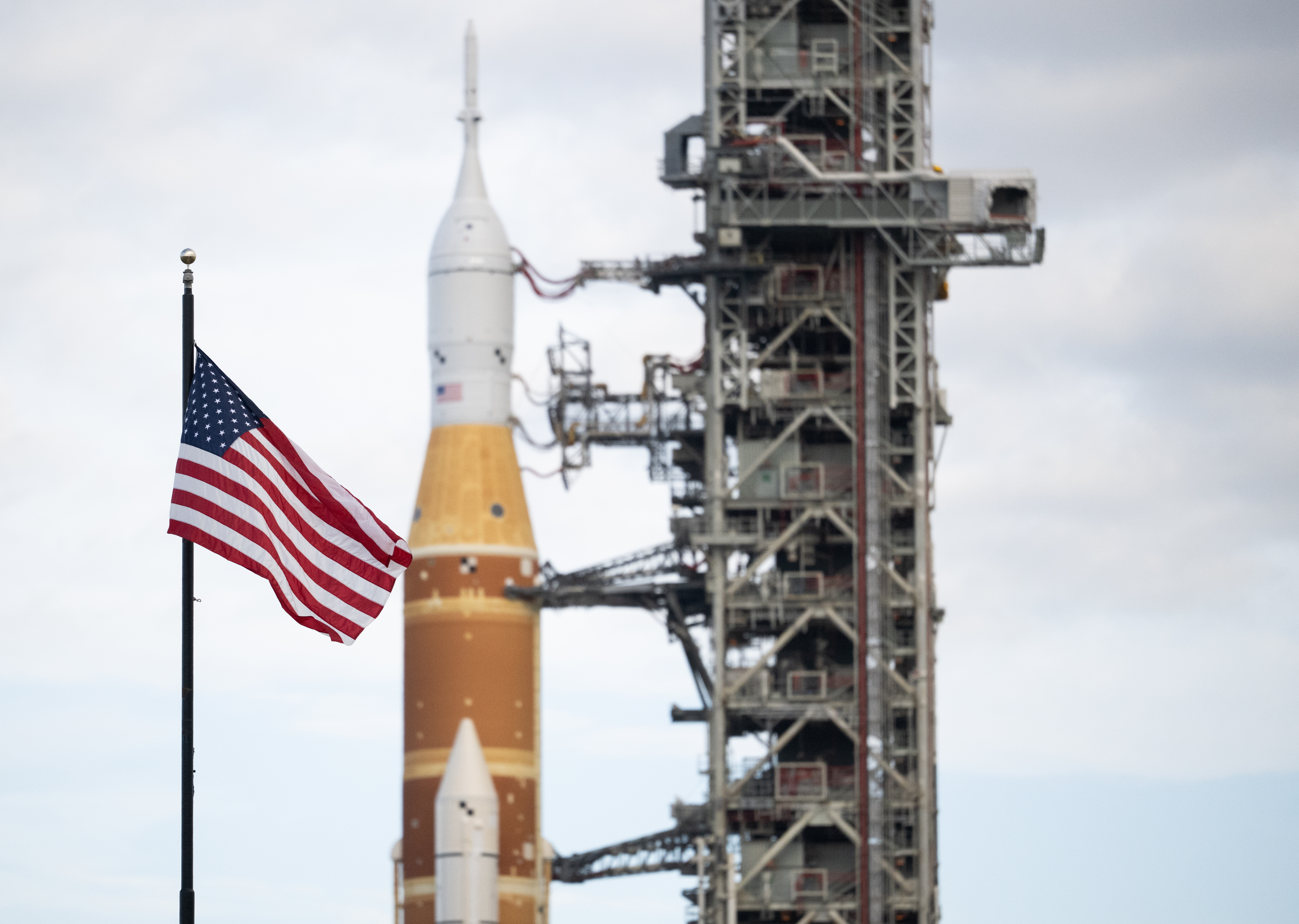
NASA will hold a news conference at 2:30 p.m. EDT, Friday, Aug. 14, live from the agency’s Kennedy Space Center in Florida, and media and digital creators are invited to attend in person.
The announcement, held in the XLV Hangar at the Shuttle Landing Facility, will preview a new event at NASA Kennedy later this year tied to America’s 250th anniversary, showcasing American leadership in aviation, space exploration, and emerging technologies while bringing together the public, industry leaders, innovators, and the next generation of explorers.
Participants include:
- NASA Administrator Jared Isaacman
- NASA leadership
- Members of Congress
The agency will stream this news conference live through a variety of platforms:
This event is open to U.S. media and digital creators. The request to attend must be received no later than 12 p.m. on Thursday, Aug. 6, to the Kennedy newsroom at: https://media.ksc.nasa.gov. NASA’s media accreditation policy is available online.
For more information about NASA’s missions, visit:
-end-
George Alderman / Cheryl Warner
Headquarters, Washington
202-358-1600
george.a.alderman@nasa.gov / cheryl.m.warner@nasa.gov
Danielle Sempsrott
Kennedy Space Center, Fla.
321-298-8990
danielle.c.sempsrott@nasa.gov
TechCrunch - Latest
The global memory shortage hits the MacBook Air
2026-08-02 21:33
Sam Altman and AI’s decel debate
2026-08-02 20:54
Malaysia is reportedly shutting down Balaji Srinivasan’s Network School
2026-08-02 17:05
TechCrunch Mobility: Two roads diverged — for robotaxis
2026-08-02 16:05
These App Store hidden gems prove there’s still room for great software in the AI era
2026-08-02 15:23