📰 Trending Topics
Google News - Trending
Google News - Technology
Google teases Pixel 11 Pro Fold, early pre-order time on August 12 - 9to5google.com
2026-08-03 16:23
- Google teases Pixel 11 Pro Fold, early pre-order time on August 12 9to5google.com
- Exclusive: Google Pixel 11 Series Full Specs + US & EU Price Tags Android Headlines
- Pixel 11 specs and price leak with no surprises The Verge
- Leaked Pixel 11 Pro Fold Photos Also Include Mysterious New Camera Bar Feature Engadget
- Google Pixel 11 Buyers Should Brace for Higher Costs, Less RAM PCMag
Can Microsoft Really Make Windows 11 Suck Less on Weak PCs? - Gizmodo
2026-08-03 15:35
- Can Microsoft Really Make Windows 11 Suck Less on Weak PCs? Gizmodo
- Windows quality: an update on the commitment we made in March blogs.windows.com
- Microsoft says 8 GB of RAM should be enough for anyone running Windows 11 The Register
- Windows 11’s next big priority: Making 8GB PCs less painful to use PCWorld
- Microsoft vows to make Windows 11 fly on 8GB RAM amid memory shortage — optimizations to reduce OS memory footprint have begun Tom's Hardware
Google Health adds two-way Apple Health syncing on iPhone - 9to5Mac
2026-08-03 15:00
- Google Health adds two-way Apple Health syncing on iPhone 9to5Mac
- Google Health 5.05 rolling out: Apple Health sync & bug fixes 9to5google.com
- Fitbit Data Can Finally Sync to Apple Health MacRumors
- Google Health now shares Fitbit workouts with Apple Health AppleInsider
- Google Health iOS App Can Now Write Data to Apple Health Thurrott.com
iPhone 18 Pro and iPhone Ultra: Pre-Orders and Release Date - MacRumors
2026-08-03 02:32
- iPhone 18 Pro and iPhone Ultra: Pre-Orders and Release Date MacRumors
- The latest iPhone 18 news, leaks, and rumors: Release date, price increases, and color options Mashable
- Apple iPhone 18 Pro Release Date September Signaled In Keynote Update Forbes
- iPhone 18 Pro Models Could Be Up to $300 More Expensive, Says Analyst MacRumors
- 2027 iPhone 18 rumors: Smaller Dynamic Island, 12GB or 9GB RAM, 2nm A20 chip AppleInsider
Samsung bans smart TV apps that share users’ internet connections with strangers - TechCrunch
2026-08-03 12:10
- Samsung bans smart TV apps that share users’ internet connections with strangers TechCrunch
- Samsung Says It's Banning Smart TV Apps That Expose Users' Internet Connections Engadget
- Samsung bans proxy SDKs as a quarter of Tizen apps route strangers' traffic PPC Land
- Samsung Moves to Ban Smart TV Apps That Share Users’ Internet Connections Межа. Новини України.
- LG and Samsung crack down on Smart TV apps that quietly share your internet bandwidth Neowin
NASA - Breaking News
Louisiana Students Loft Payloads from NASA Balloon Facility in Texas
2026-08-03 19:22
4 min read
Preparations for Next Moonwalk Simulations Underway (and Underwater)
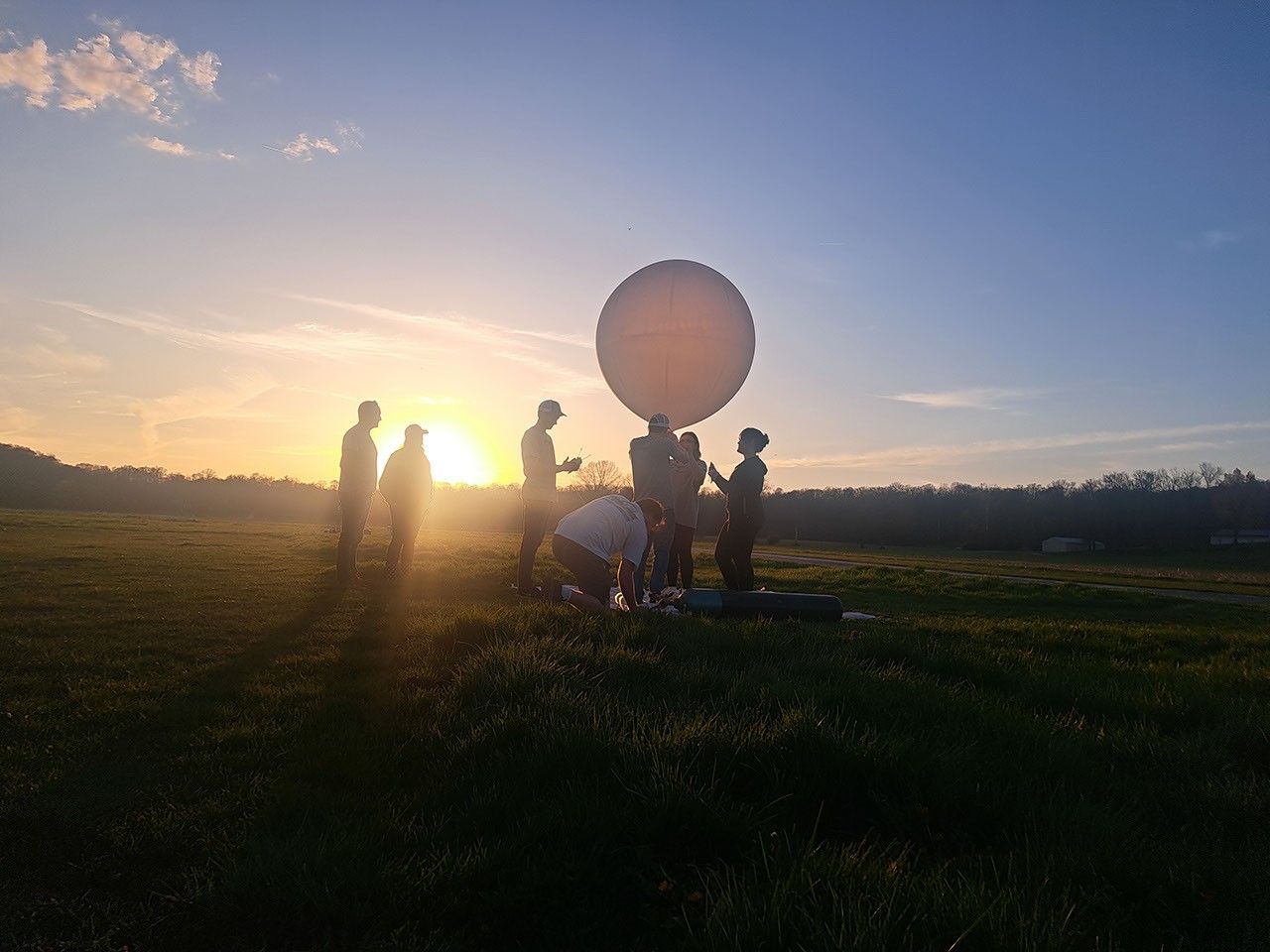
Every spring in Palestine, Texas, the wide-open fields around NASA’s Columbia Scientific Balloon Facility fill with students and faculty from across Louisiana. They arrive carrying sensors, laptops, and carefully engineered payloads they have spent months preparing. The goal is to send their experiments to the edge of space and return with meaningful data, while reflecting NASA’s long-standing commitment to develop future scientists and engineers.
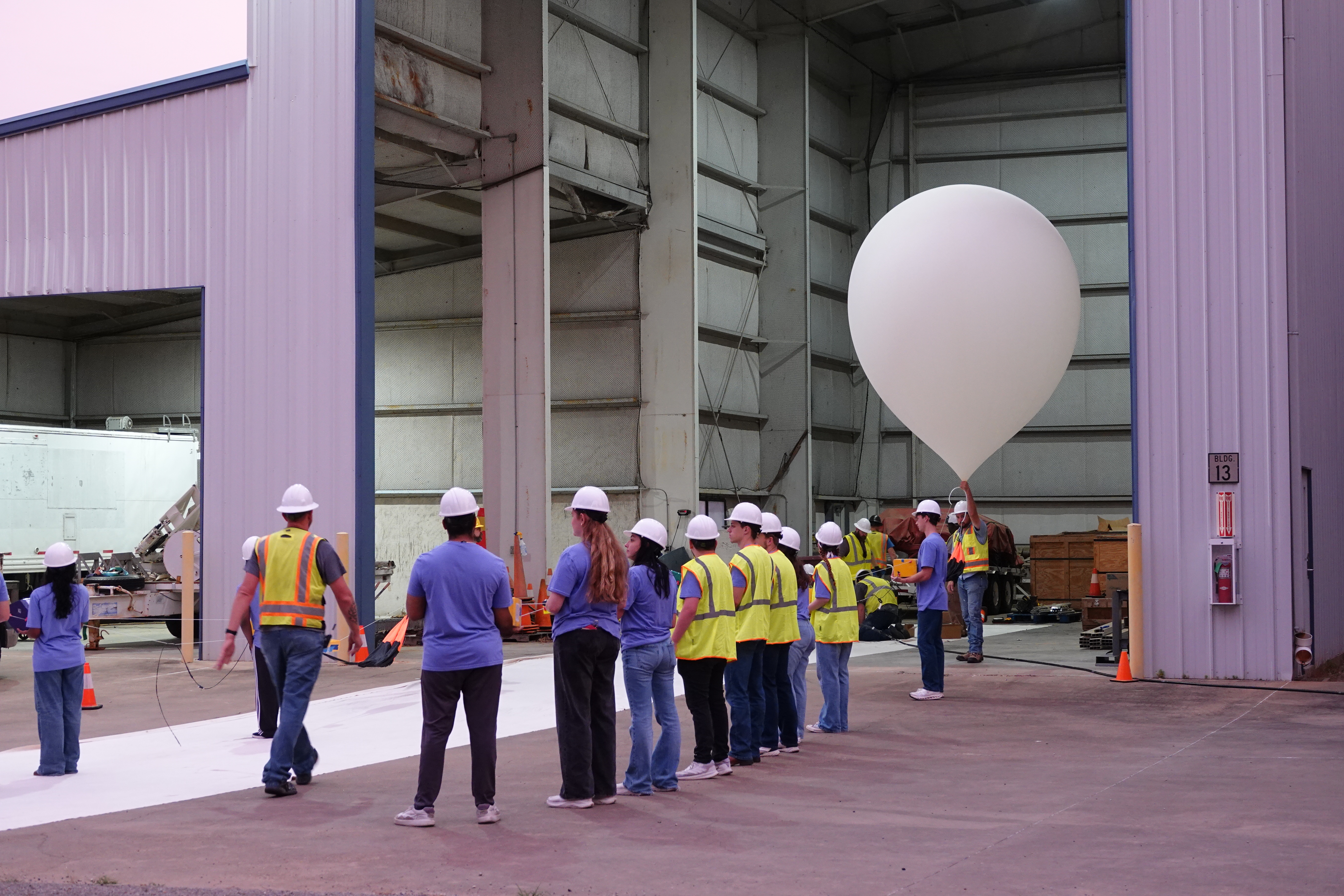
NASA’s student programs have long served as an entry point for hands-on exploration, connecting students to the agency’s missions and giving them direct exposure to real aerospace environments. Among these initiatives, the Louisiana Aerospace Catalyst Experiences for Students, also known as LaACES, provides a robust undergraduate introduction to scientific ballooning.
Just after dawn on May 19, student-crafted instruments lifted off smoothly from the flight line, notching the 74th and 75th launches in a long-running collaboration between the facility and Louisiana Space Grant Consortium. The 2026 LaACES campaign consisted of 11 payloads that were designed and built by nine Louisiana university teams — Louisiana State University, Northwestern State, Southeastern Louisiana State, McNeese State, Loyola University, and Southern University, as well as and one high school team, St. Joseph’s Academy, during the weeklong event.
The teams’ scientific objectives included a wide of research, such as atmospheric science, cosmic ray detection, thermal management, ultraviolet characterization, stratospheric wind analysis, and solar cell performance.
Before arriving in Texas, students advanced their mission concepts through a structured sequence of design reviews modeled after NASA’s engineering lifecycle. From preliminary design to flight readiness, each team defended technical decisions, refined their payloads, and demonstrated their readiness for launch.
Once cleared for flight by program directors Doug Granger and Aaron Ryan, who oversee the LaACES initiative, the students shifted their work to Palestine, Texas, where the Columbia Scientific Balloon Facility supported the 2026 LaACES campaign. Facility personnel provided daily weather briefings, performed helium fills for both latex balloons, and offered launch-line guidance to ensure safe and successful operations. “We enjoy being able to support the students’ launches here and hope to help them cultivate a love for ballooning,” said Hugo Franco, operations manager at the balloon facility.
The two flight trains of associated student payloads, LACES-74 and LACES-75, on May 19 marked the start of the program’s first launch window. The balloons, capable of supporting 7- to 9-pound payloads, ascended to near-space altitudes and were monitored using various communication and tracking systems. Both missions completed their flights successfully and were recovered roughly 60 miles north of the launch site near Ben Wheeler, Texas.
“My most memorable experience during the course of this year was seeing the plots for the first time post flight,” said Savannah Matlock, a Louisiana State University student. “When we saw the data behave in the way we’d expected it to, and saw the science we were able to demonstrate, it makes it all worth it. It’s a great feeling to see all of your hard work pay off.”
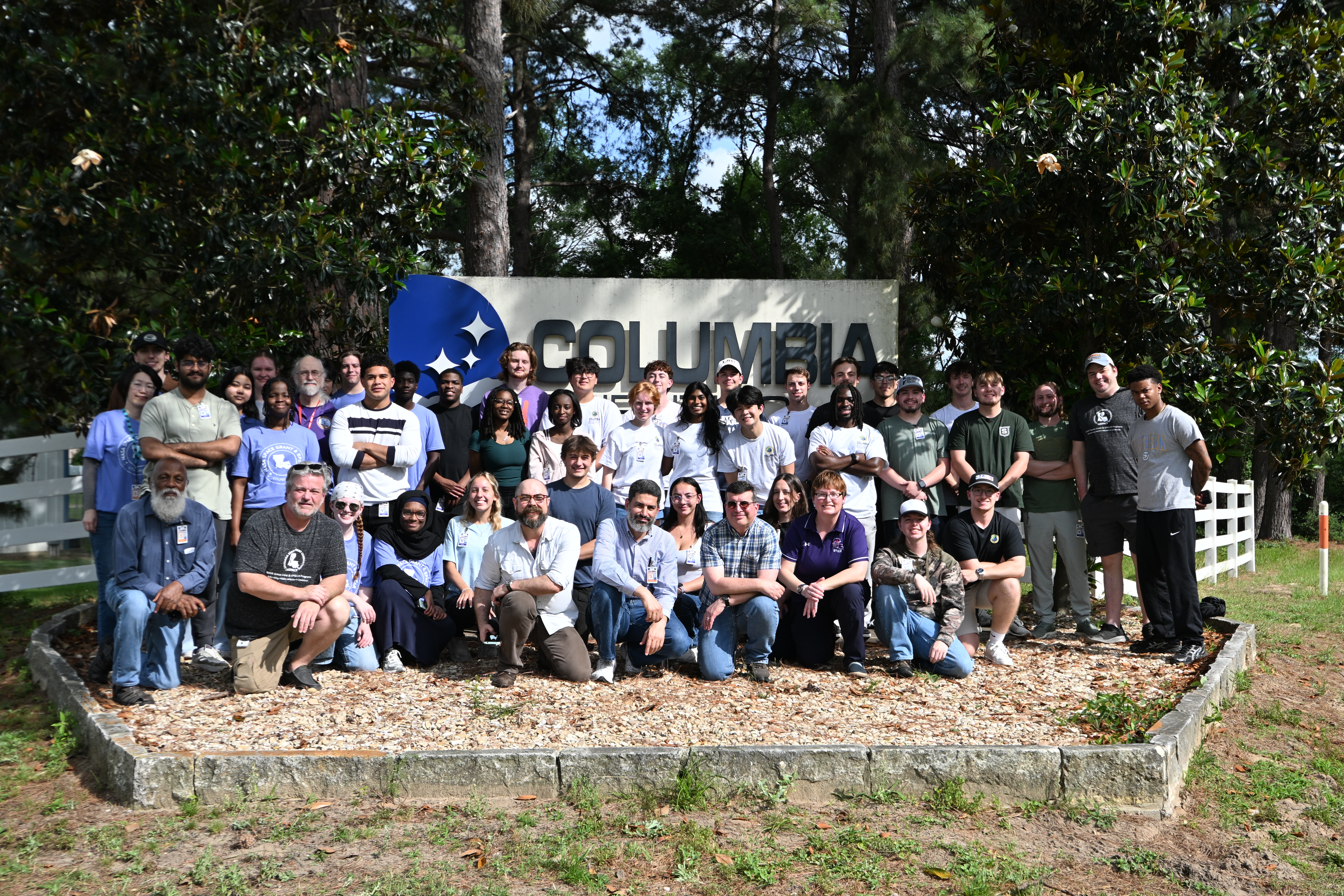
Following recovery, student teams analyzed their sensor data and environmental measurements and then presented their findings to balloon facility engineers and technicians along with faculty mentors and peers.
Programs like LaACES mirror the operational environment of NASA’s broader Scientific Balloon Program. NASA scientific balloons are more than just “weather balloons”: The reality is far more sophisticated. NASA Columbia Science Balloon Facility supports the launch, tracking, and recovery of large scientific balloons capable of carrying advanced research instruments to the edge of space. These flights support investigations in astrophysics, atmospheric science, planetary research, technology demonstrations, and more.
By placing students in this ecosystem, LaACES acts as a bridge between academic learning and national research operations. Students witness firsthand how scientific experiments are prepared, integrated, launched, tracked, and recovered — experiences that can reshape career paths and open doors to future opportunities within NASA, academia, and aerospace industries.
Funded by NASA’s National Space Grant College and Fellowship program, LaACES is a statewide program of the Louisiana Space Grant Consortium. Since its inception, LaACES has supported more than 500 students across 13 higher‑education institutions, launching over 60 balloon flights and roughly 135 unique payloads. As NASA continues to advance scientific discovery, programs like LaACES help ensure a strong pipeline of future innovators. For these Louisiana students, watching their payload rise into the sky is more than a technical milestone — it is a defining moment, a spark that turns curiosity into possibility.
Share
Details
Related Terms
Explore More
Guinea-Bissau Tidal Waters
2026-08-03 17:15
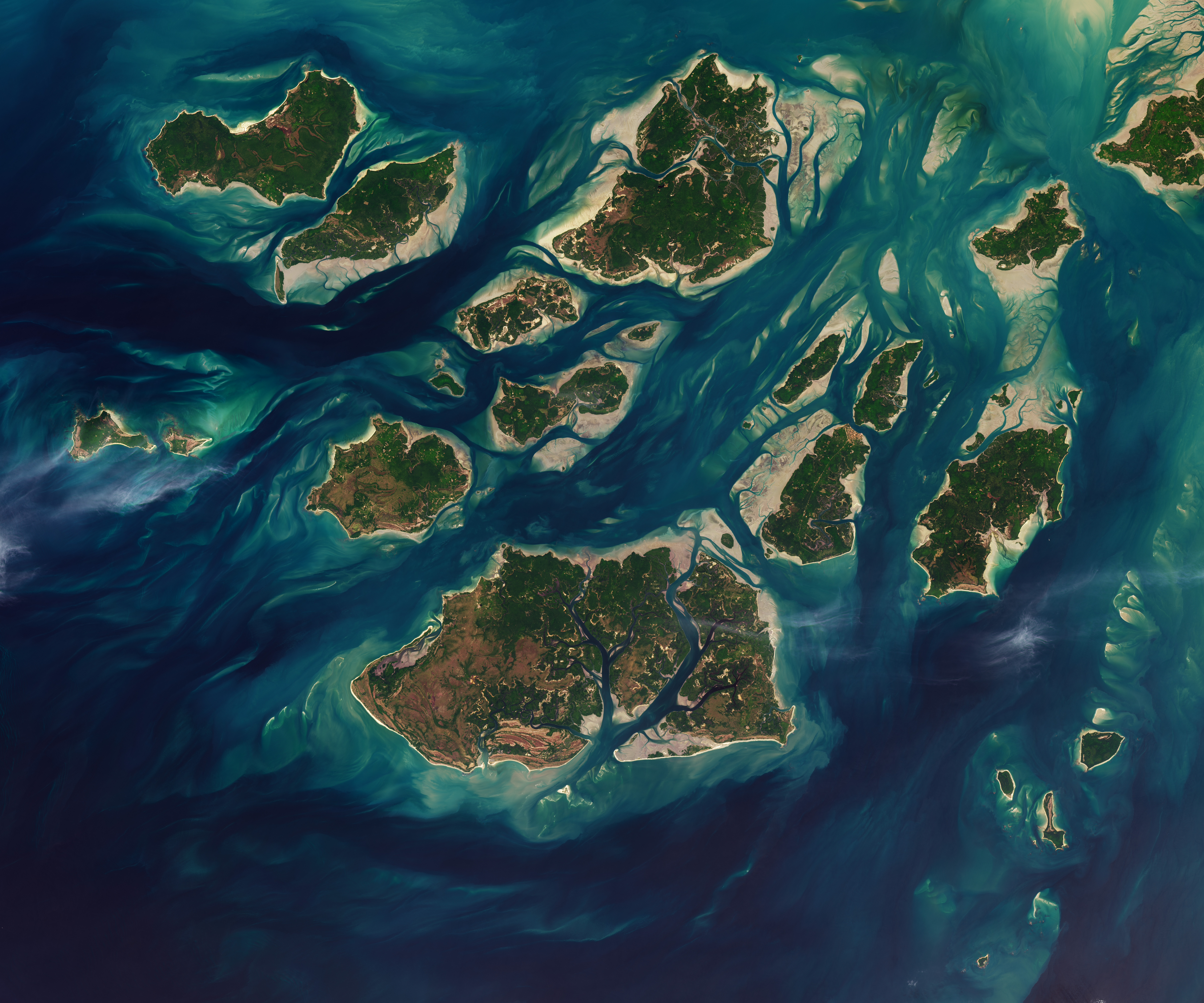
Twice each day, tides ebb and flow through a maze of sandy channels, mudflats, and mangrove forests that flank the 88 islands and islets of Guinea-Bissau’s Bijagós Archipelago (Arquipélago dos Bijagós in Portuguese). Seen from above in this image from Nov. 28, 2025, the process leads to stark changes to the landscape: around low tide, intertidal mudflats and sandflats emerge from the sea, causing islands to grow significantly before shrinking again hours later.
Learn more about the region and its wildlife.
Text credit: Adam Voiland
Image credit: NASA/Lauren Dauphin, USGS
NASA Delivers Navigation System for Commercial Lunar Relay
2026-08-03 14:20
NASA Delivers Navigation System for Commercial Lunar Relay
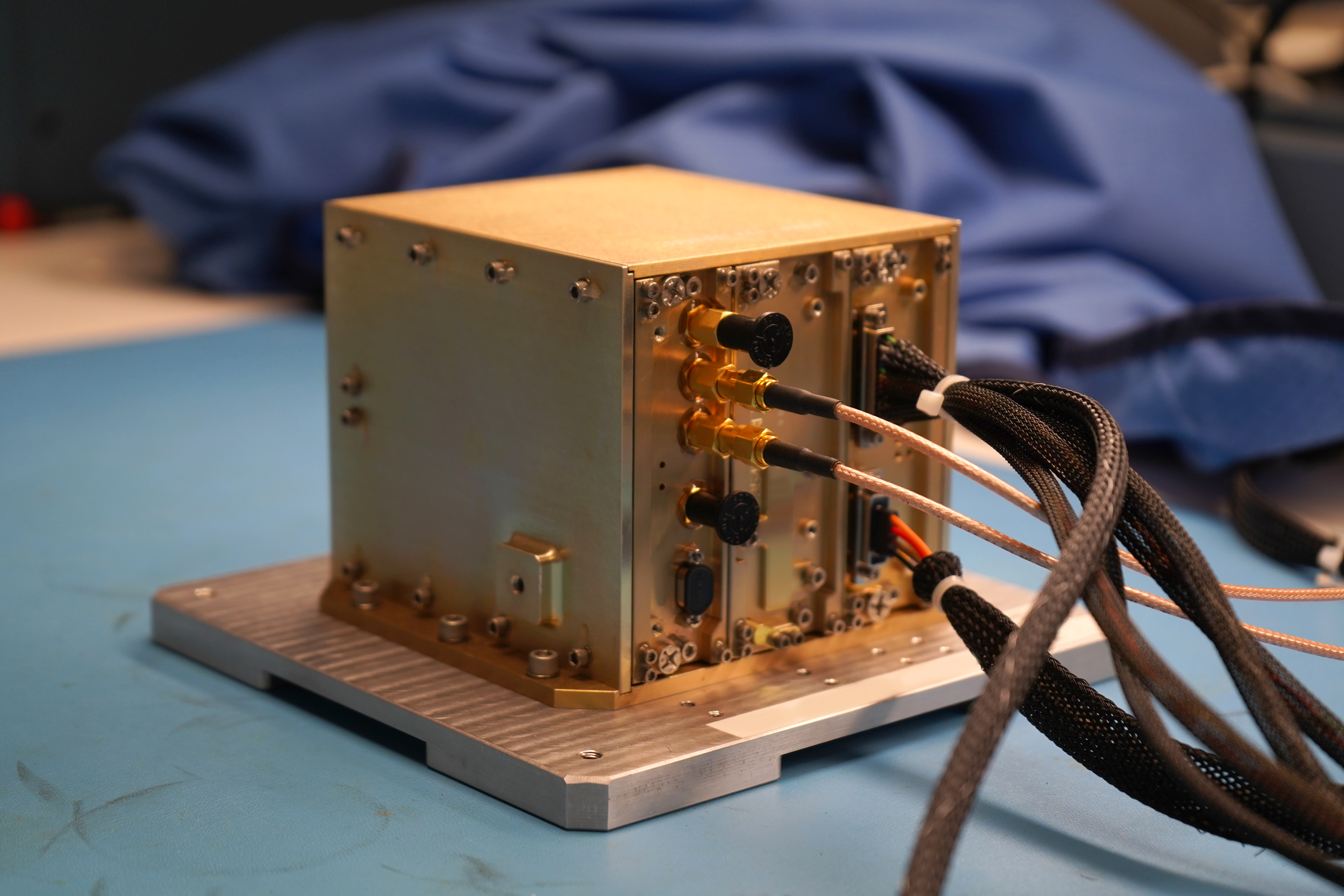
NASA delivered the NavCube3-mini payload on July 13 to Intuitive Machines for integration into Altus-1, the company’s first lunar relay satellite, marking an important milestone in the development of future lunar communications and navigation services. The lunar relays are designed to enable communications and navigation for astronauts and rovers operating at the agency’s future Moon Base.
About half the size of a shoebox and weighing just 3.5 pounds, NavCube3-mini is a compact but powerful navigation receiver designed to use signals from Earth-based GPS and Galileo Global Navigation Satellite Systems (GNSS) at lunar distances. Operating on less than 20 watts of power, roughly the same as a laptop computer, it can determine a spacecraft’s precise position far beyond Earth orbit. The compact payload builds on a series of navigation technology advancements developed at NASA’s Goddard Space Flight Center in Greenbelt, Maryland, each extending GPS navigation to new record-breaking distances from Earth.
The payload will fly aboard Intuitive Machines’ Altus-1 lunar relay satellite, the first of a planned network of lunar relay satellites being developed under the company’s Near Space Network Services contract with NASA. The relays will provide communications and navigation support for missions operating at the Moon, including the challenging lunar South Pole region, where Artemis astronauts will land in 2028, and where direct communications with Earth can be difficult. By extending communications coverage and improving navigation services, the relay network will help realize NASA’s vision for a sustained human presence on the lunar surface.
Before being shipped to Intuitive Machines, NavCube3-mini underwent an extensive environmental and performance test campaign at NASA Goddard to verify it is ready for spaceflight. The environmental testing included vibration testing to simulate launch conditions, thermal vacuum testing in the extreme temperatures and vacuum of space, and electromagnetic compatibility testing to ensure the payload can operate reliably alongside other spacecraft systems without causing or experiencing electromagnetic interference. Performance testing was conducted before and after each environmental test using high-fidelity simulations of the GPS and Galileo signals the NavCube will encounter in lunar orbit, verifying functionality and performance throughout the testing campaign.
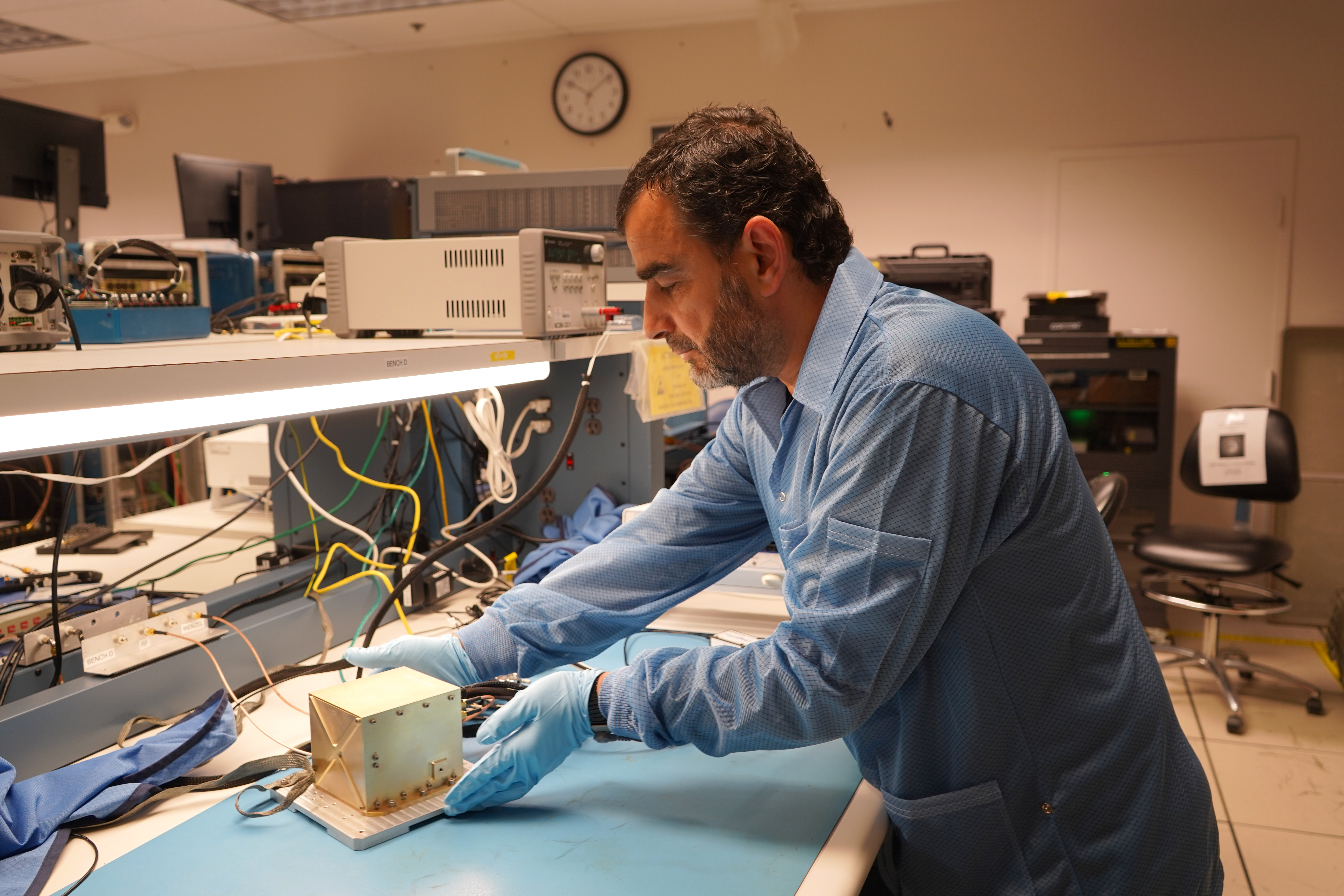
NavCube3-mini will serve as a key technology demonstration aboard Altus-1, validating the use of GNSS-based navigation in the lunar region and providing valuable performance data to support the development of future lunar navigation infrastructure. This technology is part of NASA’s broader strategy to develop communications and navigation services that work across both commercial providers and NASA’s networks. These capabilities are designed to support a growing lunar ecosystem that includes orbiters, landers, rovers, and, eventually, astronauts living and working on the Moon.
The delivery of NavCube3-mini marks another step toward building the communications and navigation infrastructure needed for long-term lunar exploration. Through partnerships with commercial providers like Intuitive Machines, NASA is building a more connected and capable lunar environment. As activity around the Moon continues to grow, these capabilities will enable lunar spacecraft and explorers to operate more safely, efficiently, and autonomously.
About the Author

Katherine Schauer
Katherine Schauer is a writer for the Space Communications and Navigation (SCaN) Program office and covers emerging technologies, commercialization efforts, exploration activities, and more.
Share
Details
Related Terms
Ike Theriot Helps Prepare Astronauts to Work on the Moon
2026-08-03 14:00
Ike Theriot Helps Prepare Astronauts to Work on the Moon
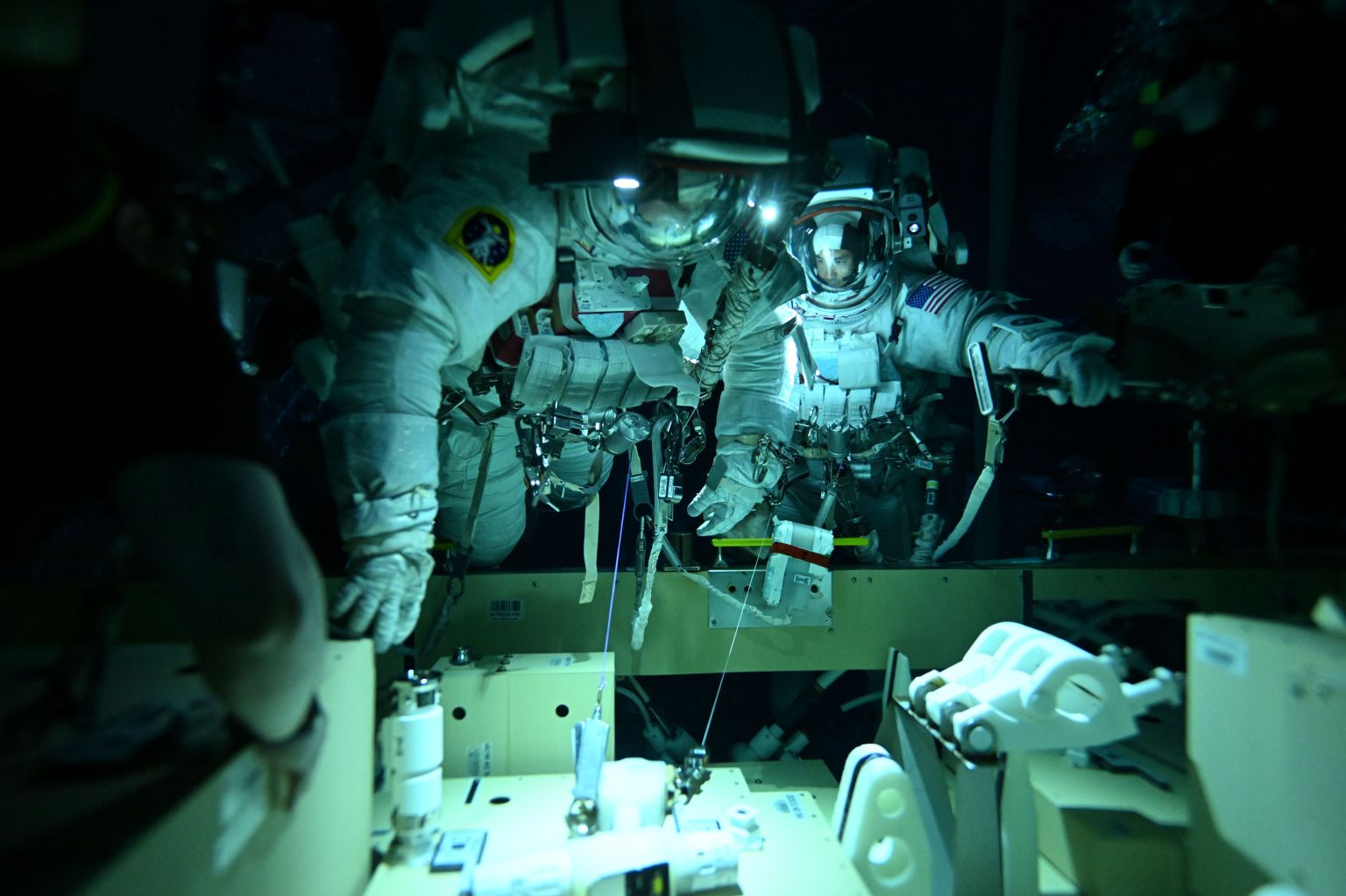
From serving in the U.S. Army to helping prepare astronauts to explore the lunar surface, Ike Theriot built a path to NASA through discipline and determination.
Theriot serves as the Flight Operations Surface Testing lead in the Exploration Extravehicular Activity Operations Branch within the EVA, Robotics, and Crew Operations Division at NASA’s Johnson Space Center in Houston. He integrates flight operations testing needs across the Artemis program, ensuring teams have the data, procedures, and experience required to prepare astronauts to live and work on the Moon. He is currently transitioning from this role to focus on mission development, astronaut training, and mission execution for the next lunar landing.
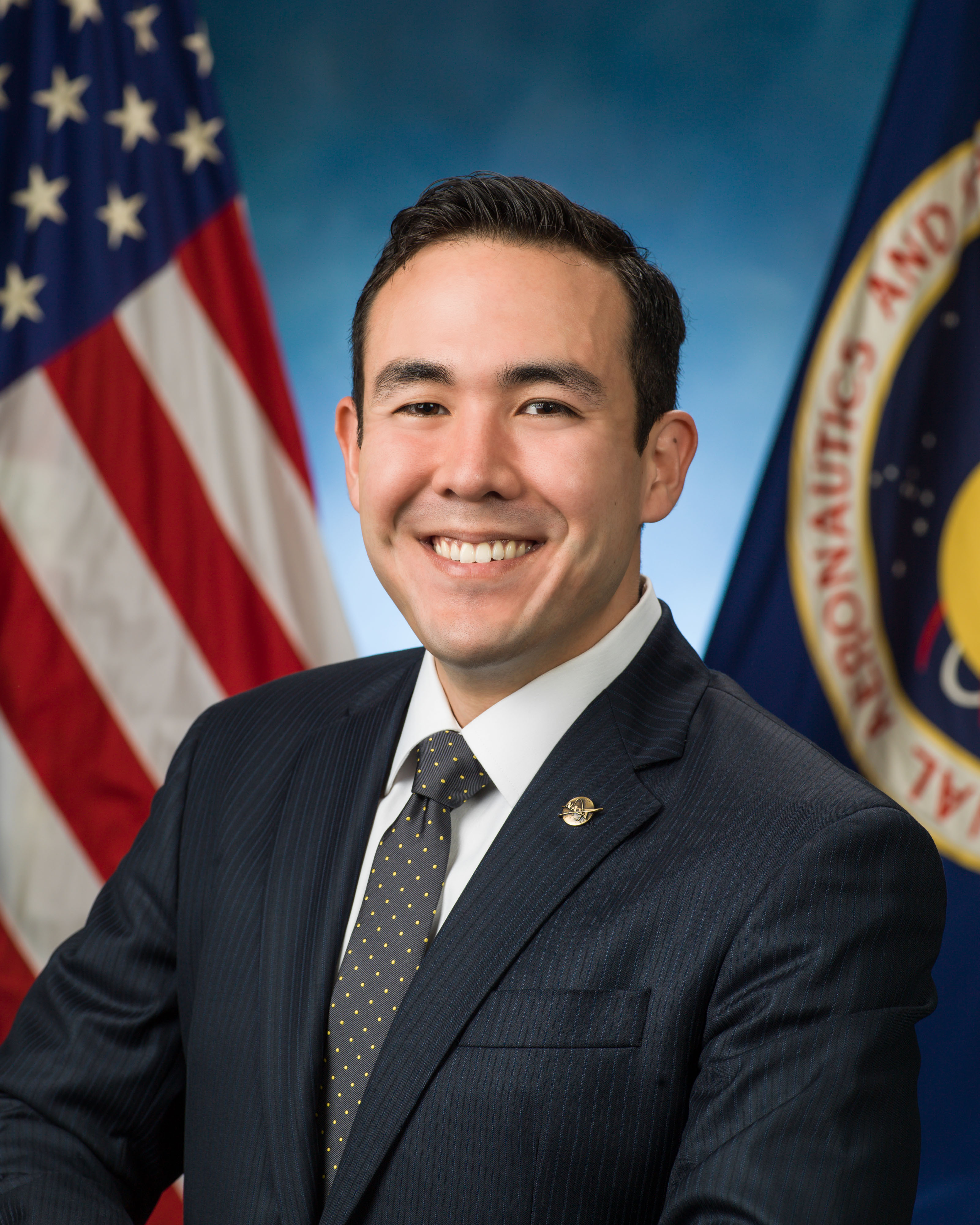
I help ensure we have the testing needed to meet mission expectations, and the knowledge and experience to train the astronaut corps to meet that mission.
Ike Theriot
Flight Operations Surface Testing Lead
Theriot helps develop and execute simulated moonwalks at Johnson and at field locations across the U.S. and internationally. He also helped lead development of the Lunar Grid Reference System, designed specifically for human operations on the Moon and now incorporated into flight control systems.
Theriot plans and executes testing in facilities such as NASA’s Neutral Buoyancy Laboratory and the Space Vehicle Mockup Facility. He often serves as a suited test subject and trains others to become test conductors and test leads, building the next generation of surface operations experts.
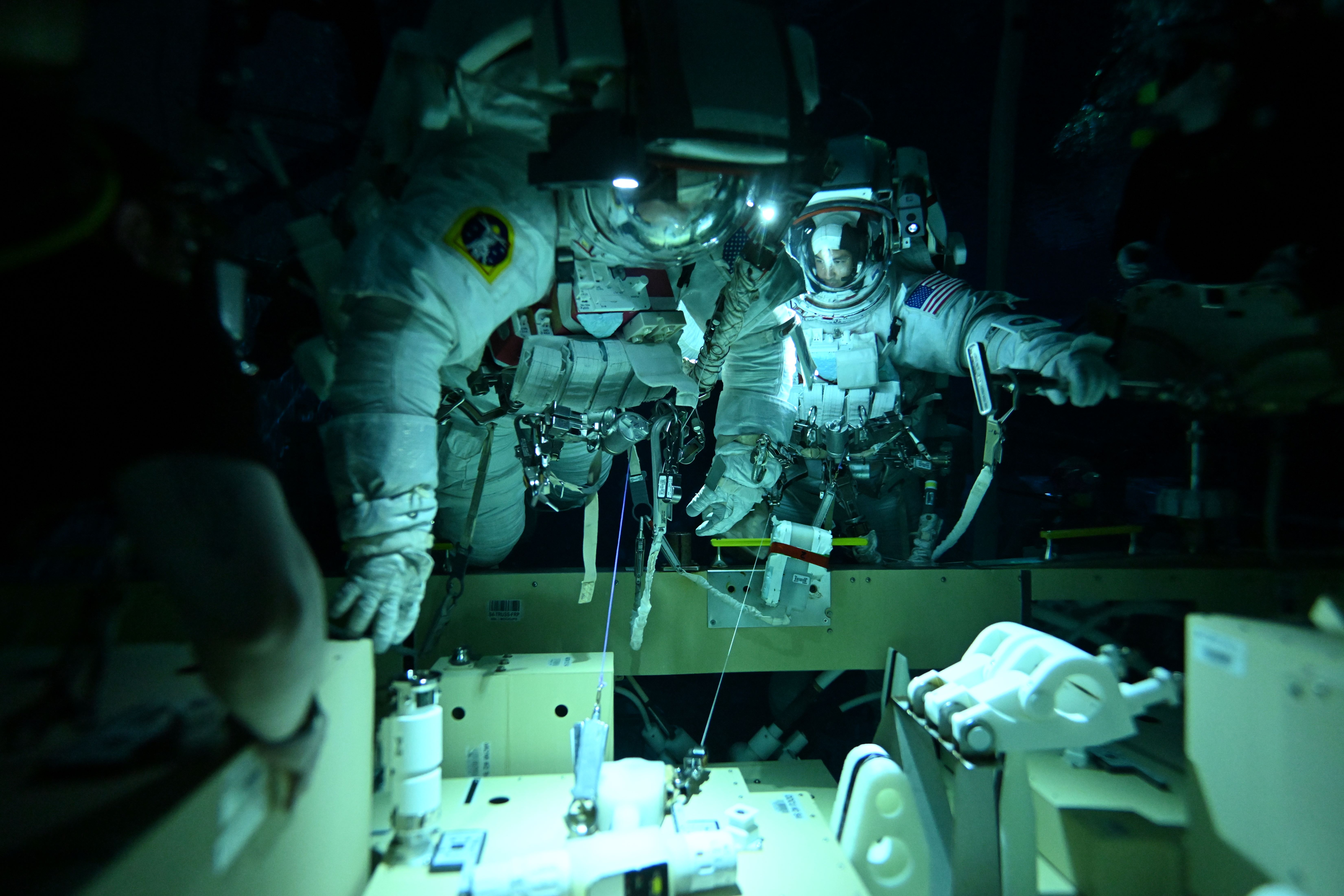
In the Neutral Buoyancy Laboratory, the agency’s 40-foot-deep pool used to simulate microgravity, Theriot has supported International Space Station spacewalk rehearsals and lunar surface testing, helping refine procedures that astronauts will use in orbit and on the Moon.
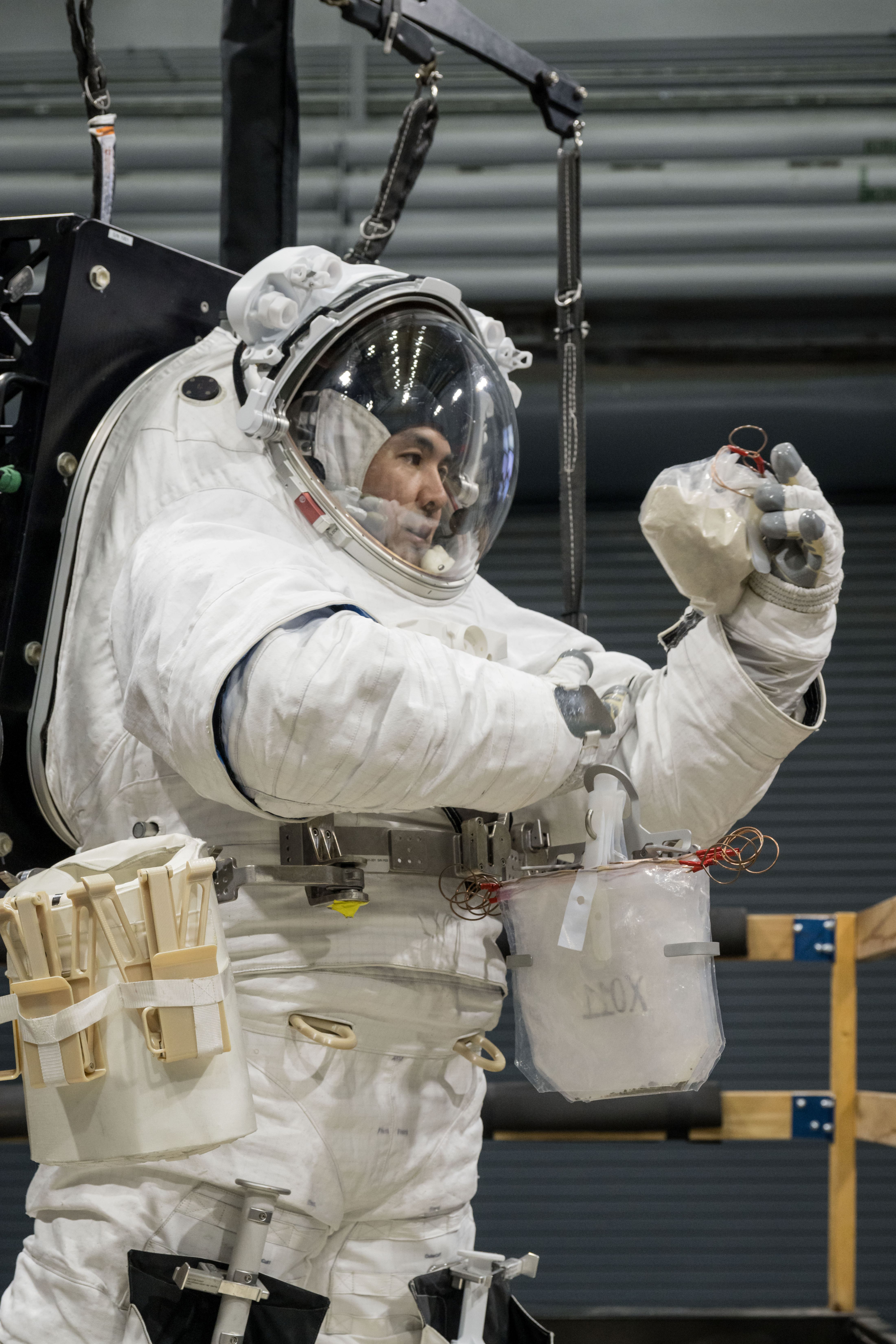
Theriot has supported testing of NASA’s government reference exploration spacesuit design and Axiom Space’s lunar spacesuit, the Axiom Extravehicular Mobility Unit, or AxEMU. In the Active Response Gravity Offload System, known as ARGOS, he practiced geologic sampling operations in the AxEMU, examining a collected sample before stowing it. The system offloads body weight to simulate lunar gravity, allowing teams to refine surface procedures and hardware performance before astronauts step onto the lunar terrain.
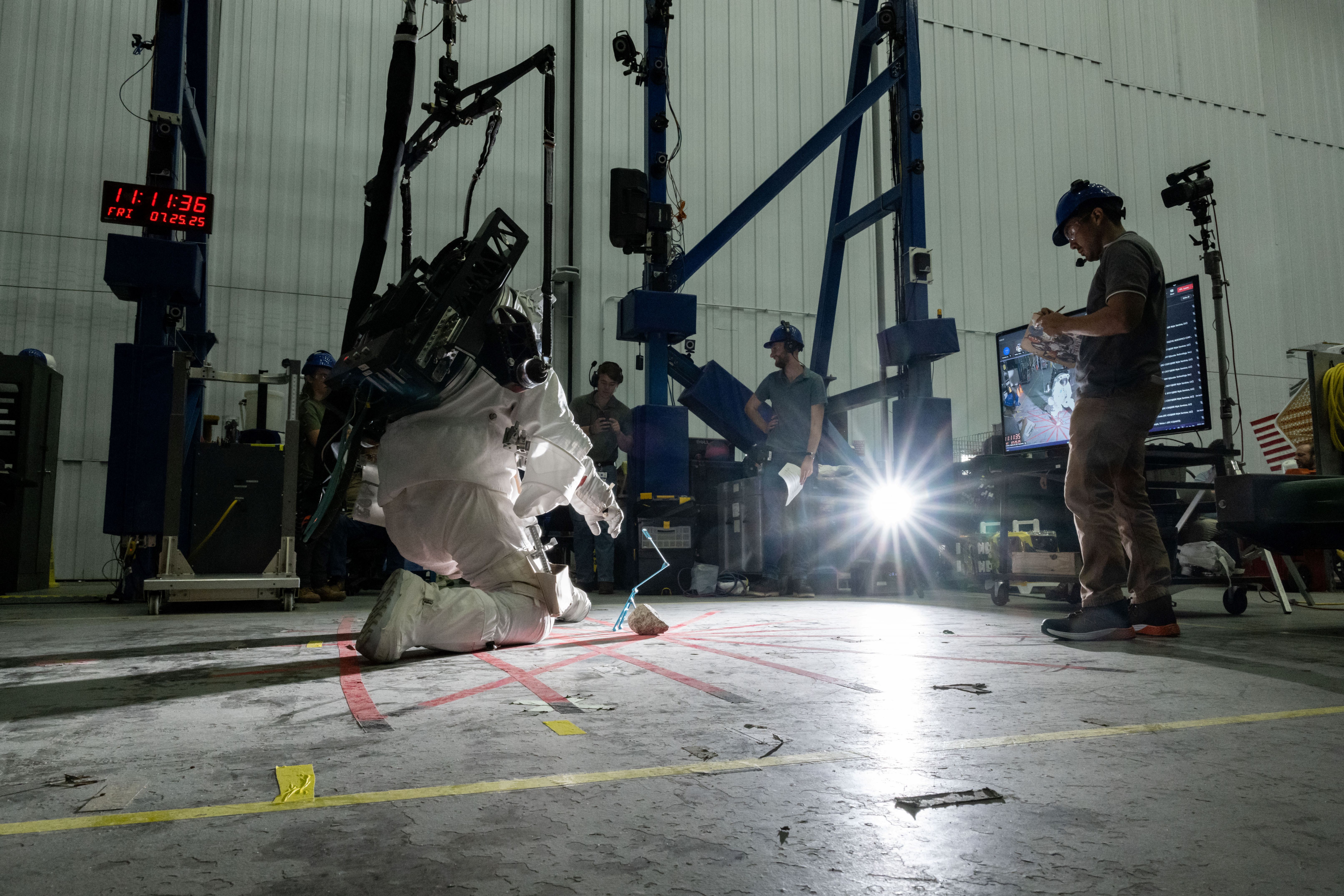
He has also evaluated new lighting configurations during suited test runs supporting development of Artemis crew training curriculum, assessing how visibility affects safety and task execution in a simulated lunar environment.
In addition, Theriot supports International Space Station spacewalks as a certified flight controller and was recently selected as a capsule communicator, or capcom. He has begun simulation training for that role, where he will serve as the voice between the Mission Control Center and astronauts in low Earth orbit.
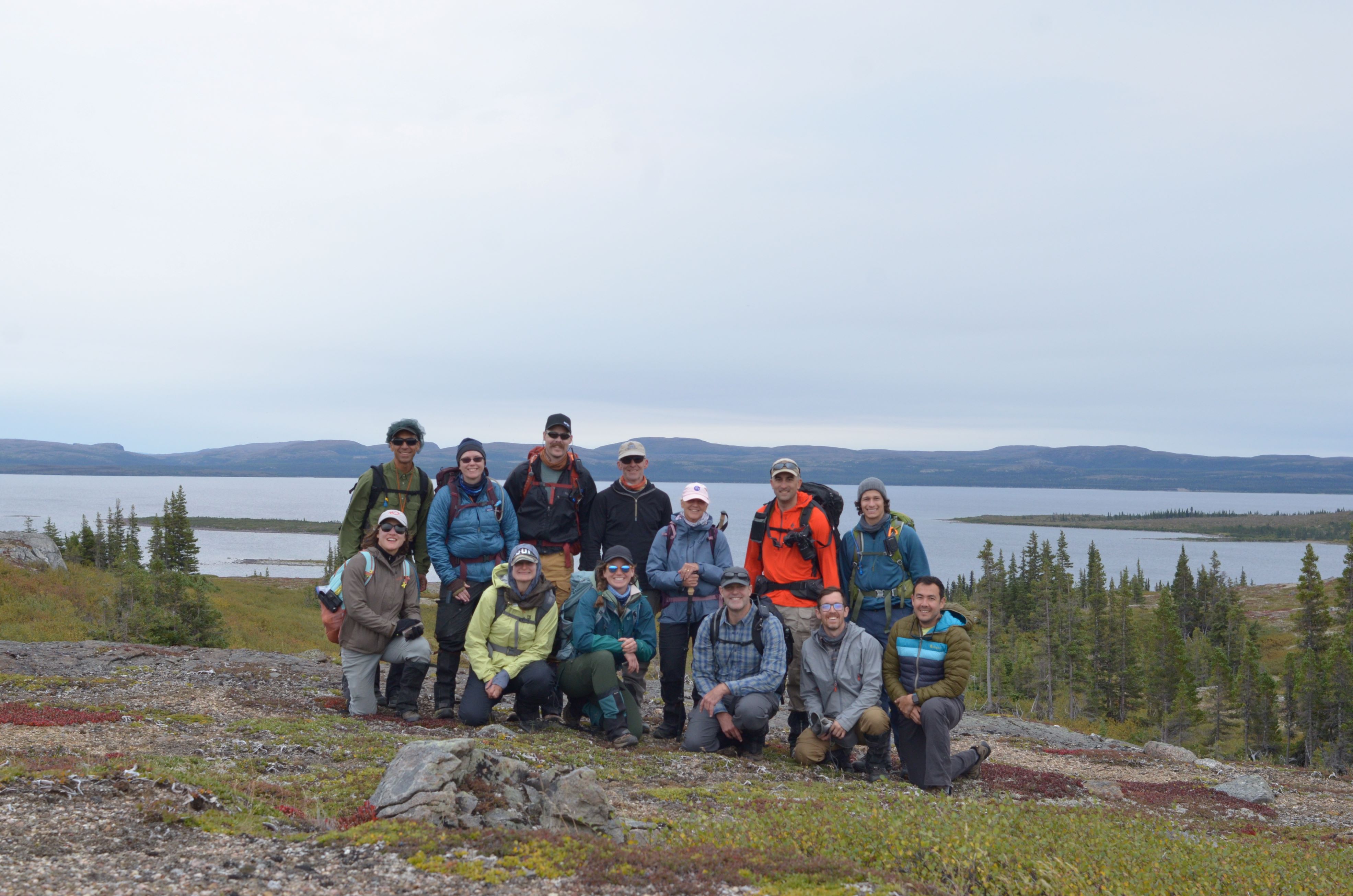
Theriot’s work extends far beyond NASA facilities, into remote environments that mirror the realities of lunar surface operations. During a field campaign at Kamestastin Crater in Labrador, Canada, Theriot trained alongside members of the Artemis II crew. Formed approximately 36 million years ago, the impact crater provides terrain similar to areas astronauts may encounter on the Moon and offers valuable geology training in a remote environment accessible only by boat.
The hardest parts of our job is creating the environment to allow technical work to flourish. That means getting people to agree on a course of action, communicating well, supporting your team, and making long-term investments in people.
Ike Theriot
Flight Operations Surface Testing Lead
Theriot’s interest in space began while deployed overseas with the Army. In Iraq, he was tasked with setting up a satellite transceiver that failed on first power-up. After observing technicians perform field repairs, he began taking online engineering courses in his spare time, studying orbital mechanics, circuit design, cryptography, and space power systems. Later, while deployed to Afghanistan, he spent evenings stargazing and tracking the space station as it passed overhead.
After leaving the Army, Theriot earned a mechanical engineering degree from the University of Houston and secured an internship at Johnson in 2016, rotating between engineering and flight operations teams. He accepted a full-time position in 2019, just as NASA announced plans to return astronauts to the Moon under the Artemis program.
His most valued achievements involve setting others up for growth and success. Several years ago, Theriot created a Field Navigation Exercise at Challenger 7 Memorial Park in Houston to strengthen lunar surface navigation skills. As surface operations planning accelerated, he recognized many had limited field experience. He built the exercise and mentored others to lead it.
More recently, he served as test conductor for a major lunar spacesuit test series in the Neutral Buoyancy Laboratory, spending months refining procedures and coordinating teams. On one occasion, the 19th Field Navigation Exercise and a Neutral Buoyancy Laboratory test run occurred on the same day. Both were led by people he had trained. Theriot took the day off.
For him, that was success.
Over time, his perspective on leadership has evolved. Early in his career, he believed the hardest challenges were technical. Now, he believes the greater challenge is providing the leadership and guidance that enable technical work to succeed.
For the mission to the Moon and beyond, Theriot hopes the agency demonstrates something larger than exploration alone.
“Each day presents a new and interesting challenge, and I can feel myself growing to meet those challenges,” he said. “Through the Artemis missions, like the Apollo missions, I hope we can all show the world that impossible things can happen.”
About the Author

Sumer Loggins
Share
Details
Related Terms
Explore More





NASA Brings Space Exploration to the FIFA World Cup
2026-08-03 13:55
NASA Brings Space Exploration to the FIFA World Cup


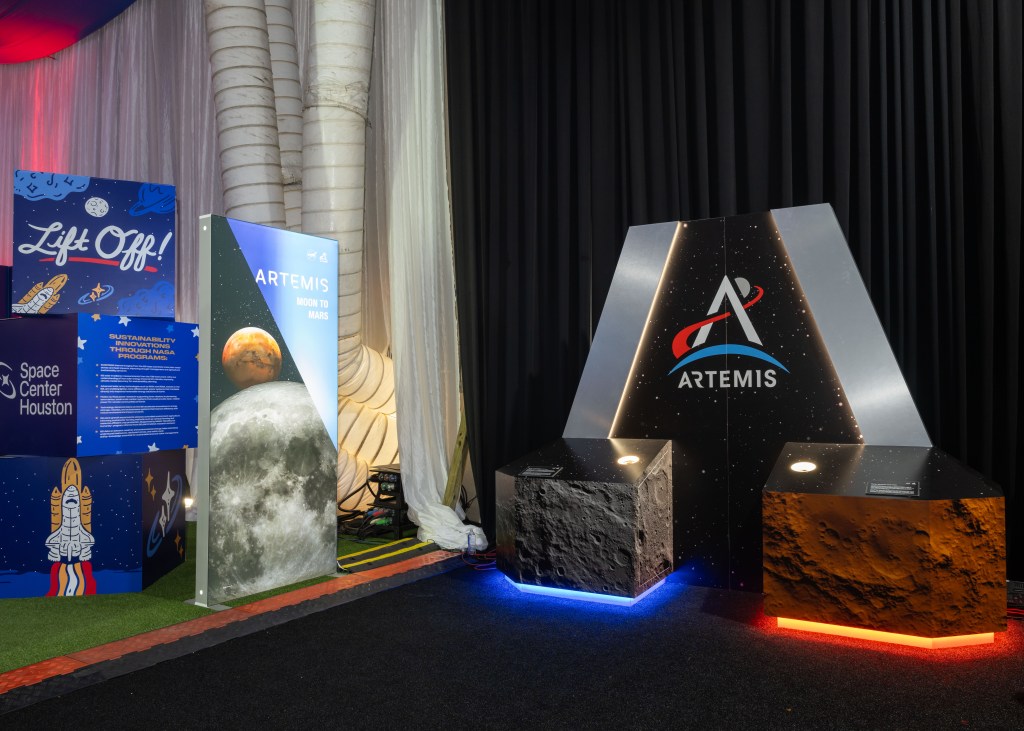
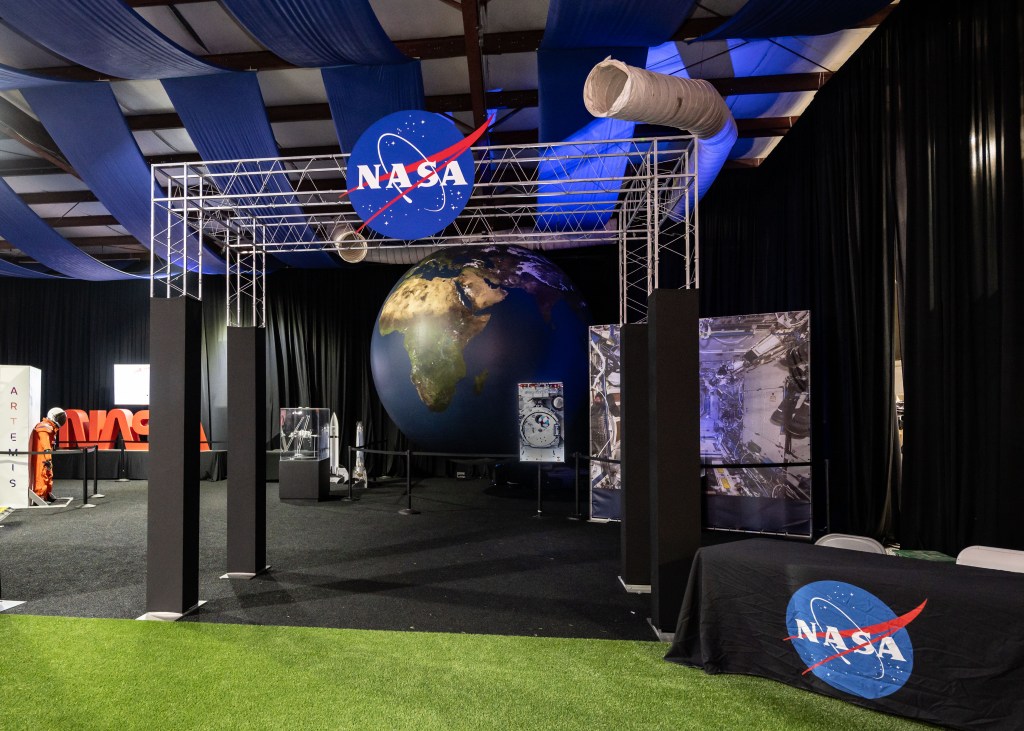
From June 11 through July 19, NASA’s free interactive exhibit at FIFA Fan Festival™ brought space exploration to soccer fans in East Downtown Houston.
More than 500,000 visitors explored the exhibit during the tournament, learning how the agency’s missions, research, and technology benefit life on Earth.
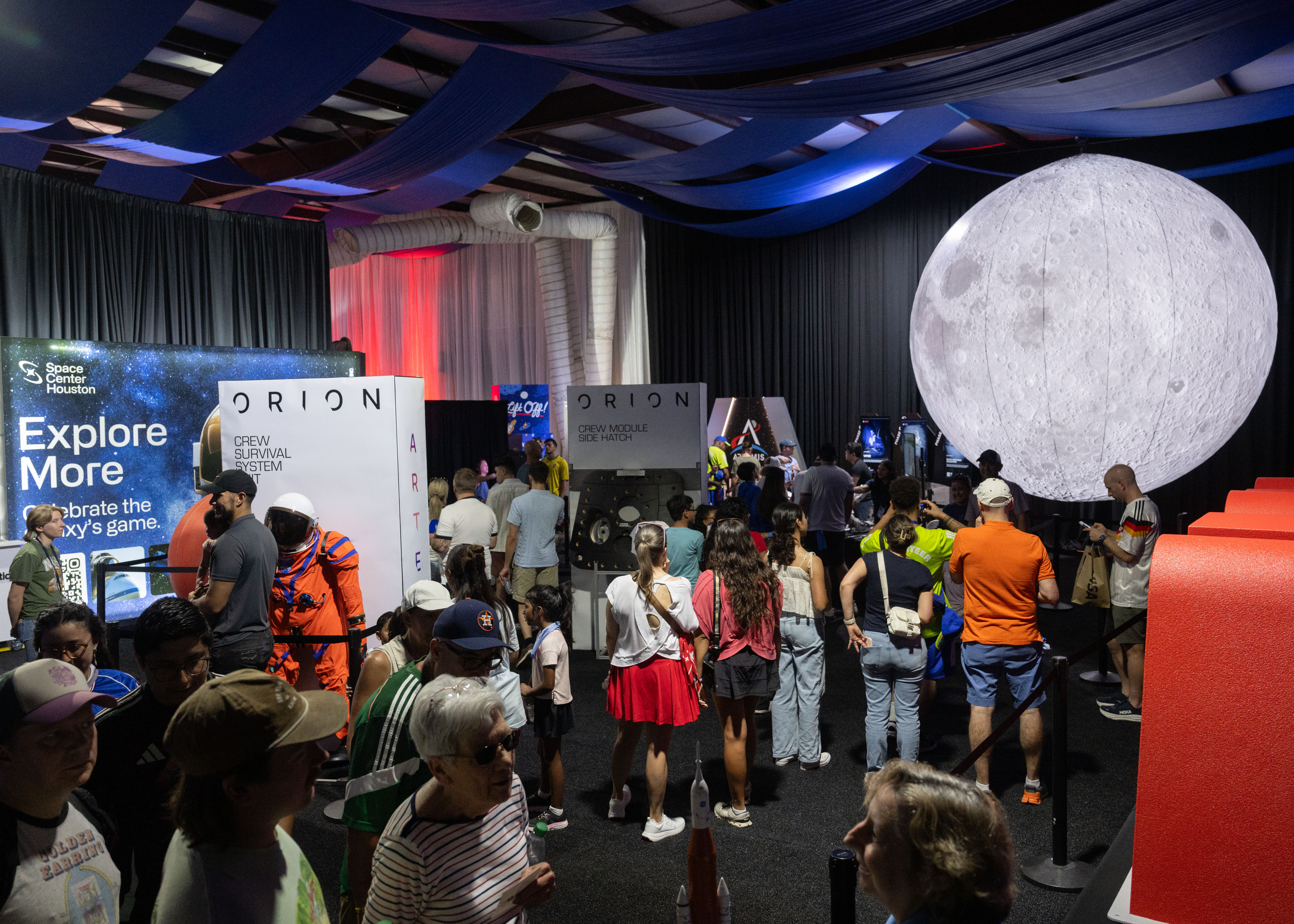
The exhibit introduced a global audience to the Artemis program, Moon Base, the International Space Station, and the future of human space exploration.
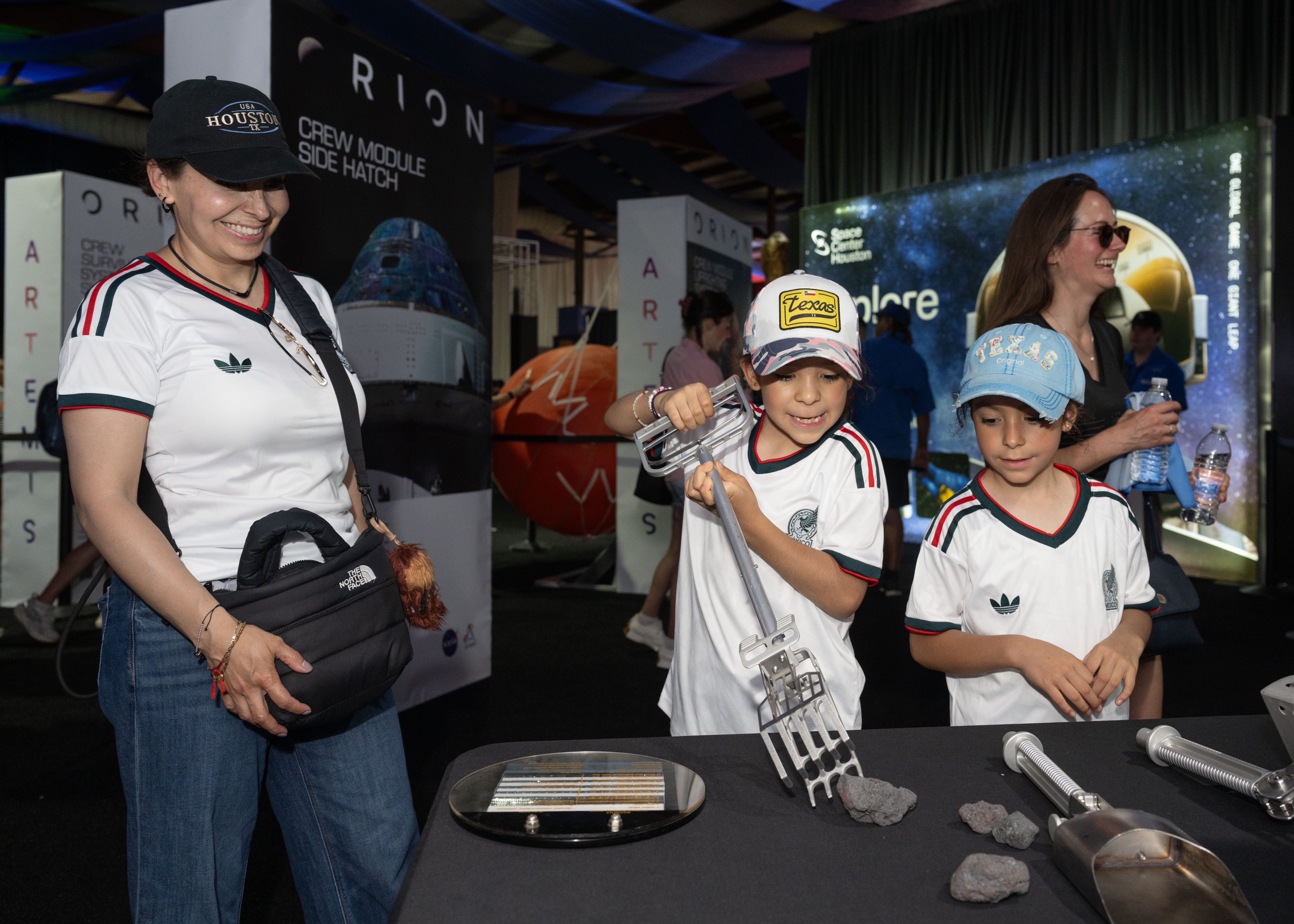
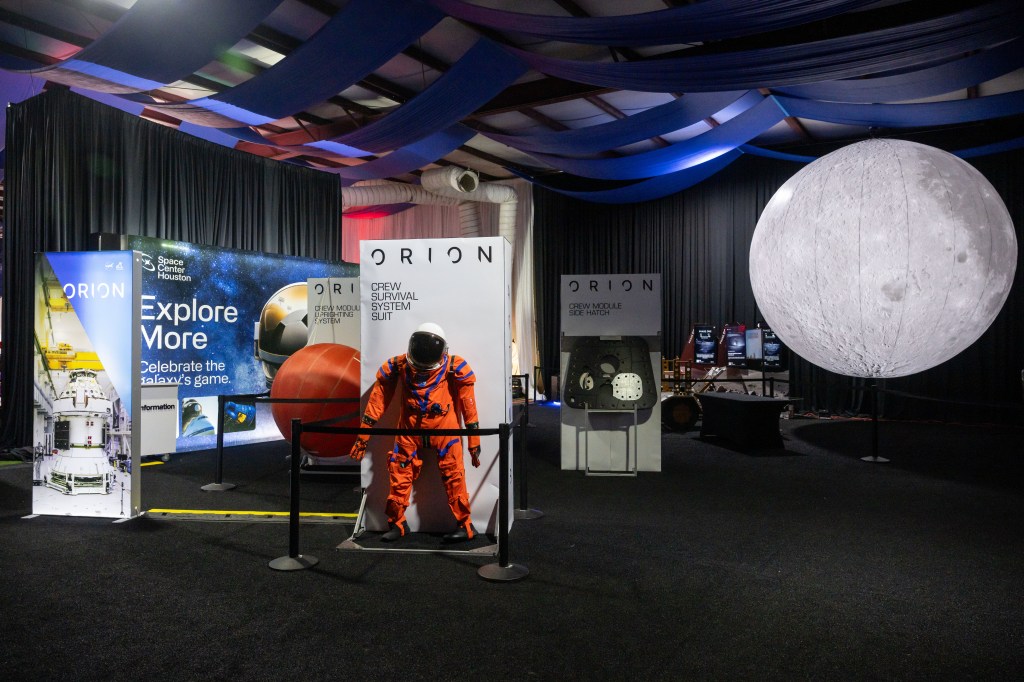
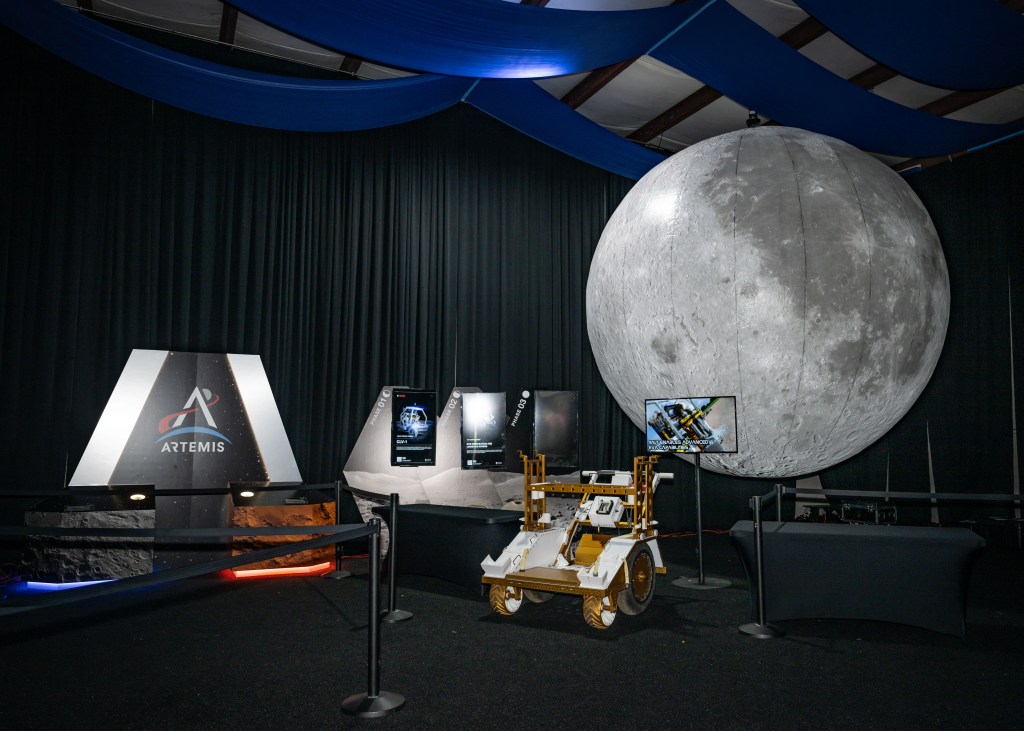
World Cup fans explored an Orion spacecraft exhibit, an International Space Station model, NASA’s Orion Crew Survival System suit, astromaterials, Hubble Space Telescope imagery, the Lunar and Mars Touch Table exhibit, a space-flown FIFA World Cup soccer ball, Space Center Houston activities, photo opportunities, and other hands-on experiences.
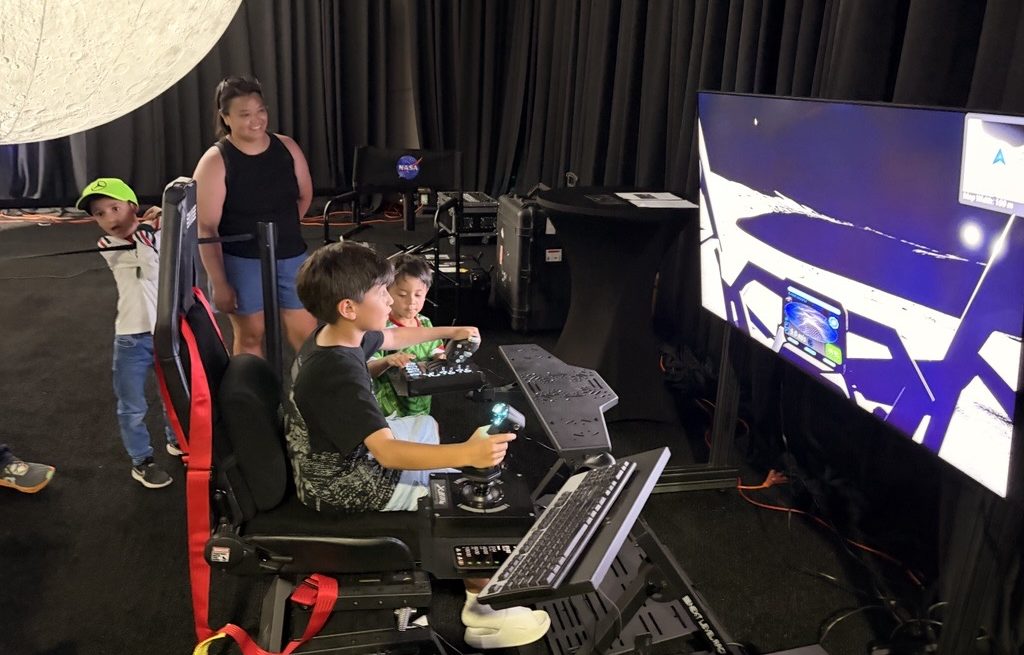
Attendees also climbed into a lunar rover simulator to drive across a virtual lunar surface, explored a Moon Base display demonstrating how astronauts could live and work on the Moon during future Artemis missions, and examined lunar tools designed to support Artemis exploration.
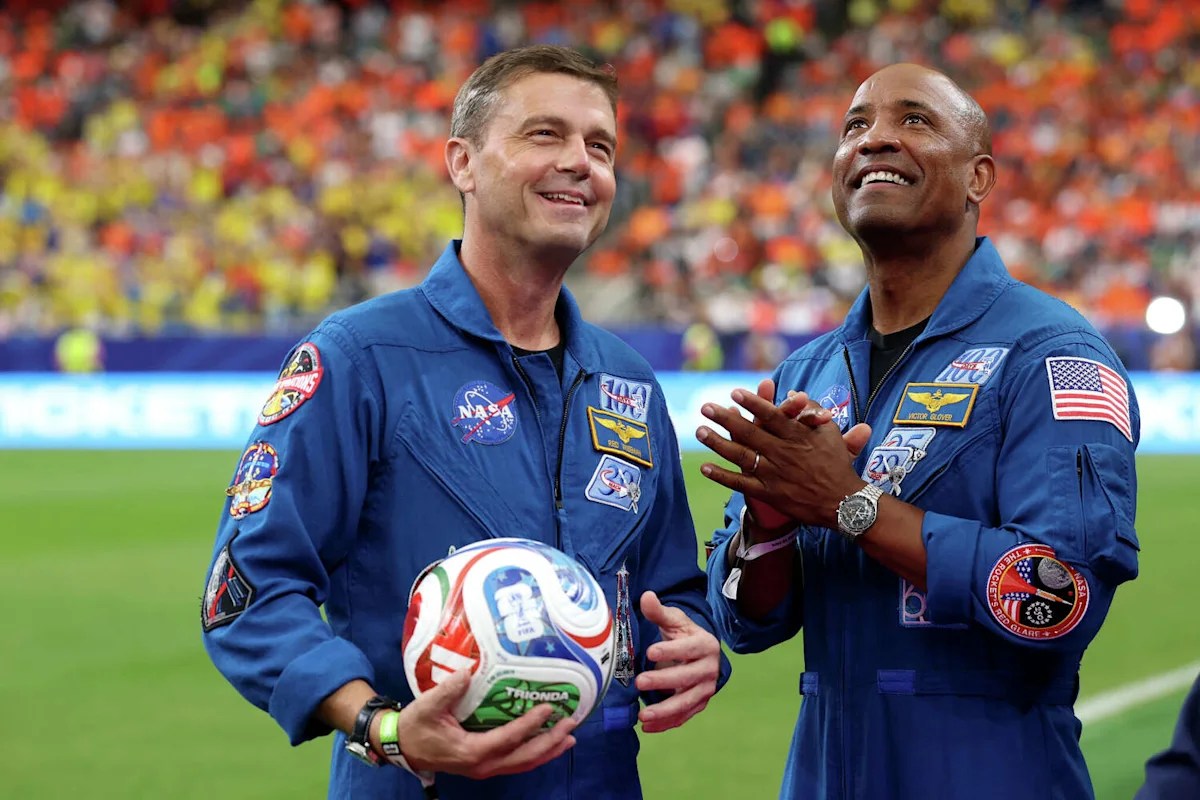
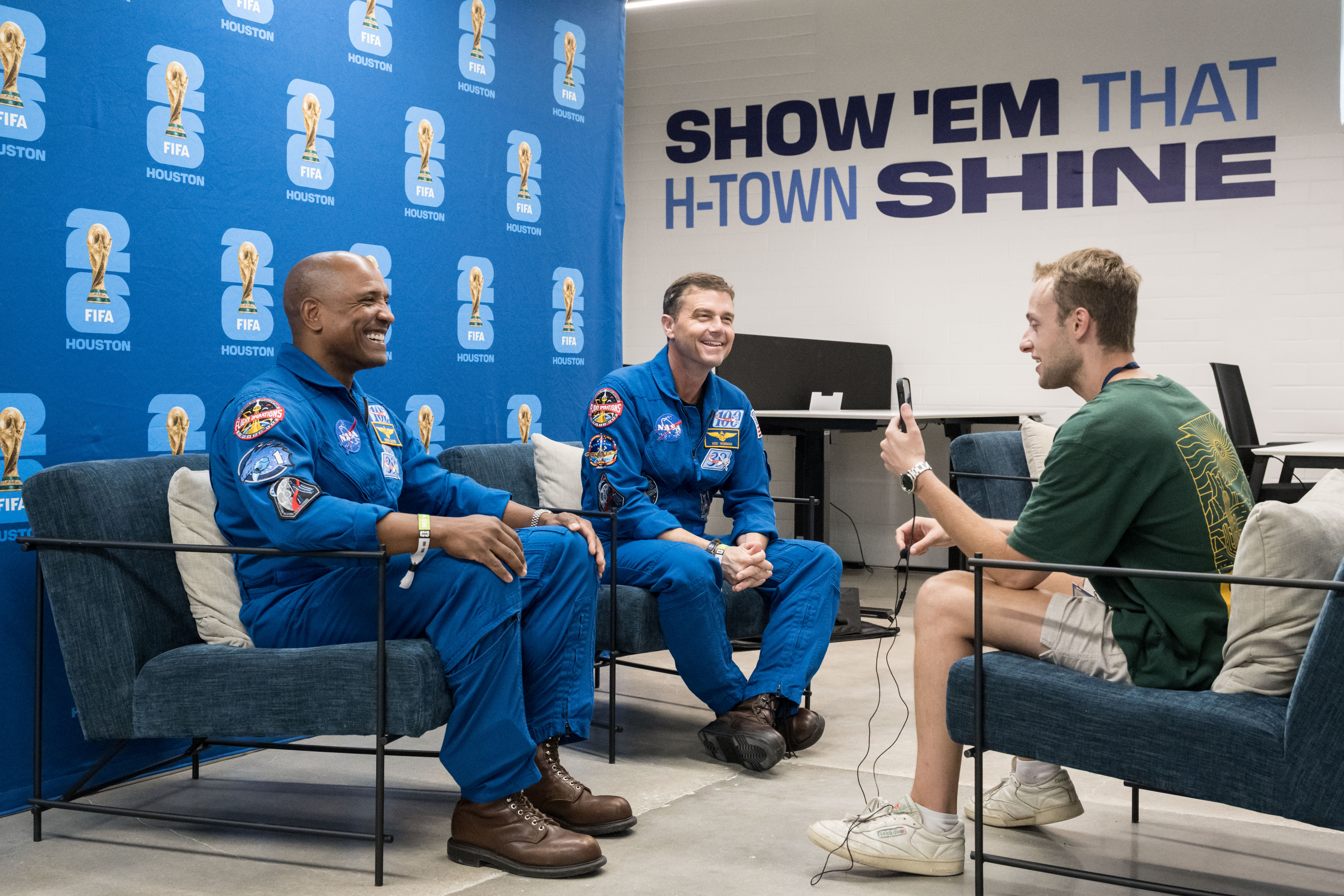
The tournament welcomed special guests, as well. On June 20, Artemis II Commander Reid Wiseman and Pilot Victor Glover participated in World Cup activities as the stadium captains ahead of the Netherlands-Sweden match at NRG Stadium, where they received a standing ovation from more than 67,000 fans.
While the weather prevented them from appearing on the FIFA Fan Festival main stage, the pair shared their experiences through media interviews.
NASA also highlighted the connection between space exploration and soccer through a STEMonstration developed in collaboration with Adidas. Filmed aboard the space station, the demonstration shows how the same physics that govern motion in space also shape the game on Earth.
Expedition 74 crew members kicked off FIFA Fan Festival with a prerecorded welcome message that aired on opening day. Throughout the tournament, the crew recorded greetings that played during matches and at Fan Festival events across the United States and Mexico.
ESA (European Space Agency) astronaut Sophie Adenot joined the celebration by recording a “Viking Row” aboard the space station. ESA astronauts Andreas Mogensen and Marcus Wandt participated from the ground in a playful tribute connecting fans on Earth with life in orbit.
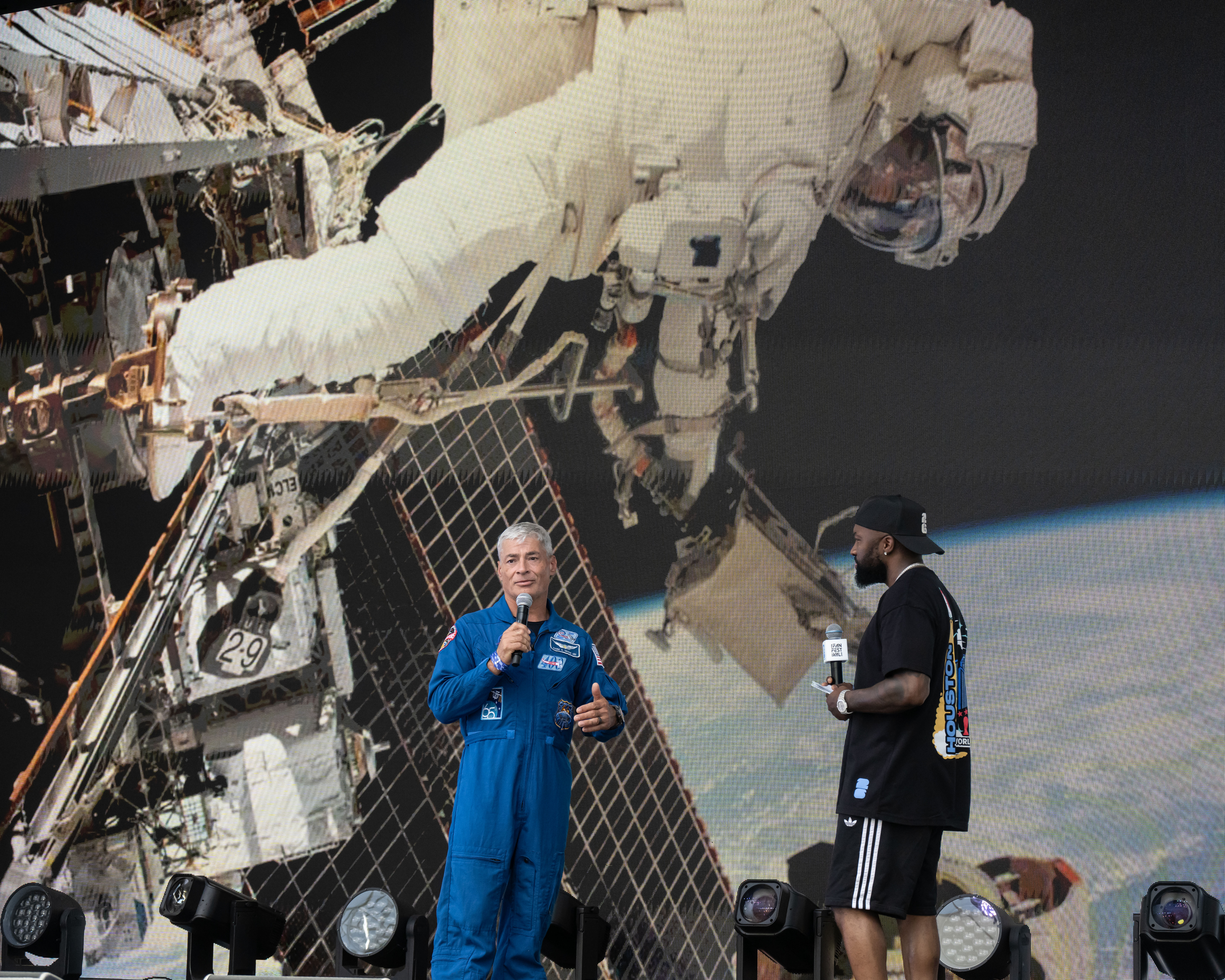
After nearly 40 days of showcasing NASA’s missions to soccer fans from around the world, FIFA Fan Fest concluded with a final message from the Expedition 74 crew during the official closing ceremony. On the ground, NASA astronaut Mark Vande Hei took the Fan Festival stage to share his journey to becoming an astronaut, his first view of Earth from space, and how the focus required for a spacewalk mirrors the concentration soccer players need on the field. He then kicked the ceremonial soccer ball, bringing NASA’s participation in the festival to a close.
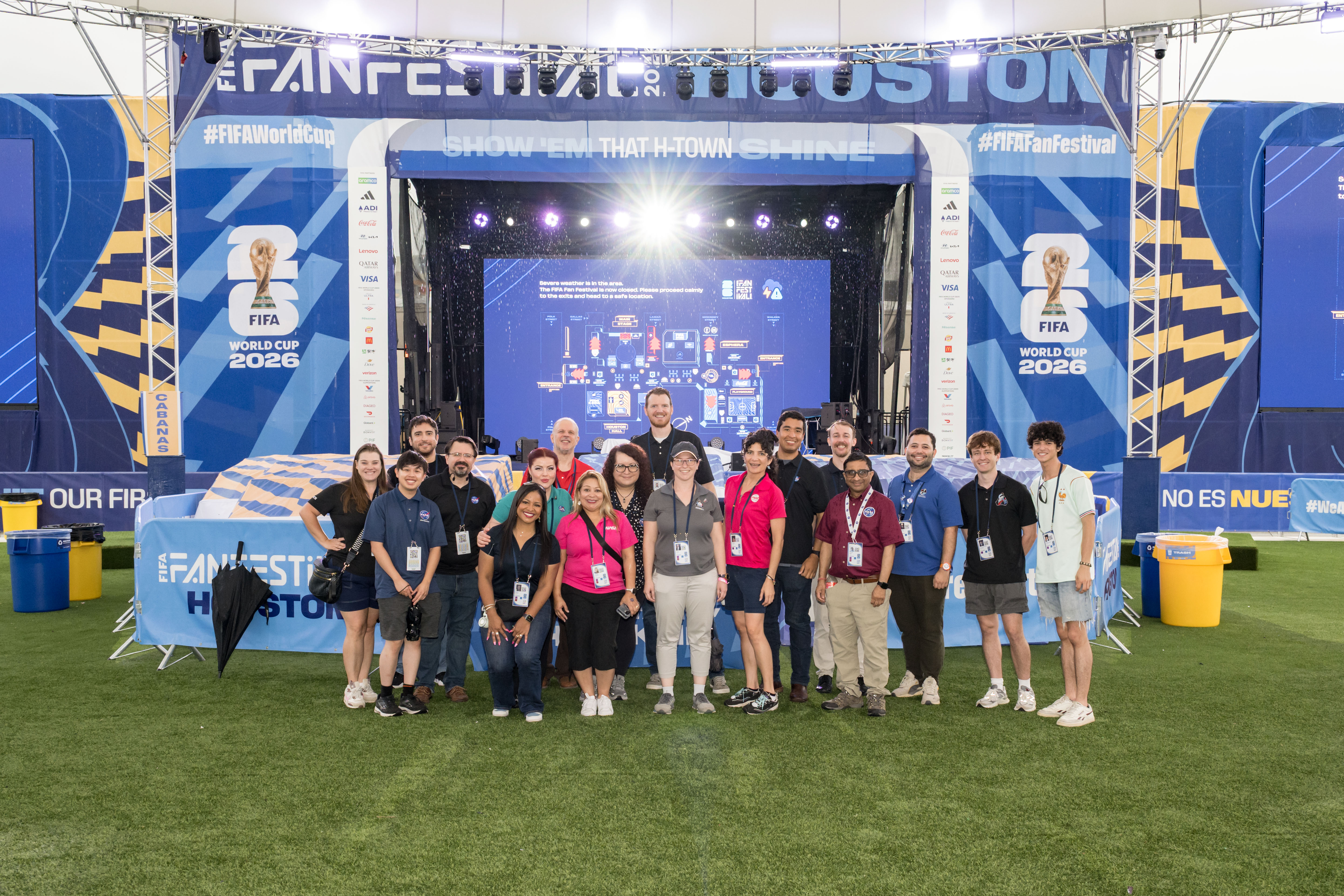
“We could not have done this without the incredible NASA team who volunteered,” said Jessica Cordero, Johnson community engagement lead. “They connected with fans and shared the excitement of Artemis III and NASA’s return to the Moon. They are truly the best volunteer crew on the planet!”
Explore NASA’s Exhibit

About the Author
Sumer Loggins
Share
Details
Related Terms
Explore More
TechCrunch - Latest
AWS is helping vibe-coding startup Superblocks, and the implications are big
2026-08-03 20:00
Who’s legally to blame for Anthropic and OpenAI’s autonomous AI hacks? It’s complicated
2026-08-03 19:45
DesignArena creators raise $7.9 million to bring taste to AI models
2026-08-03 19:28
Influencers draw backlash for attending OpenAI’s first luxury trip
2026-08-03 19:09
Apple challenges UK government’s latest demand for iCloud backdoor: report
2026-08-03 18:54