📰 Trending Topics
Google News - Trending
Google News - Technology
Pixel Tag pricing leak sets up a direct showdown with Apple AirTag - Android Authority
2026-08-05 10:41
- Pixel Tag pricing leak sets up a direct showdown with Apple AirTag Android Authority
- This is the ‘Google Pixel Tag’ 9to5Google
- Google's Take on Apple's AirTag May Have Just Leaked Lifehacker
- Google’s brand-new Pixel accessory leaked ahead of launch Tech Advisor
- Google Pixel Tag expected to be unveiled this month with a similar price to Apple's popular AirTag PC Guide
Not Google Nest, Not Netgear: This Is Amazon's Best-Selling Mesh Wi-Fi System - bgr.com
2026-08-05 11:17
- Not Google Nest, Not Netgear: This Is Amazon's Best-Selling Mesh Wi-Fi System bgr.com
- This 3-pack mesh Wi-Fi system kills dead zones, now under $100 PCWorld
- TP-Link Deco BE65-5G review - When 5G moves into your living room Korben
- Beat slow internet speeds — save £250 on TP-Link's Deco BE68 Wi-Fi 7 mesh kit TechRadar
- TP-Link Deco BE25 Review: Mesh Networking That's Both Stylish And Speedy SlashGear
ASUS Asks $5090 For RTX 5090 After Cancelling User’s Order Who Already Paid $4607 - Wccftech
2026-08-05 12:01
- ASUS Asks $5090 For RTX 5090 After Cancelling User’s Order Who Already Paid $4607 Wccftech
- GPU prices are approaching 2.5x their launch cost. Asus and Gigabyte just made it official with a second 2026 price hike. The Next Web
- GIGABYTE Reportedly Hikes GPU Pricing by Up to 40% in Japan TechPowerUp
- GIGABYTE's GeForce and Radeon GPU prices have reportedly increased by up to 40% in Japan TweakTown
- GPU prices keep surging in 2026 — Lack of sale discounts and rising VRAM costs keep current-gen prices sky-high Tom's Hardware
‘Pokémon Pokopia’ 2.0 Patch Notes: An Enormous, Welcome Update - Forbes
2026-08-05 15:24
- ‘Pokémon Pokopia’ 2.0 Patch Notes: An Enormous, Welcome Update Forbes
- Dive into Pokémon Pokopia Expansion Pass—Part 1: Bubbly Basin Pokemon.com
- Pokémon Pokopia Expansion Pass paid DLC Part 1, Bubbly Basin is set to release on 5 August! Announcing additional information on Part 2 of the Paid DLC! There’s more new details on the Ver. 2.0.0 Free software update will be released on the same day! nintendo.com
- Pokopia's Big Update Will Fix My Biggest Issue With The Game Kotaku
- Pokémon Pokopia Bubbly Basin DLC Release Time Explained vice.com
Sunbird relaunched its iMessage app for Android users after three years away - The Verge
2026-08-05 14:13
- Sunbird relaunched its iMessage app for Android users after three years away The Verge
- Sunbird Brings iMessage to Android for Everyone, with a New Priority Inbox, Agentic AI to Follow PR Newswire
- Sunbird launches its iMessage for Android app, expecting you to trust it in the name of blue bubbles 9to5Google
- Unsafe iMessage for Android app Sunbird just will not die AppleInsider
- iMessage on Android Arrives Via Sunbird, Again Droid Life
NASA - Breaking News
NASA’s Perseverance Rover Watches Earth Vanish Behind Martian Moon
2026-08-05 15:25
3 min read
Preparations for Next Moonwalk Simulations Underway (and Underwater)
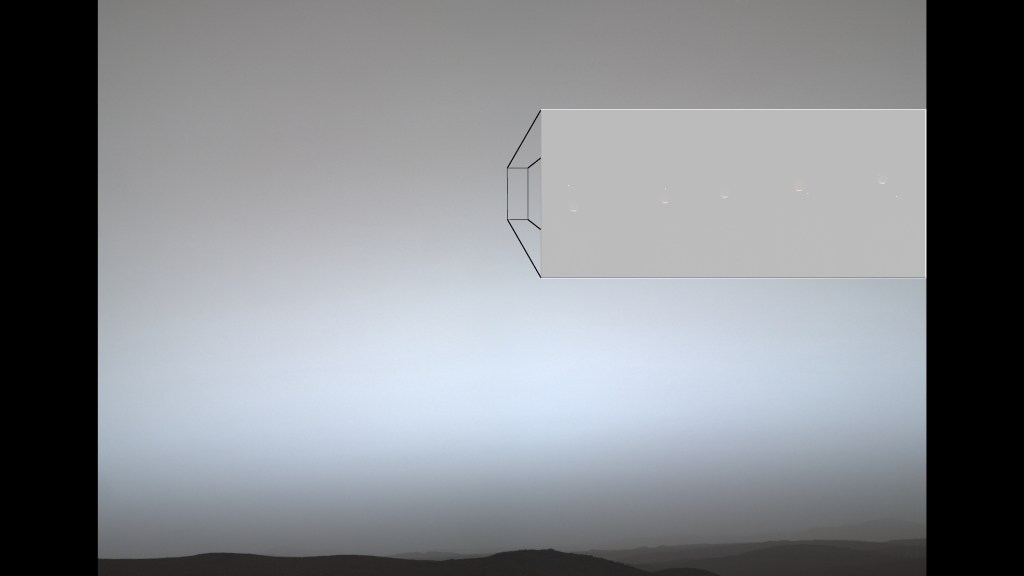
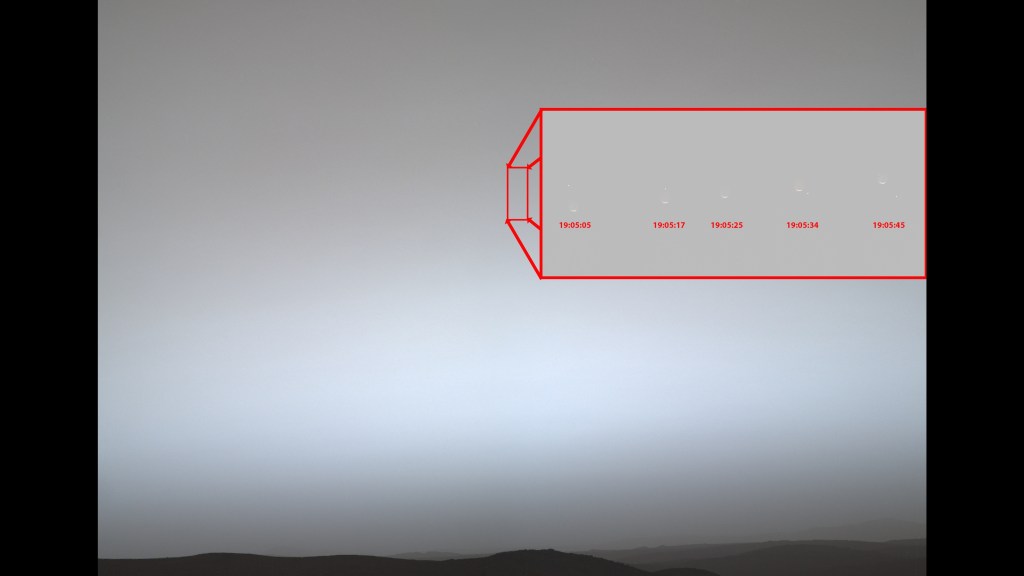
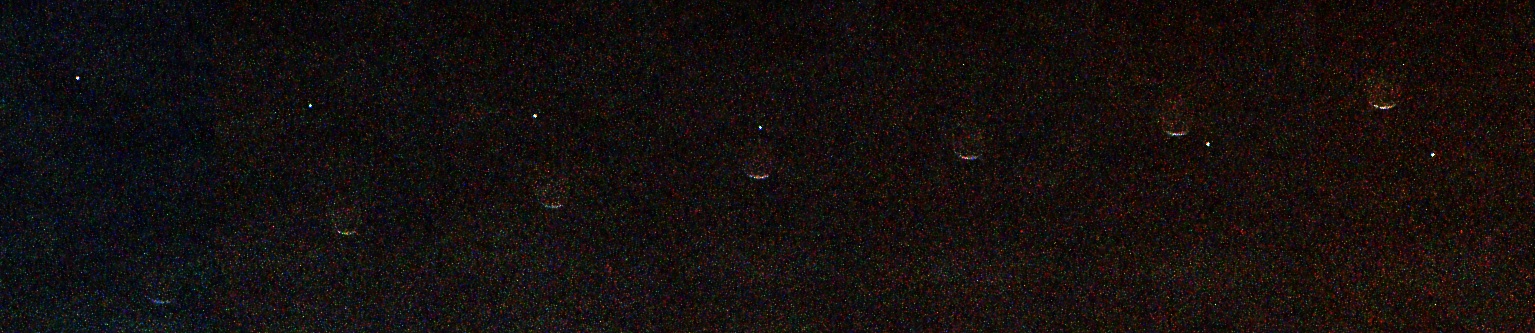
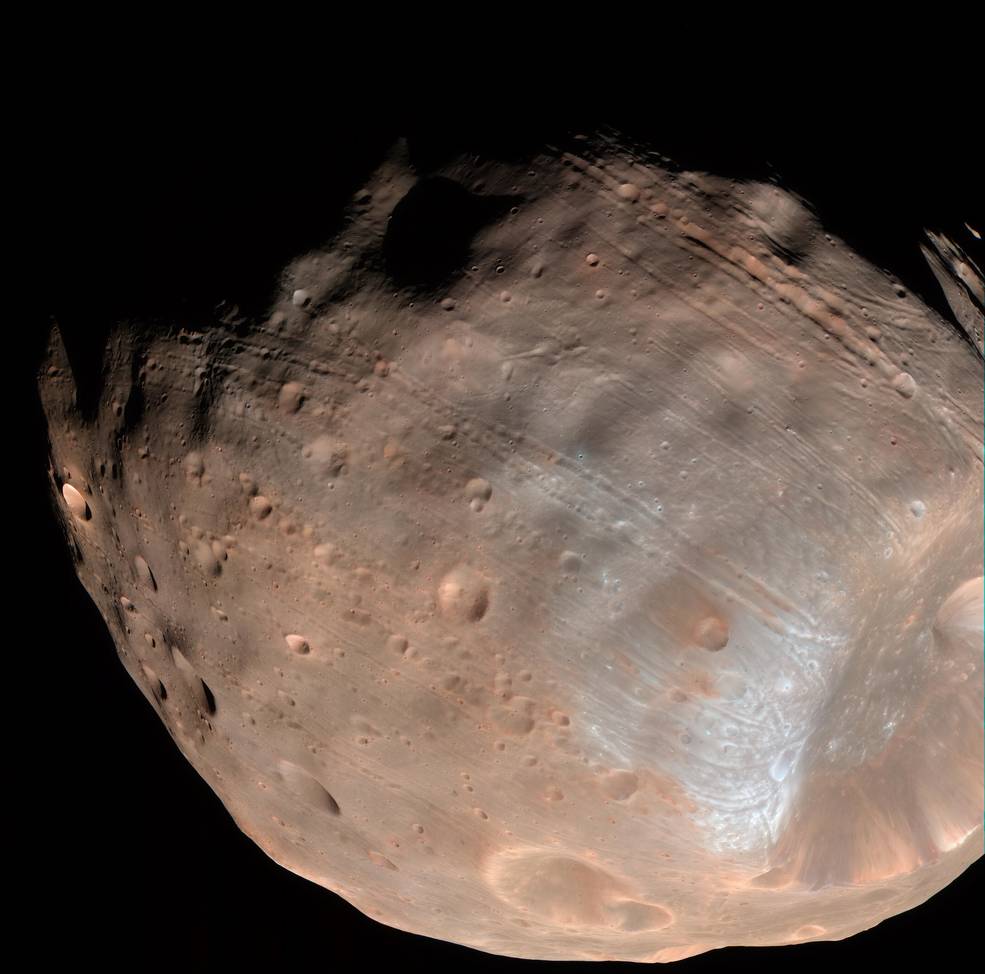
Earth and the Martian moon Phobos dance together in a series of images recently acquired by NASA’s Perseverance Mars rover. Earth appears as a point of light in the Martian sky, disappearing behind the crescent of Phobos, the larger of Mars’ two moons.
This is the first time humanity has captured from the surface of another planet an observation of Earth disappearing behind an object.
The image sequence was taken by the rover’s Mastcam-Z instrument at about 7 p.m. local solar time (the Martian evening time where the rover is located) on July 2, the 1,907th Martian day, or sol, of the mission. In the composite image, Earth travels from the upper left of the frame toward the lower right while Phobos, moving from lower left to upper right, sweeps across its path. In the third frame of the sequence, the two meet, and our planet winks out behind the little moon’s shadowed edge.
“The composite image makes for a unique Earth self-portrait, taken from the surface of another planet, with a Phobos photobomb,” said Justin Maki, the Mastcam-Z deputy principal investigator and imaging scientist for Perseverance at NASA’s Jet Propulsion Laboratory in Southern California.
From where Perseverance sits on the rim of Mars’ Jezero Crater, the two objects could hardly look more different. Phobos, a lumpy, potato-shaped moon about 17 miles (27 kilometers) across at its widest, orbits so close to Mars (4,850 miles, or 7,800 kilometers, away) that when the images were taken, Phobos appears roughly one-third the width of Earth’s Moon as seen from our planet. Some 195 million miles (314 million kilometers) away at the time, Earth is reduced to a single, pixel-size dot.
“Phobos crosses the Martian sky three times a day, and Earth is visible for months at a stretch, but catching one directly behind the other takes planning and a little luck,” said Mark Lemmon, a Mastcam-Z co-investigator at the Space Science Institute in Boulder, Colorado, who planned the observation and assembled the composite.
Transits, occultations, eclipses
Astronomers call the event captured in this observation an occultation: when a larger-appearing body completely blocks the one behind it from the viewer’s standpoint. By contrast, an eclipse occurs when one object moves into the shadow of another. When the Moon passes through Earth’s shadow, it’s called a lunar eclipse; when one object that appears to be the same size as another blocks it, like when the Moon passes before the Sun, it’s known as a solar eclipse.
When the roles are reversed, with a smaller-looking object crossing the face of a larger-looking one, astronomers call that a transit. Perseverance has observed those, too: when Phobos or Deimos crosses the disk of the Sun as seen from Mars. These are sometimes described informally as “Martian solar eclipses.”
More about Perseverance
NASA’s Jet Propulsion Laboratory in Southern California, which is managed by Caltech, built and manages operations of the Perseverance rover on behalf of the agency’s Science Mission Directorate in Washington, as part of NASA’s Mars Exploration Program portfolio. Arizona State University leads the operations of the rover’s Mastcam-Z instrument, working in collaboration with Malin Space Science Systems in San Diego, on the design, fabrication, testing, and operation of the cameras.
For more about Perseverance:
https://science.nasa.gov/mission/mars-2020-perseverance
News Media Contacts
DC Agle
Jet Propulsion Laboratory, Pasadena, Calif.
818-393-9011
agle@jpl.nasa.gov
Karen Fox / Alana Johnson
NASA Headquarters, Washington
240-285-5155 / 202-672-4780
karen.c.fox@nasa.gov / alana.r.johnson@nasa.gov
2026-054
Share
Details
Related Terms
Explore More

Advanced Mini-laboratories Automate Space Station Research
2026-08-05 14:00
Advanced Mini-laboratories Automate Space Station Research
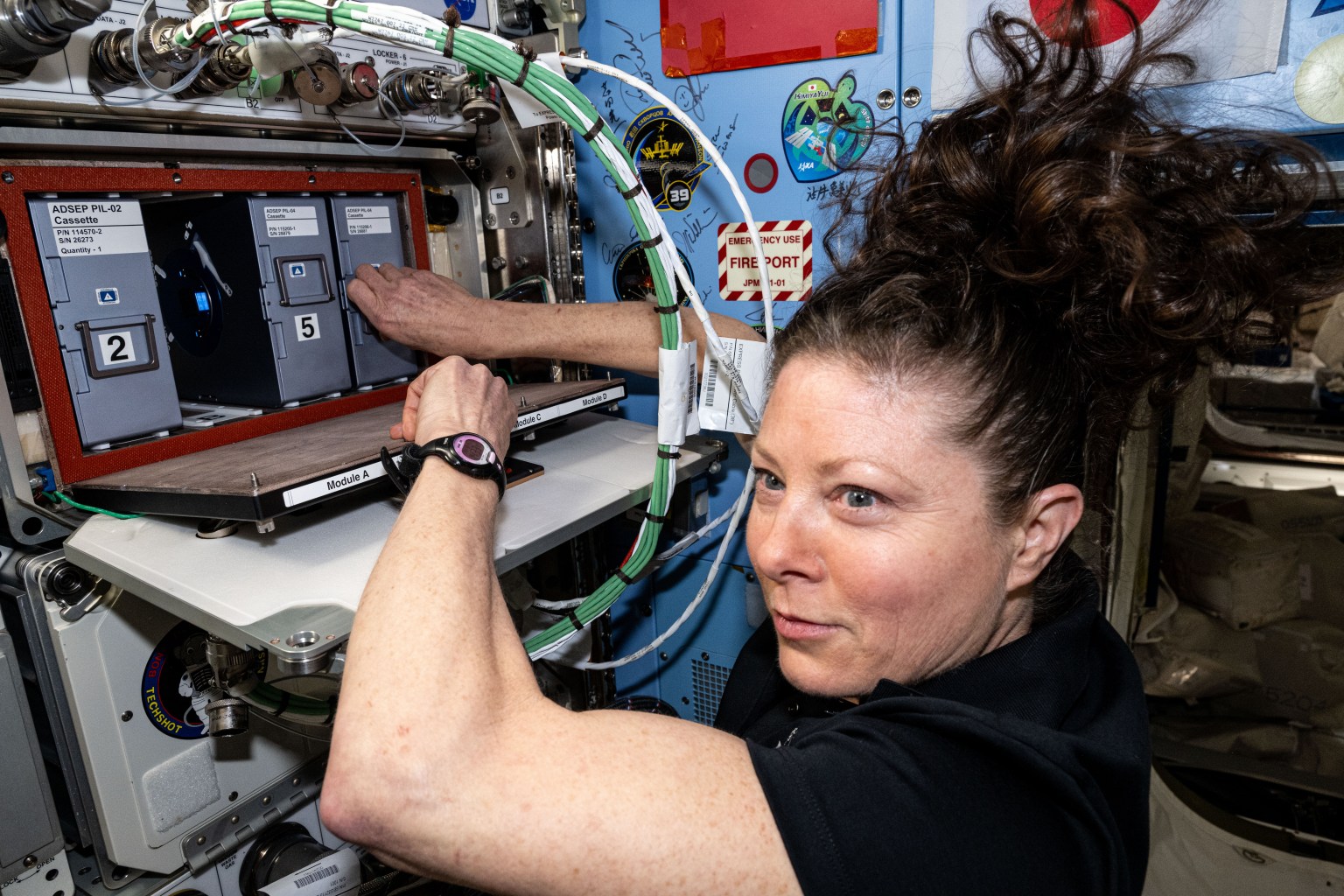
The International Space Station hosts hundreds of science experiments at a time. Some experiments can take hours to perform, and researchers need to account for astronauts’ limited time. Fully automated devices, like Redwire’s ADvanced Space Experiment Processors (ADSEPs), have been designed to conduct more space science with less crew time.
Within each ADSEP facility there are three to four “mini-laboratories”, called cassettes, that allow multiple studies with different needs to be performed at the same time. The latest model, ADSEP-4 can accommodate four cassettes and features imagery capabilities. Since 2017, ADSEPs have conducted and supported two dozen investigations aboard space station with new ones on the horizon.

The latest ADSEP investigations are related to growing seed crystals in space, which can be used to reformulate existing drugs or develop entirely new therapeutics. Previous experiments have shown that the unique microgravity environment allows the growth of larger and higher quality crystals. With Redwire’s Pharmaceutical In-Space Laboratory (PIL-BOX), a cassette-based system that uses the ADSEP facility, researchers can grow improved, space-grown seed crystals.
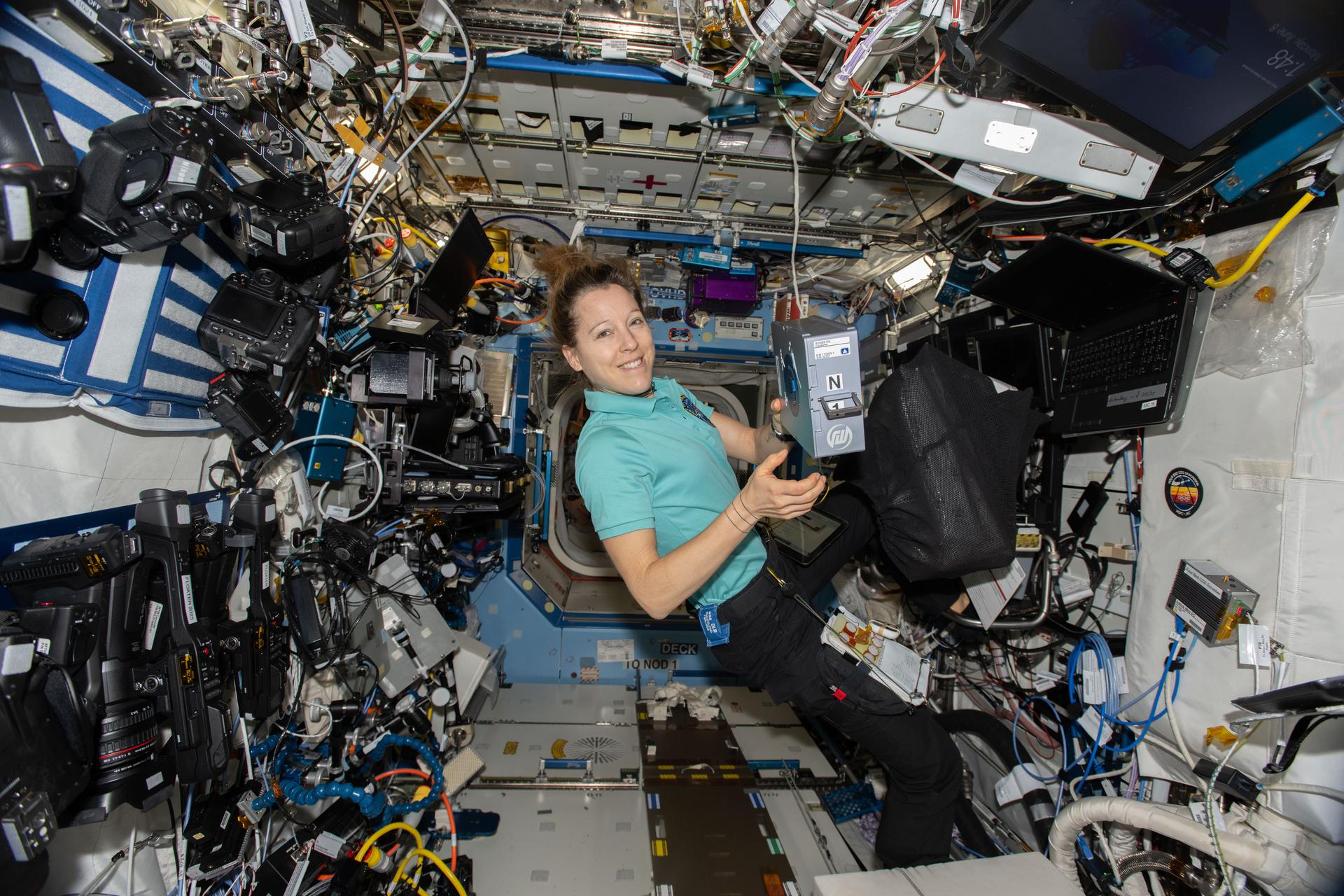
Notable PIL-BOX experiments sponsored by the ISS National Laboratory have focused on cancer research. The ADSEP-PIL-10 investigation, currently being conducted in orbit in collaboration with the Aspera Biomedicines, works to crystallize cancer-blocking and cancer-promoting molecules with the goal of creating an oral cancer medication. ADSEP-PIL-15 crystalized cancer-treating medicines to help refine production, quality, and stability of these cancer drugs. A recent technology demonstration, ADSEP- ICC (Industrial Crystallization Cassette), tested a larger cassette to expand ADSEP function and scale crystallization production for commercial use.
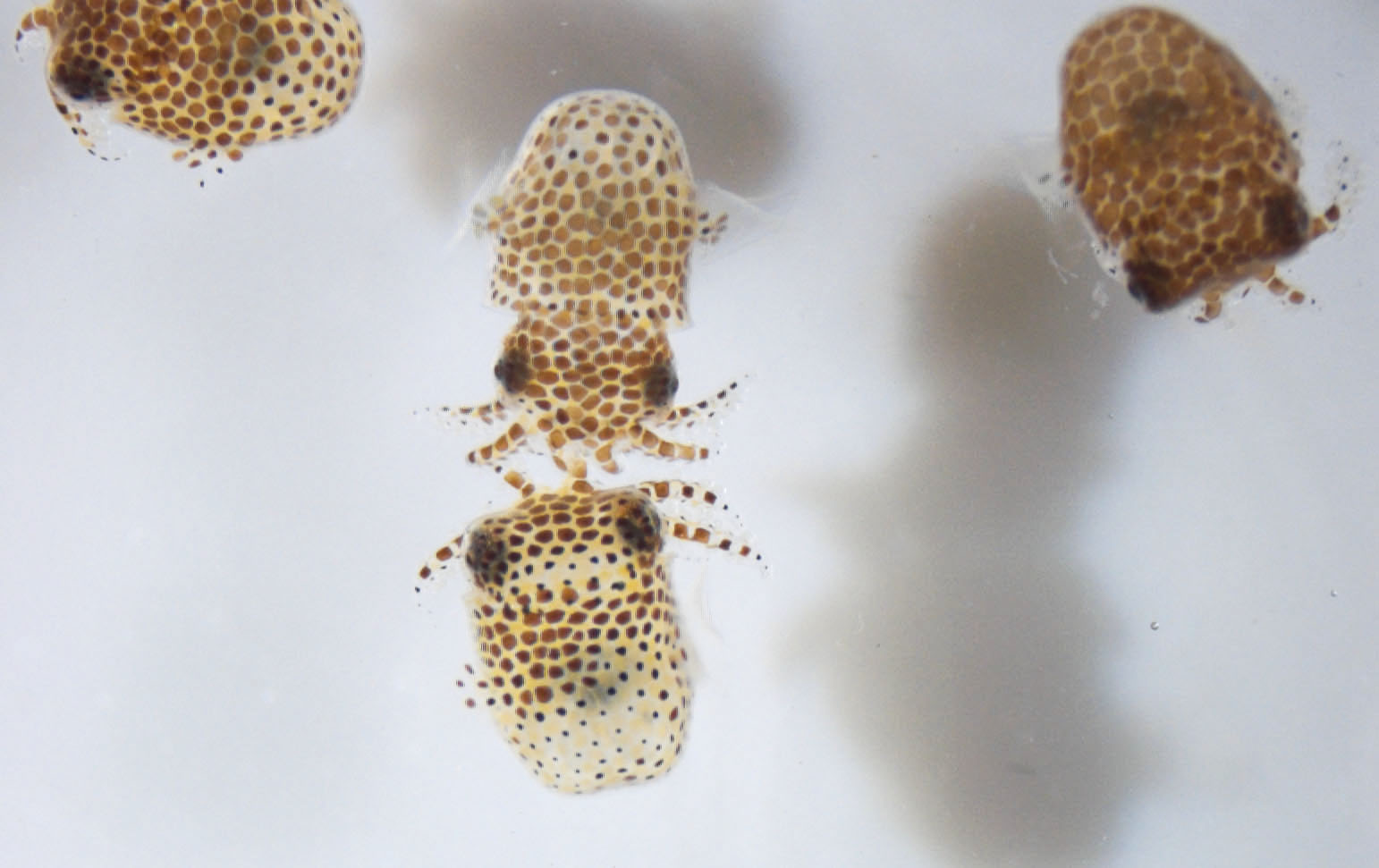
ADSEPs are not limited to crystal growth and can also be used for culturing cells and tissues, studying organisms, and researching materials-sciences. In 2021, ADSEP-UMAMI studied how bobtail squid interacted with beneficial microbes in the space environment. This research found that symbiotic interactions with microbes can lessen a host animal’s stress responses caused by spaceflight and accelerate developmental pathways such as growing neurons and tissues. These findings give insight into the importance of symbiotic relationships in closed ecosystems like spacecraft and have implications for astronauts and their own beneficial bacteria during space missions.
The automation and versatility of ADSEPs permit a wide array of science experiments to be conducted aboard the orbiting laboratory, leading to findings that inform future space missions and are beneficial to people on Earth.
APOD: 2026 August 5 – Spokes on Saturn’s B Ring
2026-08-05 04:05
APOD
Astronomy Picture of the Day
Discover the cosmos! Each day a different image or photograph of our fascinating universe is featured, along with a brief explanation written by a professional astronomer.
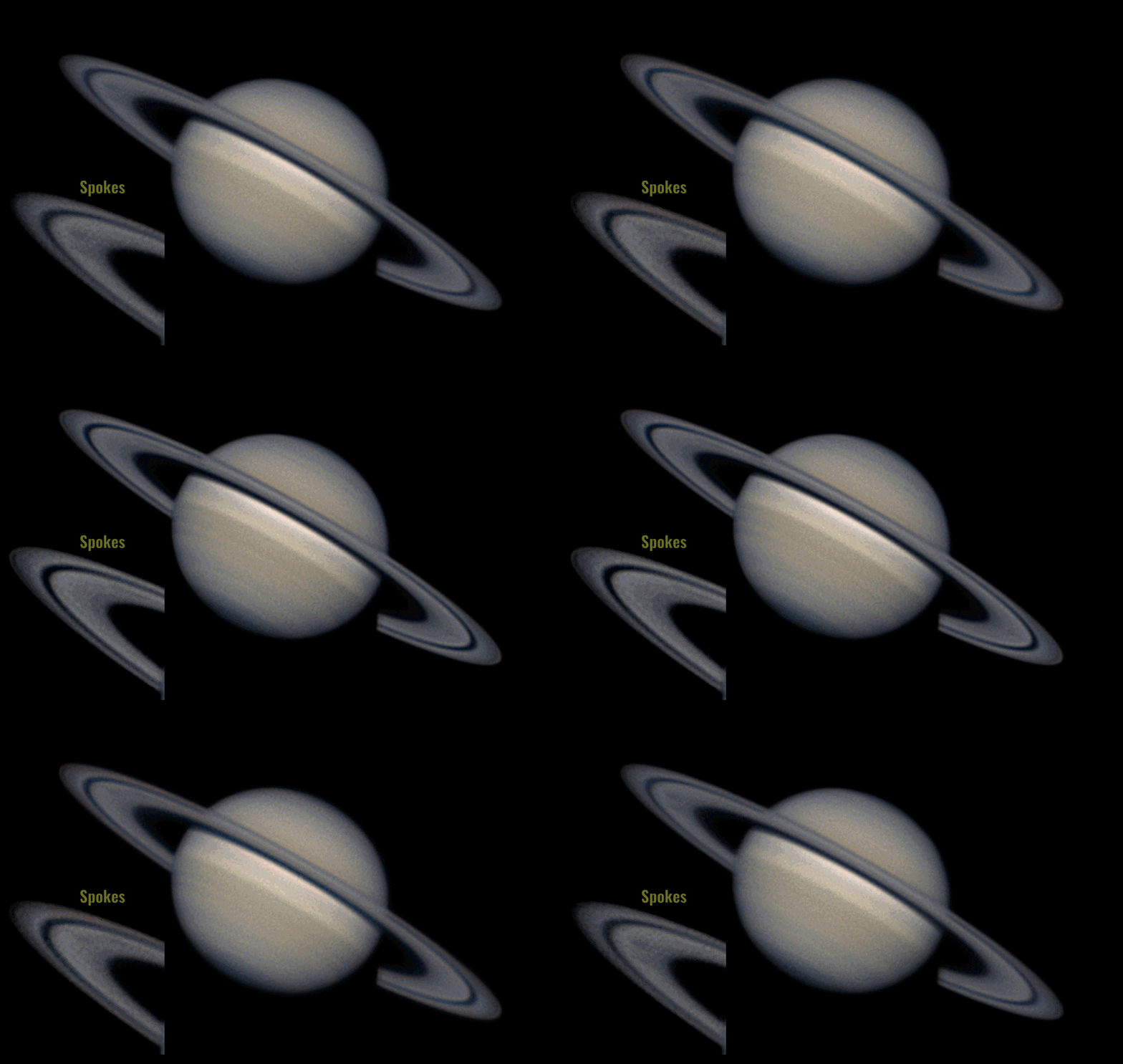
Spokes on Saturn’s B Ring
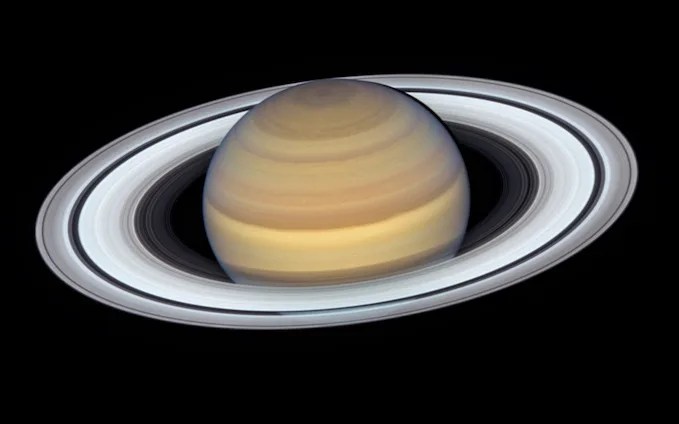
Explanation: Don’t get spooked by Saturn’s ghostly spokes! Today we feature a nearly two-hour timelapse of Saturn and its rings looping forwards and backwards. A day on Saturn is only 10 hours long, so two hours of observation covers quite a bit of its rotation. If you look closely, a ghoulish shadow appears and disappears as Saturn’s B ring rotates. Decades of observation with Voyager 2, Cassini, and Hubble show the appearance of Saturn’s spokes varies with the planet’s seasons. Like Earth, Saturn’s spin axis is tilted compared to the plane of its orbit around the Sun. During Saturn’s equinox, the rings are less tilted away from the Sun and the planet receives more evenly distributed sunlight and solar wind. Although their origin is still uncertain, Saturn’s spokes may be shadows of and reflections off of dust and ice levitating above the rings caused by electromagnetic interactions between the solar wind and the planet’s magnetic field.
Find dark skies and look up this August to witness the Perseid meteor shower uninhibited by the Moon!
Tomorrow’s picture: the COSMOS
| Date: | August 5, 2026 |
|---|---|
| Credit & Copyright: | Brad Croslin |
| Authors & editors: | Robert Nemiroff, Jerry Bonnell, Cecilia Chirenti, Keighley Rockcliffe |
| A service of: |
ASD at NASA / GSFC, NASA Science Activation & Michigan Tech. U. |
The Paradox of Lençóis Maranhenses National Park
2026-08-05 04:01
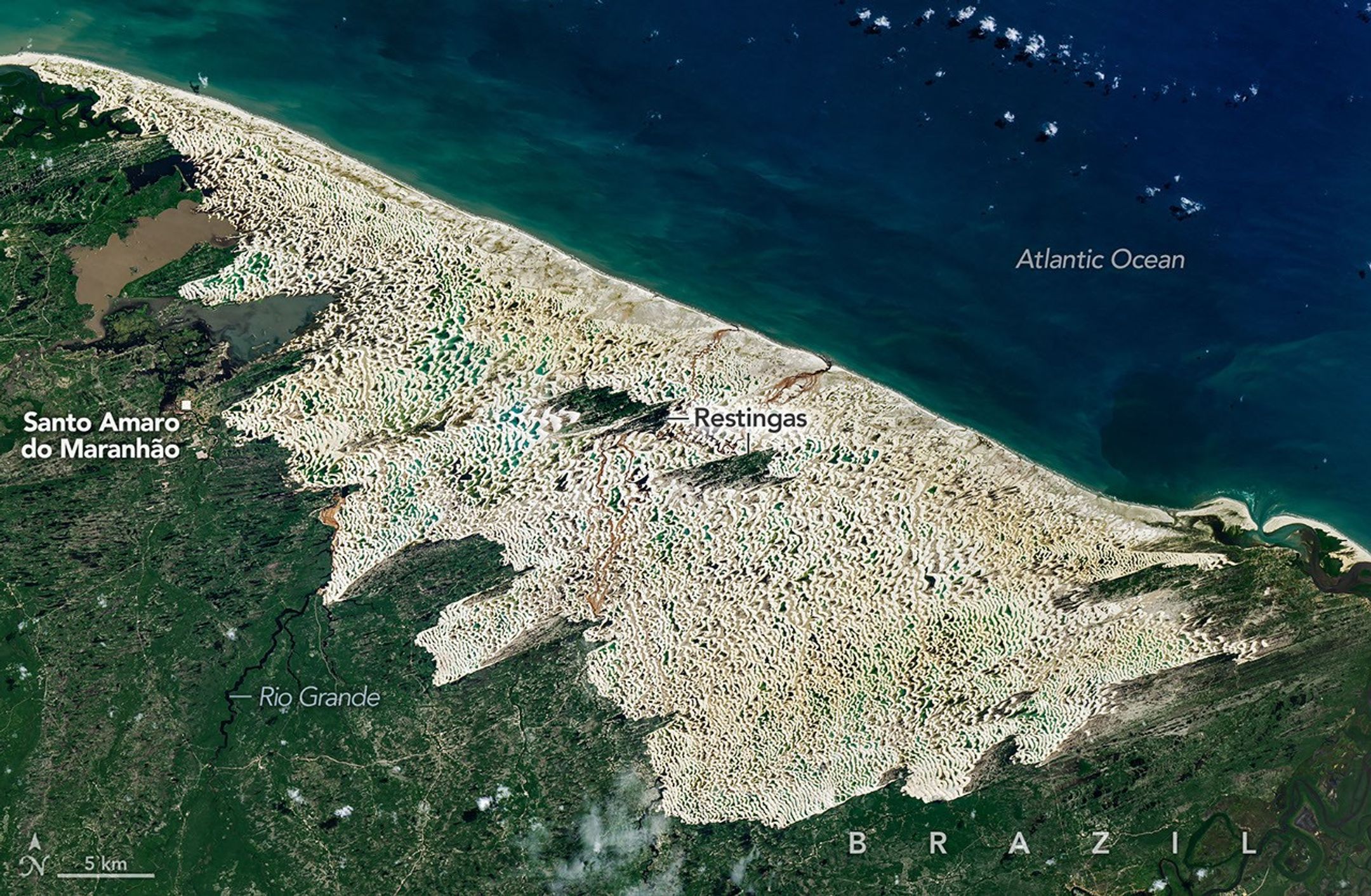
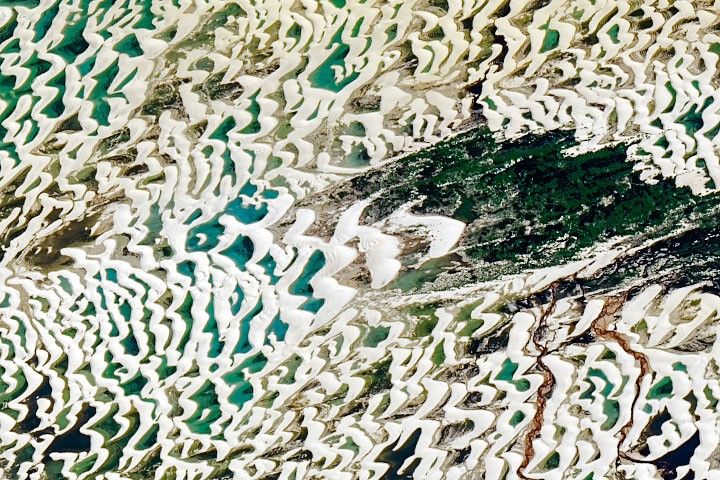
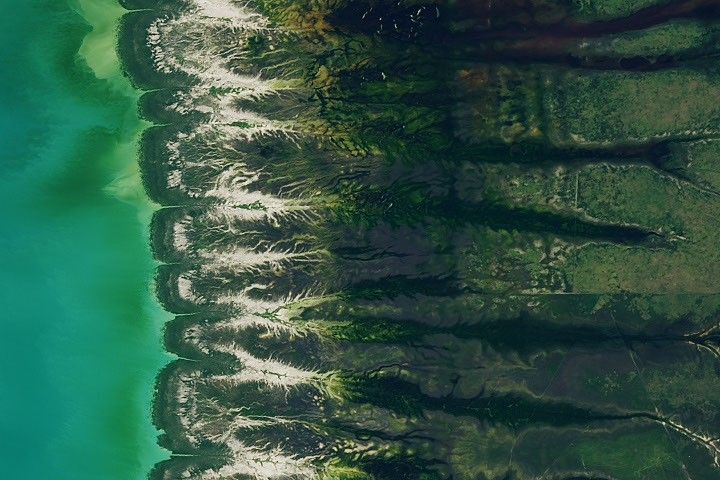
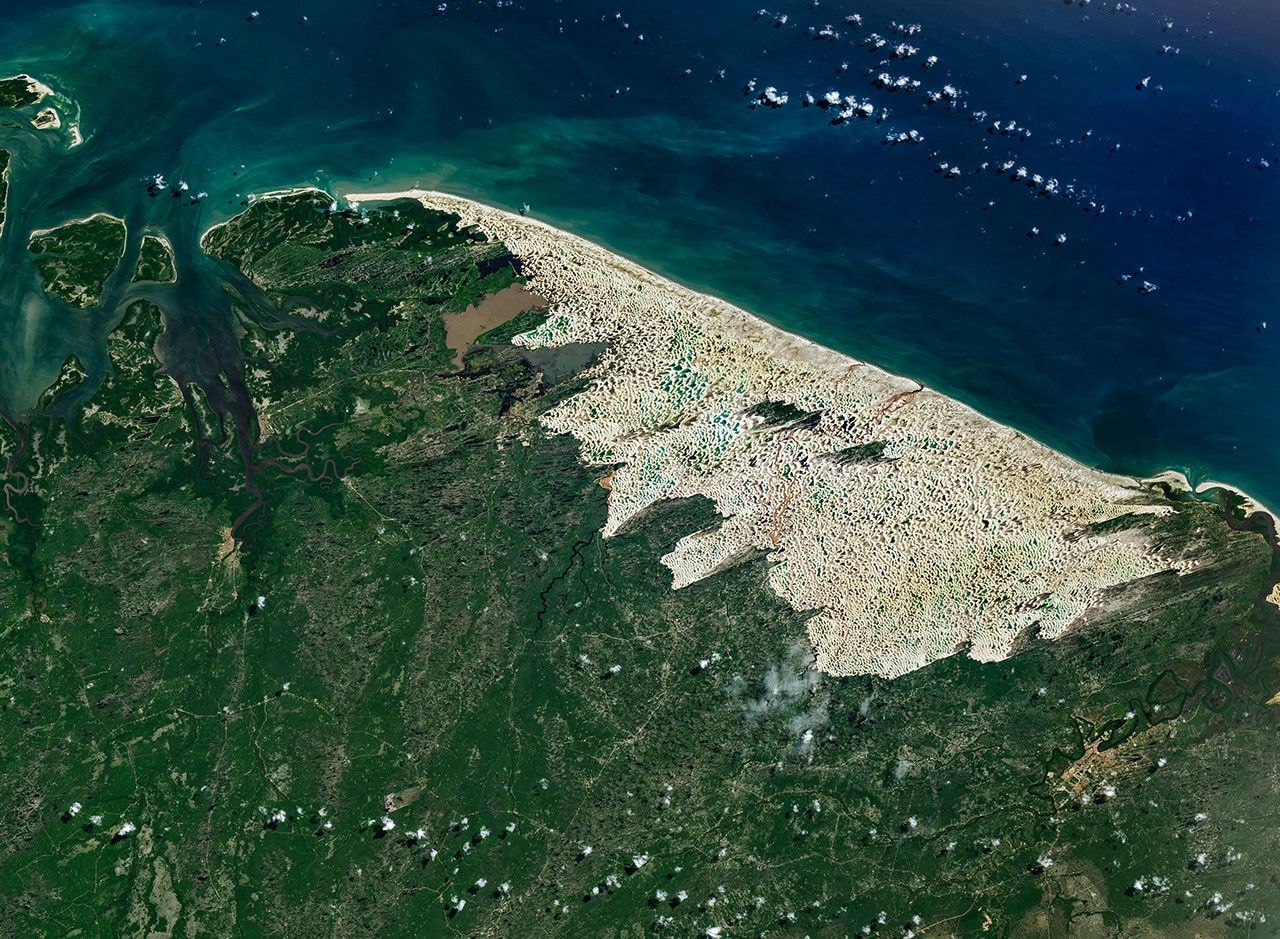
The coastal dune system in Lençóis Maranhenses National Park in northeastern Brazil is among the most surreal landscapes on Earth. At first glance, the park looks like a desert, but it is far from it. This place receives about 125 centimeters (50 inches) of rain per year—slightly more than Seattle and double what falls in London.
The result is a paradox: rows of sparkling white quartz dunes, some rising 30 meters (100 feet), soar over a mosaic of blue and green freshwater lagoons. The park’s name stems from the Portuguese word lençóis, meaning “bedsheets,” a reference that makes the most sense when the park is viewed from afar. From that perspective, the sweeping curves of the largest coastal dune field in South America resemble a rumpled, white bedsheet.
These Landsat 9 images were captured in June 2026, around the time when lagoon water levels typically peak. The partially impermeable layer of bedrock and clay beneath the sand prevents the lagoons from draining during the wet season. However, as rains subside between August and November, the water table falls, and by December, most of the lagoons dry up.
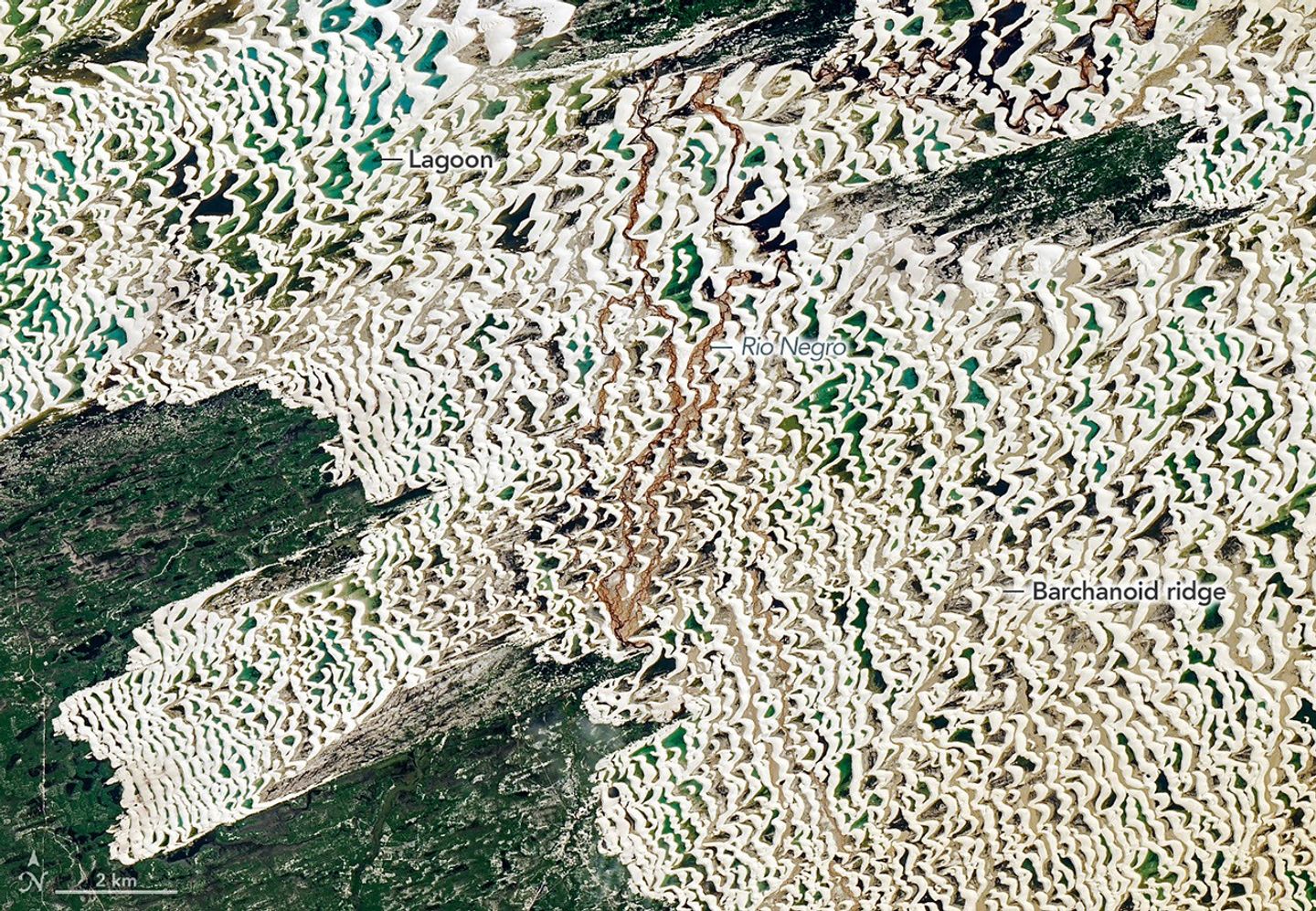
The dune field, a tan area within an expanse of green, is the centerpiece of the park. It spans about 900 square kilometers (350 square miles), roughly the size of New York City. From above, shallower lagoons appear light blue, often taking on turquoise or aquamarine hues as sunlight reflects off the sand below. Deeper lagoons are darker, a result of the deeper water absorbing more red, yellow, and green wavelengths, leaving mostly blue light to scatter back. Suspended sediment, microscopic algae, and dissolved organic matter also contribute to the array of colors, giving some lagoons greener and browner tones.
Green vegetation surrounds the dune field, which sits at the intersection of three Brazilian biomes: the Amazon rainforest to the west, the tropical wooded savannas of the Cerrado to the south, and the dry shrublands and thorn forests of the Caatinga to the east. Closest to the dunes are mangroves and restinga forests, ecosystems well adapted to sandy, coastal soils.
The dune field exists because of the rare convergence of geologic and climatic conditions. Rivers, including the Mearim and Parnaíba, deliver the key ingredient—quartz sand—to this unusually flat portion of the Maranhão coastline in massive quantities. It has accumulated here over the past few hundred thousand years driven in part by fluctuating sea levels and shoreline transgression and regression. Persistent easterly trade winds have also played a critical role. During the dry season, winds often reach at least 50 kilometers per hour, fast enough to build the dunes and push them westward at a pace of roughly 4 to 25 meters per year. That is fast for sand dunes, though not the fastest in the world. Satellites have tracked small barchan dunes in Namibia’s Sperrgebiet region moving at rates exceeding 80 meters per year.
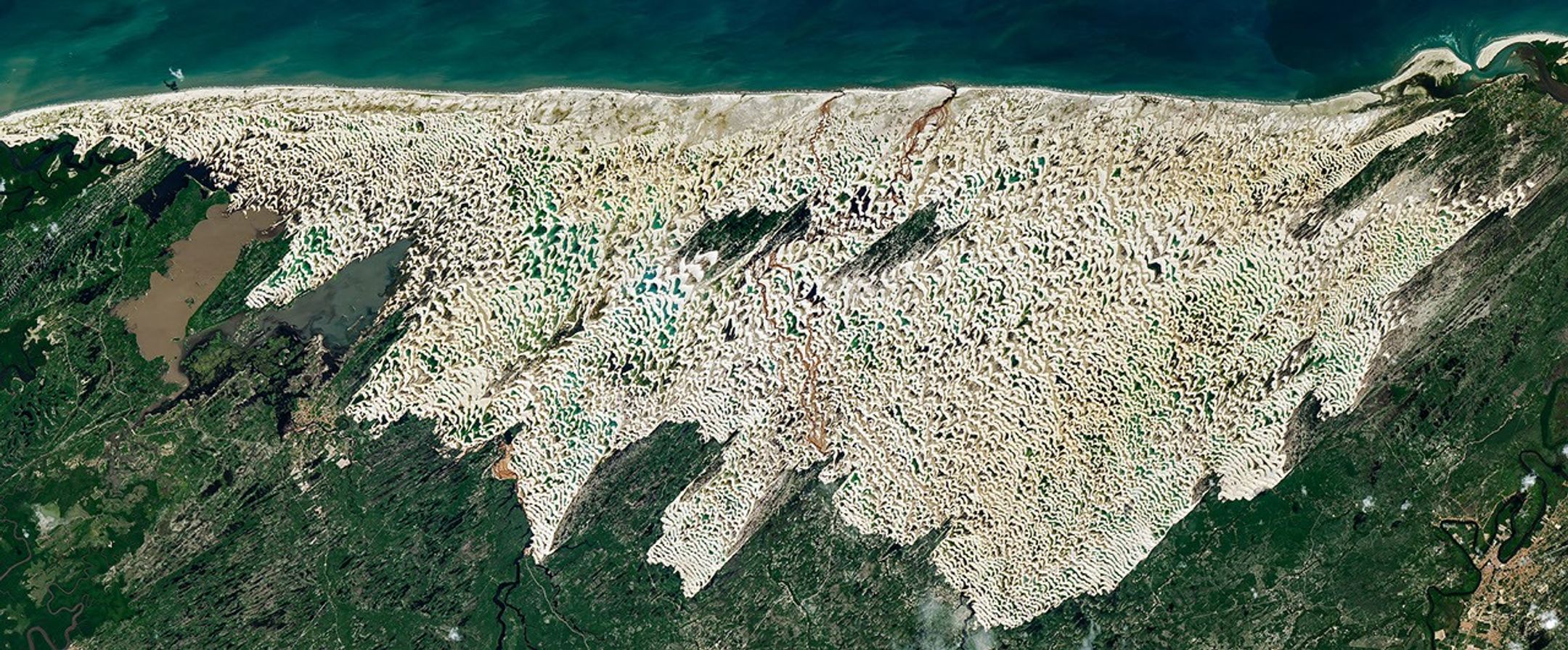
Landsat images, meanwhile, show the dune field at Lençóis Maranhenses has extended westward by about 0.5 kilometers between 1986 and 2026 in some areas due to the conveyor belt of dunes running inland from the coastline. The nearly constant movement of sand prevents vegetation from becoming established across much of the dune field.
UNESCO declared the park a World Heritage site in 2024, citing its remarkable geology and rich biodiversity. The park is home to more than 850 documented species, including fish, birds, reptiles, mammals, and phytoplankton. Among them are four endangered species, including the neotropical otter, West Indian manatee, scarlet ibis, and oncilla (a type of wild cat). Among the lagoons’ most remarkable inhabitants are the trahira (Hoplias malabaricus), a predatory fish species with large canine-like teeth. During the dry season, it burrows far enough under the sand to find damp mud, where it enters a dormant state, emerging after the rains to hunt insects and other fish.
NASA Earth Observatory images by Michala Garrison, using Landsat data from the U.S. Geological Survey. Story by Adam Voiland.
References & Resources
- Atlas Obscura (2020, July 16) The Brazilian Desert That Turns Into a Thousand Lagoons. Accessed August 4, 2026.
- C.M. de M. Luna, M. (2011) Model for the genesis of coastal dune fields with vegetation. Geomorphology, 129(3-4), 215-224.
- CNN (2022, March 9) The unknown and otherworldly landscape of Brazil’s Lençóis Maranhenses National Park. Accessed August 4, 2026.
- Global Alliance of National Park (2026) Lencois Maranhenses National Park. Accessed August 4, 2026.
- Google Arts & Culture Lençóis Maranhenses National Park, Brazil. Accessed August 4, 2026.
- Luís Silva dos Santos, A., et al. (2019) Modelling Dunes from Lençóis Maranhenses National Park (Brazil): Largest dune field in South America. Scientific Reports, 9(7434).
- Marques, M., et al. (2015) Coastal plain forests in southern and southeastern Brazil: ecological drivers, floristic patterns and conservation status. Brazilian Journal of Botany, 38, 1–18.
- Miranda, J.P., et al., (2012) Reptiles from Lençóis Maranhenses National Park, Maranhão, northeastern Brazil. ZooKeys, 246, 51-68.
- National Geographic (2010, July) A Sea of Dunes. Accessed August 4, 2026.
- Parteli, E.J.R. (2021) Profile measurement and simulation of a transverse dune field in the Lençóis Maranhenses. Accessed August 4, 2026.
- Revista pesquisa fapesp (2013) The secrets of the Lençóis Maranhenses. Accessed August 4, 2026.
- Smithsonian Magazine (2014, June 20) How Do Thousands of Clear Blue Lagoons End Up In These Brazilian Sand Dunes? Accessed August 4, 2026.
- UNESCO (2024) Lençóis Maranhenses National Park. Accessed August 4, 2026.
You may also be interested in:
Stay up-to-date with the latest content from NASA as we explore the universe and discover more about our home planet.
Sites relevant to the start of the American Revolutionary War are interspersed throughout the modern-day Boston metropolitan region.
The colonial communities of “America’s historic triangle” played defining roles in the road to American independence.
Along the northeast side of the Capital Beltway in Maryland, green spaces weave through the developed landscape.




NASA Will Attempt to Observe Rocket Part’s Lunar Impact
2026-08-04 20:00
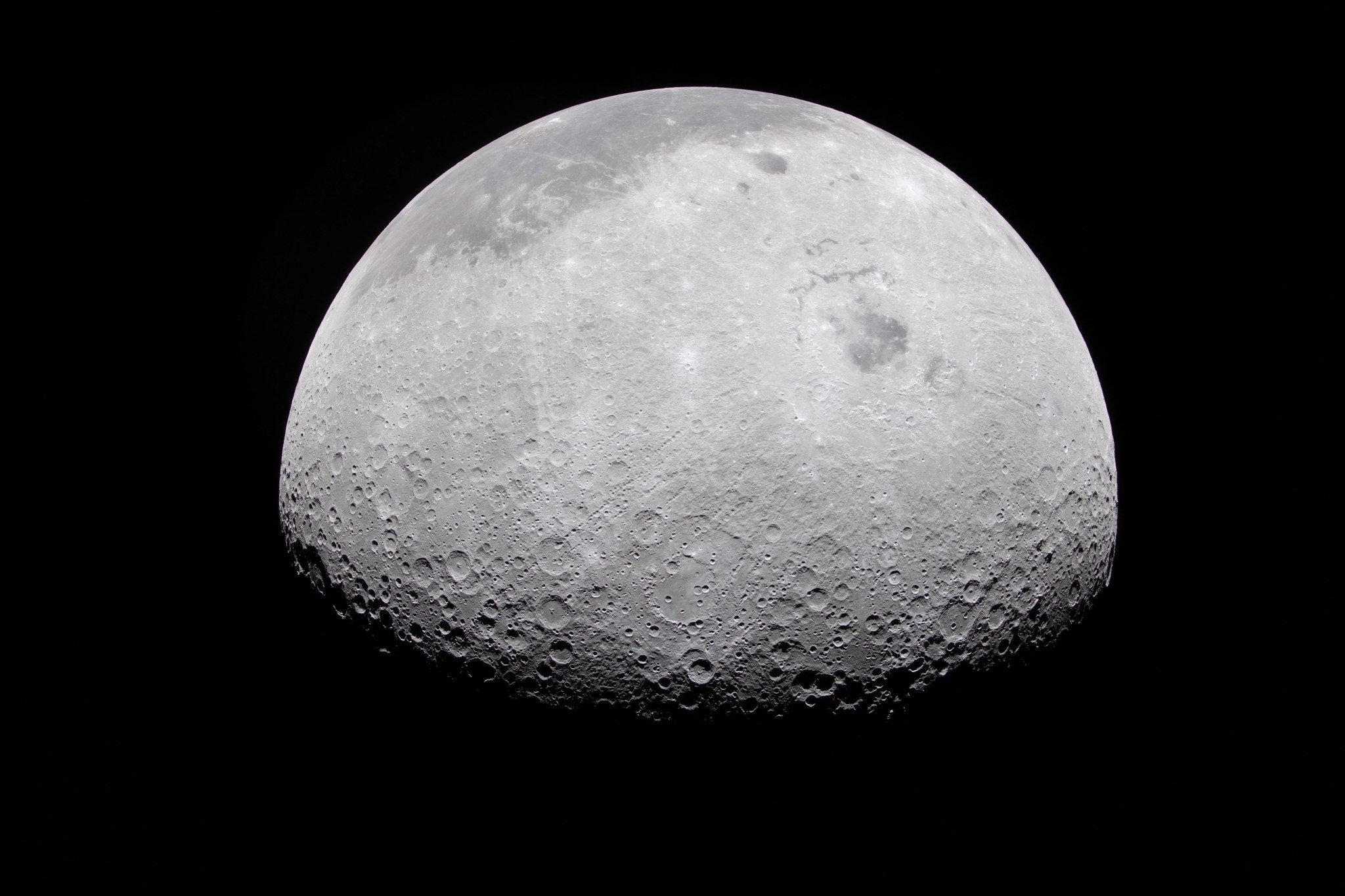
Using ground-based telescopes and space-based assets, NASA and SpaceX are tracking a used Falcon 9 upper stage from a commercial mission expected to impact the Moon on Wednesday, Aug. 5, near the Einstein and Bell craters. The impact poses no danger to Earth and NASA scientists are planning to collect lunar data from the event and refine techniques for tracking objects in space.
On Jan. 15, 2025, SpaceX launched the Falcon 9 rocket and successfully deployed Firefly Aerospace’s Blue Ghost 1 lunar lander to the Moon under NASA’s CLPS (Commercial Lunar Payload Services) initiative. Solar activity and gravitational forces caused the stage’s unplanned return to the Moon. NASA and SpaceX remain in communication about the upper stage and its flight path.
Independent astronomers first identified the trajectory using publicly available data. NASA’s Center for Near Earth Object Studies at the agency’s Jet Propulsion Laboratory in Southern California, which tracks natural objects that could pose hazards to Earth, later confirmed the stage has a 100% chance of impacting the Moon. NASA will continue tracking it as part of training operations.
Because the Moon has no atmosphere to slow incoming objects, it is struck by meteoroids daily. Human‑made object impacts are far less common but do occur. The rocket stage is expected to create a crater about 60 feet wide and 12 feet deep and throw dust and rock outward as ejecta. For comparison, a meteoroid with the same energy as the upper stage hits the Moon about every six days, so the lunar surface is constantly absorbing impacts with the same force. Despite the disturbance, observing impacts gives scientists valuable insight by revealing how ejecta plumes behave, helping to understand the Moon’s geology and refine models that guide future exploration and science missions.
The impact will not be visible to the naked eye on Earth, but NASA will attempt to observe it in real time. The Meteoroid Environments Office at the agency’s Marshall Space Flight Center in Huntsville, will use ground‑based telescopes to image the impact; however, weather and lighting conditions may make viewing difficult.
Additionally, NASA’s Lunar Reconnaissance Orbiter and the ShadowCam instrument aboard South Korea’s Korea Pathfinder Lunar Orbiter will look for chances to image the site before and after the impact. Image availability will depend on lighting, orbital timing, and spacecraft position, and it may take several days to receive imagery. Any data collected will help scientists better understand artificial impacts and their exploration implications.
Although unplanned in this instance, disposing of upper stages on the lunar surface is a technically accepted and safe method and, in some cases, can be the only practical option for missions in low lunar orbit. Many operators choose controlled impacts because they provide predictable and trackable end of life outcomes.
NASA is committed to debris mitigation and demonstrating responsible disposal practices that safeguard Earth, its orbital environment, and other planetary bodies while enabling discoveries that deepen our understanding of the solar system and benefit humanity.
TechCrunch - Latest
Meet the eight startups pitching at Startup Battlefield Australia
2026-08-05 17:02
PSA: Apple’s Private Relay can leak your real IP address
2026-08-05 16:52
Shopify says AI search is driving more traffic and sales, not replacing Google
2026-08-05 15:56
Hark previews its browser use agent for completing tasks
2026-08-05 15:46
Zoox to start charging for robotaxi rides in Las Vegas
2026-08-05 15:06