📰 Trending Topics
Google News - Trending
Who's Trending Up, Trending Down After One Week of Camp - Sports Illustrated
2026-08-05 20:24
These Raiders Are Trending Down In First Week Of Camp - Yahoo Sports
2026-08-06 01:39
Google News - Technology
Samsung Galaxy Z series foldables are breaking pre-order records in the US and Korea - Mashable
2026-08-05 23:07
- Samsung Galaxy Z series foldables are breaking pre-order records in the US and Korea Mashable
- Samsung Officially Launches Galaxy Z Fold8 Ultra, Fold8, Flip8, Watch Ultra2 and Watch9 samsung.com
- Samsung Pre-Orders for Latest Foldables Jump 30% From Last Year Bloomberg.com
- The 2-week-old Galaxy Z Fold 8 Ultra shows a deeper crease than the 4-month-old Oppo Find N6 PhoneArena
- Samsung insists the Galaxy Z Fold 8 is ‘perfect’ for ‘full-screen’ video – it’s not 9to5google.com
Pokémon Pokopia Expansion Pass—Part 1: Bubbly Basin is Available Today - Pokemon.com
2026-08-05 13:06
- Pokémon Pokopia Expansion Pass—Part 1: Bubbly Basin is Available Today Pokemon.com
- Pokémon Pokopia Expansion Pass paid DLC Part 1, Bubbly Basin is set to release on 5 August! Announcing additional information on Part 2 of the Paid DLC! There’s more new details on the Ver. 2.0.0 Free software update will be released on the same day! nintendo.com
- ‘Pokémon Pokopia’ 2.0 Patch Notes: An Enormous, Welcome Update Forbes
- Dive into Pokémon Pokopia Expansion Pass—Part 1: Bubbly Basin Pokemon.com
- Pokemon Pokopia Bubbly Basin DLC Guide IGN
Minecraft Gets Nintendo Switch 2 Version With an Upgrade Path for Switch 1 Owners - IGN
2026-08-05 21:14
- Minecraft Gets Nintendo Switch 2 Version With an Upgrade Path for Switch 1 Owners IGN
- Minecraft for Nintendo Switch™ 2 is coming October 27th! Minecraft
- 'Minecraft' Officially Confirmed for Nintendo Switch 2 Launching in October Hypebeast
- 'Minecraft' Is Officially Confirmed for Nintendo Switch 2 With a Big Glowup Polygon.com
- Kingdom Come: Deliverance 2 Star to Open Medieval Pub in Prague ixbt.games
Minecraft 26.40 update out now, patch notes - Nintendo Everything
2026-08-05 18:43
- Minecraft 26.40 update out now, patch notes Nintendo Everything
- Bedrock Edition 26.40 Minecraft
- Minecraft Adds Concrete Stairs After Making Fans Wait Nearly A Decade And People Are Excited Kotaku
- Minecraft tests abandoned camp maps and concrete stairs in new feature drop PCQuest
- Minecraft 26.3 Snapshot 7 Patch Notes IGN
iOS 27’s best new Messages feature is all about saving you time - 9to5Mac
2026-08-05 14:05
- iOS 27’s best new Messages feature is all about saving you time 9to5Mac
- Safari on iPhone Is a Much Friendlier Experience in iOS 27 CNET
- Apple Delaying iOS 27 Beta 5? Here’s When to Expect the Next Update Geeky Gadgets
- iOS 27 beta 4 is out now with further refinements and fixes Macworld
- 25 New Things Your iPhone Can Do in iOS 27 MacRumors
NASA - Breaking News
APOD: 2026 August 6 – New Sharpest Image of the Sun Uncovers Instability
2026-08-06 04:05
APOD
Astronomy Picture of the Day
Discover the cosmos! Each day a different image or photograph of our fascinating universe is featured, along with a brief explanation written by a professional astronomer.

New Sharpest Image of the Sun Uncovers Instability
Explanation: What does the new sharpest image of our Sun show? Instability. To be clear, a certain kind of interactive process called the Kelvin-Helmholtz instability (KHI). This instability can create waves and swirls when two streams flow past each other — in this case variable streams of solar magnetic plasma. Long hypothesized to occur on the Sun’s surface, KHI streaks and swirls were confirmed in just-released dramatic high-resolution images taken recently by the Inouye Solar Telescope in Hawaii, USA. The featured false-yellow image, actually taken in deep blue, is the highest resolution image yet of the Sun in visible light. It spans about the radius of the Earth, but its finest details are city sized. Visible are several smooth tops of changing solar granules, while the edges of the flower-like structures have been found to harbor multiple KHI swirls. Future research may investigate how the KHI helps move energy, magnetic fields, and may even heat the surrounding solar corona.
Tomorrow’s picture: Rubin’s COSMOS
| Date | August 6, 2026 |
|---|---|
| Credit | NSF, NSO, AURA, MPS, Inouye Tel |
| Authors & editors: | Robert Nemiroff, Jerry Bonnell, Cecilia Chirenti, Keighley Rockcliffe |
| A service of: |
ASD at NASA / GSFC, NASA Science Activation & Michigan Tech. U. |
NASA’s IXPE May Have Proven 90-Year-Old Theory
2026-08-05 18:49
4 min read
NASA’s IXPE May Have Proven 90-Year-Old Theory
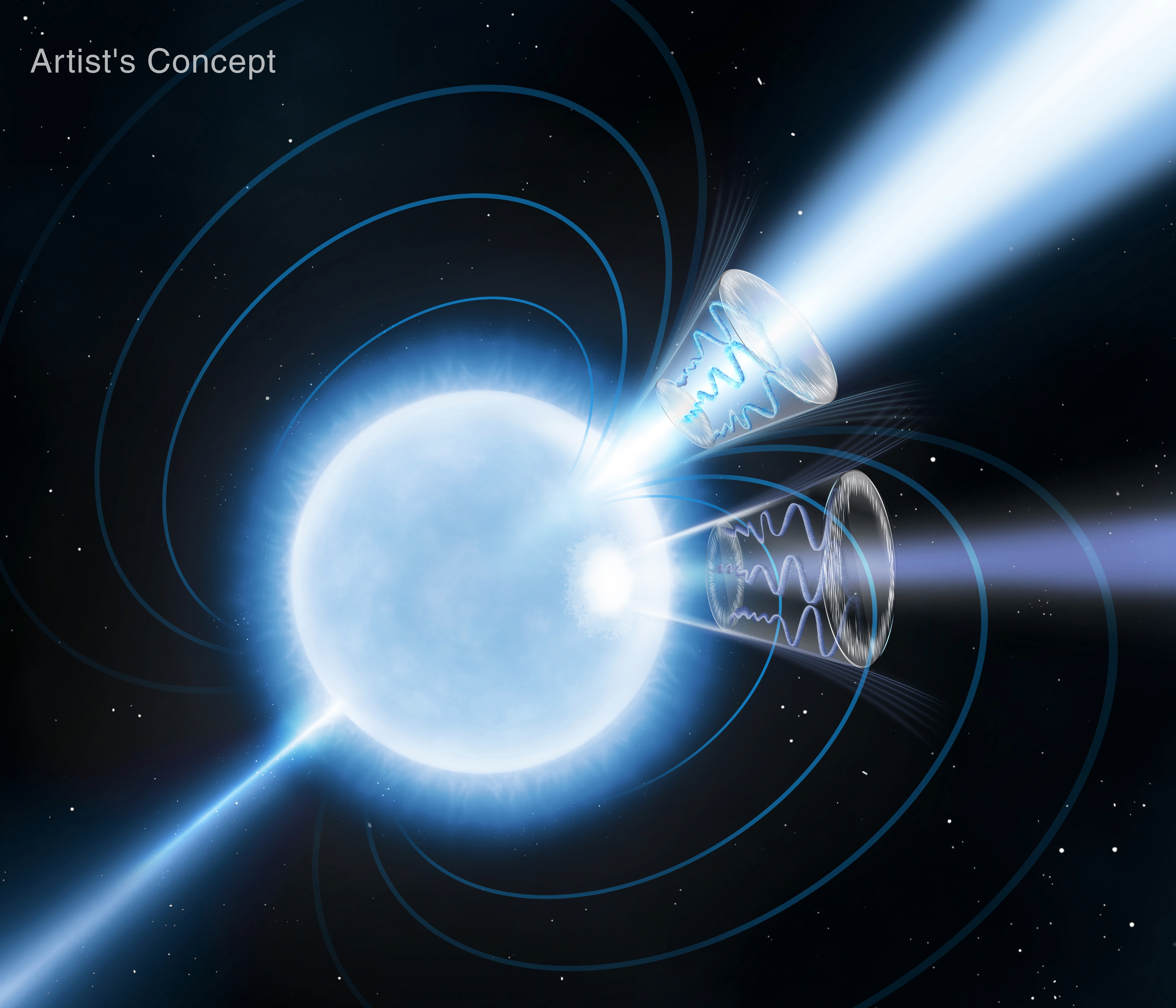
A first of its kind measurement of a magnetar may have captured empty space behaving in a way physicists have predicted for 90 years, but never directly observed. The results published Wednesday in Nature.
Fast facts
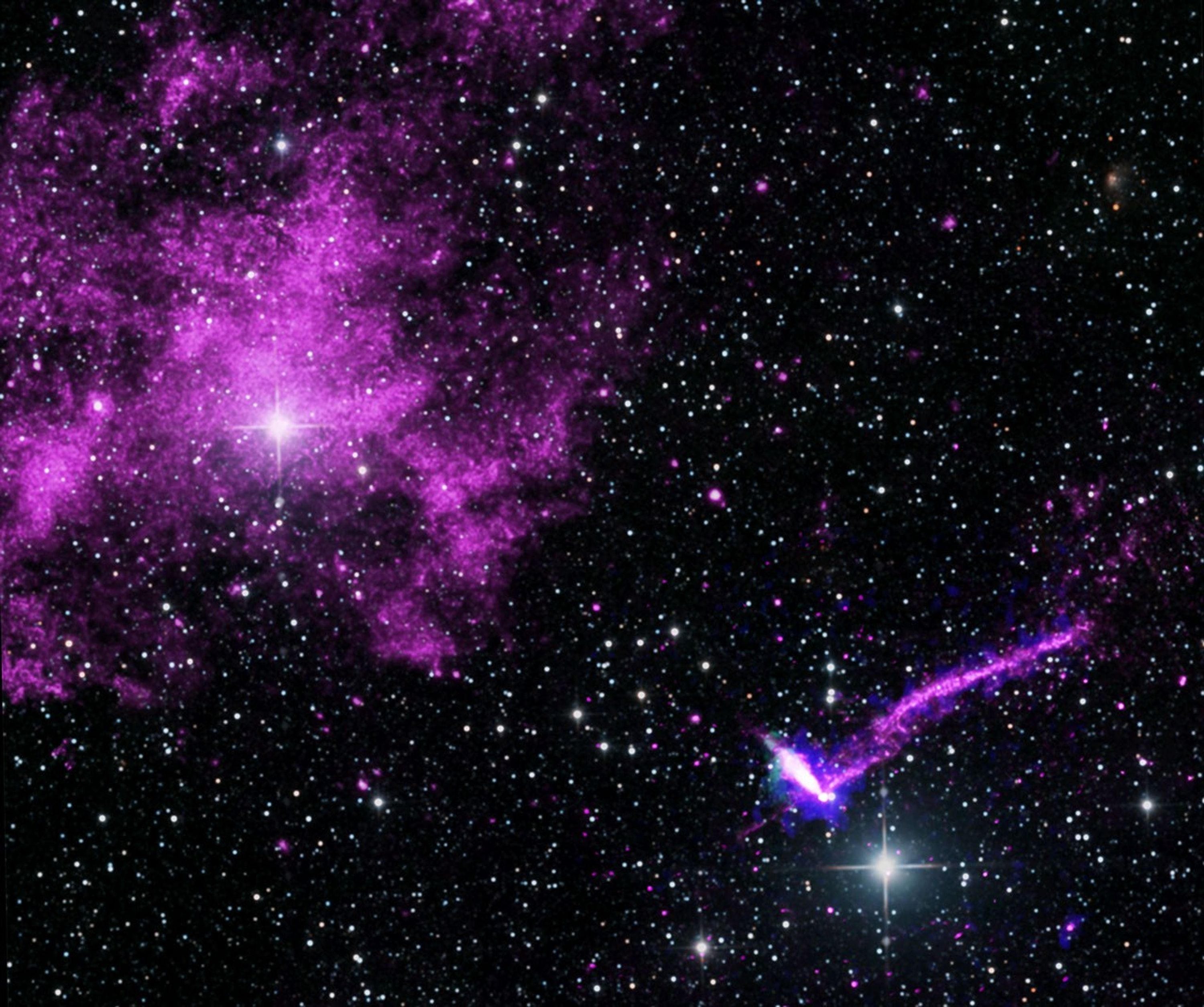
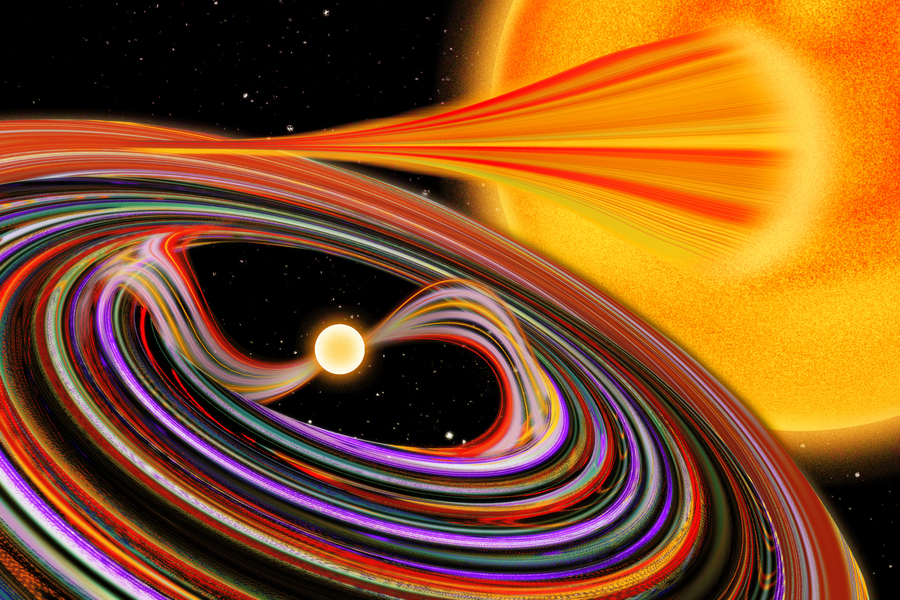
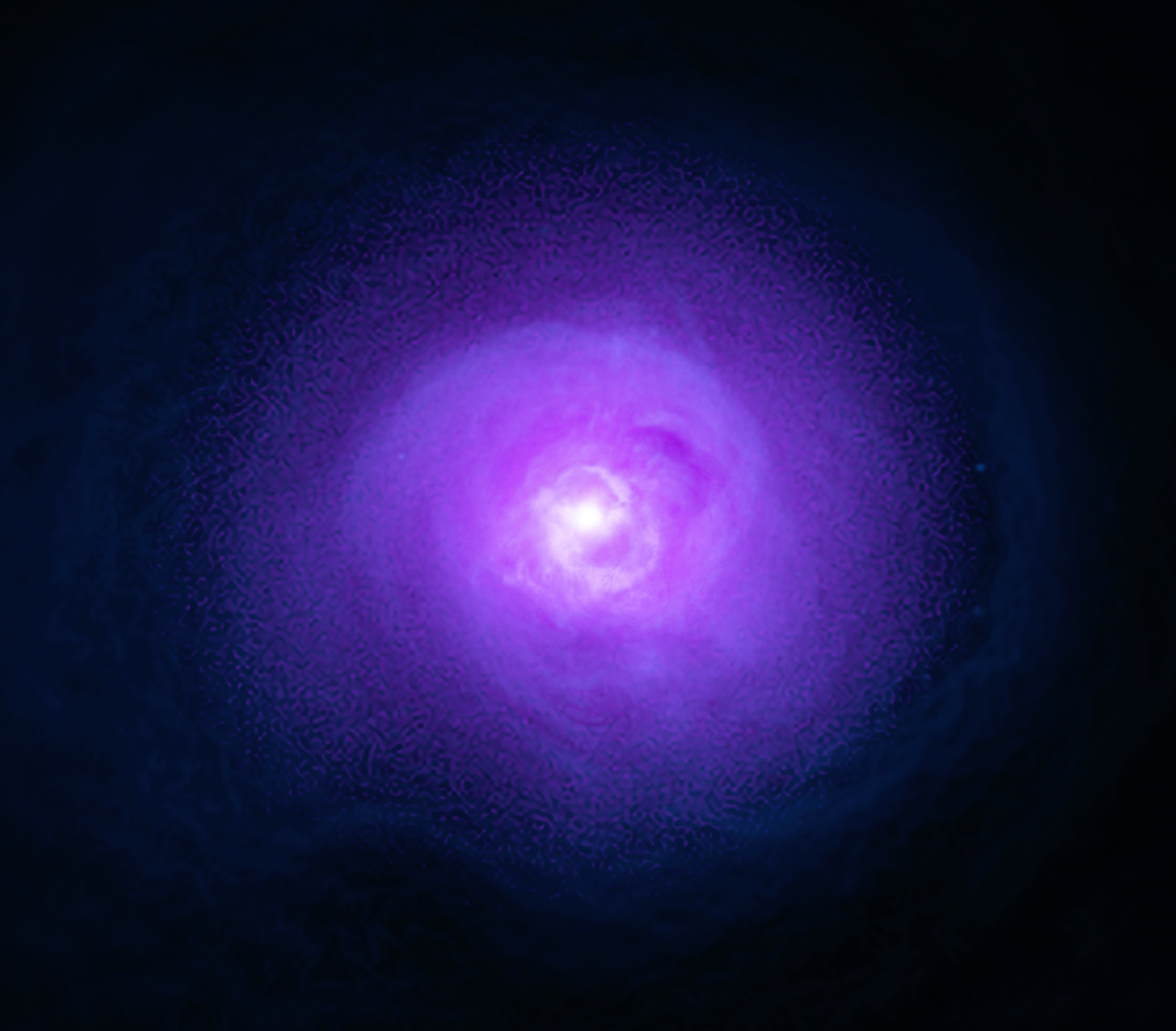
- Magnetars are a special class of neutron stars with ultra-strong magnetic fields, the strongest of any object in the observable universe, around a trillion times stronger than the strongest permanent magnets ever built on Earth. These super magnetic neutron stars offer glimpses into the physics of intense environments that cannot be found anywhere else.
- Neutron stars are the leftover cores of massive stars, formed at the end of their life cycles, that possess more mass than the Sun, condensed down to the size of a city, making them natural laboratories for studying extreme physics.
Scientists using NASA’s IXPE (Imaging X-ray Polarimetry Explorer) conducted more than 140 hours of observations of the magnetar 1E 1547-5408, between March and April 2025, alongside NASA’s NICER (Neutron Star Interior Composition Explorer) and Murriyang, CSIRO’s Parkes radio telescope, owned and operated by Australia’s national science agency. This was the first-ever coordinated radio and X-ray polarization measurement of a magnetar.
1E 1547-5408, spinning in a full rotation every 2 seconds, is a unique magnetar that consistently emits bright radio energy and X-ray light, for reasons scientists are still trying to understand.
Observations showed the polarization, or the orientation and level of alignment of the incoming photons, is nearly three times greater than seen in similar sources. This high level of polarization was surprising, since the geometry of the magnetar’s magnetic fields suggest that the measurements we see should be close to zero at certain points in the star. Standard surface emission models do not explain this large value either, indicating that another effect must be boosting the polarization.
Enter vacuum birefringence, a 90-year-old theory in the realm of quantum electrodynamics. First proposed in 1936, the theory suggests that the vacuum of space can be altered by extreme magnetic fields, far higher than those humans can create on Earth. Under such conditions, the vacuum acts like a lens or a prism, filtering light based on the direction it is traveling, therefore enhancing its total polarization. The IXPE mission’s ability to measure X-ray polarization was essential to test this theory.
Simulations performed by the research team support the possibility of vacuum birefringence causing the distinct signal. Hoa Dinh Thi, a postdoctoral associate at Rice University in Houston and co-lead author of the publication highlighting the results, said, “Our model suggests that reproducing the observed X-ray polarization signatures, while also satisfying the constraints set by radio observations, requires the presence of vacuum birefringence in the neutron star’s environment. This finding exemplifies how neutron stars enable us to test fundamental physics in environments not replicable in labs on Earth.”
The large polarization measurements from the magnetar give strong support to the theoretical prediction, and could be the first time this effect has been directly observed anywhere.
“This result truly highlights the interdisciplinary power of the field of astrophysics,” said Rachael Stewart, a Ph.D. candidate at George Washington University and lead author of the paper published in Nature. “The information we obtained from looking at this distant star core also gives us clues about the nature of the fabric of reality as we know it, and I find that to be incredible.”
Further IXPE observations of this source and other magnetars will confirm this signal and potentially reveal other exotic effects of quantum electrodynamics.
More about IXPE
The IXPE mission, which continues to provide unprecedented data enabling groundbreaking discoveries about celestial objects across the universe, is a joint NASA and Italian Space Agency mission with partners and science collaborators in 12 countries. It is led by NASA’s Marshall Space Flight Center in Huntsville, Alabama. Headquartered in Falls Church, Virginia, BAE Systems, Inc., manages spacecraft operations together with the University of Colorado’s Laboratory for Atmospheric and Space Physics in Boulder. Learn more about IXPE’s ongoing mission here:
About the Author

Michael Allen
Share
Details
Related Terms
Explore More



Artemis III Orion Crew and Service Models Joined
2026-08-05 17:27

Technicians joined the Orion crew and service modules together on July 30, 2026, inside the Neil Armstrong Operations and Checkout Building at NASA’s Kennedy Space Center in Florida.
The crew module will carry and sustain NASA astronauts Randy Bresnik, Andre Douglas, and Frank Rubio, and ESA (European Space Agency) astronaut Luca Parmitano, while the service module will power and propel Orion during the mission to test rendezvous and docking capabilities with test versions, or test articles, of commercial human landing systems from Blue Origin and SpaceX.
Read more about this milestone.
Image credit: NASA
NASA’s Perseverance Captures Phobos and Earth
2026-08-05 15:28
NASA’s Perseverance Captures Phobos and Earth
NASA/JPL-Caltech/ASU/MSSS/SSI
Description
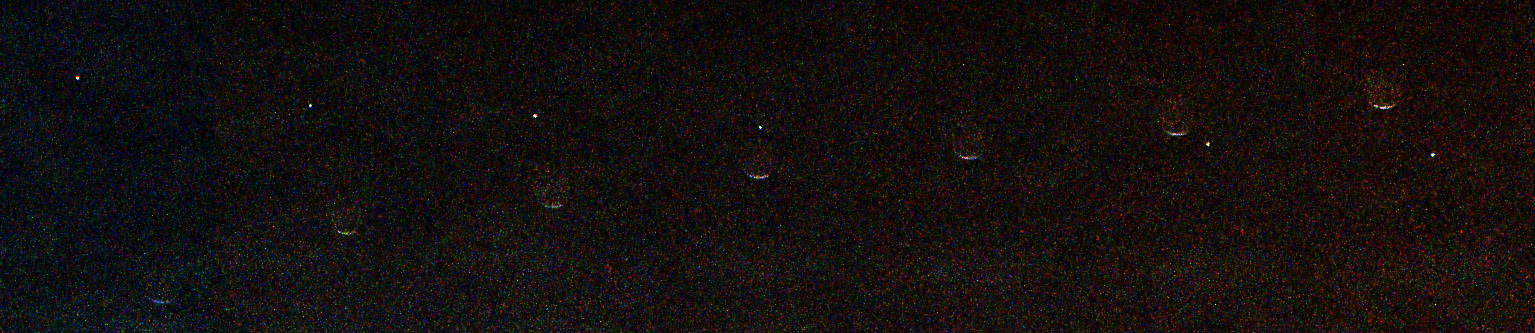
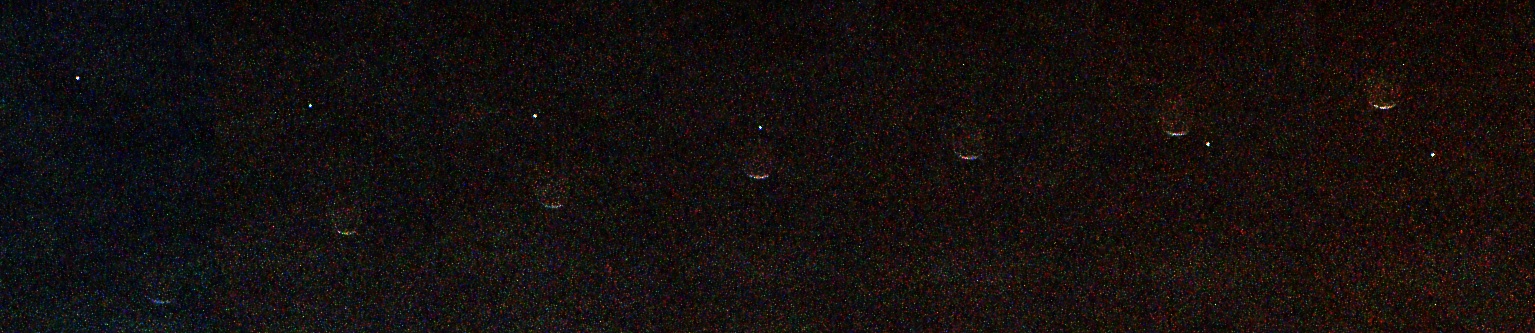
This composite of seven images from the Mastcam-Z instrument aboard NASA’s Perseverance Mars rover shows Earth, visible as a small bright dot moving from upper left to lower right, passing behind the Martian moon Phobos on July 2, 2026, 1,907th Martian day, or sol, of the mission.
The black background is the result of image processing that removed extraneous light in the background to enhance detail.
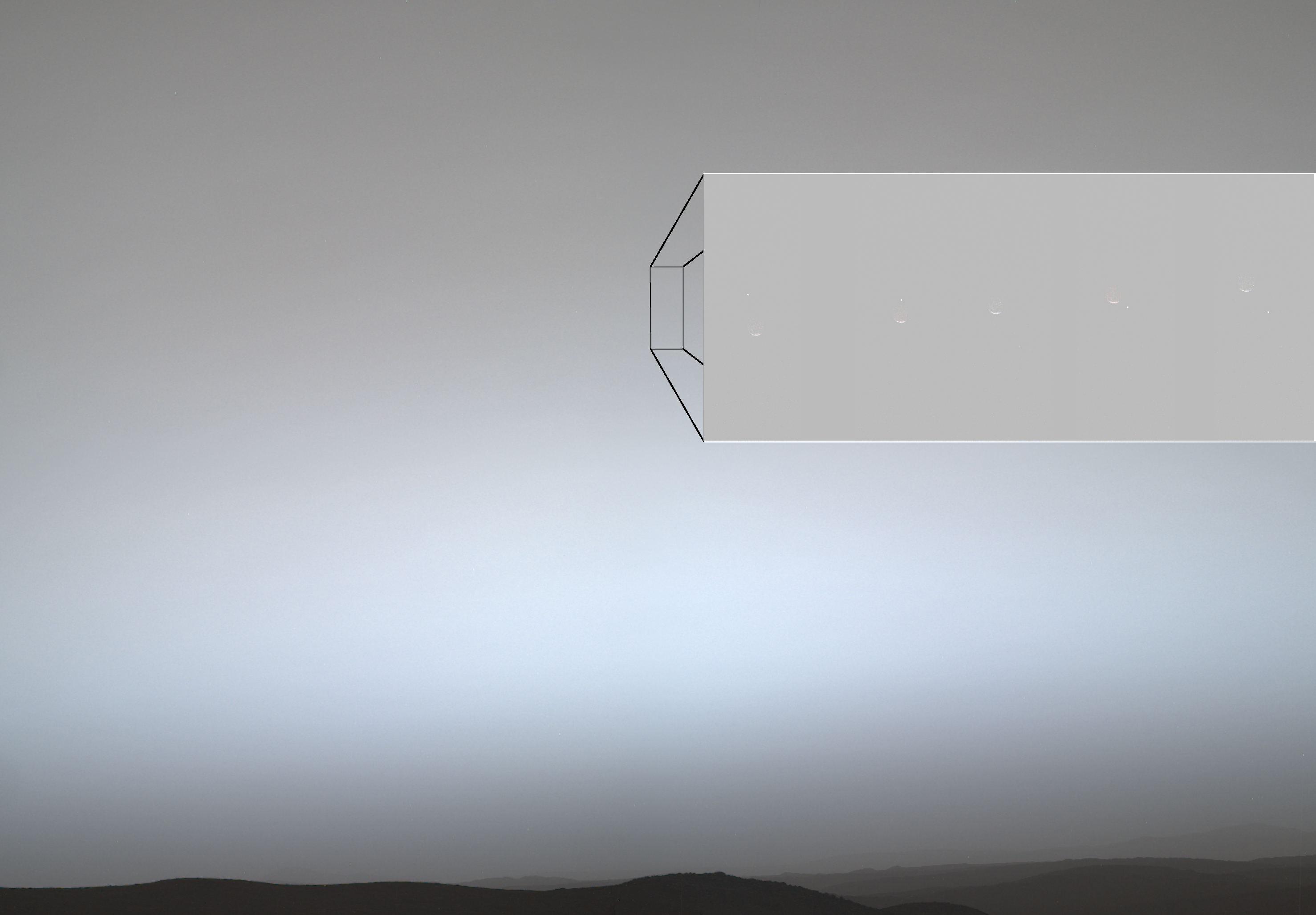
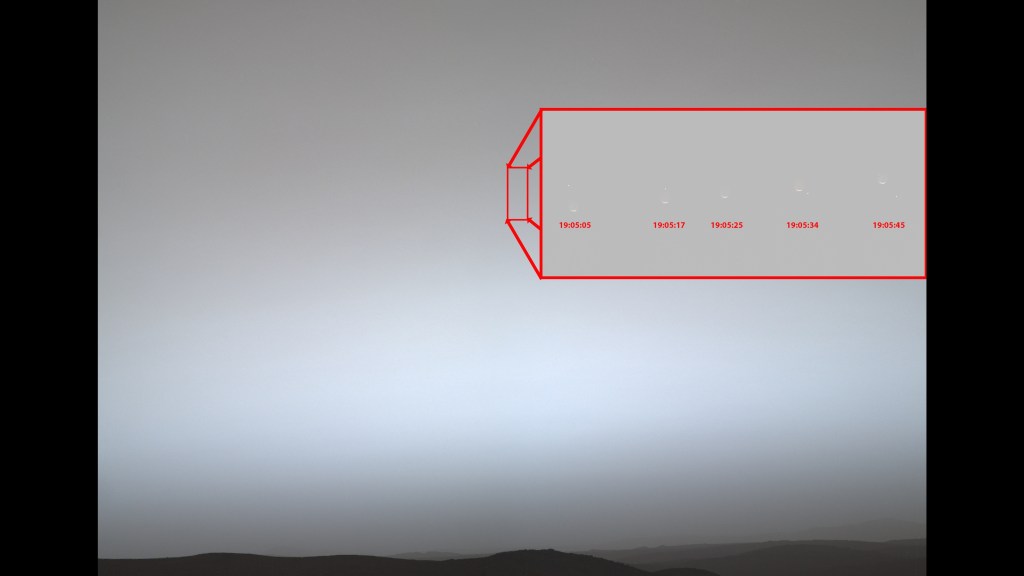
Figure A is an annotated composite of nine images taken by the Mastcam-Z instrument aboard Perseverance on July 2, 2026. The inset on the upper right, comprised of five images, shows Earth — the small bright dot moving from upper left to lower right — passing behind the Martian moon Phobos.
The rectangle outlined at the left in the annotation indicates the patch of sky that was imaged several times to capture Earth passing behind Phobos. In the larger rectangular inset, the images captured from that patch of sky are displayed in time order from left to right, with Phobos moving up and Earth moving down.
The gray of the Martian sky is the approximate true color of the twilight (about 40 minutes after sunset) on that sol. It is blue-gray lower, where it is brighter, and reddish gray above.
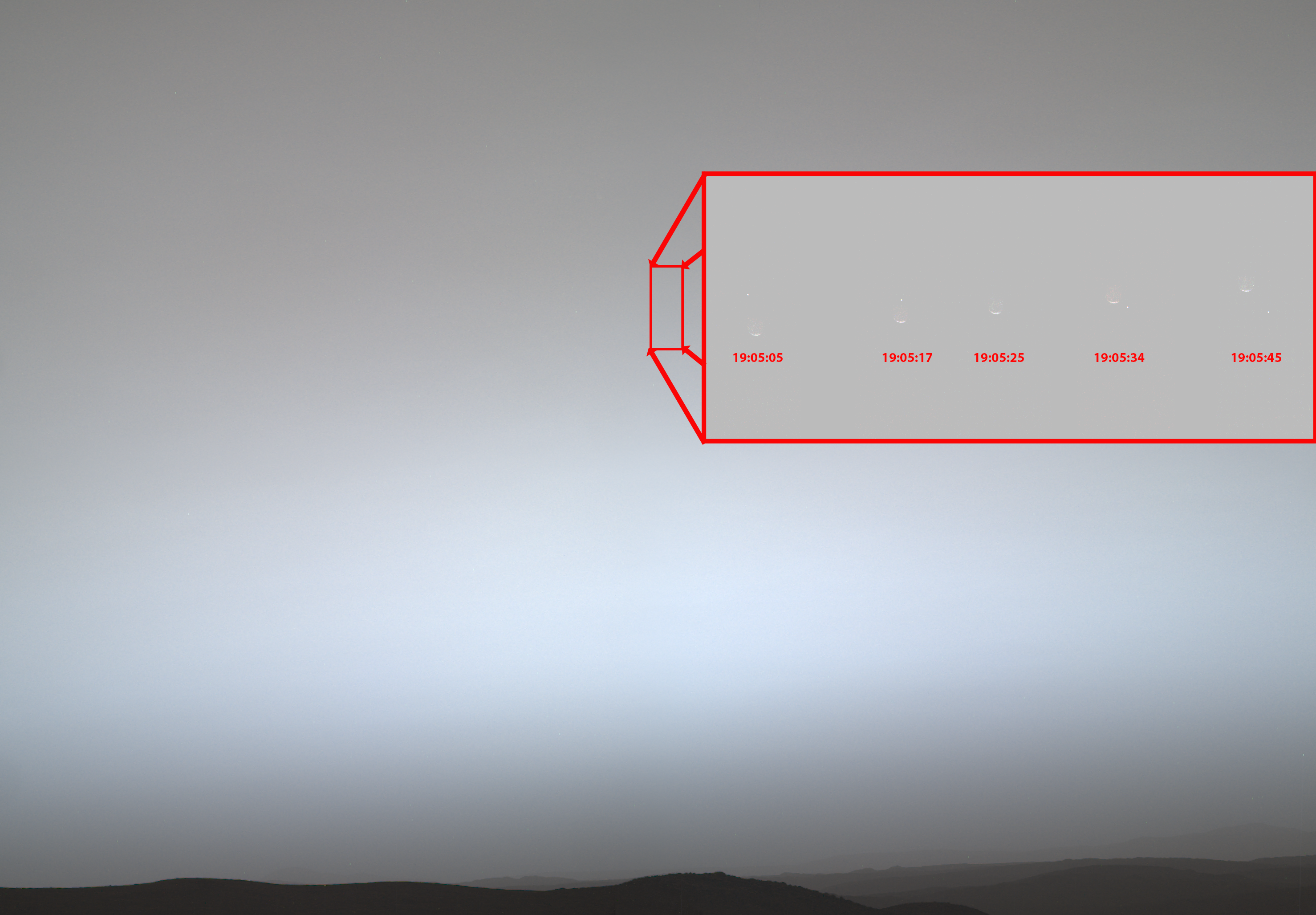
Figure B includes annotations showing the local solar time on Mars during which the five individual images that captured the occultation were taken.
NASA’s Jet Propulsion Laboratory in Southern California, which is managed by Caltech, built and manages operations of the Perseverance rover on behalf of the agency’s Science Mission Directorate in Washington, as part of NASA’s Mars Exploration Program portfolio. Arizona State University leads the operations of the rover’s Mastcam-Z instrument, working in collaboration with Malin Space Science Systems in San Diego, on the design, fabrication, testing, and operation of the cameras.
For more about Perseverance:

NASA’s Perseverance Rover Watches Earth Vanish Behind Martian Moon
2026-08-05 15:25
3 min read
Preparations for Next Moonwalk Simulations Underway (and Underwater)
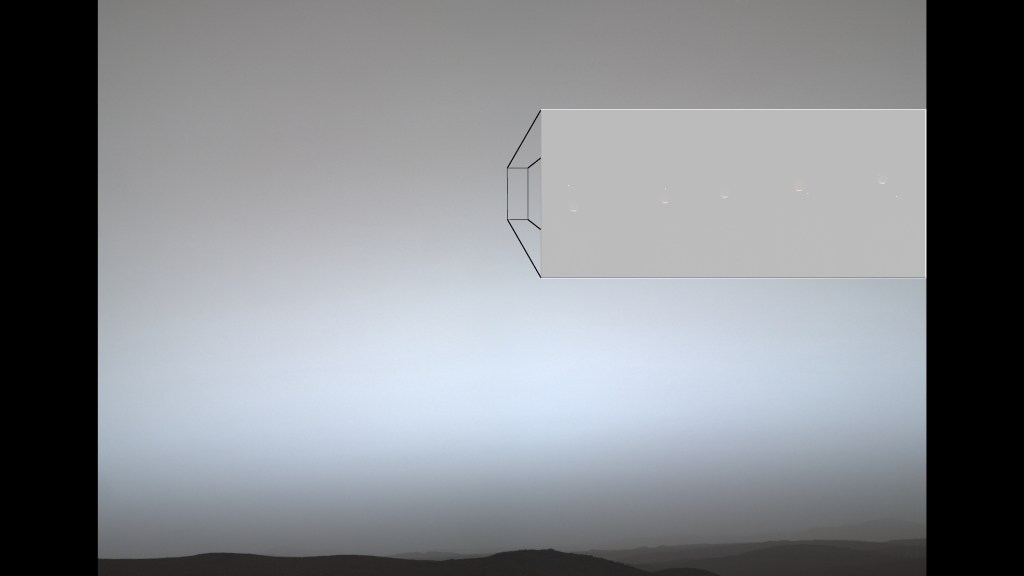
Earth and the Martian moon Phobos dance together in a series of images recently acquired by NASA’s Perseverance Mars rover. Earth appears as a point of light in the Martian sky, disappearing behind the crescent of Phobos, the larger of Mars’ two moons.
This is the first time humanity has captured from the surface of another planet an observation of Earth disappearing behind an object.
The image sequence was taken by the rover’s Mastcam-Z instrument at about 7 p.m. local solar time (the Martian evening time where the rover is located) on July 2, the 1,907th Martian day, or sol, of the mission. In the composite image, Earth travels from the upper left of the frame toward the lower right while Phobos, moving from lower left to upper right, sweeps across its path. In the third frame of the sequence, the two meet, and our planet winks out behind the little moon’s shadowed edge.
“The composite image makes for a unique Earth self-portrait, taken from the surface of another planet, with a Phobos photobomb,” said Justin Maki, the Mastcam-Z deputy principal investigator and imaging scientist for Perseverance at NASA’s Jet Propulsion Laboratory in Southern California.
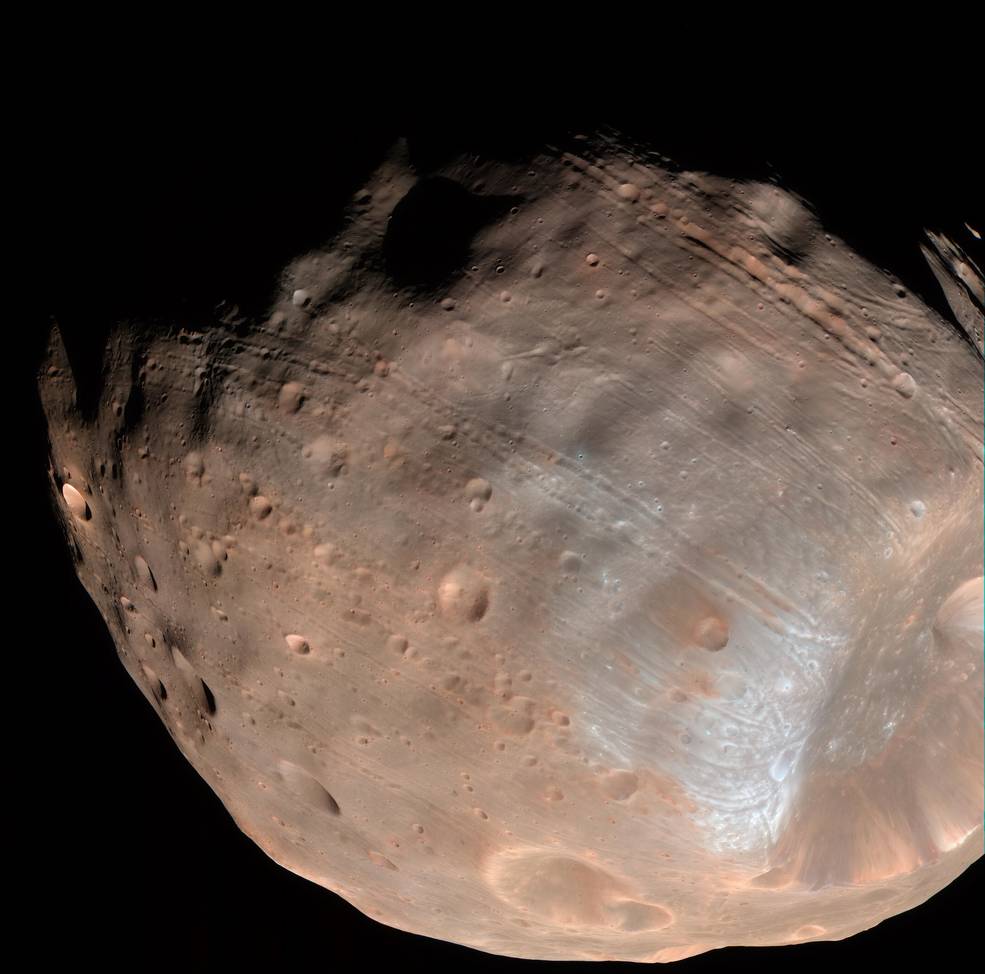
From where Perseverance sits on the rim of Mars’ Jezero Crater, the two objects could hardly look more different. Phobos, a lumpy, potato-shaped moon about 17 miles (27 kilometers) across at its widest, orbits so close to Mars (4,850 miles, or 7,800 kilometers, away) that when the images were taken, Phobos appears roughly one-third the width of Earth’s Moon as seen from our planet. Some 195 million miles (314 million kilometers) away at the time, Earth is reduced to a single, pixel-size dot.
“Phobos crosses the Martian sky three times a day, and Earth is visible for months at a stretch, but catching one directly behind the other takes planning and a little luck,” said Mark Lemmon, a Mastcam-Z co-investigator at the Space Science Institute in Boulder, Colorado, who planned the observation and assembled the composite.
Transits, occultations, eclipses
Astronomers call the event captured in this observation an occultation: when a larger-appearing body completely blocks the one behind it from the viewer’s standpoint. By contrast, an eclipse occurs when one object moves into the shadow of another. When the Moon passes through Earth’s shadow, it’s called a lunar eclipse; when one object that appears to be the same size as another blocks it, like when the Moon passes before the Sun, it’s known as a solar eclipse.
When the roles are reversed, with a smaller-looking object crossing the face of a larger-looking one, astronomers call that a transit. Perseverance has observed those, too: when Phobos or Deimos crosses the disk of the Sun as seen from Mars. These are sometimes described informally as “Martian solar eclipses.”
More about Perseverance
NASA’s Jet Propulsion Laboratory in Southern California, which is managed by Caltech, built and manages operations of the Perseverance rover on behalf of the agency’s Science Mission Directorate in Washington, as part of NASA’s Mars Exploration Program portfolio. Arizona State University leads the operations of the rover’s Mastcam-Z instrument, working in collaboration with Malin Space Science Systems in San Diego, on the design, fabrication, testing, and operation of the cameras.
For more about Perseverance:
https://science.nasa.gov/mission/mars-2020-perseverance
News Media Contacts
DC Agle
Jet Propulsion Laboratory, Pasadena, Calif.
818-393-9011
agle@jpl.nasa.gov
Karen Fox / Alana Johnson
NASA Headquarters, Washington
240-285-5155 / 202-672-4780
karen.c.fox@nasa.gov / alana.r.johnson@nasa.gov
2026-054
Share
Details
Related Terms
Explore More





TechCrunch - Latest
Get up to $400 off your TechCrunch Disrupt 2026 pass until Friday
2026-08-05 22:55
Nikita Bier steps down as X’s head of product
2026-08-05 21:30
Travis Kalanick’s robotics startup Atoms taps former Uber finance chief as CFO
2026-08-05 21:26
Meta launches Muse Code, an AI agent for large code bases
2026-08-05 21:21
Trump’s DOJ gains oversight of OpenAI’s green-card employee sponsorships
2026-08-05 21:05