📰 Trending Topics
Google News - Trending
Who's Trending Up, Trending Down After One Week of Camp - Sports Illustrated
2026-08-05 20:24
Google News - Technology
Another huge Pixel Watch 5 leak showcases everything from design to health features - Android Authority
2026-08-06 06:38
- Another huge Pixel Watch 5 leak showcases everything from design to health features Android Authority
- Pixel Watch 5 leaked marketing images surface one week before launch 9to5Google
- Google Pixel Watch 5 Leak Points to 3GB RAM and $399 Price TechRepublic
- Pixel Watch 5 Specs Tell Us the Upgrades to Expect Droid Life
- The mother of all Pixel Watch 5 leaks is here to leave no question unanswered PhoneArena
iPhone 18 Pro event date: When Apple announced its event over the last six years - 9to5mac.com
2026-08-05 19:10
- iPhone 18 Pro event date: When Apple announced its event over the last six years 9to5mac.com
- iPhone 18 Pro will have three upgrades that have been rumored for years 9to5mac.com
- Apple iPhone 18 Pro Release Date September Signaled In Keynote Update Forbes
- iPhone 18 Pro and iPhone Ultra: Pre-Orders and Release Date MacRumors
- The latest iPhone 18 news, leaks, and rumors: Release date, price increases, and color options Mashable
Viture’s New XR Glasses Are Sharper, Brighter, and Way Less Expensive - Gizmodo
2026-08-06 13:00
- Viture’s New XR Glasses Are Sharper, Brighter, and Way Less Expensive Gizmodo
- Viture’s cheapest AR glasses have the sharpest image clarity I’ve seen yet The Verge
- The $299 Viture Pro 2 Are The Company's Lightest And Most Comfortable Smartglasses Yet Engadget
- Viture Pro 2 Review: These $299 Smart Glasses Treat Vision Correction as a Feature, Not an Extra PCMag
- VITURE Marks Five Years with the 5th Anniversary Collection -- Led by VITURE Pro 2: The Classic, Evolved, Sharper Than Ever with UltraClarity 3.0 PR Newswire
The top-rated Bose QuietComfort Ultra (2nd Gen) headphones are now on sale at Amazon - PhoneArena
2026-08-04 14:15
- The top-rated Bose QuietComfort Ultra (2nd Gen) headphones are now on sale at Amazon PhoneArena
- Bose’s New QuietComfort Headphones Are Truly Next Gen. Here’s What I Like About Them CNET
- Bose has refreshed its QuietComfort headphones with two-way USB-C audio and better noise cancellation Engadget
- Bose Announces New QuietComfort Headphones, Bringing Flagship Features to a Lower Price Point Rolling Stone
- Bose Debuts Revamped QuietComfort Headphones With Better Noise-Cancellation Bloomberg.com
NASA - Breaking News
APOD: 2026 August 6 – New Sharpest Image of the Sun Uncovers Instability
2026-08-06 04:05
APOD
Astronomy Picture of the Day
Discover the cosmos! Each day a different image or photograph of our fascinating universe is featured, along with a brief explanation written by a professional astronomer.

New Sharpest Image of the Sun Uncovers Instability
Explanation: What does the new sharpest image of our Sun show? Instability. To be clear, a certain kind of interactive process called the Kelvin-Helmholtz instability (KHI). This instability can create waves and swirls when two streams flow past each other — in this case variable streams of solar magnetic plasma. Long hypothesized to occur on the Sun’s surface, KHI streaks and swirls were confirmed in just-released dramatic high-resolution images taken recently by the Inouye Solar Telescope in Hawaii, USA. The featured false-yellow image, actually taken in deep blue, is the highest resolution image yet of the Sun in visible light. It spans about the radius of the Earth, but its finest details are city sized. Visible are several smooth tops of changing solar granules, while the edges of the flower-like structures have been found to harbor multiple KHI swirls. Future research may investigate how the KHI helps move energy, magnetic fields, and may even heat the surrounding solar corona.
Tomorrow’s picture: Rubin’s COSMOS
| Date | August 6, 2026 |
|---|---|
| Credit | NSF, NSO, AURA, MPS, Inouye Tel |
| Authors & editors: | Robert Nemiroff, Jerry Bonnell, Cecilia Chirenti, Keighley Rockcliffe |
| A service of: |
ASD at NASA / GSFC, NASA Science Activation & Michigan Tech. U. |
How the Tide Turns at the Mouth of the Elbe
2026-08-06 04:01




August 15, 2025
May 11, 2025
One of the major rivers of Europe, the Elbe flows more than 1,000 kilometers (600 miles) across the continent before reaching the North Sea. At its mouth, the low-lying landscape is continually reshaped by the rise and fall of the tides. These dynamic tidal flats are a boon to biodiversity while sometimes posing challenges for those navigating its waters and for communities living along its shores.
The images above illustrate how the area changes with the tides. They were acquired on August 15, 2025, at low tide (left) and on May 11, 2025, at high tide (right) with the OLI (Operational Land Imager) on Landsat 9. The mean tidal range at Cuxhaven is 2.9 meters (9.5 feet), which is considered intermediate, or mesotidal. The tides are also asymmetrical, meaning the flood period is shorter than the ebb. This causes the incoming current to run faster and typically carry more sediment up the 140-kilometer-long (87-mile-long) estuary than it does out.
The low tide exposes complex channels, sandbars, and mudflats around the river mouth. This wide zone of coastal wetlands is part of the Wadden Sea, which stretches from the Netherlands to southern Denmark and represents the largest continuous system of intertidal sand and mud flats in the world. Its habitats serve as important staging, molting, and wintering grounds for migratory birds, with more than 10 million passing through every year.
A channel cuts through these natural features near the river’s mouth, allowing ships to reach Cuxhaven and Hamburg—the third-largest container port in the European Union—farther upriver. Dredging is required to remove accumulated sediment in the channel, and some ships can only pass through when the tide is high enough. The Elbe’s mouth also provides access to the Kiel Canal, which connects the North Sea and Baltic Sea and is the world’s busiest human-made waterway navigable by seagoing ships.

At high tide (right), only a handful of small islands and sandbars remain above the waves. One of these islands, Neuwerk, is a tranquil tourist destination that is home to a few dozen inhabitants and the oldest building on the German coast. A brick tower, completed in 1310 and later converted to a lighthouse, was built to protect shipping on the Elbe from pirates and wreckers.
These images show normal tidal variation in the area, but storms can push water levels much higher than a typical high tide. The highest water level measured at Cuxhaven—5.1 meters (16.7 feet) above Europe’s official sea level reference—occurred on January 3, 1976, when a fast-moving storm swept across the North Sea and slammed the coast with high winds. Researchers who reconstructed historical storms noted that the storm surge was worsened by its timing relative to the tide. The strongest winds arrived around low tide, preventing water that had propagated upstream at high tide from flowing back out to sea and causing further inundation inland.
Scientists study past extreme events like this to better understand how future storms might affect low-lying coastal areas and how flood protection could be improved. Flooding risks can be exacerbated by rising sea levels, which at Cuxhaven have trended upward by 2.12 millimeters per year, or 0.70 feet per century.
Two new Earth-observing satellites are making it possible to measure water levels in coastal areas in greater detail. The dual-band radar on the NISAR (NASA-ISRO Synthetic Aperture Radar) satellite is expected to track long-term phenomena such as sea level changes, as well as to map flood inundation and other ephemeral events. In addition, early data from NASA’s SWOT (Surface Water and Ocean Topography) satellite has demonstrated the potential to accurately measure water levels around complex coastlines and to improve tidal models.
NASA Earth Observatory images by Lauren Dauphin, using Landsat data from the U.S. Geological Survey. Photo by Thomas Gölles. Story by Lindsey Doermann.


References & Resources
- Common Wadden Sea Secretariat Welcome to the Wadden Sea World Heritage. Accessed August 5, 2026.
- EBSCO Research Starters (2024) Elbe River. Accessed August 5, 2026.
- Federal Maritime and Hydrographic Agency (2025) Tides. Accessed August 5, 2026.
- Meyer, E.M.I. and Gaslikova, L. (2024) Investigation of historical severe storms and storm tides in the German Bight with century reanalysis data. Natural Hazards and Earth System Sciences, 24(2), 481–499.
- NASA Tides. Accessed August 5, 2026.
- North Sea Region Programme The Elbe Estuary. Accessed August 5, 2026.
You may also be interested in:
Stay up-to-date with the latest content from NASA as we explore the universe and discover more about our home planet.

The expansive mudflats, sandy beaches, and mangrove forests of the Bijagós archipelago support an array of migratory shorebirds and large…

Drifting sea ice fragments near Alaska’s Saint Lawrence and Nunivak islands and colorful water around the Yukon Delta heralded the…

Patches of open water in the region contributed to low sea ice extent across the Arctic in March 2026, which…




NASA’s IXPE May Have Proven 90-Year-Old Theory
2026-08-05 18:49
4 min read
NASA’s IXPE May Have Proven 90-Year-Old Theory
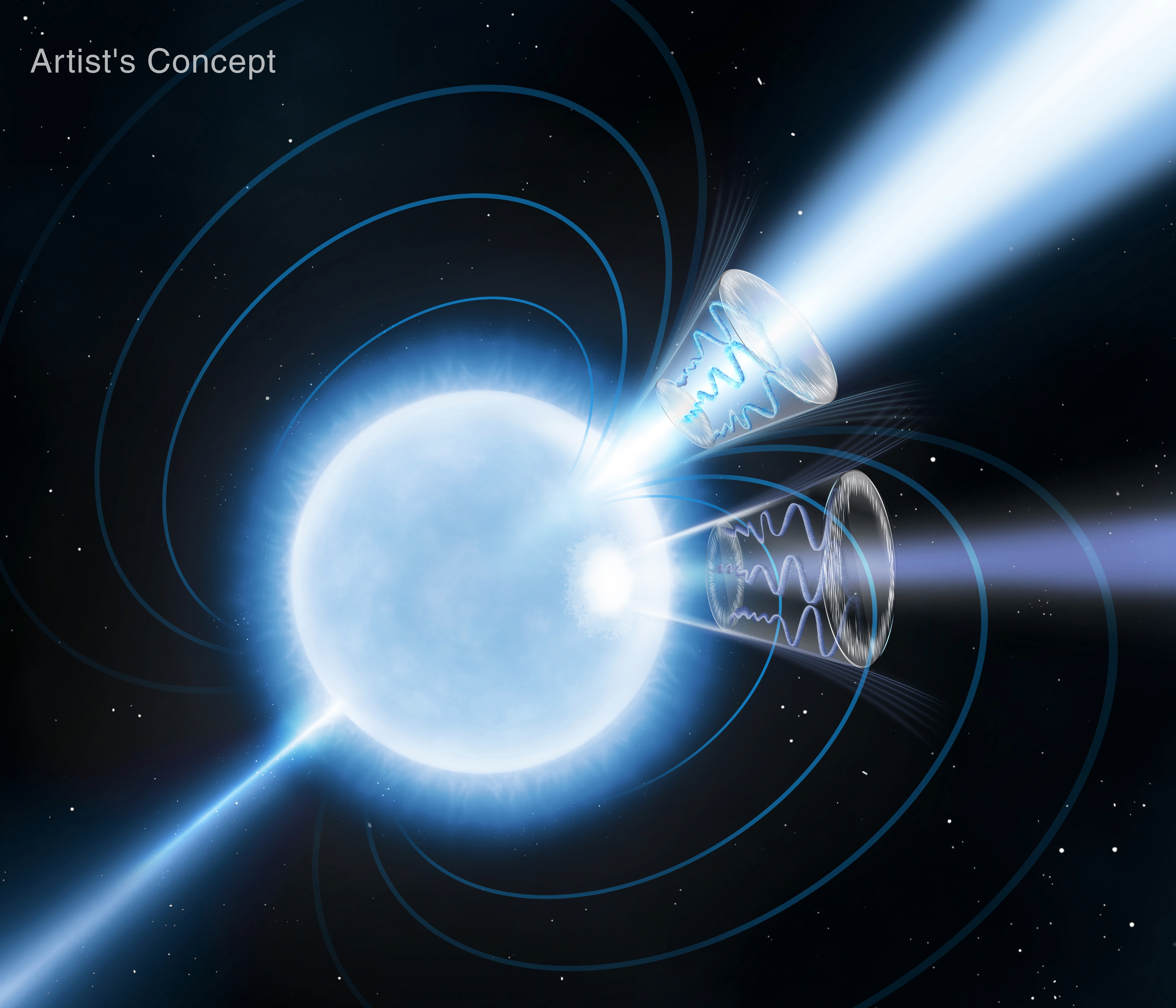
A first of its kind measurement of a magnetar may have captured empty space behaving in a way physicists have predicted for 90 years, but never directly observed. The results published Wednesday in Nature.
Fast facts
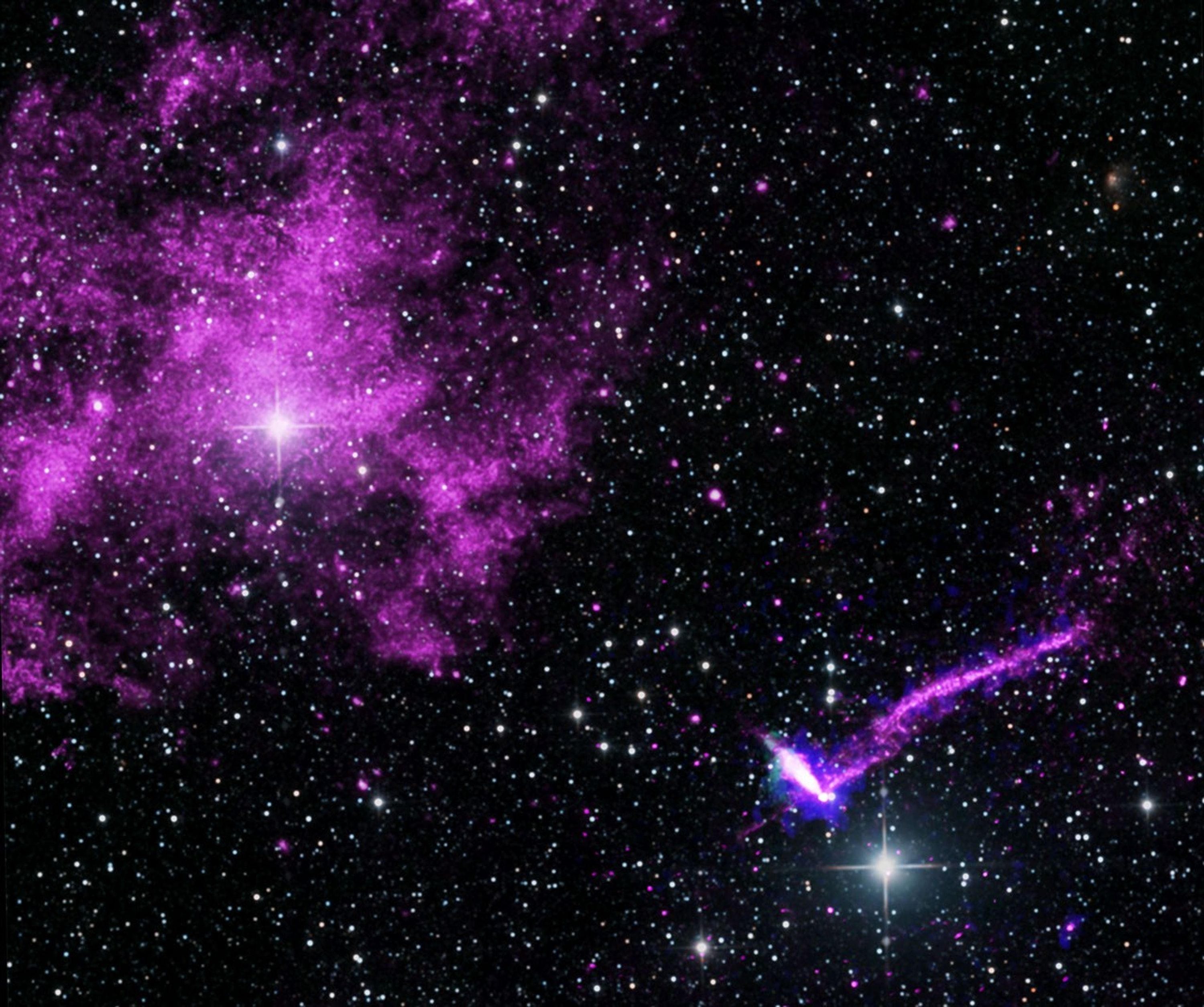
- Magnetars are a special class of neutron stars with ultra-strong magnetic fields, the strongest of any object in the observable universe, around a trillion times stronger than the strongest permanent magnets ever built on Earth. These super magnetic neutron stars offer glimpses into the physics of intense environments that cannot be found anywhere else.
- Neutron stars are the leftover cores of massive stars, formed at the end of their life cycles, that possess more mass than the Sun, condensed down to the size of a city, making them natural laboratories for studying extreme physics.
Scientists using NASA’s IXPE (Imaging X-ray Polarimetry Explorer) conducted more than 140 hours of observations of the magnetar 1E 1547-5408, between March and April 2025, alongside NASA’s NICER (Neutron Star Interior Composition Explorer) and Murriyang, CSIRO’s Parkes radio telescope, owned and operated by Australia’s national science agency. This was the first-ever coordinated radio and X-ray polarization measurement of a magnetar.
1E 1547-5408, spinning in a full rotation every 2 seconds, is a unique magnetar that consistently emits bright radio energy and X-ray light, for reasons scientists are still trying to understand.
Observations showed the polarization, or the orientation and level of alignment of the incoming photons, is nearly three times greater than seen in similar sources. This high level of polarization was surprising, since the geometry of the magnetar’s magnetic fields suggest that the measurements we see should be close to zero at certain points in the star. Standard surface emission models do not explain this large value either, indicating that another effect must be boosting the polarization.
Enter vacuum birefringence, a 90-year-old theory in the realm of quantum electrodynamics. First proposed in 1936, the theory suggests that the vacuum of space can be altered by extreme magnetic fields, far higher than those humans can create on Earth. Under such conditions, the vacuum acts like a lens or a prism, filtering light based on the direction it is traveling, therefore enhancing its total polarization. The IXPE mission’s ability to measure X-ray polarization was essential to test this theory.
Simulations performed by the research team support the possibility of vacuum birefringence causing the distinct signal. Hoa Dinh Thi, a postdoctoral associate at Rice University in Houston and co-lead author of the publication highlighting the results, said, “Our model suggests that reproducing the observed X-ray polarization signatures, while also satisfying the constraints set by radio observations, requires the presence of vacuum birefringence in the neutron star’s environment. This finding exemplifies how neutron stars enable us to test fundamental physics in environments not replicable in labs on Earth.”
The large polarization measurements from the magnetar give strong support to the theoretical prediction, and could be the first time this effect has been directly observed anywhere.
“This result truly highlights the interdisciplinary power of the field of astrophysics,” said Rachael Stewart, a Ph.D. candidate at George Washington University and lead author of the paper published in Nature. “The information we obtained from looking at this distant star core also gives us clues about the nature of the fabric of reality as we know it, and I find that to be incredible.”
Further IXPE observations of this source and other magnetars will confirm this signal and potentially reveal other exotic effects of quantum electrodynamics.
More about IXPE
The IXPE mission, which continues to provide unprecedented data enabling groundbreaking discoveries about celestial objects across the universe, is a joint NASA and Italian Space Agency mission with partners and science collaborators in 12 countries. It is led by NASA’s Marshall Space Flight Center in Huntsville, Alabama. Headquartered in Falls Church, Virginia, BAE Systems, Inc., manages spacecraft operations together with the University of Colorado’s Laboratory for Atmospheric and Space Physics in Boulder. Learn more about IXPE’s ongoing mission here:
About the Author

Michael Allen
Share
Details
Related Terms
Explore More
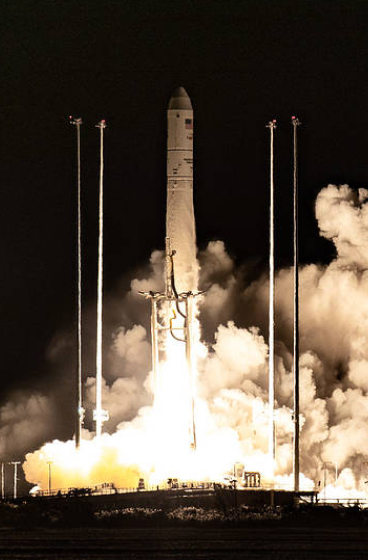


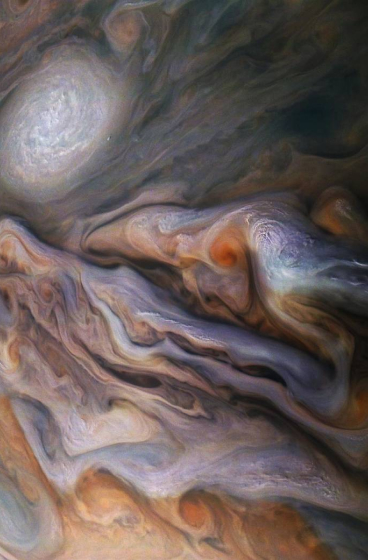
Artemis III Orion Crew and Service Models Joined
2026-08-05 17:27

Technicians joined the Orion crew and service modules together on July 30, 2026, inside the Neil Armstrong Operations and Checkout Building at NASA’s Kennedy Space Center in Florida.
The crew module will carry and sustain NASA astronauts Randy Bresnik, Andre Douglas, and Frank Rubio, and ESA (European Space Agency) astronaut Luca Parmitano, while the service module will power and propel Orion during the mission to test rendezvous and docking capabilities with test versions, or test articles, of commercial human landing systems from Blue Origin and SpaceX.
Read more about this milestone.
Image credit: NASA
NASA’s Perseverance Captures Phobos and Earth
2026-08-05 15:28
NASA’s Perseverance Captures Phobos and Earth
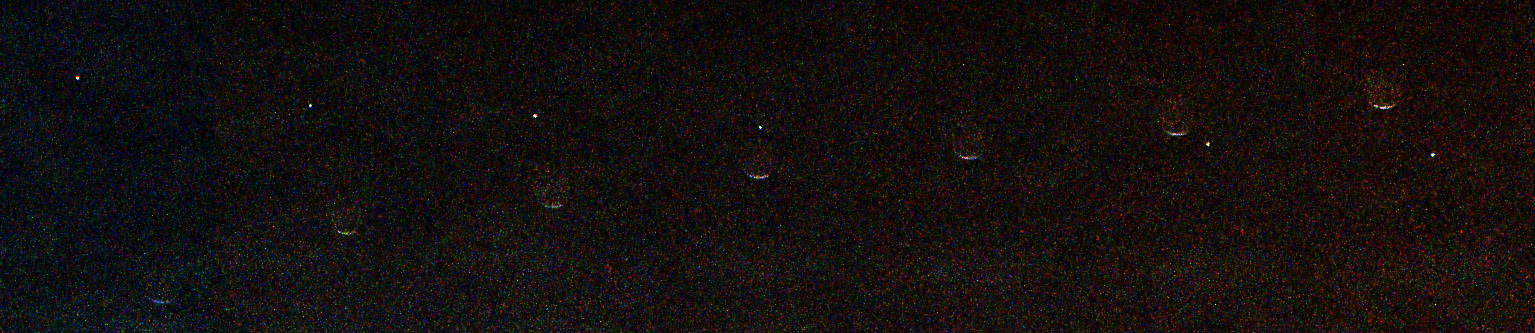
NASA/JPL-Caltech/ASU/MSSS/SSI
Description
This composite of seven images from the Mastcam-Z instrument aboard NASA’s Perseverance Mars rover shows Earth, visible as a small bright dot moving from upper left to lower right, passing behind the Martian moon Phobos on July 2, 2026, 1,907th Martian day, or sol, of the mission.
The black background is the result of image processing that removed extraneous light in the background to enhance detail.
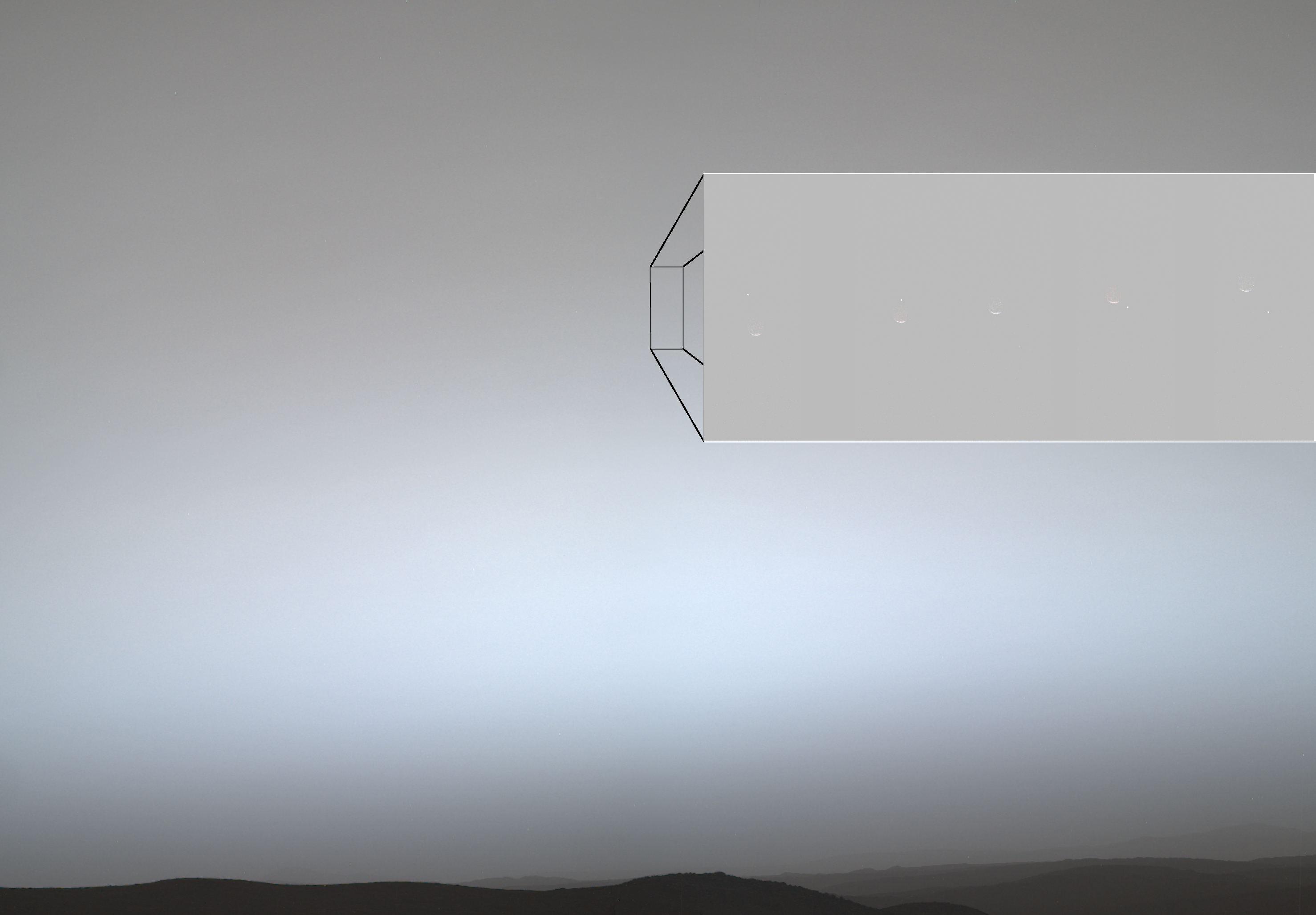
Figure A is an annotated composite of nine images taken by the Mastcam-Z instrument aboard Perseverance on July 2, 2026. The inset on the upper right, comprised of five images, shows Earth — the small bright dot moving from upper left to lower right — passing behind the Martian moon Phobos.
The rectangle outlined at the left in the annotation indicates the patch of sky that was imaged several times to capture Earth passing behind Phobos. In the larger rectangular inset, the images captured from that patch of sky are displayed in time order from left to right, with Phobos moving up and Earth moving down.
The gray of the Martian sky is the approximate true color of the twilight (about 40 minutes after sunset) on that sol. It is blue-gray lower, where it is brighter, and reddish gray above.
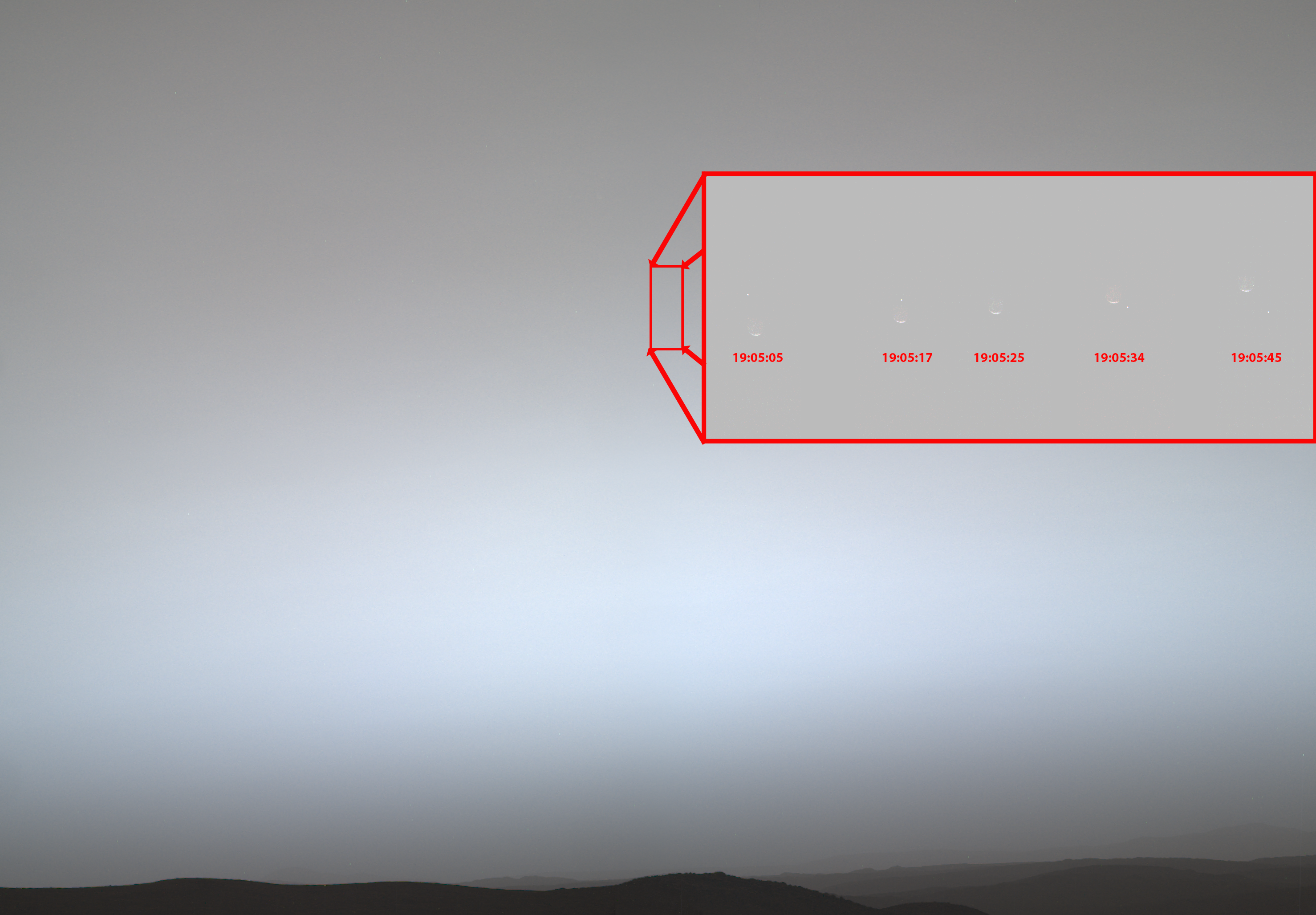
Figure B includes annotations showing the local solar time on Mars during which the five individual images that captured the occultation were taken.
NASA’s Jet Propulsion Laboratory in Southern California, which is managed by Caltech, built and manages operations of the Perseverance rover on behalf of the agency’s Science Mission Directorate in Washington, as part of NASA’s Mars Exploration Program portfolio. Arizona State University leads the operations of the rover’s Mastcam-Z instrument, working in collaboration with Malin Space Science Systems in San Diego, on the design, fabrication, testing, and operation of the cameras.
For more about Perseverance:

TechCrunch - Latest
Amid legal battles, Suno says it will start watermarking songs
2026-08-06 13:31
Ford’s new electric truck, ‘Fathom’, starts at $28,350
2026-08-06 13:01
Ex-Spotify employees raise $10M to bring the AI behind its recommendations to e-commerce
2026-08-06 13:00
Exclusive: Mirendil inks $100M+ Google Cloud deal to scale self-improving AI
2026-08-06 13:00
Google Maps adds agentic features, including food ordering and hotel bookings
2026-08-06 12:30