📰 Trending Topics
Google News - Trending
Who's Trending Up, Trending Down After One Week of Camp - Sports Illustrated
2026-08-05 20:24
Google News - Technology
‘Grand Theft Auto VI’ Game To Debut Extended Look On Netflix This Month - Deadline
2026-08-06 14:41
- ‘Grand Theft Auto VI’ Game To Debut Extended Look On Netflix This Month Deadline
- Grand Theft Auto VI: An Extended Look Rockstar Games
- Grand Theft Auto VI: An Extended Look is Premiering Exclusively on Netflix Netflix
- ‘GTA 6’ to Debut ‘Extended Look’ on Netflix and YouTube on Aug. 27 Variety
- 'Peak Rockstar Arrogance' — GTA 6 Fans Aren't Thrilled With Netflix's Paywalled Extended Look at the Game IGN
Trevor Noah is hosting Google’s Pixel 11 launch event - theverge.com
2026-08-06 21:15
- Trevor Noah is hosting Google’s Pixel 11 launch event theverge.com
- The Pixel 11’s “glow” feature is actually called HiLight—here’s what it does arstechnica.com
- Google Pixel 11 Pro: The latest rumors, leaks, and news Mashable
- Google Contacts reveals what colors Pixel 11 HiLight will support 9to5Google
- 55% in 5 minutes: the Pixel 11 could reportedly charge at this blistering speed PhoneArena
New Gemini overlay for Wear OS rolling out to Pixel Watch - 9to5Google
2026-08-07 03:10
- New Gemini overlay for Wear OS rolling out to Pixel Watch 9to5Google
- Gemini’s new blurred UI is finally reaching Android phones Android Central
- Gemini on Wear OS starts rolling out: Google brings a new watch interface en.softonic.com
- What Can You Do With Gemini on Galaxy Watch Ultra2 and Galaxy Watch9? samsung.com
- Samsung Galaxy Watches start receiving Gemini's new glowing redesign SamMobile
Bose has refreshed its QuietComfort headphones with two-way USB-C audio and better noise cancellation - Engadget
2026-08-06 13:00
- Bose has refreshed its QuietComfort headphones with two-way USB-C audio and better noise cancellation Engadget
- Bose’s New QuietComfort Headphones Are Truly Next Gen. Here’s What I Like About Them CNET
- Bose Debuts Revamped QuietComfort Headphones With Better Noise-Cancellation Bloomberg.com
- Bose Announces New QuietComfort Headphones, Bringing Flagship Features to a Lower Price Point rollingstone.com
- Bose’s upgraded QuietComfort headphones add head-tracking immersive audio theverge.com
iOS 27 adds four new ways to customize your iPhone’s Lock Screen - 9to5Mac
2026-08-05 17:34
- iOS 27 adds four new ways to customize your iPhone’s Lock Screen 9to5Mac
- iOS 27's New Compact Clock Gives Your Wallpaper Room to Breathe MacRumors
- Safari on iPhone Is a Much Friendlier Experience in iOS 27 CNET
- Apple to implement AI text overview, one-tap options in new iOS 27 update Yahoo
- iOS 27 beta 4 is out now with further refinements and fixes Macworld
NASA - Breaking News
NASA’s Lunar Development and Test Facility Prepares Artemis Hardware for Moon
2026-08-07 06:25
NASA’s Lunar Development and Test Facility Prepares Artemis Hardware for Moon
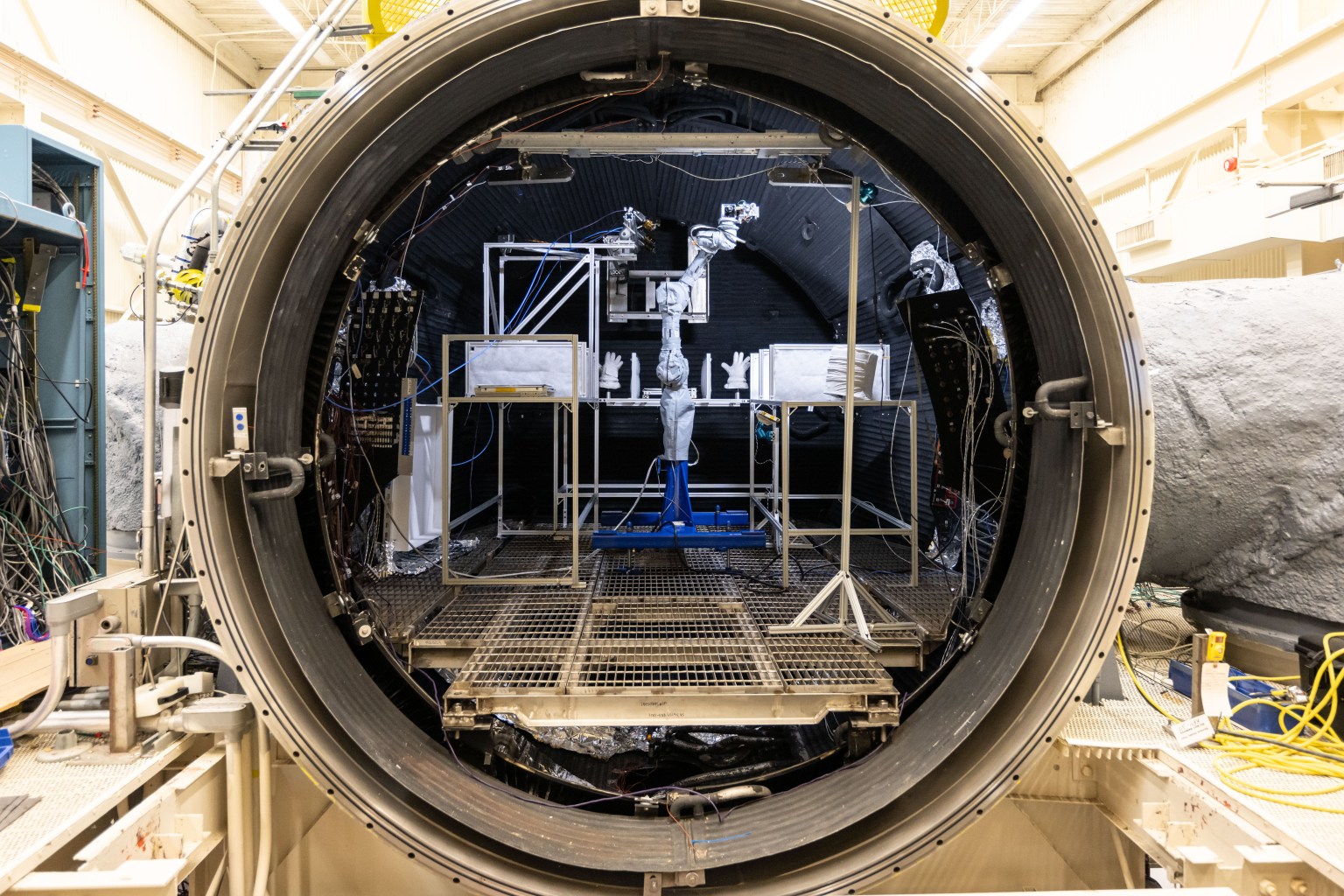
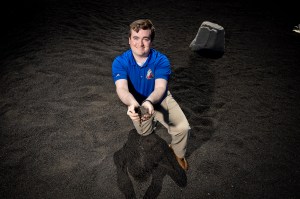
Before astronauts return to the Moon’s surface through NASA’s Artemis program, the hardware they depend on must first prove it can survive the unforgiving lunar environment. At NASA’s Johnson Space Center in Houston, engineers at the Lunar Development and Test Facility are tackling one of exploration’s biggest challenges: Moon dust.
Unlike sand on Earth, lunar dust is sharp, abrasive, and clings to nearly everything. Without mitigation, lunar dust could damage equipment and spacesuits while posing health risks to astronauts. Understanding and mitigating the effects of lunar dust is essential as astronauts prepare to live and work on the surface of the Moon.
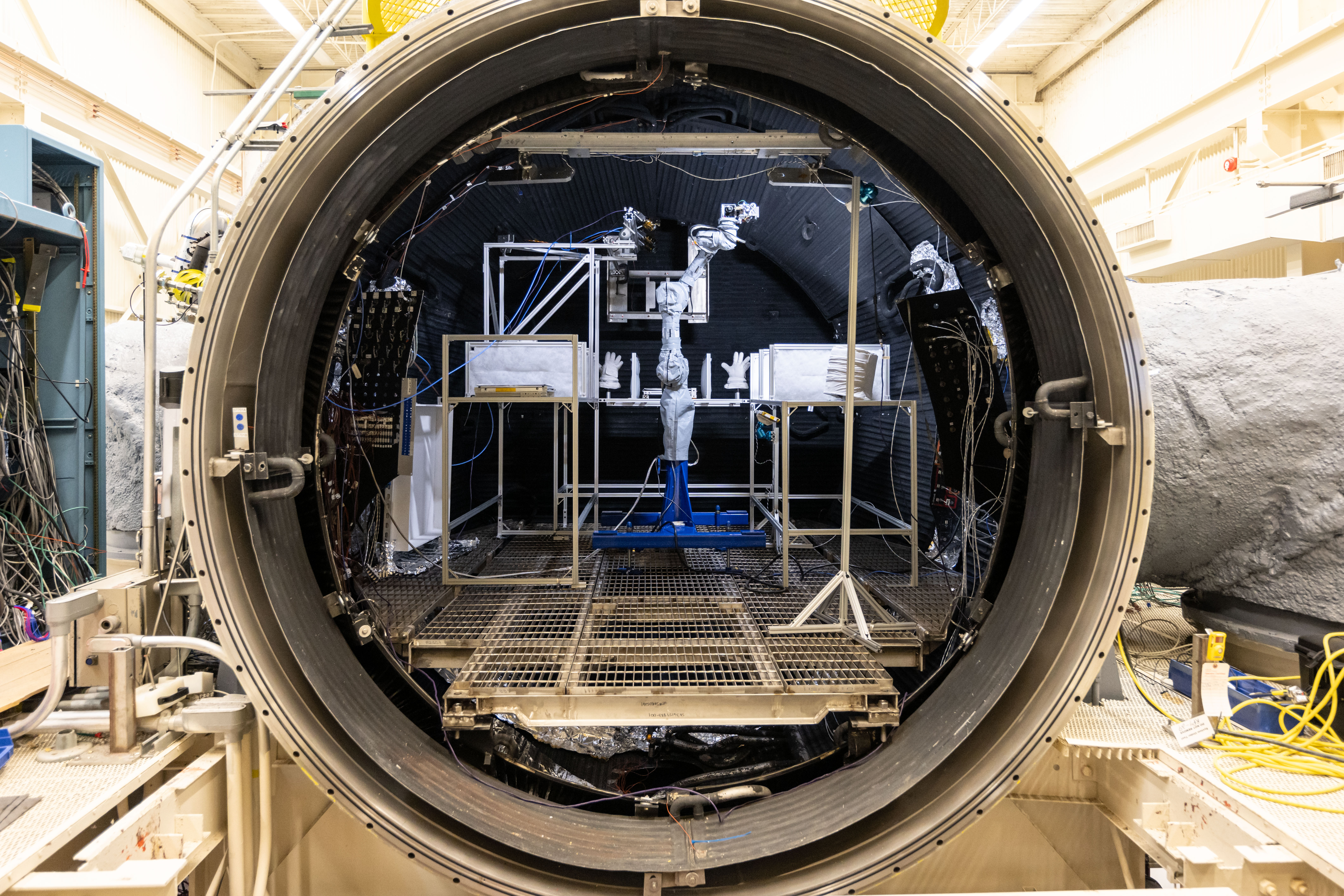
Located within the Energy Systems Test Area and managed by NASA engineers, the Lunar Development and Test Facility supports the development and testing of hardware in simulated lunar conditions. Engineers evaluate systems and subsystems inside vacuum chambers using lunar regolith simulant to better understand how spacesuits, spacecraft components, and mechanisms with moving parts and joints will perform during future Artemis missions.
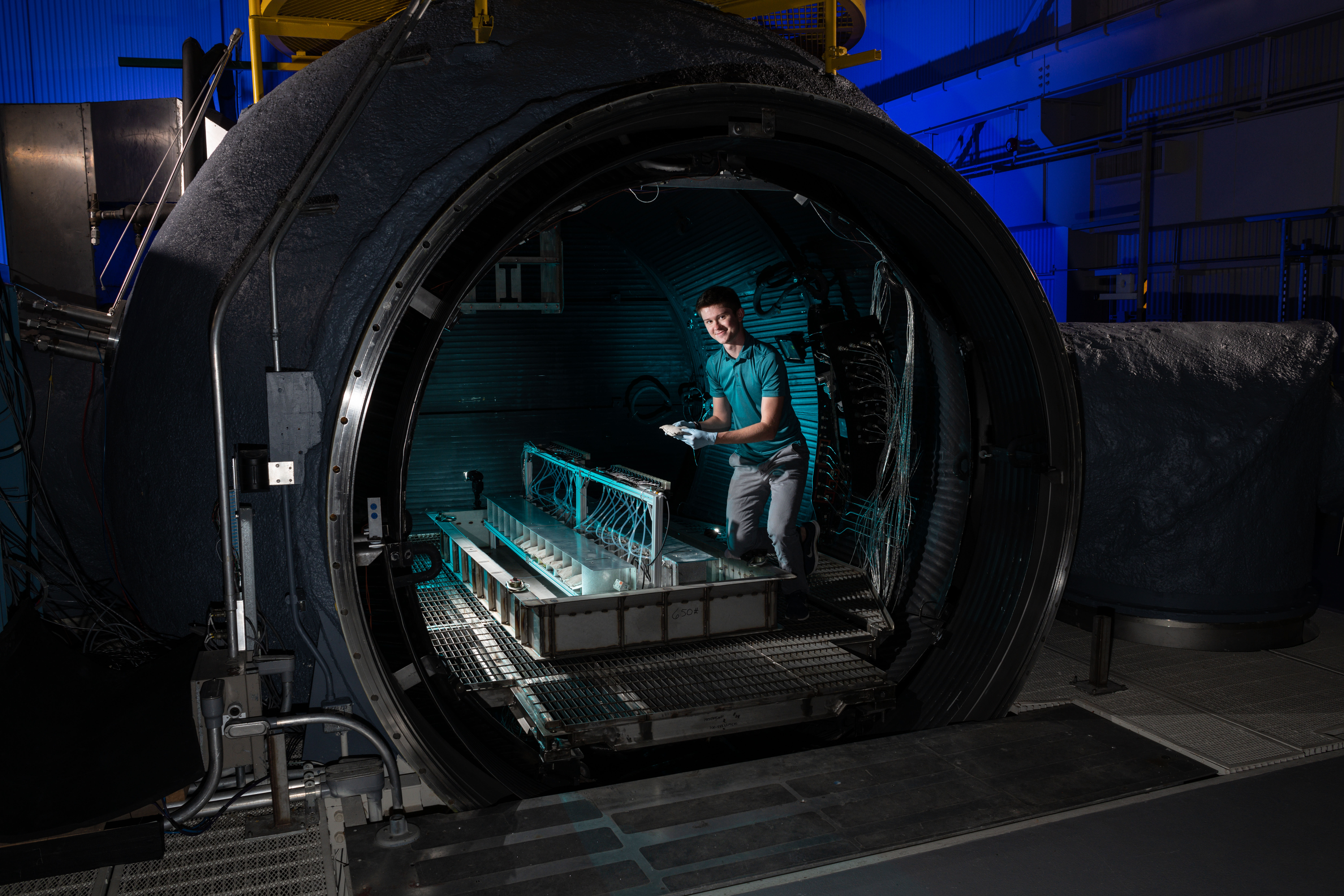
NASA Johnson’s Propulsion and Power Division developed specialized systems that make the facility’s lunar simulations possible. The facility includes a dust containment and preparation laboratory for ambient testing, a 3-foot cube vacuum chamber, and a 15-foot thermal vacuum chamber.
Inside the chamber, engineers test hardware under realistic lunar conditions using lunar regolith simulant. The chamber uses a closed-loop nitrogen system to recreate the harsh lunar environment.
“The facility helps develop and test technologies needed for long-duration lunar exploration,” said Mike Salinas, Propulsion and Power Division branch deputy chief. “Engineers are advancing techniques to extract resources from lunar regolith, which can be turned into oxygen for astronauts and liquid oxygen for rocket propellant.”
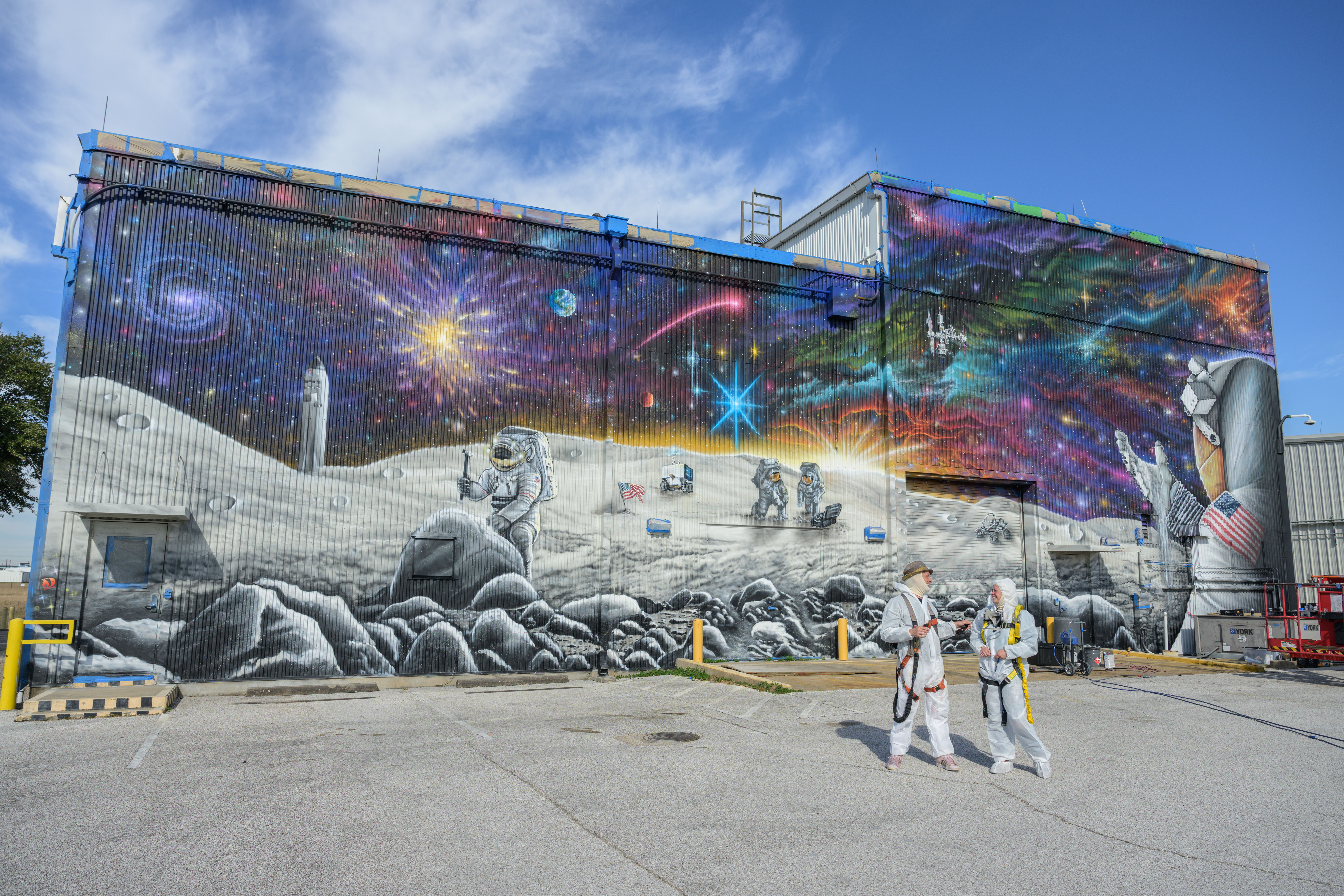
The spirit of exploration extends beyond the facility’s walls. Its exterior features a large-scale mural depicting astronauts exploring the lunar surface beneath a view of the cosmos. Completed in 2024 by artist Sebastian Boileau, the artwork celebrates the innovation, ingenuity, and discovery happening inside the building every day.
Now, anyone can step inside the facility from anywhere. Explore NASA’s new 3D virtual tour of the Lunar Development and Test Facility to see where engineers are helping prepare the technologies that support this Golden Age of exploration and innovation.
About the Author

Sumer Loggins
Share
Details
Related Terms
Explore More




Educators & Teens Get Hands-On With TEMPO Data to Help Investigate Local Air Quality
2026-08-06 19:33
4 min read
Educators & Teens Get Hands-On With TEMPO Data to Help Investigate Local Air Quality
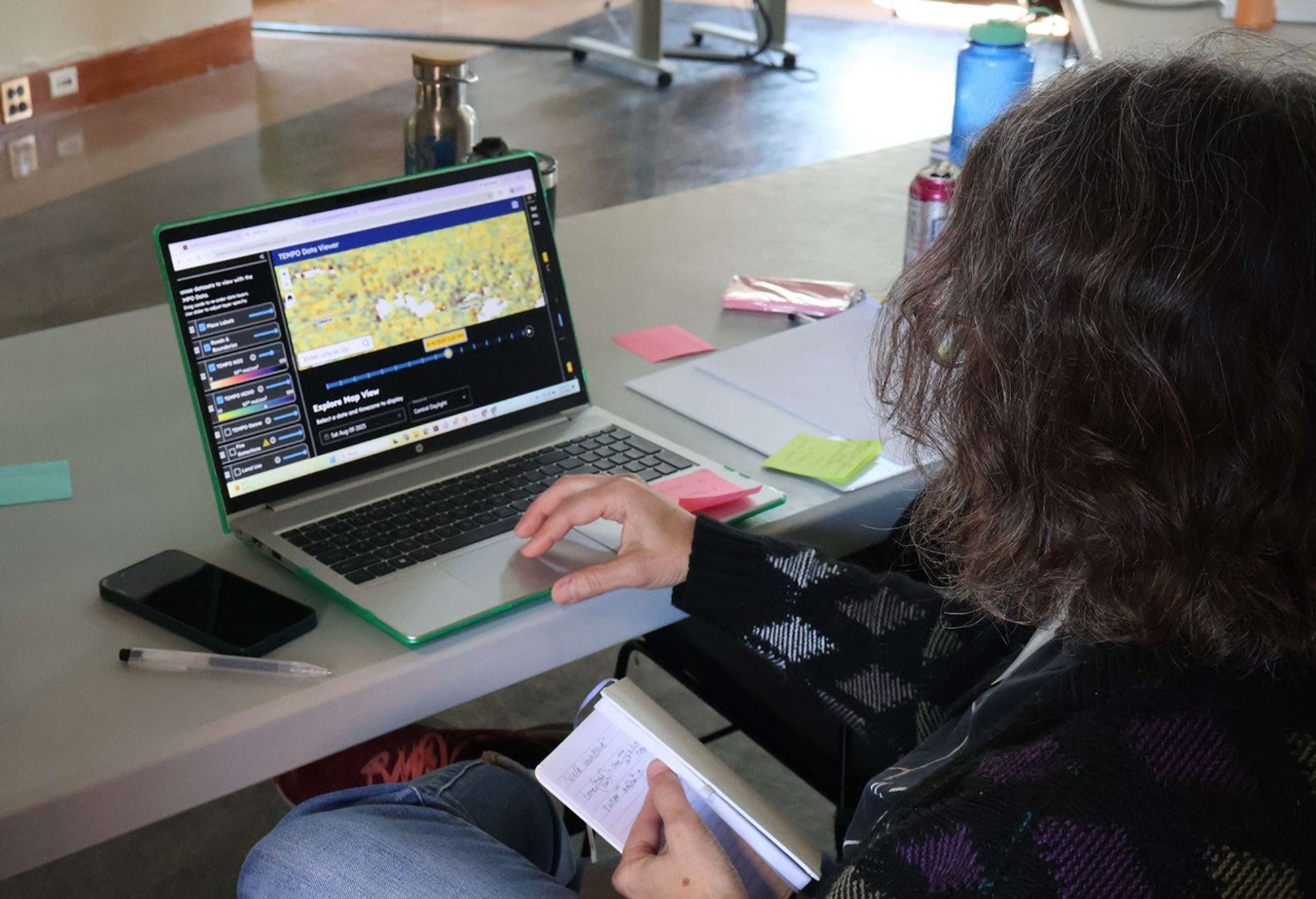
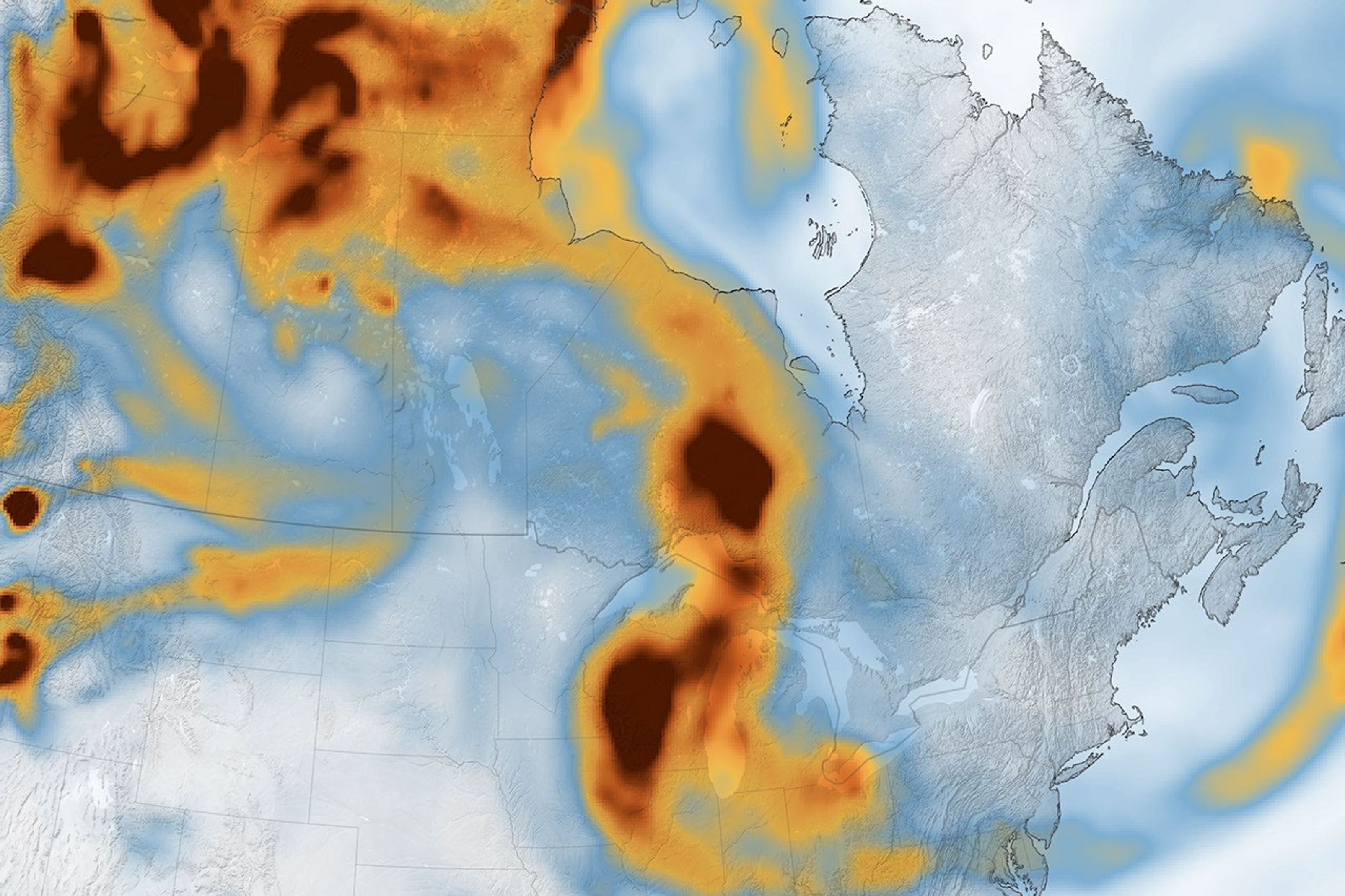
The NASA Science Activation Program’s Cosmic Storytelling with NASA Data (CosmicDS) project, led by Harvard University in Cambridge, Massachusetts, works to bring authentic NASA data into the hands of educators and learners. From July 27–29, 2026, the CosmicDS team partnered with the Smithsonian Institution’s BEST AQI (Breathing Easier: Supporting Teen Air Quality Investigations) project to host a Leadership Institute at the Center for Astrophysics | Harvard & Smithsonian (CfA) in Cambridge, MA. The Institute brought together 13 formal and informal educators who serve as advisors to BEST AQI, an initiative that guides teens through their own air quality research to support actions that improve air quality in their communities.
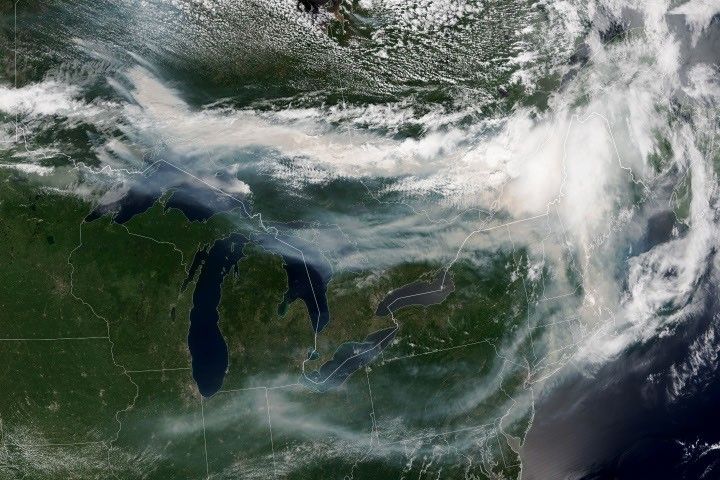
On Day 1 of the Institute, the CosmicDS Science Principal Investigator Pat Udomprasert led a hands-on immersion session introducing educators to TEMPO-Lab, a free online tool built with NASA Science Activation Program funding. TEMPO-Lab lets learners explore and analyze near-real-time air quality measurements collected by NASA’s TEMPO (Tropospheric Emissions: Monitoring of Pollution) mission, which measures pollution across North America hourly during daylight hours. During Days 2 and 3 of the Institute, as educators worked together to co-develop BEST AQI curriculum and resources, they used TEMPO-Lab to build case studies covering a variety of real-world air quality scenarios, including wildfire smoke and emissions from rush-hour traffic, power plants, and agriculture. These case studies will give the teens in their programs a strong foundation for investigating air quality where they live and deciding what actions they might take in their own communities.
One moment made the workshop especially memorable. During a science briefing, TEMPO scientist Heesung Chong shared that a new beta-version ground-level ozone data product had recently become available. TEMPO-Lab’s flexible design made it possible for CosmicDS software developer John Lewis to integrate the new data product into the tool overnight, letting workshop participants explore cutting-edge ozone data themselves the very next morning. It was a striking example of how CosmicDS’s data tools can match the pace of active NASA science, giving educators and their learners access to data almost as soon as scientists themselves do.
“The BEST AQI Leadership Institute reinforced the value of the TEMPO-Lab as a tool for empowering youth to investigate local air quality issues using authentic NASA data. Educators were excited not only by the scientific capabilities of the platform, but by its potential to help young people use evidence to make informed decisions and contribute to positive change in their communities.”
— Erika Wright, Education Specialist, Smithsonian Astrophysical Observatory (SAO), and BEST AQI Principal Investigator
Equipping educators with both the technical skills and the curriculum to bring NASA air quality data into their classrooms matters because it builds data literacy skills that teens can carry into any career, while also giving them the tools to investigate issues that affect their health and their own communities. Air quality is a subject teens can see, smell, and feel the effects of — and BEST AQI is designed to help them turn that lived experience into evidence-based understanding and, ultimately, action.
The CosmicDS team will continue supporting these efforts in the year ahead. The 13 educators who attended this Leadership Institute plan to share the BEST AQI toolkit and TEMPO-Lab with approximately 100 additional educators across their partner sites in South Dakota, Maryland, and New York, potentially extending this work to thousands of teen air quality researchers.
Experience TEMPO-Lab at https://projects.cosmicds.cfa.harvard.edu/tempo-lab and learn more about the CosmicDS project at https://cosmicds.cfa.harvard.edu.
Cosmic DS is supported by NASA cooperative agreement award number 80NSSC21M0002 and is part of the NASA Science Activation Program portfolio, which connects learners with authentic NASA science experiences through partnerships with educators and community organizations.
Share
Details
Related Terms
Explore More


NASA’s SkyFall Helicopters at Work (Artist’s Concept)
2026-08-06 18:06
NASA’s SkyFall Helicopters at Work (Artist’s Concept)

NASA/JPL-Caltech
Description
This artist’s concept depicts NASA’s three SkyFall Mars helicopters collecting data while flying over the surface of the Red Planet.
The green frequency waves emanating from the helicopters’ large antennas depict collection of subsurface radar data. The red beams depict collect near-infrared imagery data from regolith (crushed rock and dust) and other surface features.
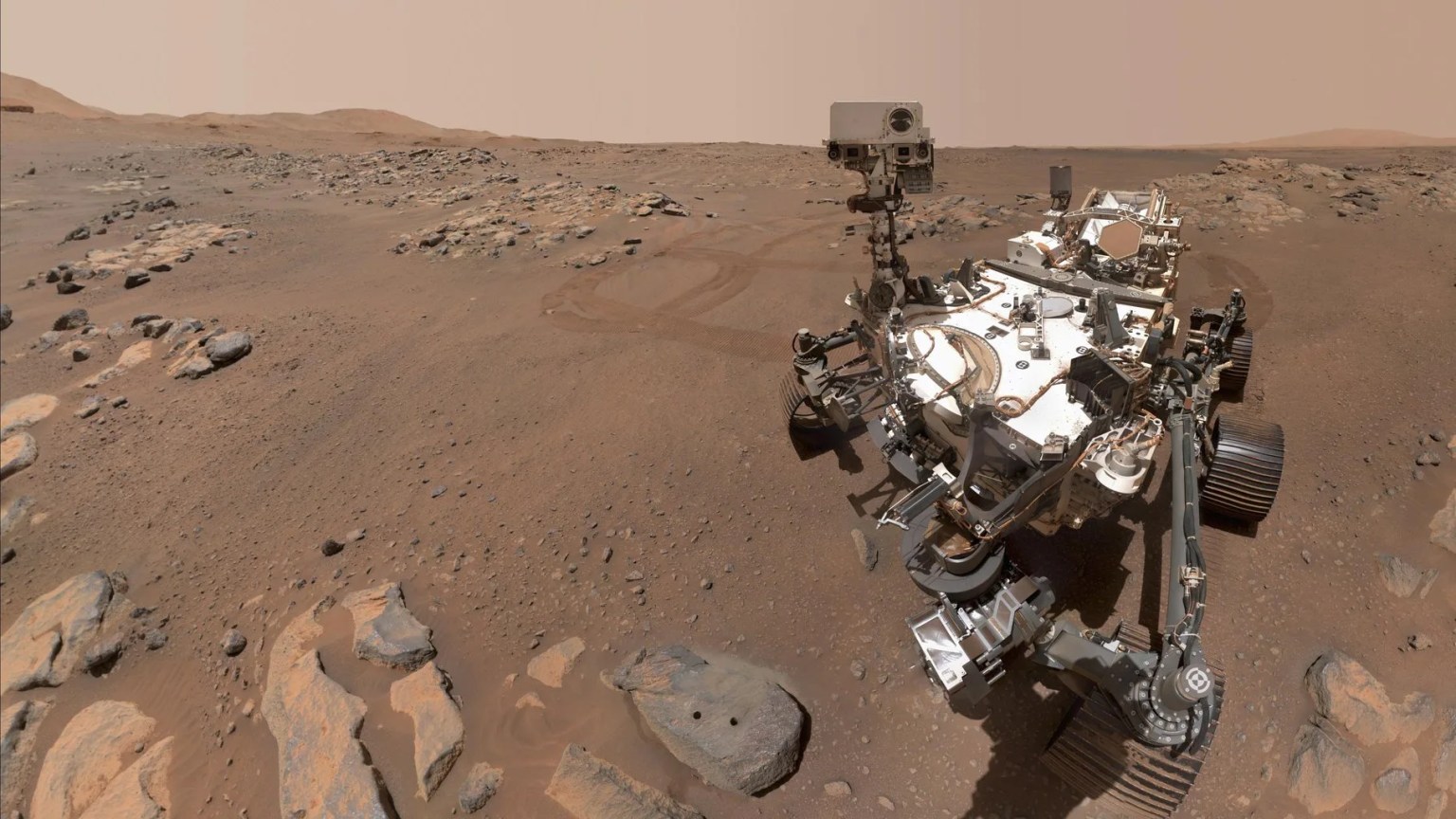
Equipped with four instruments each, the three helicopters will follow in the footsteps of the agency’s Ingenuity Mars Helicopter, a technology demonstrator that flew 72 times over nearly three years, proving that powered, controlled flight is possible in the rarefied Martian atmosphere. It also demonstrated how an aerial perspective can generate valuabledata by helping NASA’s Perseverance Mars rover team plan time-saving routes and choose locations for science-gathering.
SkyFall is expected to launch aboard NASA’s Space Reactor-1 Freedom in late 2028.
The SkyFall project, which will carry three Mars helicopters to the Red Planet in December 2028, is managed by NASA’s Jet Propulsion Laboratory. AeroVironment of Arlington, Virginia — which worked with JPL to design and build the history-making Ingenuity rotorcraft — will co-design and co-manufacture the SkyFall helicopters. Managed by Caltech for NASA, JPL manages the overall Mars Exploration Program on behalf of NASA’s Science Mission Directorate in Washington.
For more information about NASA’s SkyFall:

Antenna Testing for NASA’s SkyFall Mission
2026-08-06 17:56
Antenna Testing for NASA’s SkyFall Mission

NASA/JPL-Caltech
Description
SkyFall ground-penetrating radar engineer Maya Román connects a coaxial cable to a test antenna in the Environmental Test Lab’s electromagnetic interference testing chamber at NASA’s Jet Propulsion Laboratory in Southern California.
The antenna was pointed up during test to minimize reflections and interferences with the antenna pattern during the measurement.
Equipped with four instruments each, the three SkyFall aircraft will follow in the footsteps of the agency’s Ingenuity Mars Helicopter, which flew 72 times over nearly three years, proving that powered, controlled flight is possible in the rarefied Martian atmosphere. It also demonstrated how an aerial perspective can generate valuable data by helping NASA’s Perseverance Mars rover team plan time-saving routes and choose locations for science-gathering.
SkyFall is expected to launch aboard NASA’s Space Reactor-1 Freedom in late 2028.
I Am Artemis: Tom Percy
2026-08-06 16:35
I Am Artemis: Tom Percy
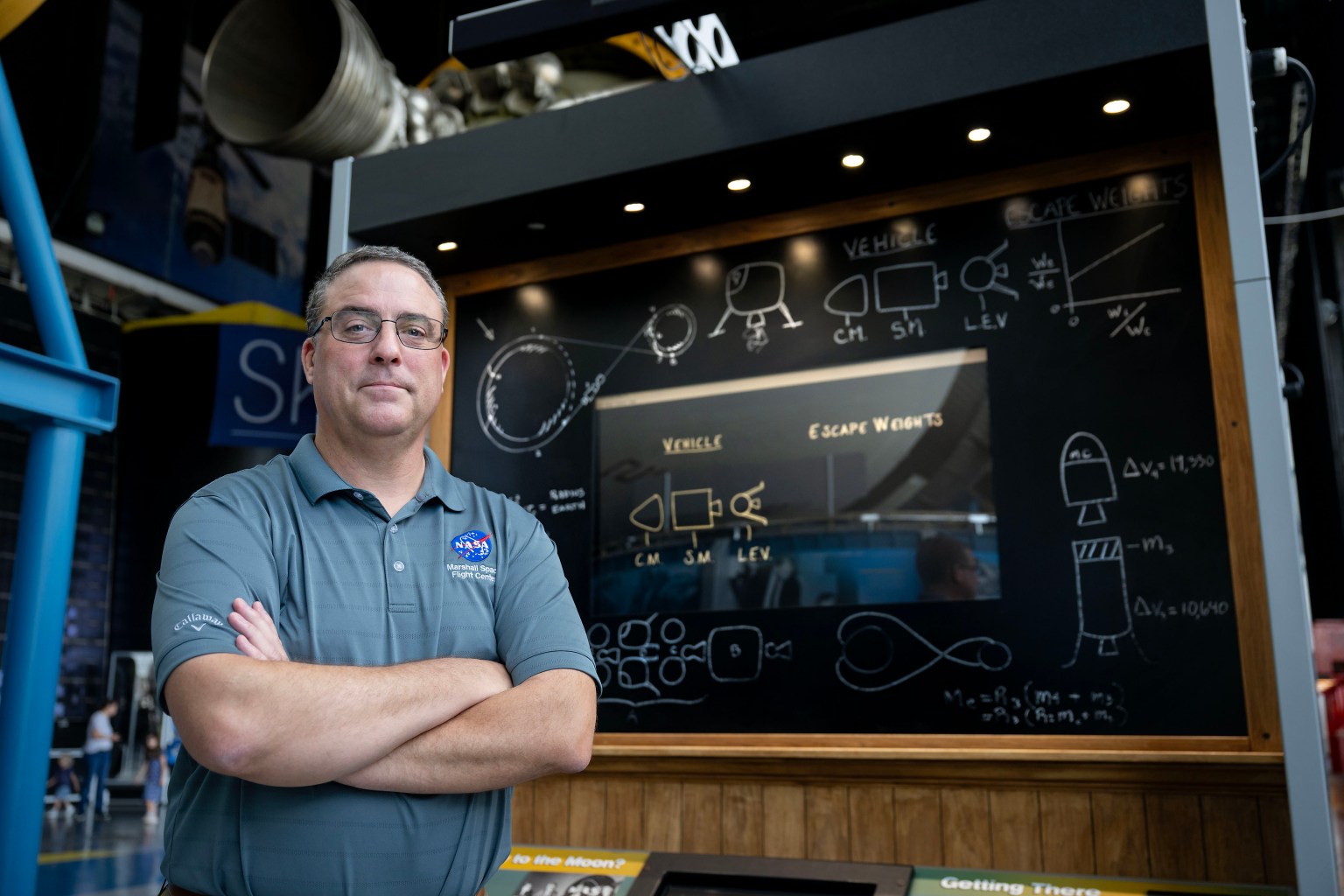
As NASA sets its sights on long-term exploration of the Moon and Mars, the agency is increasing the cadence of its Artemis missions. Helping bring these plans to fruition is Tom Percy, manager of systems engineering and integration for NASA’s Human Landing System Program.
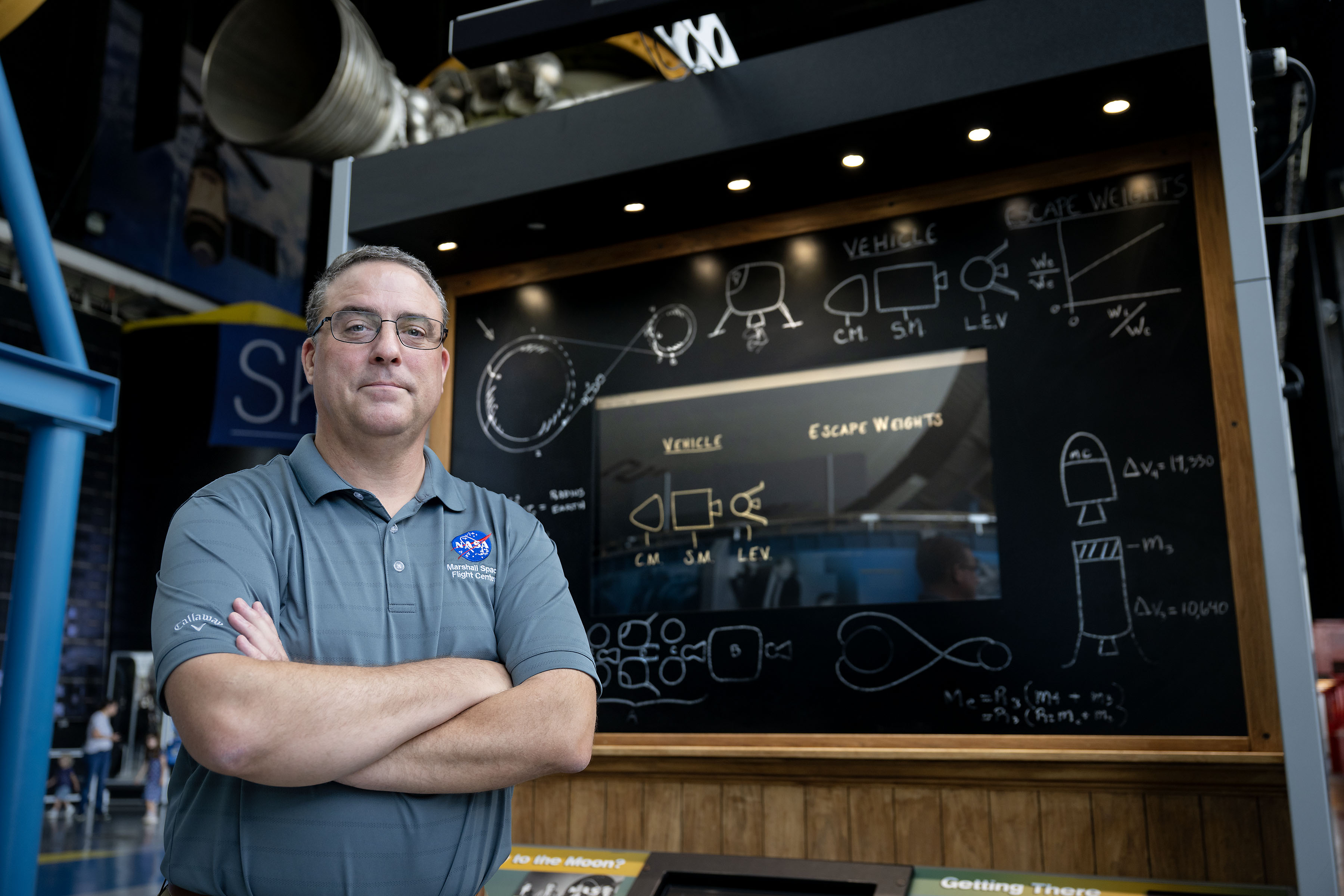
Percy serves as a focal point in working with providers SpaceX and Blue Origin to accelerate and streamline systems designs, manufacturing, testing, and certification. He ensures the crewed landers that SpaceX and Blue Origin are developing for Artemis are designed, built, tested, and will operate with other NASA exploration assets safely and effectively.
“You might say that all human landing system integration work lands on my desk. And with the rest of my talented, hard-working systems engineering and integration team, we’re working to make it all happen,” Percy said.
A native of North Easton, Massachusetts, Percy earned a bachelor’s degree in mechanical engineering from the Rochester Institute of Technology in Rochester, New York, where he first got hands-on experience working on designs that could be applied to NASA’s sustainable lunar architecture.
“As an undergrad, I served as president of the Rochester Institute of Technology’s chapter of the American Society of Mechanical Engineers. To get some real-world engineering experience, we decided to participate in the Great Moonbuggy Race,” Percy said. “Now called the Human Exploration Rover Challenge, the competition is held annually at NASA’s Marshall Space Flight Center in Huntsville, Alabama.
“At the time, I had never heard of Marshall Space Flight Center,” said Percy. “But our student team designed and built a rover and traveled to Huntsville for the race. That’s when I learned about some of the projects in Marshall’s diverse portfolio that the center works for NASA. And that’s when I began planning to make my way to NASA Marshall for my career.”
Percy chose to move south and earn a master’s degree in aerospace engineering from the Georgia Institute of Technology in Atlanta. His research in the advanced propulsion lab and courses in space systems design culminated in a spacecraft design course and the chance to work directly with engineers at Marshall.
Since landing at Marshall in 2003, Percy has been involved in evaluating transportation architecture options for human deep space exploration, including missions to land astronauts on the Moon and Mars. He also has expertise in space transportation, including advanced propulsion technology development; trajectory analysis; and spacecraft and mission concept development. Percy earned a doctorate in aerospace systems engineering from the University of Alabama in Huntsville.
The range of experience comes together in his current role as manager of human landing systems engineering and integration.
“The world watched the amazing success of Artemis II. NASA and our commercial providers are looking forward to flying again soon and executing increasingly complex Artemis missions,” Percy said.
Through the Artemis program, NASA will send astronauts on increasingly complex missions to explore more of the Moon for scientific discovery, economic benefits, establish an enduring human presence on the lunar surface, and to build on our foundation for the first crewed missions to Mars.
To learn more about the Artemis program, visit:
About the Author
Beverly Perry
Share
Details
Related Terms
Explore More
TechCrunch - Latest
OpenAI’s new AI smart speaker will reportedly sell for between $300 and $400
2026-08-06 22:43
Your table awaits: Exhibit at TechCrunch Disrupt 2026 to be seen by thousands
2026-08-06 22:00
Vogue just gave another nod of approval to the tech world
2026-08-06 21:24
Get up to $400 off your TechCrunch Disrupt 2026 pass until tomorrow
2026-08-06 21:20
Google says hackers are calling financial firm employees to hack and extort victims
2026-08-06 19:40


