📰 Trending Topics
Google News - Trending
Who's Trending Up, Trending Down After One Week of Camp - Sports Illustrated
2026-08-05 20:24
Trending on The Hill – August 6, 2026 - NEWS10 ABC
2026-08-06 11:38
Google News - Technology
Bose’s upgraded QuietComfort headphones add head-tracking immersive audio - The Verge
2026-08-06 13:00
- Bose’s upgraded QuietComfort headphones add head-tracking immersive audio The Verge
- Bose Debuts Revamped QuietComfort Headphones With Better Noise-Cancellation Bloomberg.com
- Bose’s New QuietComfort Headphones Make ANC Better for People With Glasses Gizmodo
- Bose’s New QuietComfort Headphones Are Truly Next Gen. Here’s What I Like About Them CNET
- Bose has refreshed its QuietComfort headphones with two-way USB-C audio and better noise cancellation Engadget
OpenAI updating ChatGPT with a smarter GPT-5.6 Sol and unlimited free chats - 9to5Mac
2026-08-06 17:16
- OpenAI updating ChatGPT with a smarter GPT-5.6 Sol and unlimited free chats 9to5Mac
- OpenAI makes major upgrades for free and paid ChatGPT users. Here's what they are Axios
- ChatGPT brings unlimited text chats to free users TechCrunch
- OpenAI Will No Longer Limit How Many Texts Free Accounts Can Send To ChatGPT Engadget
- 4 ChatGPT features that used to require a subscription — and are now free MakeUseOf
Nintendo's Switch 2 Console Sales Just Dropped Significantly - Engadget
2026-08-06 10:13
- Nintendo's Switch 2 Console Sales Just Dropped Significantly Engadget
- ‘Mamma mia!’: Trump tariffs refund ignites 53% profit spike at Nintendo The Guardian
- Nintendo’s Profit Surges on Stronger Game Software Sales, ‘Mario’ Movie Hit WSJ
- Nintendo Tops Estimates With Tariff Refunds and Switch 2 Games Bloomberg.com
- Nintendo's fiscal first-quarter profit and revenue beat estimates, despite Switch 2 sales slump CNBC
Ask Maps in Google Maps rolling out Personal Intelligence, real-time transit, global launch - 9to5Google
2026-08-06 12:30
- Ask Maps in Google Maps rolling out Personal Intelligence, real-time transit, global launch 9to5Google
- Ask Maps gets more helpful with food ordering and more blog.google
- Google’s Ask Maps Lets You Get More Done Conversationally, Thanks to AI CNET
- Google Maps adds agentic features, including food ordering and hotel bookings TechCrunch
- Now You Can Chat With Google Maps To Order Food, Reserve Hotels And More Engadget
Apple Raises Trade-In Values for iPhone, Mac, and More - MacRumors
2026-08-06 14:17
- Apple Raises Trade-In Values for iPhone, Mac, and More MacRumors
- Apple raises trade-in values for most iPhone, iPad, Mac, and Apple Watch models 9to5Mac
- Apple increases trade-in offers and adds new Android devices The Verge
- Apple sweetens its trade-in deals, but you can still do better AppleInsider
- Your old Mac and iPhone are suddenly worth a lot more Macworld
NASA - Breaking News
NASA’s SkyFall Helicopters at Work (Artist’s Concept)
2026-08-06 18:06
NASA’s SkyFall Helicopters at Work (Artist’s Concept)

NASA/JPL-Caltech
Description
This artist’s concept depicts NASA’s three SkyFall Mars helicopters collecting data while flying over the surface of the Red Planet.
The green frequency waves emanating from the helicopters’ large antennas depict collection of subsurface radar data. The red beams depict collect near-infrared imagery data from regolith (crushed rock and dust) and other surface features.
Equipped with four instruments each, the three helicopters will follow in the footsteps of the agency’s Ingenuity Mars Helicopter, a technology demonstrator that flew 72 times over nearly three years, proving that powered, controlled flight is possible in the rarefied Martian atmosphere. It also demonstrated how an aerial perspective can generate valuabledata by helping NASA’s Perseverance Mars rover team plan time-saving routes and choose locations for science-gathering.
SkyFall is expected to launch aboard NASA’s Space Reactor-1 Freedom in late 2028.
The SkyFall project, which will carry three Mars helicopters to the Red Planet in December 2028, is managed by NASA’s Jet Propulsion Laboratory. AeroVironment of Arlington, Virginia — which worked with JPL to design and build the history-making Ingenuity rotorcraft — will co-design and co-manufacture the SkyFall helicopters. Managed by Caltech for NASA, JPL manages the overall Mars Exploration Program on behalf of NASA’s Science Mission Directorate in Washington.
For more information about NASA’s SkyFall:


Antenna Testing for NASA’s SkyFall Mission
2026-08-06 17:56
Antenna Testing for NASA’s SkyFall Mission

NASA/JPL-Caltech
Description
SkyFall ground-penetrating radar engineer Maya Román connects a coaxial cable to a test antenna in the Environmental Test Lab’s electromagnetic interference testing chamber at NASA’s Jet Propulsion Laboratory in Southern California.
The antenna was pointed up during test to minimize reflections and interferences with the antenna pattern during the measurement.
Equipped with four instruments each, the three SkyFall aircraft will follow in the footsteps of the agency’s Ingenuity Mars Helicopter, which flew 72 times over nearly three years, proving that powered, controlled flight is possible in the rarefied Martian atmosphere. It also demonstrated how an aerial perspective can generate valuable data by helping NASA’s Perseverance Mars rover team plan time-saving routes and choose locations for science-gathering.
SkyFall is expected to launch aboard NASA’s Space Reactor-1 Freedom in late 2028.
I Am Artemis Tom Percy
2026-08-06 16:35
I Am Artemis Tom Percy
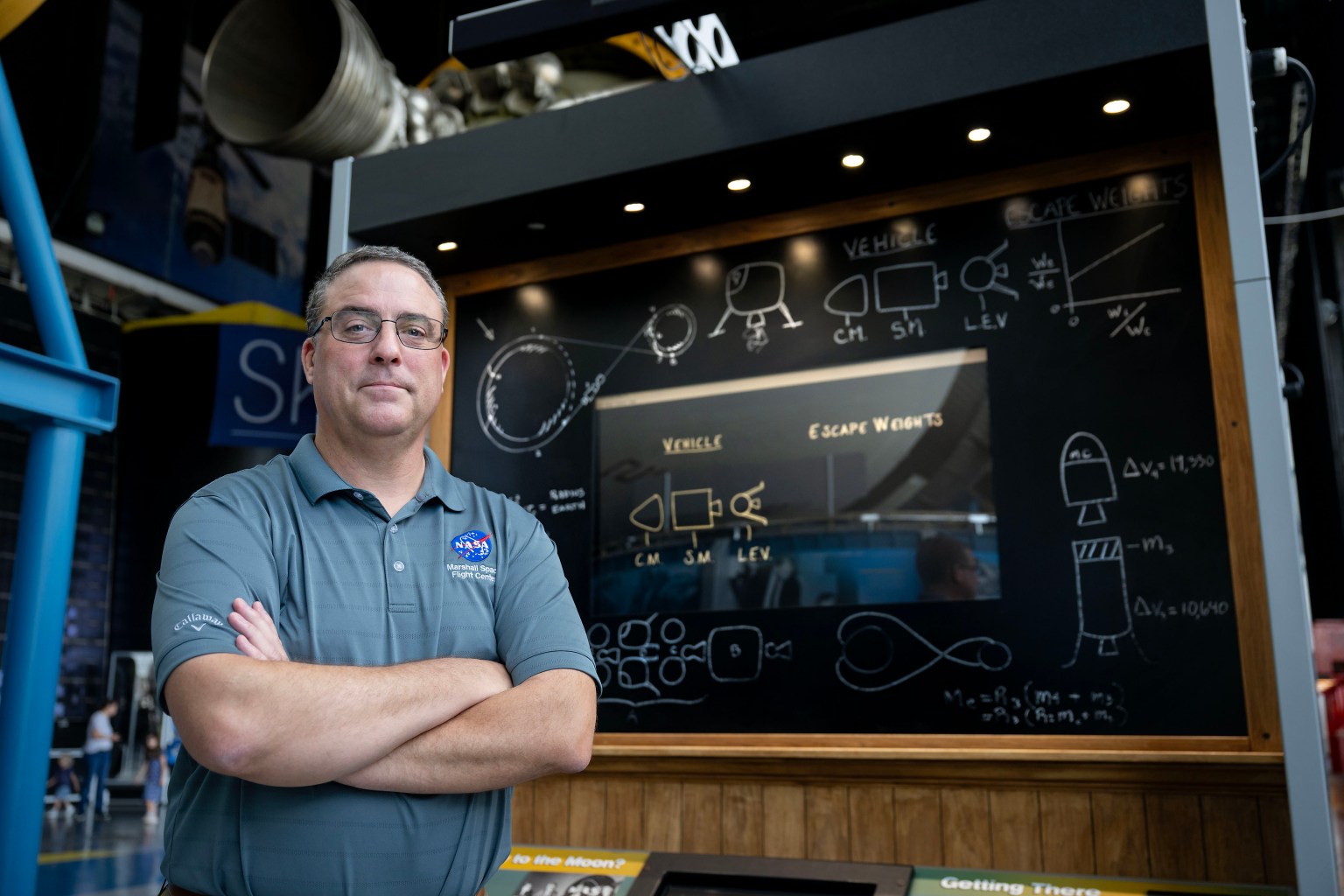
As NASA sets its sights on long-term exploration of the Moon and Mars, the agency is increasing the cadence of its Artemis missions. Helping bring these plans to fruition is Tom Percy, manager of systems engineering and integration for NASA’s Human Landing System Program.
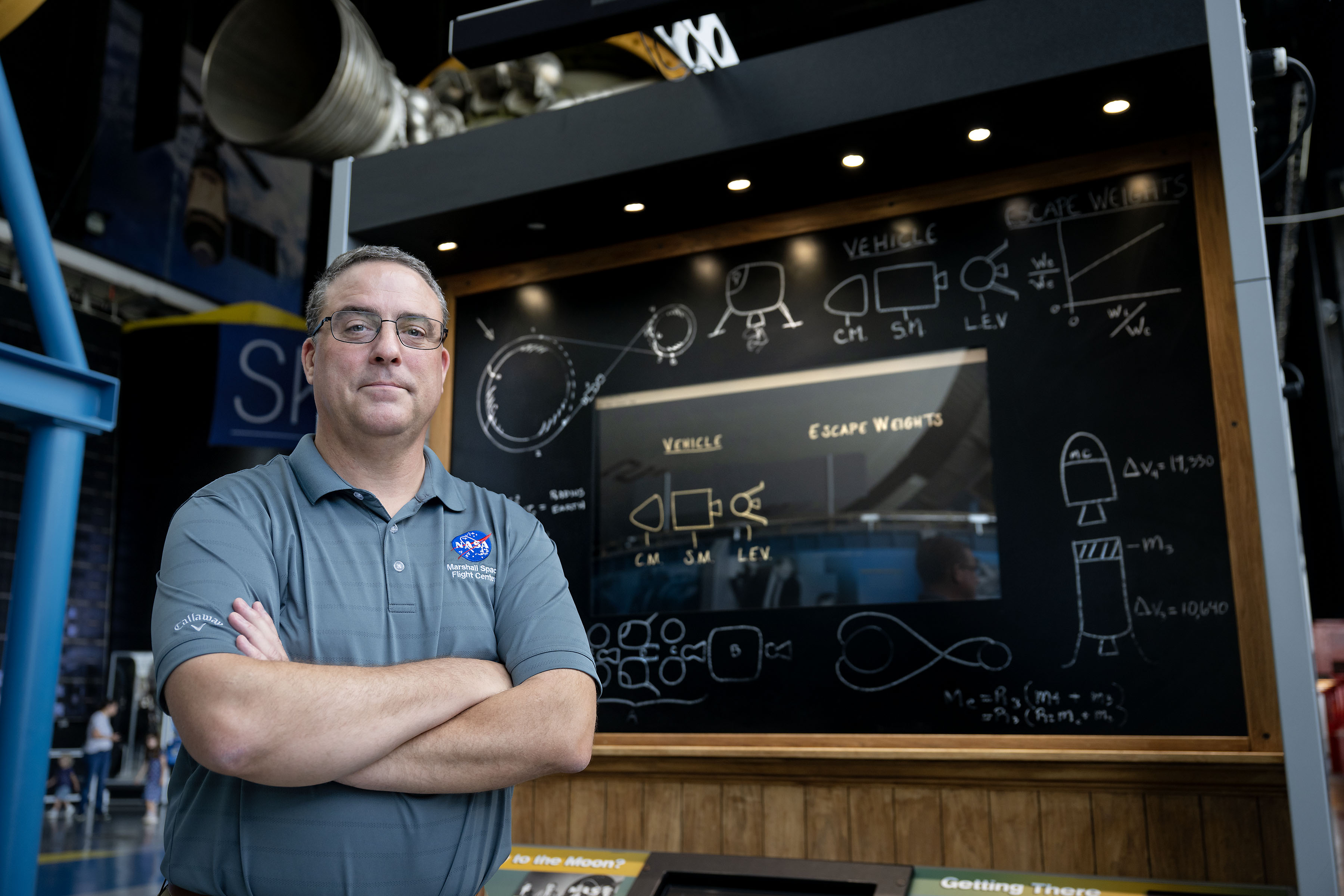
Percy serves as a focal point in working with providers SpaceX and Blue Origin to accelerate and streamline systems designs, manufacturing, testing, and certification. He ensures the crewed landers that SpaceX and Blue Origin are developing for Artemis are designed, built, tested, and will operate with other NASA exploration assets safely and effectively.
“You might say that all human landing system integration work lands on my desk. And with the rest of my talented, hard-working systems engineering and integration team, we’re working to make it all happen,” Percy said.
A native of North Easton, Massachusetts, Percy earned a bachelor’s degree in mechanical engineering from the Rochester Institute of Technology in Rochester, New York, where he first got hands-on experience working on designs that could be applied to NASA’s sustainable lunar architecture.
“As an undergrad, I served as president of the Rochester Institute of Technology’s chapter of the American Society of Mechanical Engineers. To get some real-world engineering experience, we decided to participate in the Great Moonbuggy Race,” Percy said. “Now called the Human Exploration Rover Challenge, the competition is held annually at NASA’s Marshall Space Flight Center in Huntsville, Alabama.
“At the time, I had never heard of Marshall Space Flight Center,” said Percy. “But our student team designed and built a rover and traveled to Huntsville for the race. That’s when I learned about some of the projects in Marshall’s diverse portfolio that the center works for NASA. And that’s when I began planning to make my way to NASA Marshall for my career.”
Percy chose to move south and earn a master’s degree in aerospace engineering from the Georgia Institute of Technology in Atlanta. His research in the advanced propulsion lab and courses in space systems design culminated in a spacecraft design course and the chance to work directly with engineers at Marshall.
Since landing at Marshall in 2003, Percy has been involved in evaluating transportation architecture options for human deep space exploration, including missions to land astronauts on the Moon and Mars. He also has expertise in space transportation, including advanced propulsion technology development; trajectory analysis; and spacecraft and mission concept development. Percy earned a doctorate in aerospace systems engineering from the University of Alabama in Huntsville.
The range of experience comes together in his current role as manager of human landing systems engineering and integration.
“The world watched the amazing success of Artemis II. NASA and our commercial providers are looking forward to flying again soon and executing increasingly complex Artemis missions,” Percy said.
Through the Artemis program, NASA will send astronauts on increasingly complex missions to explore more of the Moon for scientific discovery, economic benefits, establish an enduring human presence on the lunar surface, and to build on our foundation for the first crewed missions to Mars.
To learn more about the Artemis program, visit:
About the Author
Beverly Perry
Share
Details
Related Terms
Explore More




Taking Flight to Prepare for Space
2026-08-06 15:15
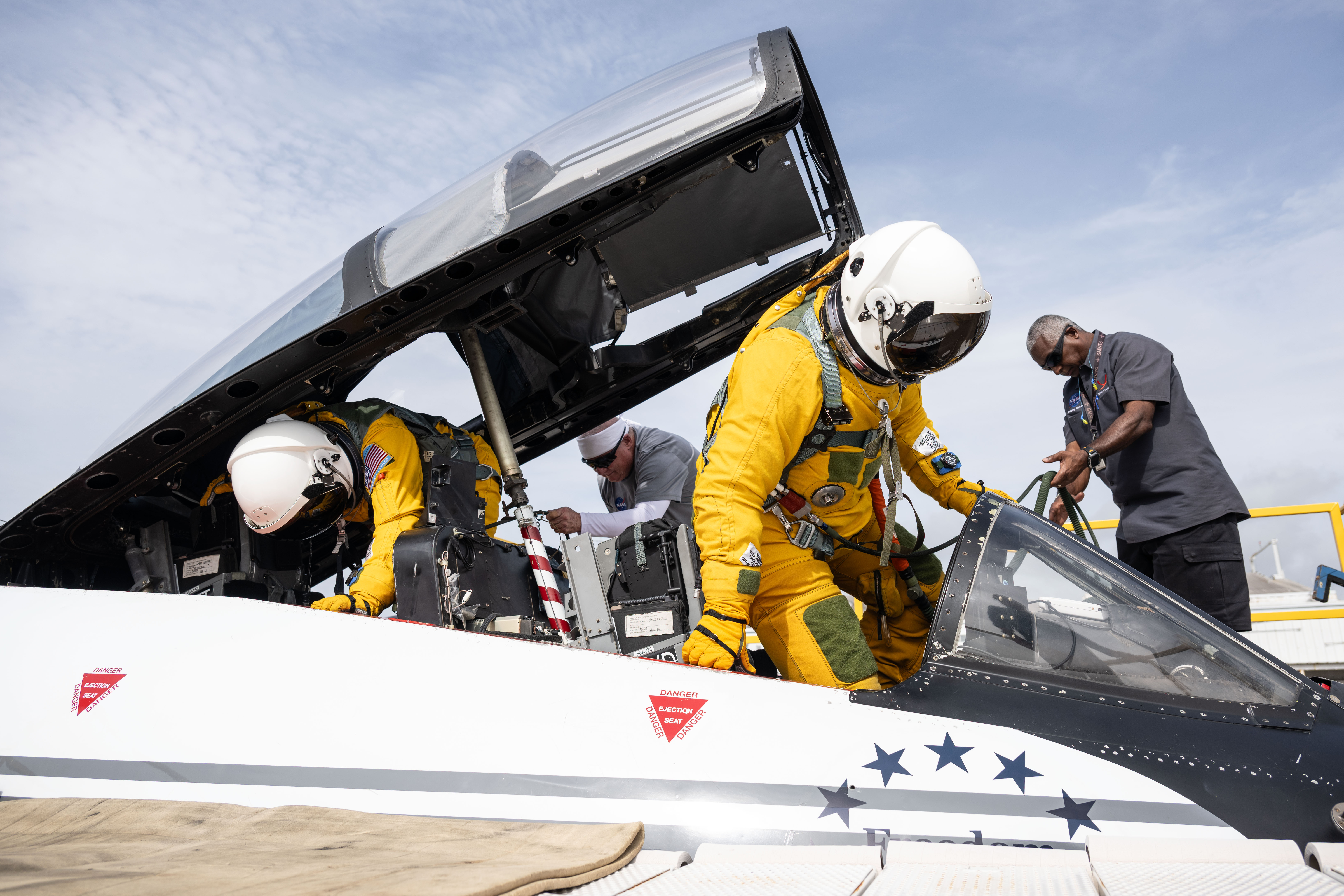
NASA astronaut Adam Fuhrmann (right, in yellow) prepares for a training flight aboard NASA’s WB-57 aircraft in this July 16, 2026, photo.
These high-altitude flights train the crew to work in a tight environment and operate aircraft systems while in a pressure suit, preparing them for future missions to the International Space Station, Moon, or beyond.
Image credit: NASA/Josh Valcarcel
JOB OPPORTUNITIES: NASA OFFICE OF THE GENERAL COUNSEL
2026-08-06 14:39
1 min read
Preparations for Next Moonwalk Simulations Underway (and Underwater)
TechCrunch - Latest
Ford needs another Taurus, and the $30K Fathom EV pickup isn’t it
2026-08-06 17:41
Bumble teases a swipe-free future as it doubles down on IRL meetups
2026-08-06 17:39
ChatGPT brings unlimited text chats to free users
2026-08-06 17:34
Naïve raises $28.5M to automate the grunt work of setting up and running a company
2026-08-06 17:00
Hacker pleads guilty to stealing data from more than 165 Snowflake customers
2026-08-06 16:42


