📰 Trending Topics
Google News - Trending
Who's Trending Up, Trending Down After One Week of Camp - Sports Illustrated
2026-08-05 20:24
Trending on The Hill – August 6, 2026 - NEWS10 ABC
2026-08-06 11:38
Google News - Technology
Samsung Galaxy Z series foldables are breaking pre-order records in the US and Korea - Mashable
2026-08-05 23:07
- Samsung Galaxy Z series foldables are breaking pre-order records in the US and Korea Mashable
- Samsung Pre-Orders for Latest Foldables Jump 30% From Last Year Bloomberg.com
- The 2-week-old Galaxy Z Fold 8 Ultra shows a deeper crease than the 4-month-old Oppo Find N6 PhoneArena
- It’s the last day to get a $350 gift card with your Samsung Galaxy Z Fold 8 preorder The Verge
- Samsung’s Galaxy Z Series Sets Record for Highest Ever Pre-Order samsung.com
Bose’s upgraded QuietComfort headphones add head-tracking immersive audio - The Verge
2026-08-06 13:00
- Bose’s upgraded QuietComfort headphones add head-tracking immersive audio The Verge
- Bose’s New QuietComfort Headphones Are Truly Next Gen. Here’s What I Like About Them cnet.com
- Bose Debuts Revamped QuietComfort Headphones With Better Noise-Cancellation Bloomberg.com
- Bose’s New QuietComfort Headphones Make ANC Better for People With Glasses Gizmodo
- Bose has refreshed its QuietComfort headphones with two-way USB-C audio and better noise cancellation Engadget
Apple raises trade-in values for most iPhone, iPad, Mac, and Apple Watch models - 9to5Mac
2026-08-06 13:35
- Apple raises trade-in values for most iPhone, iPad, Mac, and Apple Watch models 9to5Mac
- Apple increases trade-in offers and adds new Android devices The Verge
- Apple Raises Trade-In Values for iPhone, Mac, and More MacRumors
- Your old Mac and iPhone are suddenly worth a lot more Macworld
- Apple sweetens its trade-in deals, but you can still do better AppleInsider
Samsung reveals when fifth One UI 9.0 beta is coming to Galaxy S26 - SamMobile
2026-08-06 05:31
- Samsung reveals when fifth One UI 9.0 beta is coming to Galaxy S26 SamMobile
- Bad news for Galaxy S26 owners waiting on the One UI 9 beta PhoneArena
- Android 17: List of Samsung phones eligible for One UI 9.0 Deccan Herald
- Galaxy Z Fold 7, Flip 7 One UI 9.0 beta release is around the corner SamMobile
- Exclusive: Here’s Your First Look at One UI 9.5’s Update Banner SammyGuru
NASA - Breaking News
I Am Artemis Tom Percy
2026-08-06 16:35
I Am Artemis Tom Percy

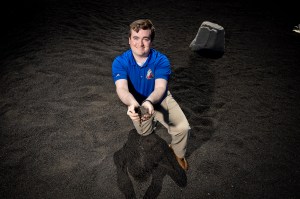
As NASA sets its sights on long-term exploration of the Moon and Mars, the agency is increasing the cadence of its Artemis missions. Helping bring these plans to fruition is Tom Percy, manager of systems engineering and integration for NASA’s Human Landing System Program.

Percy serves as a focal point in working with providers SpaceX and Blue Origin to accelerate and streamline systems designs, manufacturing, testing, and certification. He ensures the crewed landers that SpaceX and Blue Origin are developing for Artemis are designed, built, tested, and will operate with other NASA exploration assets safely and effectively.
“You might say that all human landing system integration work lands on my desk. And with the rest of my talented, hard-working systems engineering and integration team, we’re working to make it all happen,” Percy said.
A native of North Easton, Massachusetts, Percy earned a bachelor’s degree in mechanical engineering from the Rochester Institute of Technology in Rochester, New York, where he first got hands-on experience working on designs that could be applied to NASA’s sustainable lunar architecture.
“As an undergrad, I served as president of the Rochester Institute of Technology’s chapter of the American Society of Mechanical Engineers. To get some real-world engineering experience, we decided to participate in the Great Moonbuggy Race,” Percy said. “Now called the Human Exploration Rover Challenge, the competition is held annually at NASA’s Marshall Space Flight Center in Huntsville, Alabama.
“At the time, I had never heard of Marshall Space Flight Center,” said Percy. “But our student team designed and built a rover and traveled to Huntsville for the race. That’s when I learned about some of the projects in Marshall’s diverse portfolio that the center works for NASA. And that’s when I began planning to make my way to NASA Marshall for my career.”
Percy chose to move south and earn a master’s degree in aerospace engineering from the Georgia Institute of Technology in Atlanta. His research in the advanced propulsion lab and courses in space systems design culminated in a spacecraft design course and the chance to work directly with engineers at Marshall.
Since landing at Marshall in 2003, Percy has been involved in evaluating transportation architecture options for human deep space exploration, including missions to land astronauts on the Moon and Mars. He also has expertise in space transportation, including advanced propulsion technology development; trajectory analysis; and spacecraft and mission concept development. Percy earned a doctorate in aerospace systems engineering from the University of Alabama in Huntsville.
The range of experience comes together in his current role as manager of human landing systems engineering and integration.
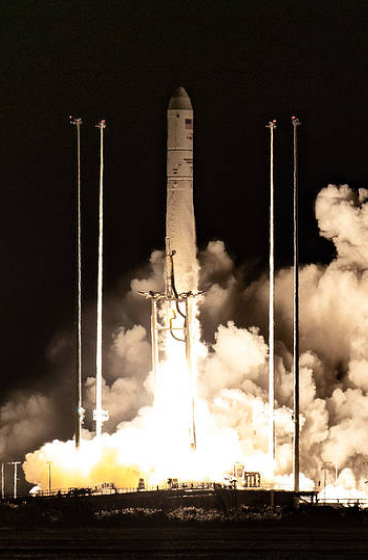
“The world watched the amazing success of Artemis II. NASA and our commercial providers are looking forward to flying again soon and executing increasingly complex Artemis missions,” Percy said.
Through the Artemis program, NASA will send astronauts on increasingly complex missions to explore more of the Moon for scientific discovery, economic benefits, establish an enduring human presence on the lunar surface, and to build on our foundation for the first crewed missions to Mars.
To learn more about the Artemis program, visit:
About the Author
Beverly Perry
Share
Details
Related Terms
Explore More


Taking Flight to Prepare for Space
2026-08-06 15:15

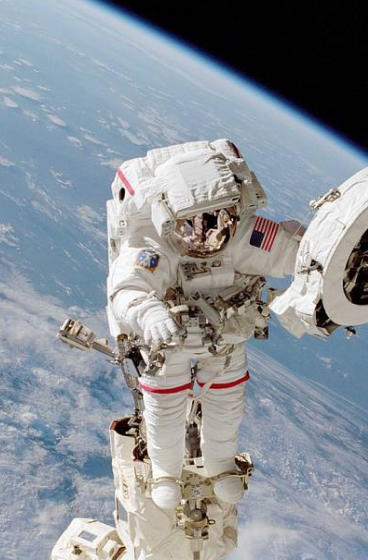
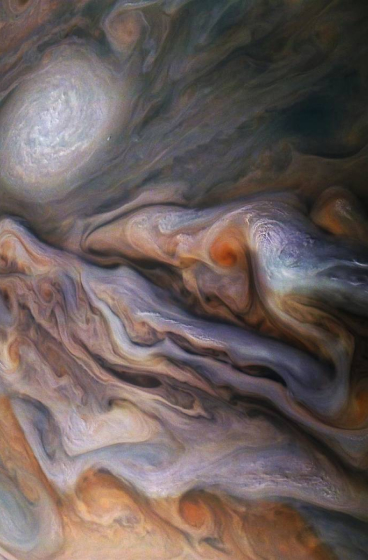
NASA astronaut Adam Fuhrmann (right, in yellow) prepares for a training flight aboard NASA’s WB-57 aircraft in this July 16, 2026, photo.
These high-altitude flights train the crew to work in a tight environment and operate aircraft systems while in a pressure suit, preparing them for future missions to the International Space Station, Moon, or beyond.
Image credit: NASA/Josh Valcarcel
JOB OPPORTUNITIES: NASA OFFICE OF THE GENERAL COUNSEL
2026-08-06 14:39
1 min read
Preparations for Next Moonwalk Simulations Underway (and Underwater)
APOD: 2026 August 6 – New Sharpest Image of the Sun Uncovers Instability
2026-08-06 04:05
APOD
Astronomy Picture of the Day
Discover the cosmos! Each day a different image or photograph of our fascinating universe is featured, along with a brief explanation written by a professional astronomer.

New Sharpest Image of the Sun Uncovers Instability
Explanation: What does the new sharpest image of our Sun show? Instability. To be clear, a certain kind of interactive process called the Kelvin-Helmholtz instability (KHI). This instability can create waves and swirls when two streams flow past each other — in this case variable streams of solar magnetic plasma. Long hypothesized to occur on the Sun’s surface, KHI streaks and swirls were confirmed in just-released dramatic high-resolution images taken recently by the Inouye Solar Telescope in Hawaii, USA. The featured false-yellow image, actually taken in deep blue, is the highest resolution image yet of the Sun in visible light. It spans about the radius of the Earth, but its finest details are city sized. Visible are several smooth tops of changing solar granules, while the edges of the flower-like structures have been found to harbor multiple KHI swirls. Future research may investigate how the KHI helps move energy, magnetic fields, and may even heat the surrounding solar corona.
Tomorrow’s picture: Rubin’s COSMOS
| Date | August 6, 2026 |
|---|---|
| Credit | NSF, NSO, AURA, MPS, Inouye Tel |
| Authors & editors: | Robert Nemiroff, Jerry Bonnell, Cecilia Chirenti, Keighley Rockcliffe |
| A service of: |
ASD at NASA / GSFC, NASA Science Activation & Michigan Tech. U. |
How the Tide Turns at the Mouth of the Elbe
2026-08-06 04:01
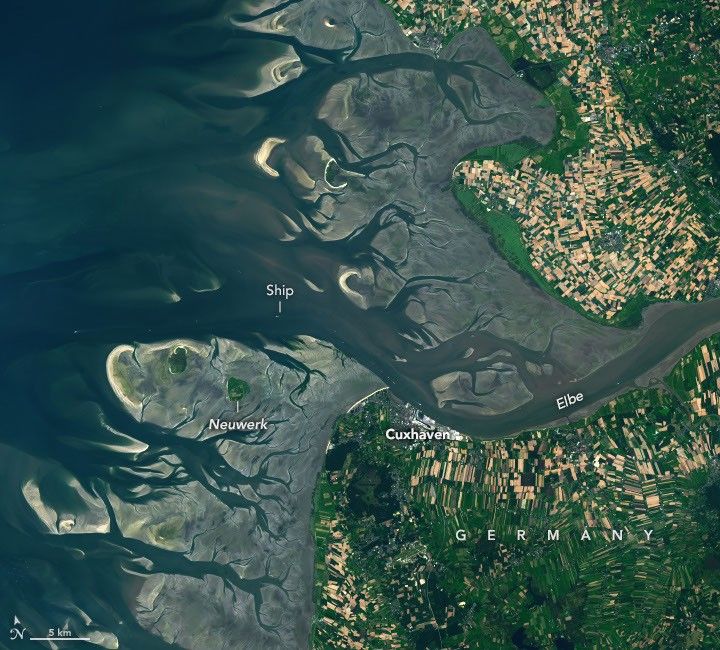
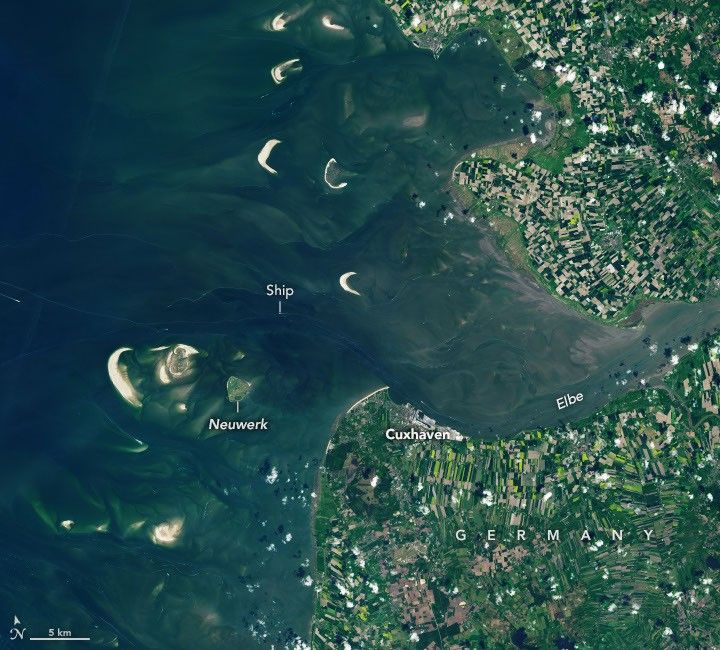
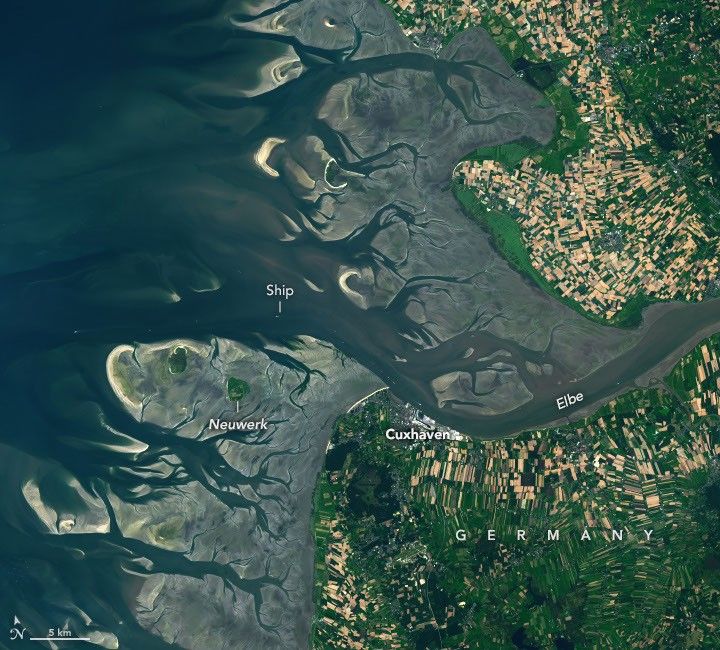
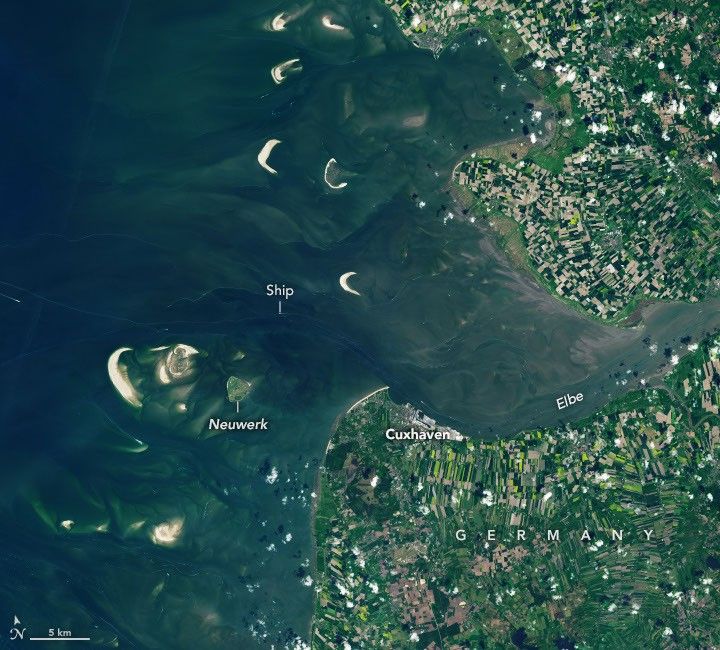
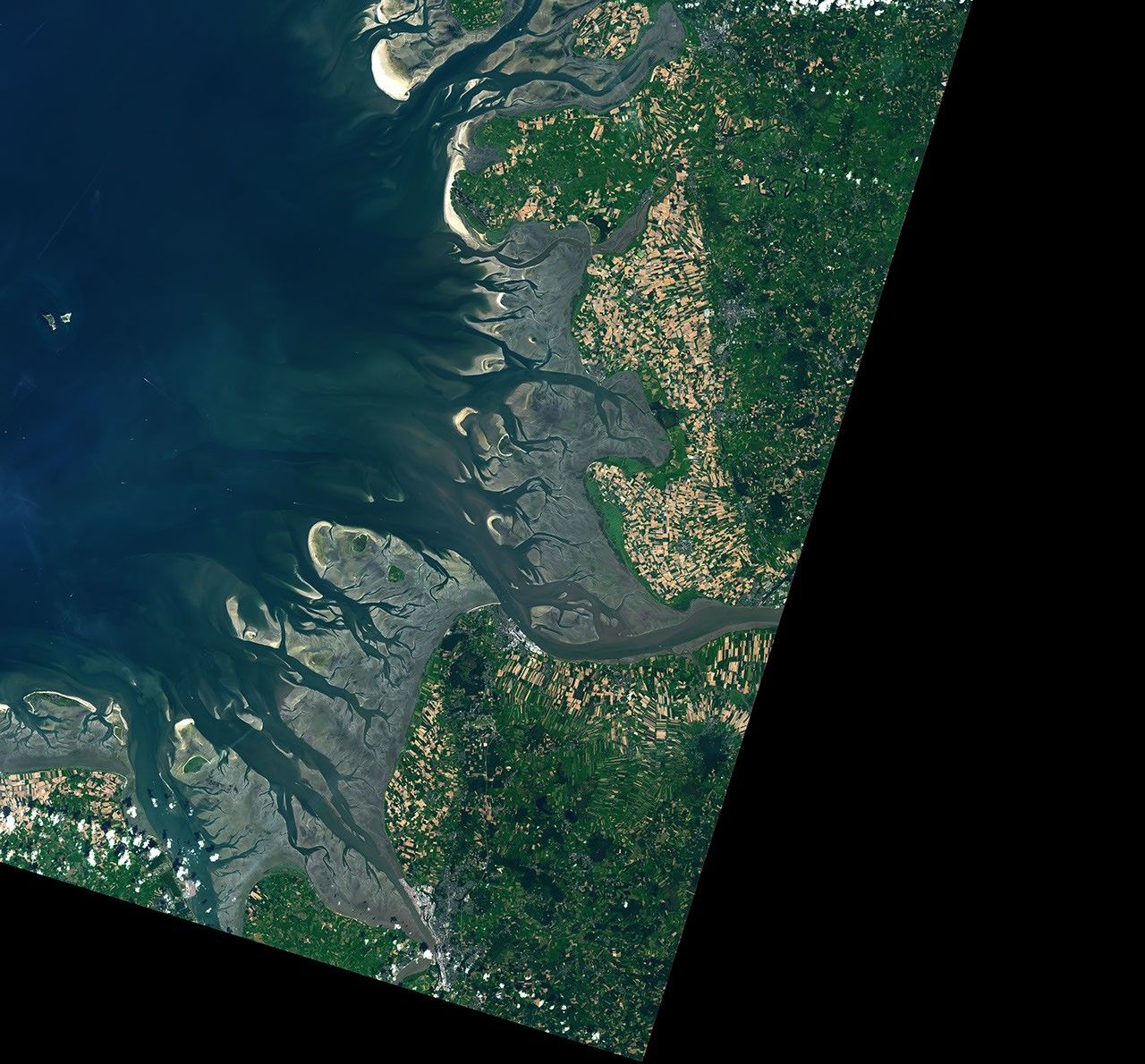
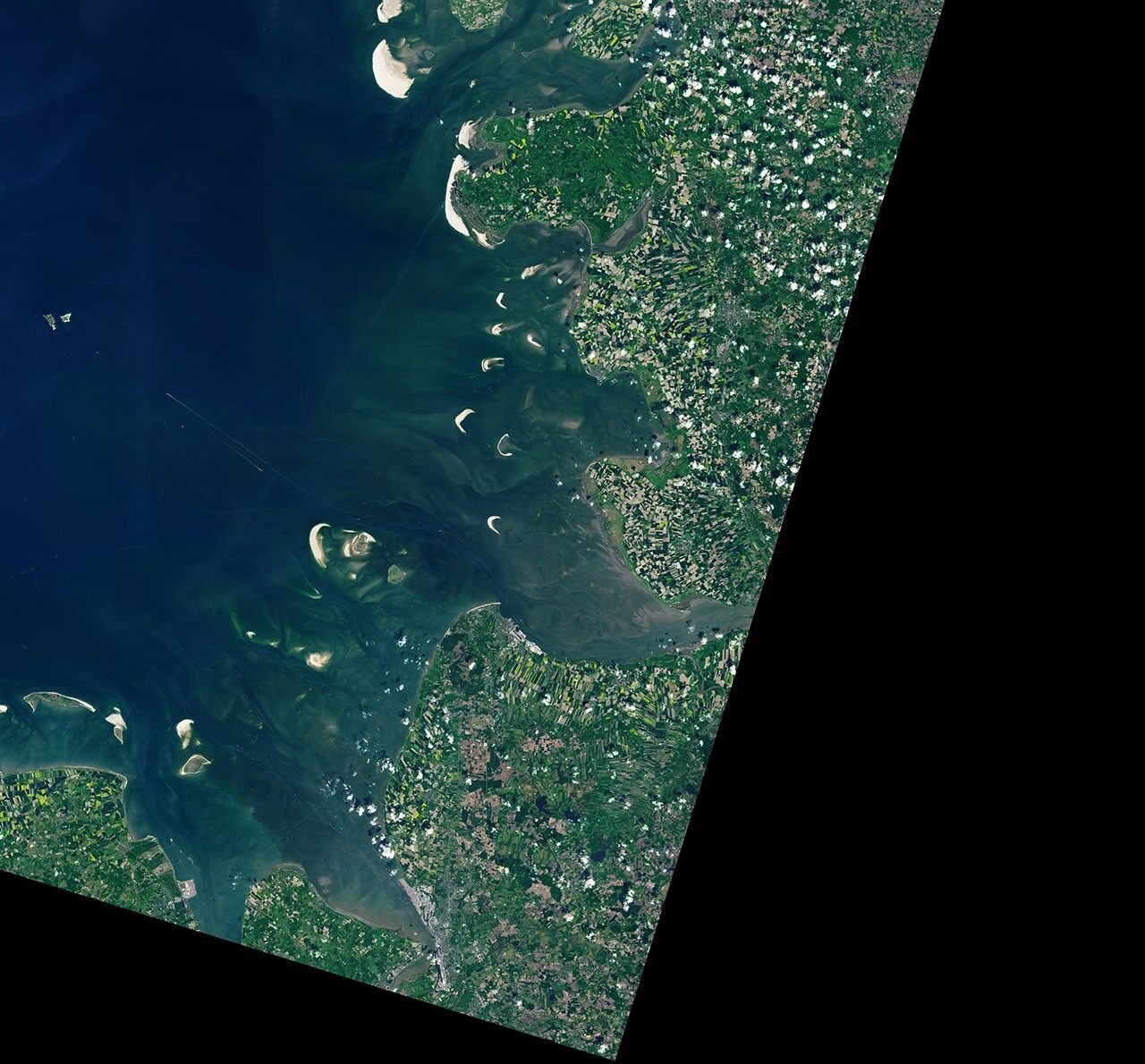
August 15, 2025
May 11, 2025
One of the major rivers of Europe, the Elbe flows more than 1,000 kilometers (600 miles) across the continent before reaching the North Sea. At its mouth, the low-lying landscape is continually reshaped by the rise and fall of the tides. These dynamic tidal flats are a boon to biodiversity while sometimes posing challenges for those navigating its waters and for communities living along its shores.
The images above illustrate how the area changes with the tides. They were acquired on August 15, 2025, at low tide (left) and on May 11, 2025, at high tide (right) with the OLI (Operational Land Imager) on Landsat 9. The mean tidal range at Cuxhaven is 2.9 meters (9.5 feet), which is considered intermediate, or mesotidal. The tides are also asymmetrical, meaning the flood period is shorter than the ebb. This causes the incoming current to run faster and typically carry more sediment up the 140-kilometer-long (87-mile-long) estuary than it does out.
The low tide exposes complex channels, sandbars, and mudflats around the river mouth. This wide zone of coastal wetlands is part of the Wadden Sea, which stretches from the Netherlands to southern Denmark and represents the largest continuous system of intertidal sand and mud flats in the world. Its habitats serve as important staging, molting, and wintering grounds for migratory birds, with more than 10 million passing through every year.
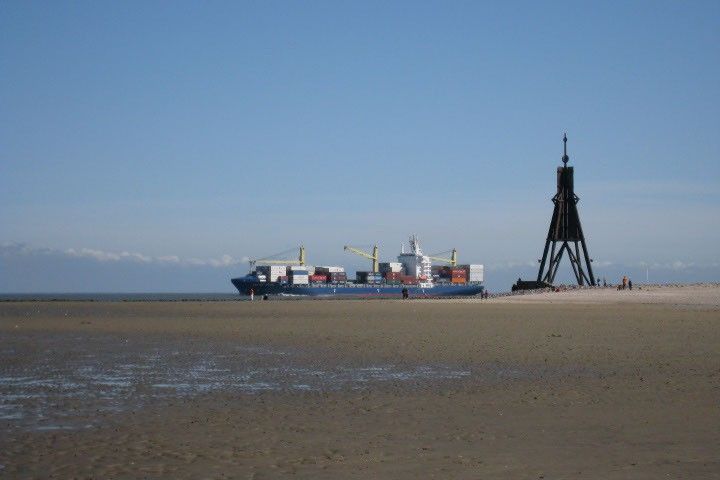
A channel cuts through these natural features near the river’s mouth, allowing ships to reach Cuxhaven and Hamburg—the third-largest container port in the European Union—farther upriver. Dredging is required to remove accumulated sediment in the channel, and some ships can only pass through when the tide is high enough. The Elbe’s mouth also provides access to the Kiel Canal, which connects the North Sea and Baltic Sea and is the world’s busiest human-made waterway navigable by seagoing ships.
At high tide (right), only a handful of small islands and sandbars remain above the waves. One of these islands, Neuwerk, is a tranquil tourist destination that is home to a few dozen inhabitants and the oldest building on the German coast. A brick tower, completed in 1310 and later converted to a lighthouse, was built to protect shipping on the Elbe from pirates and wreckers.
These images show normal tidal variation in the area, but storms can push water levels much higher than a typical high tide. The highest water level measured at Cuxhaven—5.1 meters (16.7 feet) above Europe’s official sea level reference—occurred on January 3, 1976, when a fast-moving storm swept across the North Sea and slammed the coast with high winds. Researchers who reconstructed historical storms noted that the storm surge was worsened by its timing relative to the tide. The strongest winds arrived around low tide, preventing water that had propagated upstream at high tide from flowing back out to sea and causing further inundation inland.
Scientists study past extreme events like this to better understand how future storms might affect low-lying coastal areas and how flood protection could be improved. Flooding risks can be exacerbated by rising sea levels, which at Cuxhaven have trended upward by 2.12 millimeters per year, or 0.70 feet per century.
Two new Earth-observing satellites are making it possible to measure water levels in coastal areas in greater detail. The dual-band radar on the NISAR (NASA-ISRO Synthetic Aperture Radar) satellite is expected to track long-term phenomena such as sea level changes, as well as to map flood inundation and other ephemeral events. In addition, early data from NASA’s SWOT (Surface Water and Ocean Topography) satellite has demonstrated the potential to accurately measure water levels around complex coastlines and to improve tidal models.
NASA Earth Observatory images by Lauren Dauphin, using Landsat data from the U.S. Geological Survey. Photo by Thomas Gölles. Story by Lindsey Doermann.
References & Resources
- Common Wadden Sea Secretariat Welcome to the Wadden Sea World Heritage. Accessed August 5, 2026.
- EBSCO Research Starters (2024) Elbe River. Accessed August 5, 2026.
- Federal Maritime and Hydrographic Agency (2025) Tides. Accessed August 5, 2026.
- Meyer, E.M.I. and Gaslikova, L. (2024) Investigation of historical severe storms and storm tides in the German Bight with century reanalysis data. Natural Hazards and Earth System Sciences, 24(2), 481–499.
- NASA Tides. Accessed August 5, 2026.
- North Sea Region Programme The Elbe Estuary. Accessed August 5, 2026.
You may also be interested in:
Stay up-to-date with the latest content from NASA as we explore the universe and discover more about our home planet.

The expansive mudflats, sandy beaches, and mangrove forests of the Bijagós archipelago support an array of migratory shorebirds and large…
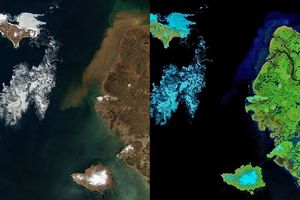
Drifting sea ice fragments near Alaska’s Saint Lawrence and Nunivak islands and colorful water around the Yukon Delta heralded the…
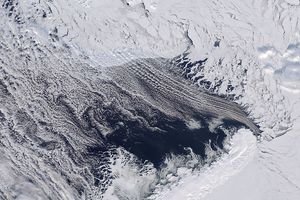
Patches of open water in the region contributed to low sea ice extent across the Arctic in March 2026, which…




TechCrunch - Latest
Naïve raises $28.5M to automate the grunt work of setting up and running a company
2026-08-06 17:00
Hacker pleads guilty to stealing data from more than 165 Snowflake customers
2026-08-06 16:42
TikTok lays off 250 employees, shutters its Nashville office
2026-08-06 16:06
Google Wallet now lets parents set up secure balances for their kids
2026-08-06 16:00
Gen Z dating apps like Ditto ditch swiping in favor of AI matchmaking
2026-08-06 15:53


