📰 Trending Topics
Google News - Trending
Google News - Technology
‘Fitbit Edge’ leaks as Google’s next fitness tracker with ‘Apps’ & ‘Notifications’ - 9to5Google
2026-10-04 17:06
- ‘Fitbit Edge’ leaks as Google’s next fitness tracker with ‘Apps’ & ‘Notifications’ 9to5Google
- Exclusive: This Is the Fitbit Edge, Google's Next Fitness Tracker Android Headlines
- Google Fitbit Edge: Everything We Know About It Droid Life
- The new Fitbit Edge leaks The Verge
- Google's Fitbit Edge leaks: built-in GPS, 7-day battery, iPhone support finance.biggo.com
Redesigned MacBook Pro with OLED to feature ‘significantly lighter’ design: report - 9to5Mac
2026-10-04 14:11
- Redesigned MacBook Pro with OLED to feature ‘significantly lighter’ design: report 9to5Mac
- Apple MacBook Pro Release Schedule: What To Expect When Forbes
- The Upcoming Touchscreen OLED MacBook Pro Is Reportedly 'Significantly Lighter' Engadget
- New MacBook Pro redesign gets exciting launch timing update 9to5Mac
- Touch-screen MacBook Pro will be significantly lighter AppleInsider
Microsoft adds alternate way to download and install Windows 11 26H2 easily - Neowin
2026-10-03 17:16
- Microsoft adds alternate way to download and install Windows 11 26H2 easily Neowin
- How to get the Windows 11 2026 Update Windows Blog
- Skip the Wait. Microsoft's 26H2 Update Fixes the Parts You Hate Most About Windows 11 PCMag
- Microsoft’s week of quiet power moves: Windows 11 26H2 goes stable, Surface gears up for October 7, and Qualcomm’s X2 puts Intel on notice Windows Central
- Microsoft promised a better Windows 11. Here’s its 6-month report card PCWorld
Top Stories: Apple Smart Home Launch on October 13, iPhone Duo Production Issues, and More - MacRumors
2026-10-03 13:00
- Top Stories: Apple Smart Home Launch on October 13, iPhone Duo Production Issues, and More MacRumors
- Apple Is Finally Ready to Enter Its Next Big Category: the Smart Home Bloomberg.com
- Dear Apple Stock Fans, Mark Your Calendars for October 13 Barchart.com
- Apple’s September was huge. October could be even bigger macworld.com
- ‘HomePad’ coming: Will Apple hold an October special event? 9to5Mac
Today's NYT Strands Hints (and Answer) for Sunday, October 4, 2026 - Lifehacker
2026-10-04 04:00
- Today's NYT Strands Hints (and Answer) for Sunday, October 4, 2026 Lifehacker
- NYT Strands hints, answers for October 4, 2026 Mashable
- Today’s NYT Strands Hints, Answers and Help for Oct. 4, #945 CNET
- NYT Strands Answers Today: Hints & Clues For Sunday, October 4 (Grab Your Tokens) Forbes
- Today’s NYT Strands Hints, Spangram, Answers: Wednesday, September 30 (An Instrumental Destination) Currently.com
NASA - Breaking News
Curiosity Blog, Sols 5022-5028: Cashing in at Cache Creek
2026-10-04 21:13
3 min read
Curiosity Blog, Sols 5022-5028: Cashing in at Cache Creek
Written by Lucy Thompson, Senior Research Scientist, University of New Brunswick, Canada
Earth planning date: Friday, Sept. 25, 2026
Before we landed, the area of Gale crater that we planned to explore was divided up into rectangular parcels with designated names. The names were chosen after small towns associated with significant geological features. Our selected targets (mesas, bedrock, soil, boulders, etc.) within those quads were then given unofficial names based on the theme of the quad. See the link here for more details on naming conventions on Mars. Curiosity has long since climbed above the quads that were selected before landing, and before her 14-year, 38-kilometer (24.6-mile) trek, which included more than 1 kilometer (0.6 miles) of elevation gain.
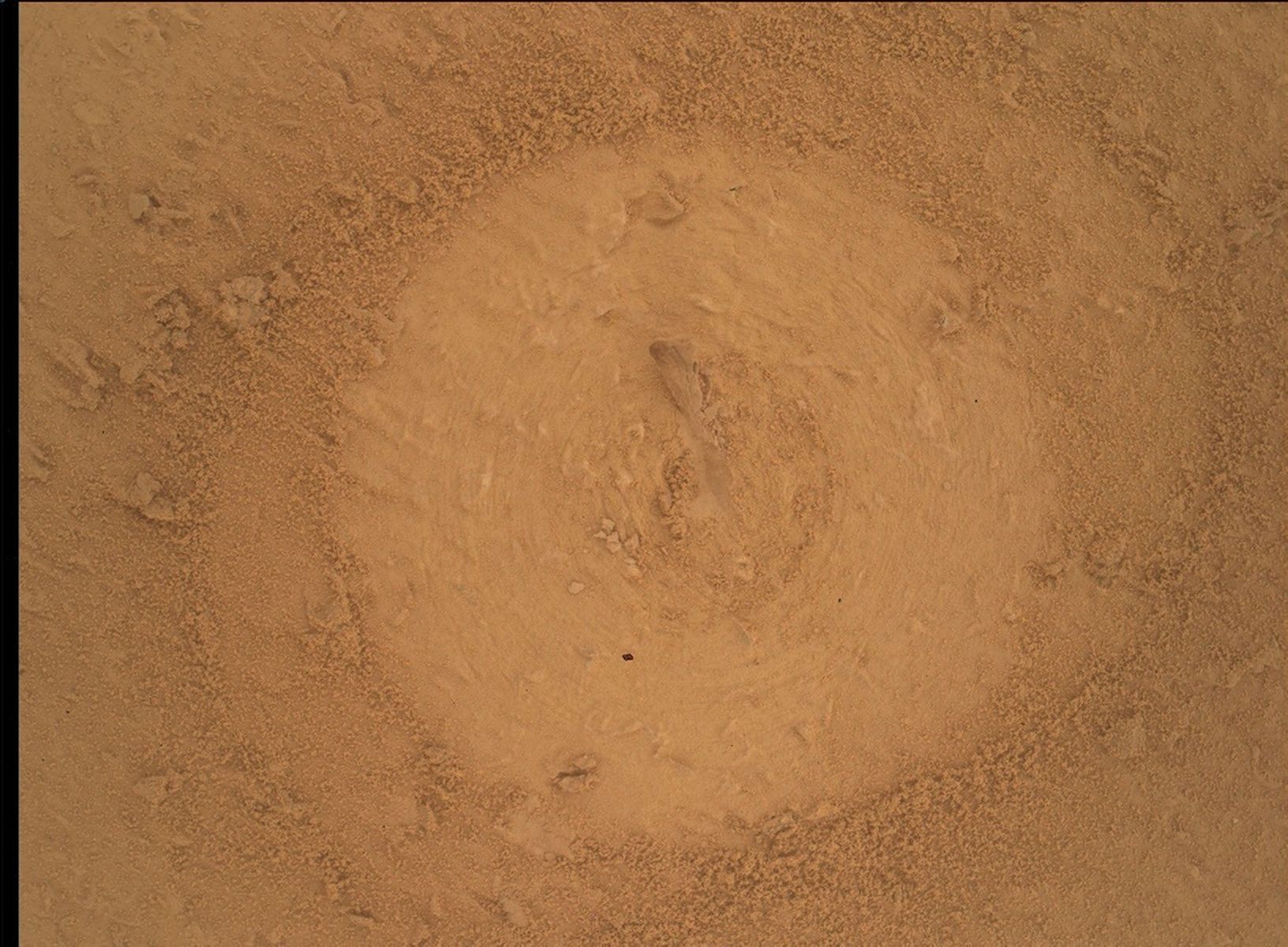
We recently entered the new Cache Creek quad, named after an area of geological diversity in British Columbia, Canada. The area in Canada includes exposures of oceanic crust, marine sediments, volcanic rocks, and glacial deposits, as well as being home to lakes with unusual chemistry that may be analogous to lakes that once existed on Mars. It also lies at the southern end of the 1860s Gold Rush Trail, where miners and prospectors flocked to this part of British Columbia in search of riches. This week we successfully drilled into our 48th rock target in Gale crater (“Basque Lakes”), from the Cache Creek quad. While we may not literally strike gold, we are all eagerly anticipating the outcome of the CheMin X-ray diffraction analysis of our drilled sample that will take place in this weekend plan. What gold mine of minerals will the sample contain? What can they tell us about the depositional and alteration history of this rock exposure — might there be similar minerals present as those associated with some of the lakes in the Cache Creek area of British Columbia?
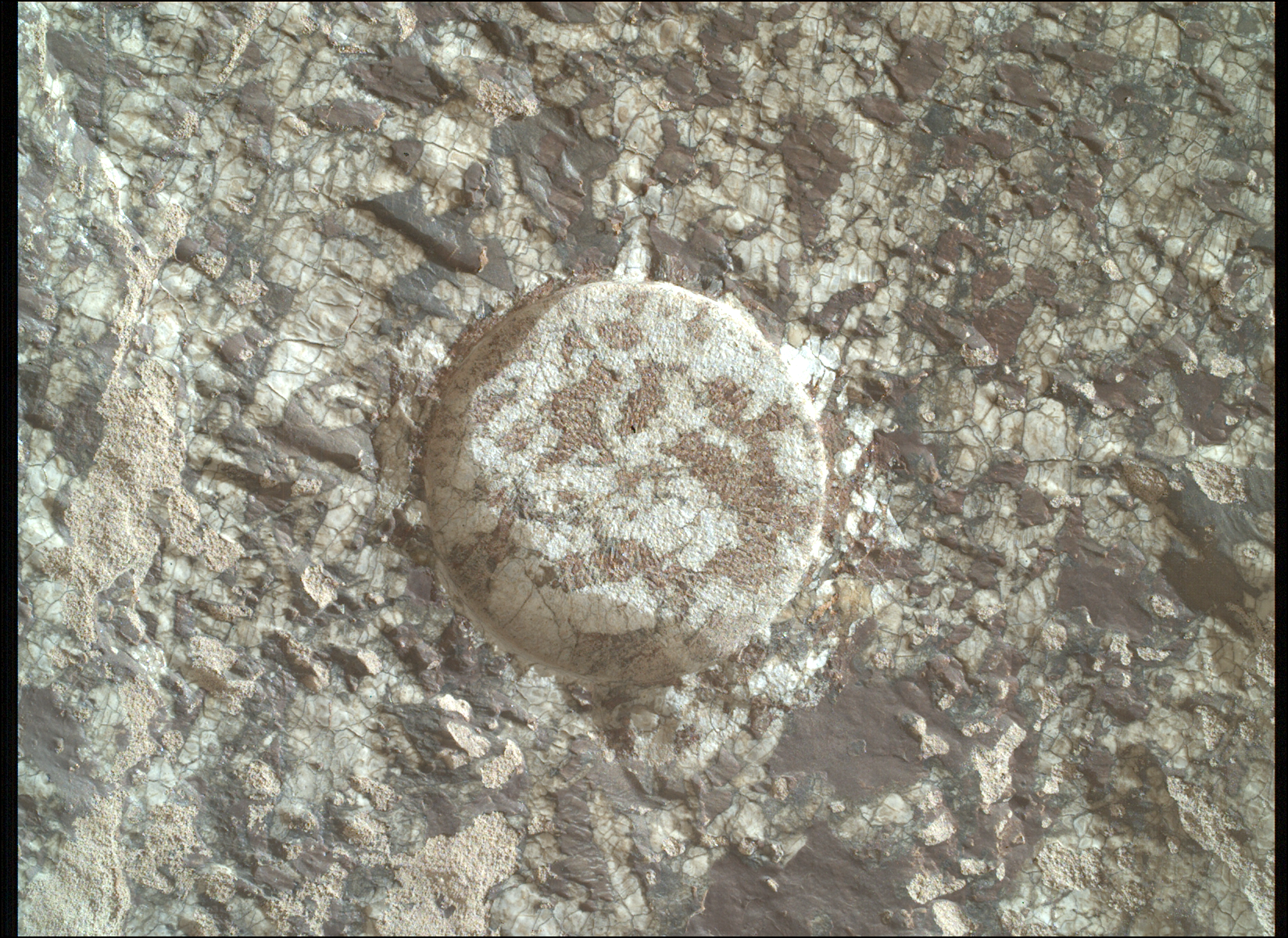
As an APXS uplink lead and strategic planner this week I helped to plan the triage contact science on the potential Basque Lakes drill target and communicate the results to the rest of the team. We placed APXS in contact with the rock target to measure its chemistry, and the MAHLI camera to within 1 centimeter (about 0.4 inches) to examine in detail the textures. ChemCam also fired its laser at the Basque Lakes drill target to further characterize composition. MAHLI also imaged the target after the engineers checked the stability of the rock with a pre-load test. The results from all these activities helped to determine whether to proceed with drilling.
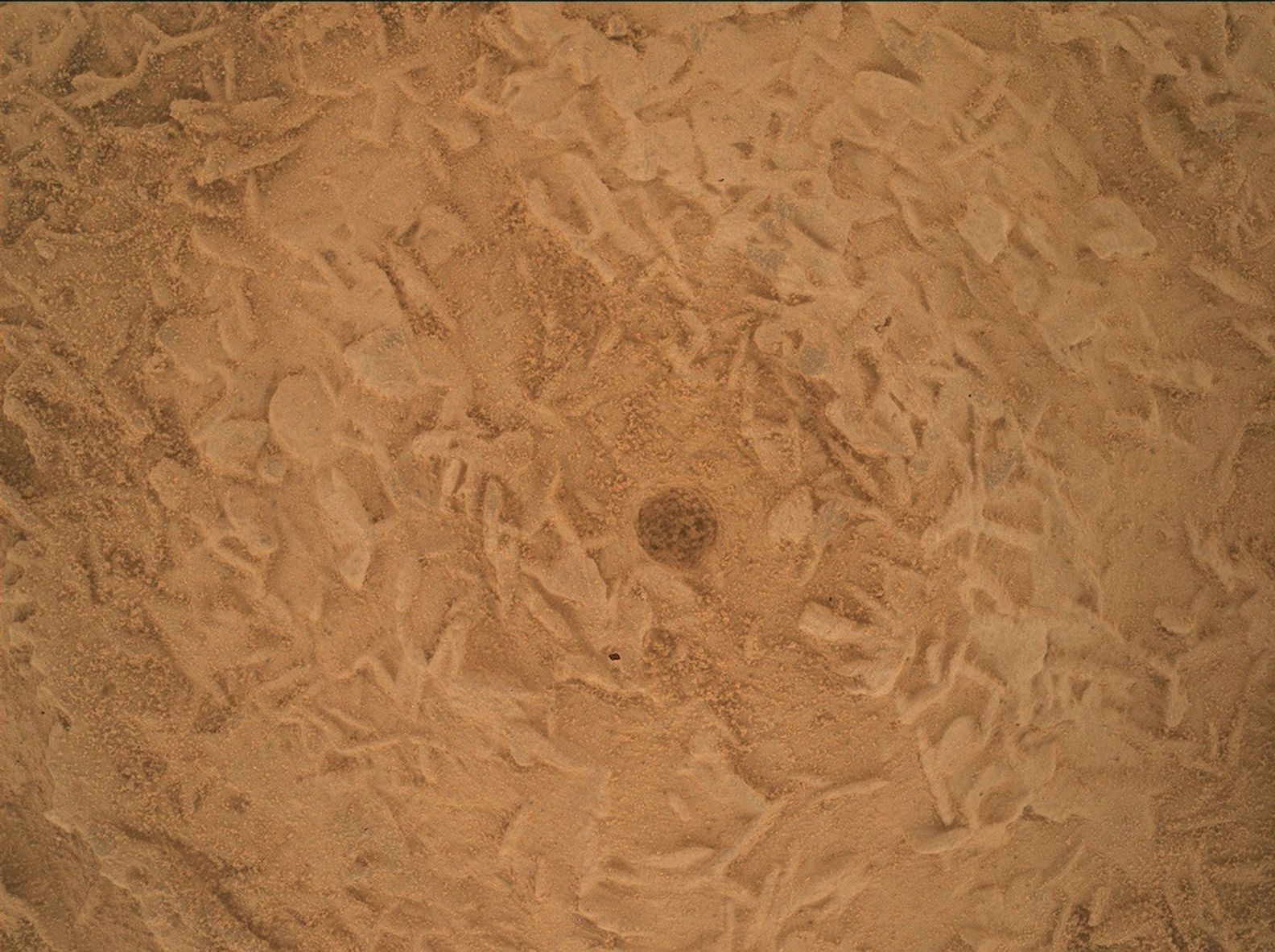
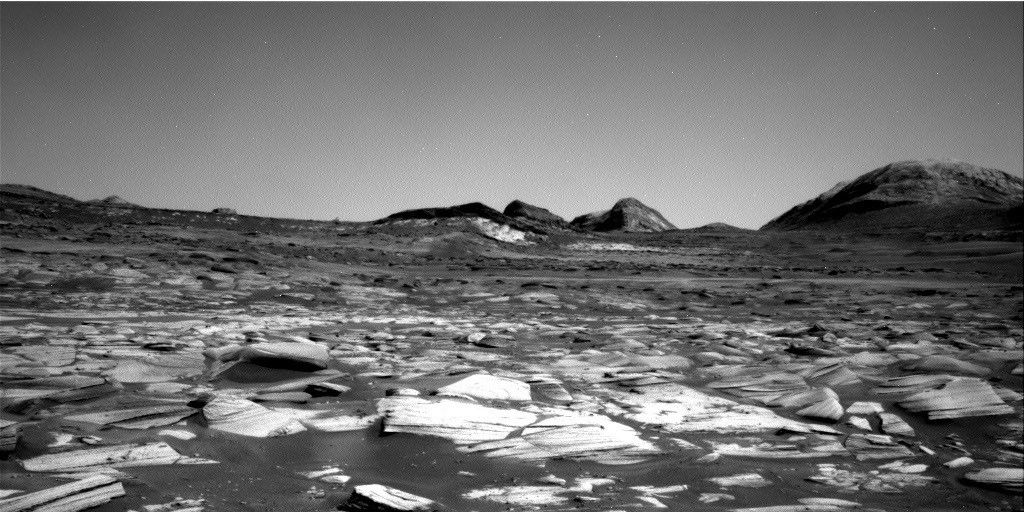
Despite significant power constraints associated with drilling and the accompanying analyses, as well as an aging rover, we were also able to plan additional activities. Mastcam imaged the surrounding terrain to provide context for our new drill sample. ChemCam was able to analyze the chemistry of another nearby bedrock target, “Peace River,” and use its imaging and passive spectroscopic capabilities to look at the new drill hole and surrounding tailings. ChemCam remote imaging was also used to examine an interesting-looking deposit of jumbled blocks at the base of a nearby butte, “Cordillera.”
We also utilized Navcam and Mastcam imaging in the continued monitoring of environmental and atmospheric conditions in Gale crater.
Analysis of the Basque Lakes drill sample should continue next week with delivery of material to SAM, which will reveal more nuggets of information regarding the history of this particular rock sample. Curiosity will likely be at this location for another week, before we dump the sample and drive away to continue our exploration of Mount Sharp and Gale crater.
Share
Details
Related Terms
Explore More
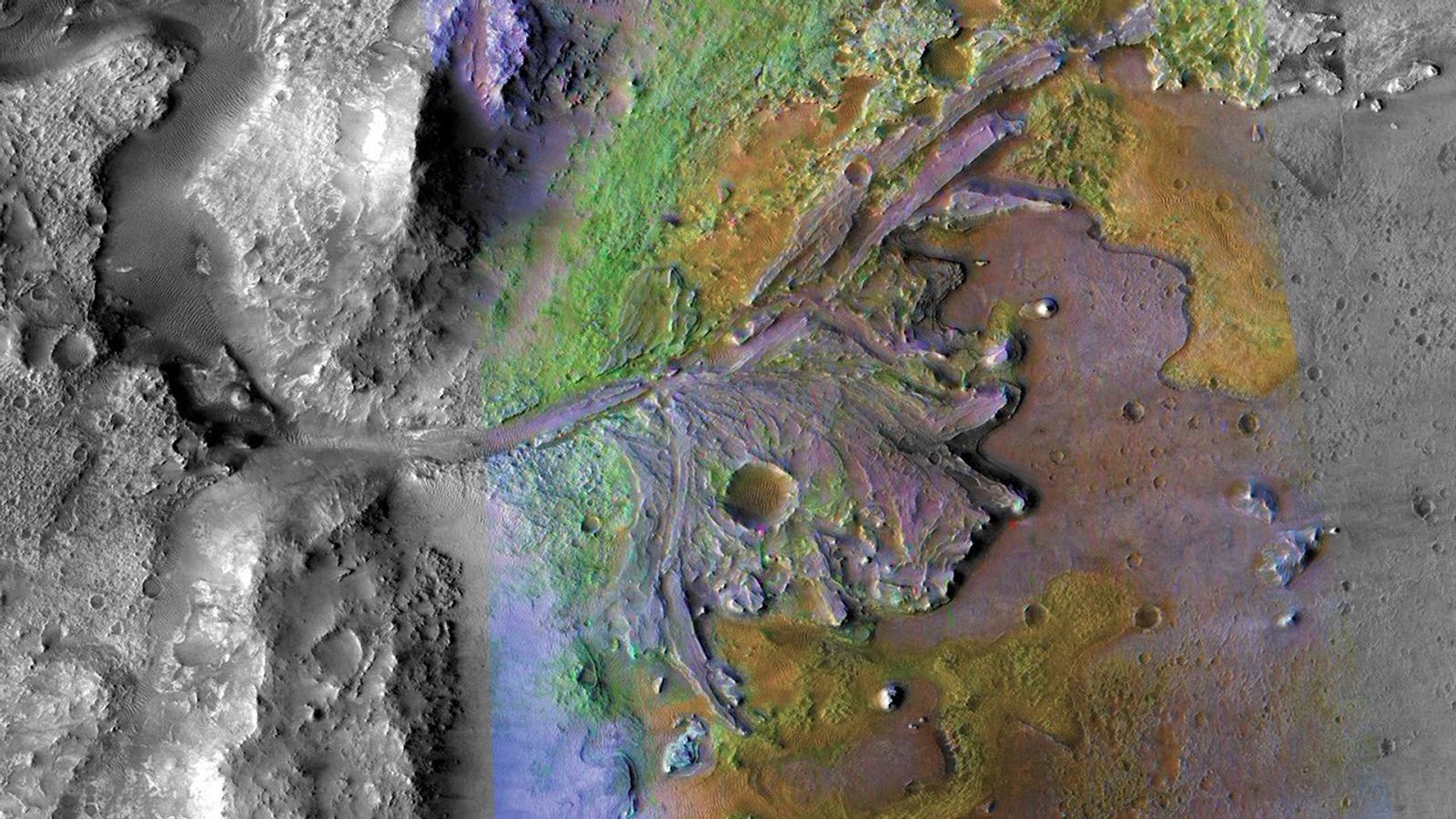
Mapping the Gaps in NASA’s Return to the Moon, featuring Richard Spolzino
2026-10-04 19:10
“I want to be able to look at a rocket launch and say, ‘I touched a piece of this.’”
That’s how Richard Spolzino describes the thing he’s chasing. Not a title, not a specific mission, not even NASA itself, just the ability to point at something real and know his work made it possible. At NASA’s Langley Research Center in Hampton, Virginia, Spolzino works within Moon Base’s mission architecture and systems interoperability effort, helping identify what NASA still doesn’t know about the Moon and Mars, and making sure that missing information gets found before it becomes a problem.
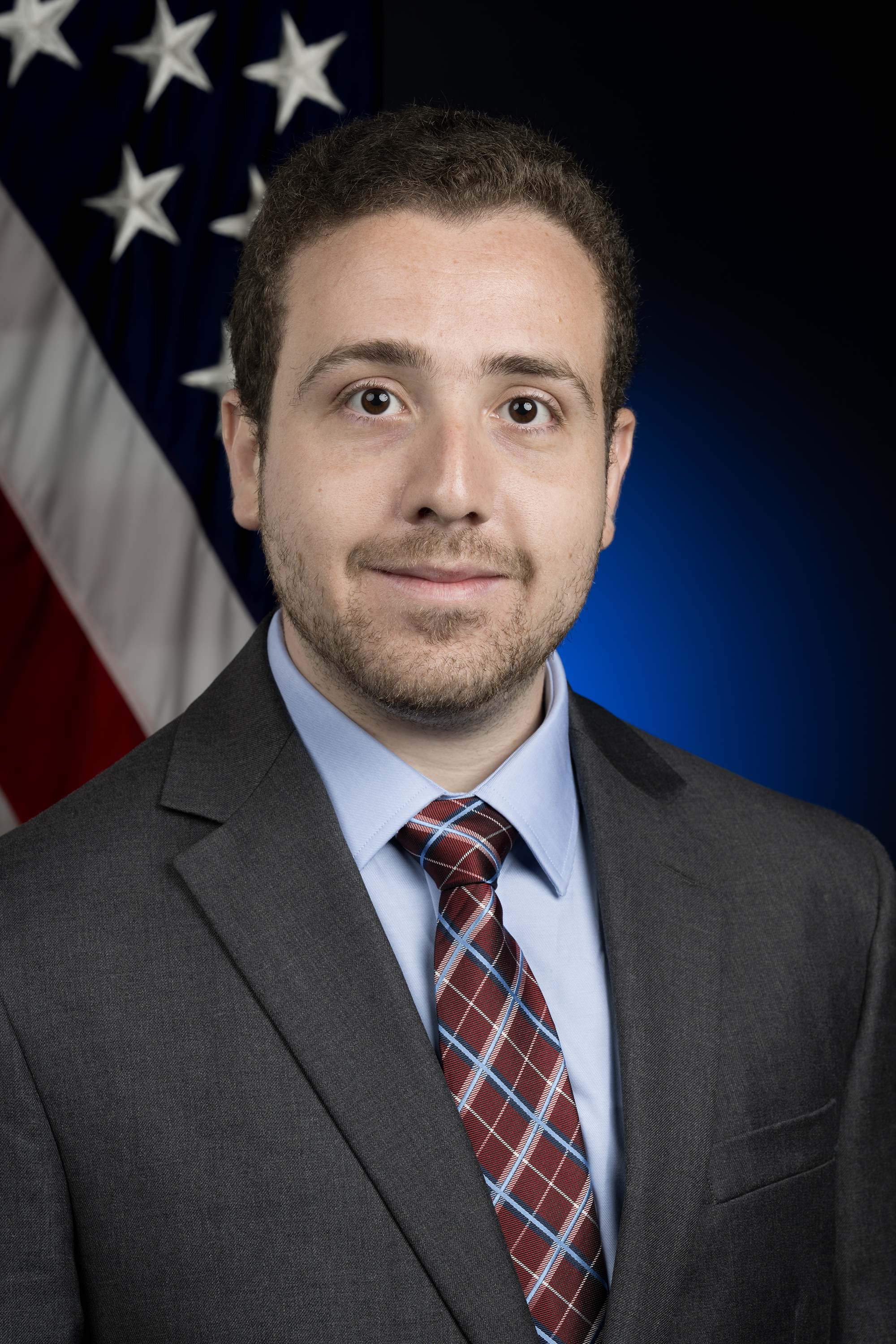
“For me, it kept coming back to where can I have the most impact? Where can my work touch the most things?“
From History to Aerospace
Spolzino didn’t set out to end up here.
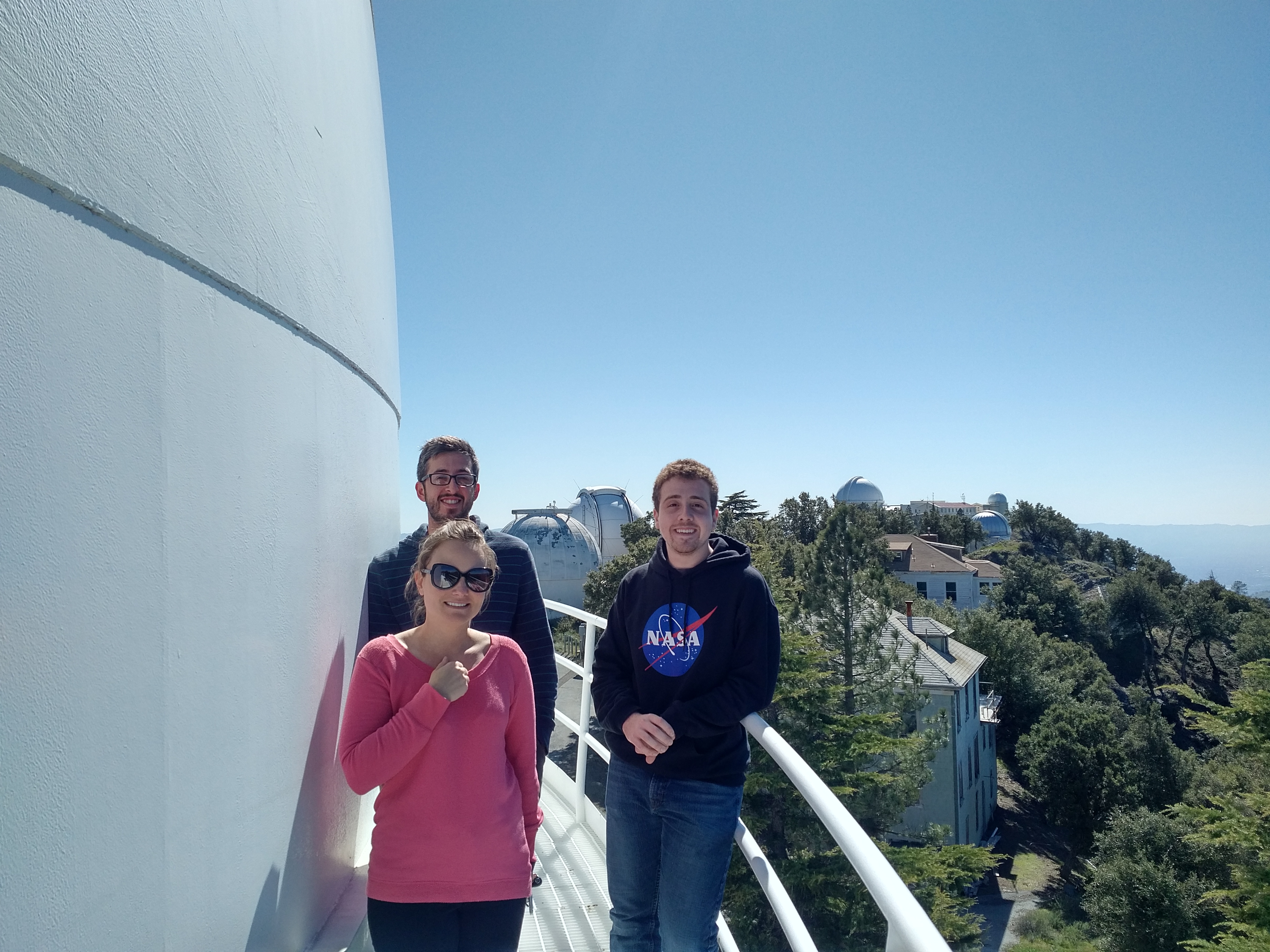
He started college as a history major. He switched to a physics track at Santa Clara University, thinking he’d end up in astrophysics. A research stint at Lick Observatory studying interstellar dust polarization taught him two things: the work was fascinating and, “I don’t think the staying-up-all-night thing is for me,” he says.
After graduation, he started down the path of Officer Candidate School in the Navy, hoping to fly jets. It didn’t pan out, and that detour led him to a graduate program at the University of Houston, combining aerospace engineering and space architecture — not the habitat-design kind of architecture people usually picture, but the systems-level kind, where a lunar oxygen plant connects to the rovers that feed it, which connect to the processor, which connects to the user drawing down the resource. “I was always more attracted to how all the pieces work together than to any single piece,” he says.
Chasing Impact
Ask Spolzino if he dreamed of working at NASA, and the honest answer is no.
“I really admire people who’ve had that drive their whole life,” he says. “For me, it kept coming back to where can I have the most impact? Where can my work touch the most things?” A University of Houston program with strong ties to Johnson Space Center put NASA on his radar alongside other options in industry and government. What ultimately drew him in wasn’t the agency’s name, it was the scope of the problems and the direct line he saw to senior decision-makers shaping the return to the Moon.
That’s also, he adds, exactly why NASA is worth considering for people who aren’t sure it’s their calling yet. The culture rewards people willing to take on more than their assigned lane and gives early-career employees room to grow into problems bigger than their job description, something he says he might not have found moving up more slowly in industry.
Documenting the Missing Piece
Spolzino’s day-to-day work centers on a deceptively simple idea: the data gap.
“You can think of it as synonymous with a knowledge gap,” he explains. “It’s a way of documenting the thing we don’t know.” Take the geotechnical properties of lunar regolith — moon dust, essentially, but the specifics matter enormously. How much weight can it bear? What’s its shear strength? Answering those questions shapes everything from how far a rover can safely drive to whether a habitat’s foundation will hold.
A data gap lays that out formally: what we don’t know, why it matters, what we currently have that falls short, and, critically, a specific measurable target industry and international partners can aim for. “Once we’ve identified what’s missing,” he says, “our partners can look at that list and see exactly where their contribution would be valuable.”
His team started with roughly 25 published data gaps last year. They’re on track for 60 by the end of this year.
From Concept to Cargo
The concept only matters if it changes decisions, and Spolzino cites two recent examples where it did.
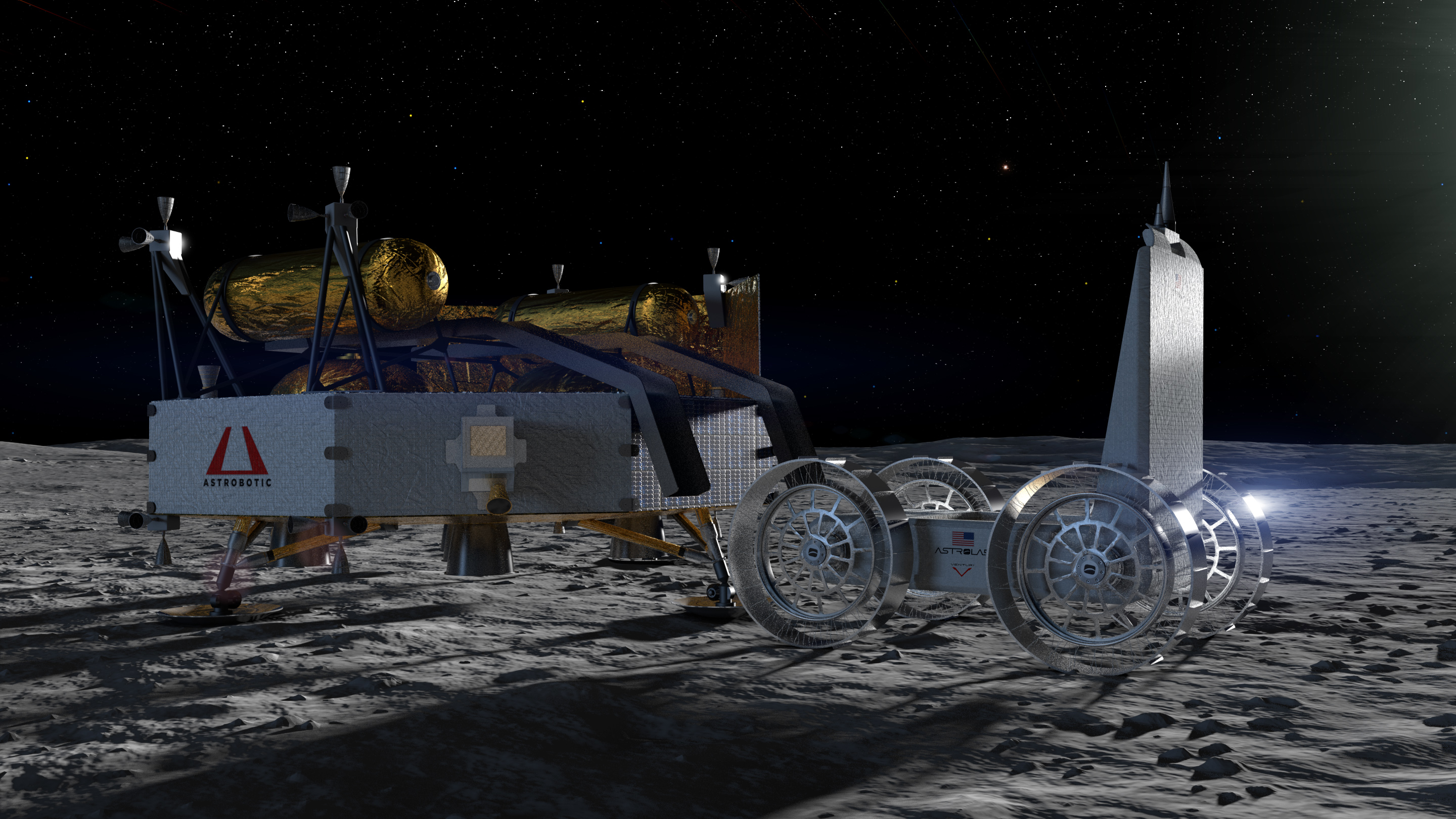
When the lunar lander company now known as Voyager (formerly Astrobotic) was preparing its upcoming Griffin-1 mission, the team didn’t help them figure out what instruments to fly since that was already locked in. Instead, Spolzino’s team helped them prioritize what data gets sent home first through a communication pipeline that can’t carry everything at once. “How do you prioritize all the things you say you want, and what gets sent back through that constrained pipeline?” he asks.
On the other side of the pipeline, Spolzino has spent recent months evaluating proposed instruments (spectrometers, sample collection tools, tech demonstrations) against the published data gaps to help leadership decide what’s worth flying. Some proposals map cleanly onto a documented need. Others don’t align with anything NASA has said it’s missing. “That’s used to filter down what gets pushed forward as a real candidate,” he says. Industry partners have taken notice, and leadership now asks companies pitching new instruments to show how their proposal maps to a data gap before the conversation goes any further.
Figuring It Out Takes Work
Spolzino admits the job reshaped an assumption he carried out of graduate school — that NASA had everything figured out, and that the agency’s reputation meant every question already had an answer somewhere inside its walls.
Three years in, he sees it differently. “Keeping the kind of reputation NASA has takes constant, deliberate work,” he says. “Everyone’s genuinely trying to pull in the right direction, but it’s not automatic.” That realization was clarifying for him. The agency runs on people figuring things out in real time, which means there’s room for someone early in their career to contribute meaningfully, rather than just executing someone else’s playbook.
His advice to students considering NASA is practical, not sentimental: Grades matter less than people think. “The projects you work on, and the results of that work, are what people look at first,” he says. His advice is to join clubs, take on real projects, and build something. “It’s less about credentials and more about giving yourself something to show up with.”
On Spolzino’s Sci-Fi Shelf
The Three-Body Problem trilogy by Liu Cixin
Spolzino was already deep into the second book, The Dark Forest, on a flight from New York to Houston when the plane was diverted to San Antonio. “I did not care that I was three or four hours late,” he says. “I had that book, and I was just devouring it.”
Kerbal Space Program
An older game, but a formative one. Spolzino credits it with cementing his interest in space before college even started. “It’s a space program simulator where you build rockets piece by piece, and the physics are simplified but accurate enough that you’re doing a lot of the same math as an actual mission design tool,” he says. “That really had a huge impact on me figuring out that space was the thing I wanted to do.”

Part of the Systems Analysis and Concepts Directorate at NASA’s Langley Research Center.
Learn more about our work by visiting our website.
APOD: 2026 October 4 – Supernumerary Rainbows over New Jersey
2026-10-04 04:05
APOD
Astronomy Picture of the Day
Discover the cosmos! Each day a different image or photograph of our fascinating universe is featured, along with a brief explanation written by a professional astronomer.

Supernumerary Rainbows over New Jersey
Explanation: Yes, but can your rainbow do this? After the remnants of Hurricane Florence passed over the Jersey Shore, New Jersey, USA in 2018, the Sun came out in one direction but something quite unusual appeared in the opposite direction: a hall of rainbows. Over the course of the next half hour, to the delight of the photographer and his daughter, vibrant supernumerary rainbows faded in and out, with at least five captured in this featured single shot. Supernumerary rainbows only form when falling water droplets are all nearly the same size and typically less than a millimeter across. Then, sunlight will not only reflect from inside the raindrops, but interfere, a wave phenomenon similar to ripples on a pond when a stone is thrown in. In fact, supernumerary rainbows can only be explained with waves, and their noted existence in the early 1800s was considered early evidence of light’s wave nature.
Your Sky Surprise: What picture did APOD feature on your birthday? (post 1995)
Tomorrow’s picture: open space
| Date | October 4, 2026 |
|---|---|
| Credit & Copyright | John Entwistle |
| Authors & editors: | Robert Nemiroff, Jerry Bonnell, Cecilia Chirenti, Keighley Rockcliffe |
| A service of: |
ASD at NASA / GSFC, NASA Science Activation & Michigan Tech. U. |
APOD: 2026 October 3 – Selfie at Vera Rubin Ridge
2026-10-03 04:05
APOD
Astronomy Picture of the Day
Discover the cosmos! Each day a different image or photograph of our fascinating universe is featured, along with a brief explanation written by a professional astronomer.
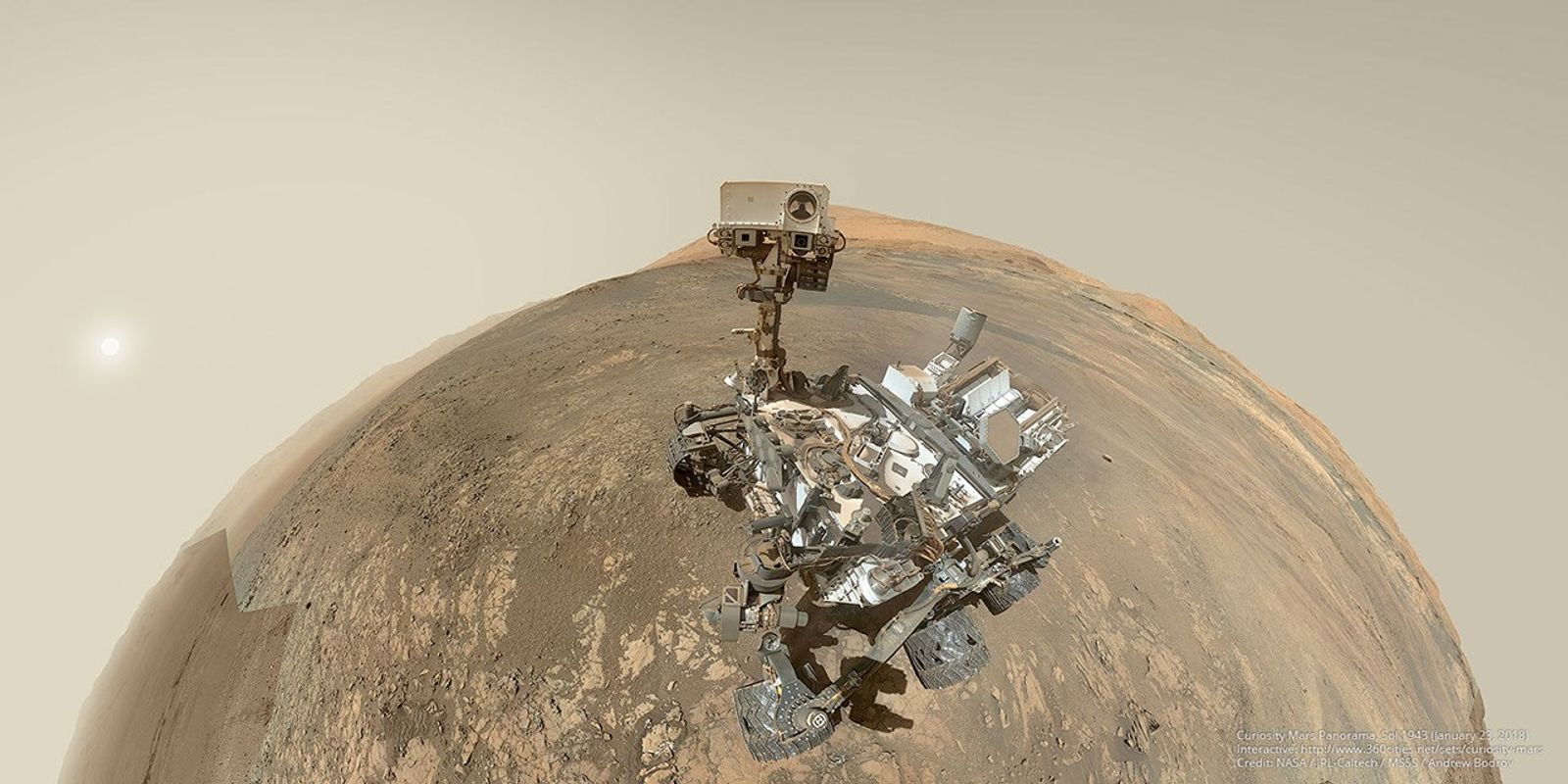
Selfie at Vera Rubin Ridge
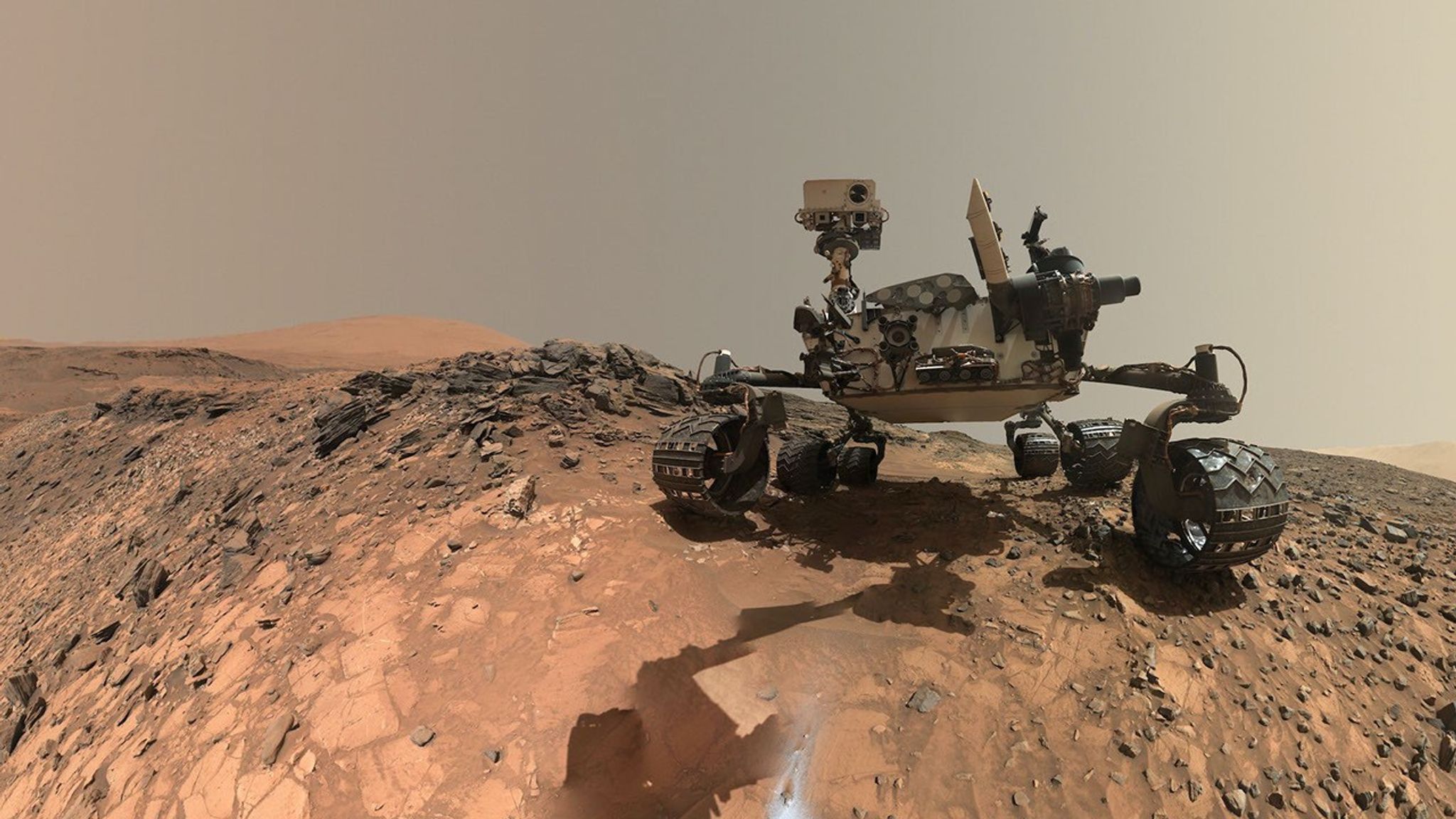
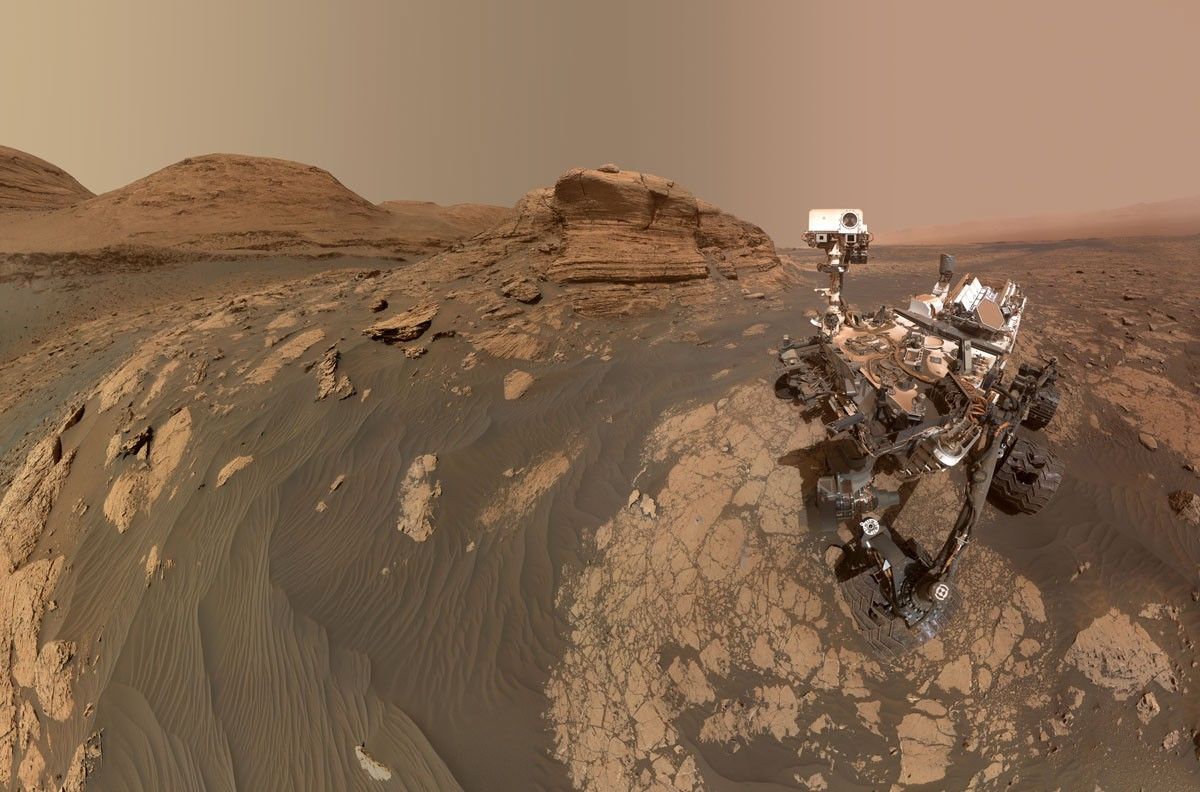
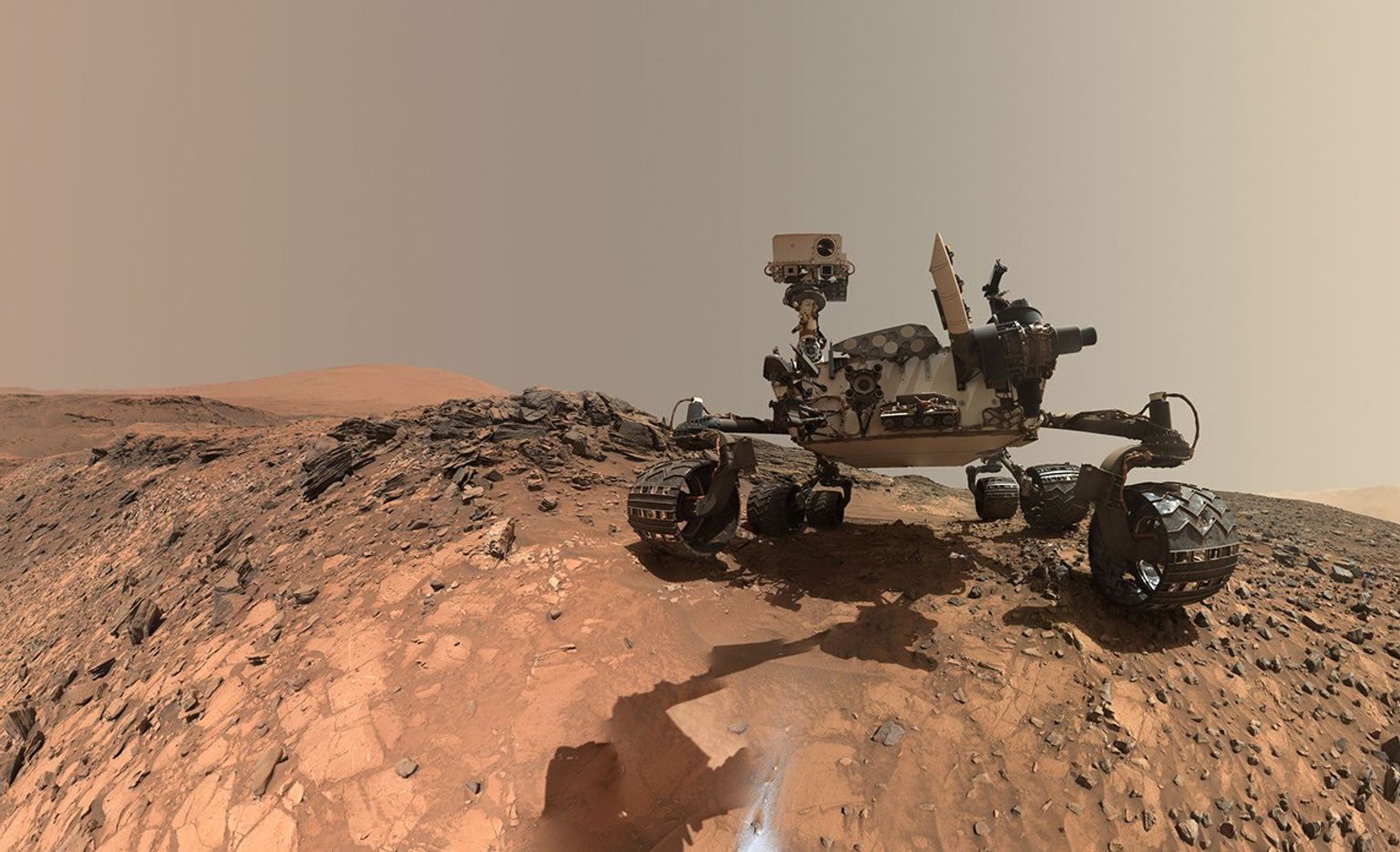
Explanation: On sol 1943 of its journey of exploration across the surface of Mars, the Curiosity Rover recorded this selfie at the south rim of Vera Rubin Ridge. Of course a sol is a Martian solar day, about 40 minutes longer than an Earth day. Curiosity’s sol 1943 corresponds to Earth date January 23, 2018. Also composed as an interactive 360 degree VR, the mosaicked panorama combines 61 exposures taken by the small car-sized rover’s Mars Hand Lens Imager (MAHLI). Frames containing the imager’s arm have been edited out while the extended background used was taken by the rover’s Mastcam on sol 1903. At the top of the rover’s mast, sitting above the Mastcam, the laser-firing ChemCam housing blocks out the distant, 5 kilometer high peak of Mount Sharp. On Earth date August 26, 2026, Curiosity marked an total elevation gain of 1 kilometer in its trek from the floor of Gale Crater up the slope of Mount Sharp.
APOD’s email for image submissions has changed. Please see: APOD Submissions.
Tomorrow’s picture: Sunday’s Childe
| Date | October 3, 2026 |
|---|---|
| Credit: | Image Credit: NASA, JPL-Caltech, MSSS – Panorama: Andrew Bodrov |
| Authors & editors: | Jerry Bonnell, Cecilia Chirenti, Robert Nemiroff, Keighley Rockcliffe |
| A service of: |
ASD at NASA / GSFC, NASA Science Activation & Michigan Tech. U. |
NASA Astronaut Christina Koch to Join NFL Fans in Philadelphia
2026-10-02 19:54
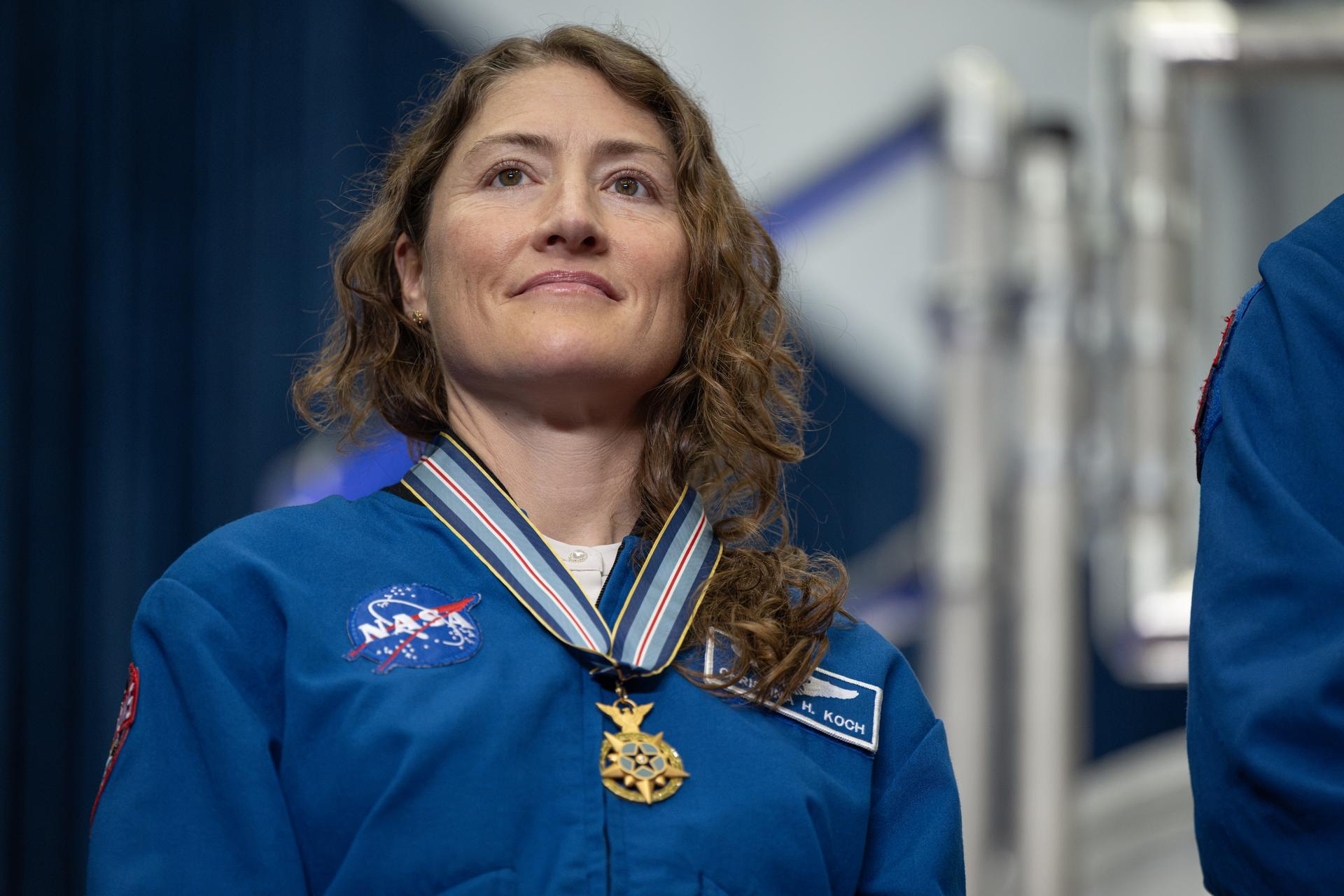
As part of NASA’s ongoing Inspiration Tour, NASA astronaut Christina Koch will highlight America’s strengths in space exploration and aeronautics innovation at the Philadelphia Eagles vs. Los Angeles Rams game in Philadelphia on Sunday, Oct. 4.
A self-proclaimed Philadelphia sports fan, Koch is an explorer and engineer who spent a total of 338 days in space across two missions, including serving as a mission specialist for the agency’s Artemis II mission earlier this year. On April 1, Koch launched from NASA’s Kennedy Space Center in Florida aboard the Orion spacecraft on top of the agency’s SLS (Space Launch System) rocket as part of Artemis II. Koch and her fellow crew members completed a historic lunar flyby, marking humanity’s return to the vicinity of the Moon for the first time in more than 50 years.
NASA team members will engage with fans at the agency’s Experience Zone, located outside the stadium from 10 a.m. to 1 p.m. before the game. Fans can learn more about NASA’s return to the Moon through the agency’s Artemis program, enjoy interactive games, and capture photos at a selfie station and with a large, inflatable NASA logo.
With stops across the nation, NASA’s Inspiration Tour convenes academic, industry, and public sector stakeholders to connect the agency with the people, technologies, and organizations that drive American leadership in space.
The tour will culminate in MAX POWER, a public exposition of American air and space innovation, Saturday, Nov. 7, and Sunday, Nov. 8, on and near the agency’s Kennedy Space Center in Florida. Held in honor of America’s historic 250th anniversary, the multi-day, family-friendly event will showcase the next-generation aircraft, spacecraft, autonomous vehicles, and technologies that will help define the future of transportation in air and space.
For more information about MAX POWER and the agency’s missions, visit:
-end-
Camille Gallo / Jessica Taveau
Headquarters, Washington
202-358-1600
camille.m.gallo@nasa.gov / jessica.c.taveau@nasa.gov
TechCrunch - Latest
Google froze its open source bug bounty program due to a ‘significant rise’ in AI submissions
2026-10-04 20:31
Can ‘super intelligence’ and a non-binding safety pact solve AI’s image problem?
2026-10-04 20:08
TechCrunch Mobility: Reining in robotaxis
2026-10-04 16:05
Trump unveils his new Super Intelligence Force
2026-10-04 15:15
Federal judge calls Flock ‘indiscriminate mass surveillance’
2026-10-03 19:33


#/media/File:PIA15279_3rovers-stand_D2011_1215_D521.jpg)